
State governments brace for stamp duty collapse
Recent Australian state budgets have explicitly forecast a decline in stamp duty receipts for the same underlying reasons: higher interest rates, weaker housing turnover, and investor retreat following federal tax changes.
Across the East Coast, state treasuries are warning that stamp duty – one of the most volatile revenue sources – is dropping sharply because:
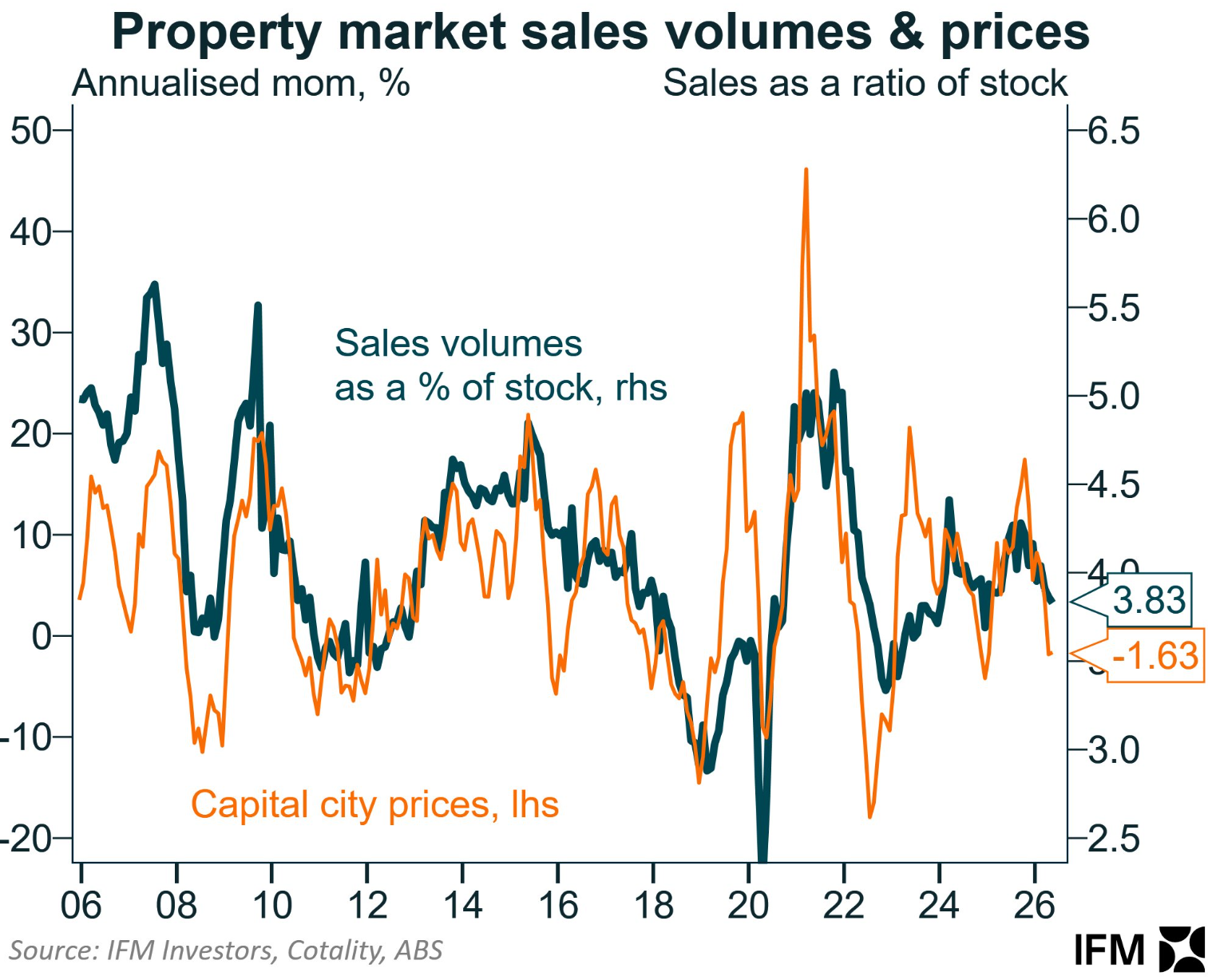
- Housing turnover has fallen to multi-year lows
- Auction clearance rates have collapsed
- Investor activity is retreating
- Prices are softening or flat
- Federal CGT/negative‑gearing reforms are reducing investor demand
- Higher interest rates are suppressing borrowing capacity
Victoria
The Victorian budget reported a $600 million decline in stamp duty in one year and forecast flat or falling receipts until 2027, before a slow recovery.
Treasury noted that weak housing turnover, rising interest rates, and investor uncertainty over federal tax changes were driving the downturn.
Independent economists warned that Victoria’s projections could still be too optimistic.
NSW:
NSW is facing one of the largest stamp duty write‑downs in the country. The Treasury revealed a $5 billion fall in stamp duty revenue over four years.
Clearance rates in Sydney have fallen to six‑year lows, and Treasurer Daniel Mookhey says the market downturn is “more severe than expected”.
Queensland:
Queensland is preparing for a multi‑year weakness in property‑related taxes, with the Treasury warning of significant volatility and falling receipts.
Treasurer David Janetzki cited the Middle East conflict, rising interest rates, and the federal government’s changes to negative gearing and capital gains tax.
South Australia
SA’s downturn is milder than in the east, but still material. Nevertheless, SA forecasts lower property transaction volumes and reduced stamp duty.
The situation facing state governments is illustrated below by Alex Joiner at IFM Investors, showing the decline in both prices and transaction volumes, which are highly correlated:
In a similar vein, Westpac’s Housing Sentiment Index has fallen sharply, which suggests that housing turnover will fall further:
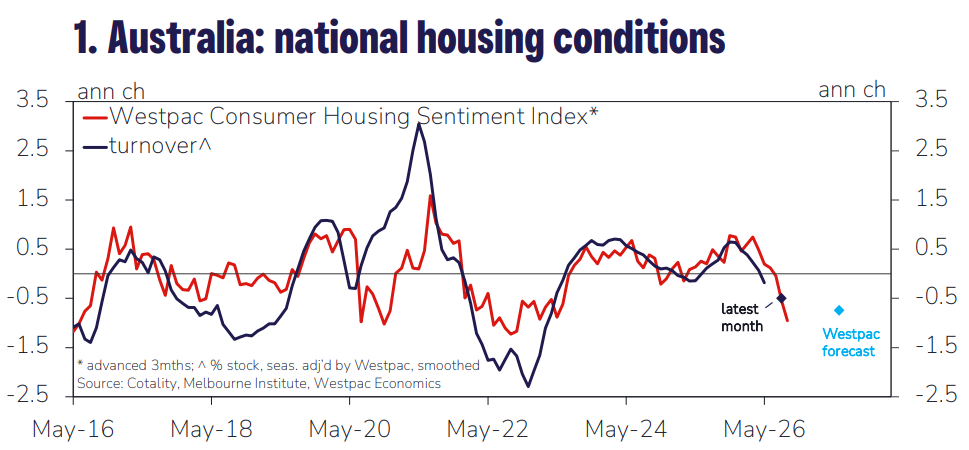
Westpac’s Matthew Hassan forecasts a steep fall in investor activity from mid‑2026 and a 20% decline in market turnover.
As a result, state budgets, which are highly dependent on stamp duty receipts, are facing a significant revenue haircut and rising debt in the period ahead.
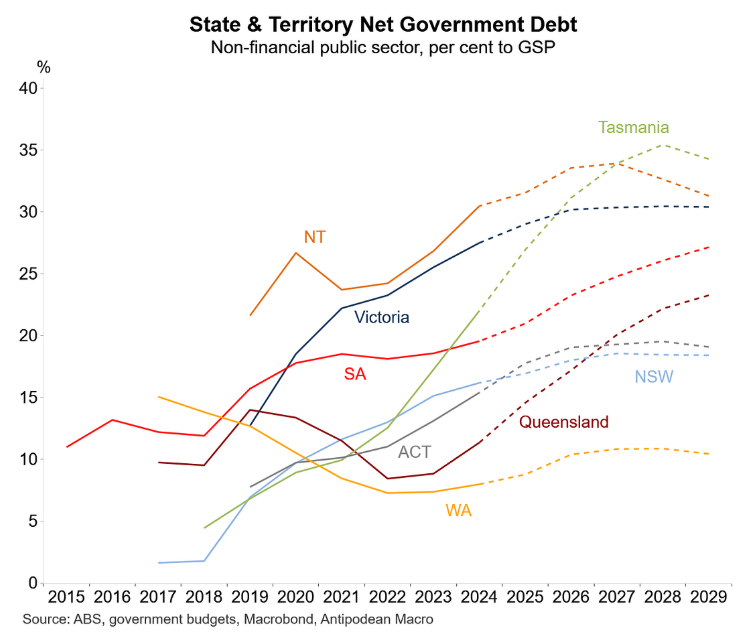
Chart from Justin Fabo at Antipodean Macro
