
The Climate Council contends that there are currently about 160 data centres operating in Australia, with another 90 proposed.
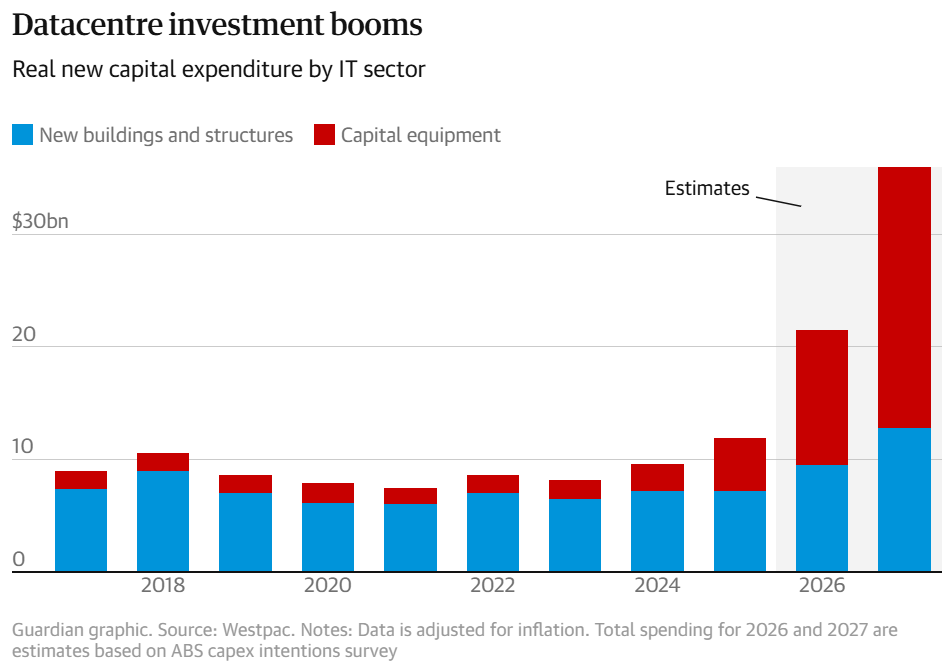
Alex Hooper, the head of climate and energy economics at Oxford Economics Australia, says data centres are tipped to account for more than 10% of electricity consumption on Australia’s East Coast by the mid-2030s, which will place additional pressure on power grids.
Already, Australia’s data‑centre boom is now running into hard physical limits in Western Sydney’s electricity grid.
Transgrid has received an “unprecedented increase in inquiries” from data centre developers.
8 GW of proposed data‑centre load under discussion — roughly equal to NSW’s entire daily electricity demand (7.5–10 GW) — and 1.5 GW of data centre connections have already been signed in Western Sydney.
Transgrid warns that transmission capacity will be “largely exhausted” beyond 2033 and says there is “limited scope” for more large connections until major new transmission projects are confirmed.
Meanwhile, AEMO warns that a single fault near Western Sydney could instantly knock out 1,500 MW of data‑centre load.
Clusters of data centres in Sydney and Melbourne can disconnect simultaneously during voltage dips, creating new grid‑stability risks.
Coal cannot exit the grid:
The data centre boom has exposed the fallacy of Australia’s energy transition, which requires coal to exit the power grid over the decade to 2040:
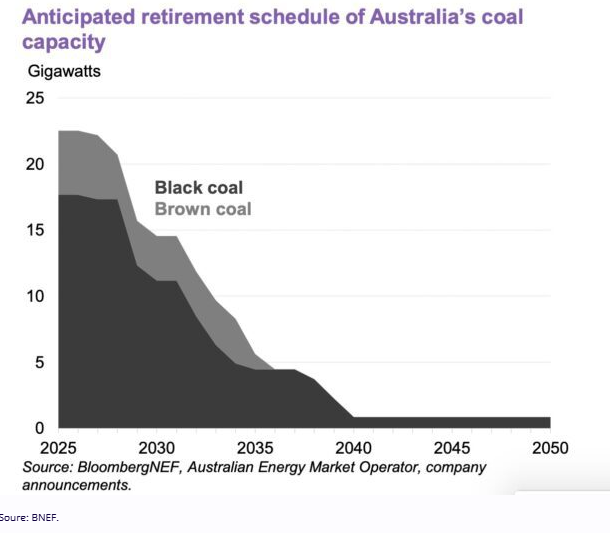
Data centres require stable 24/7 power, something that cannot be provided by intermittent renewables, and overall electricity demand in Australia is set to surge due to the combination of data centres, planned population growth, electric vehicles, and water desalination plants.
As I write this article, another winter wind drought is hitting Australia, which is making the power grid highly reliant on coal and gas:
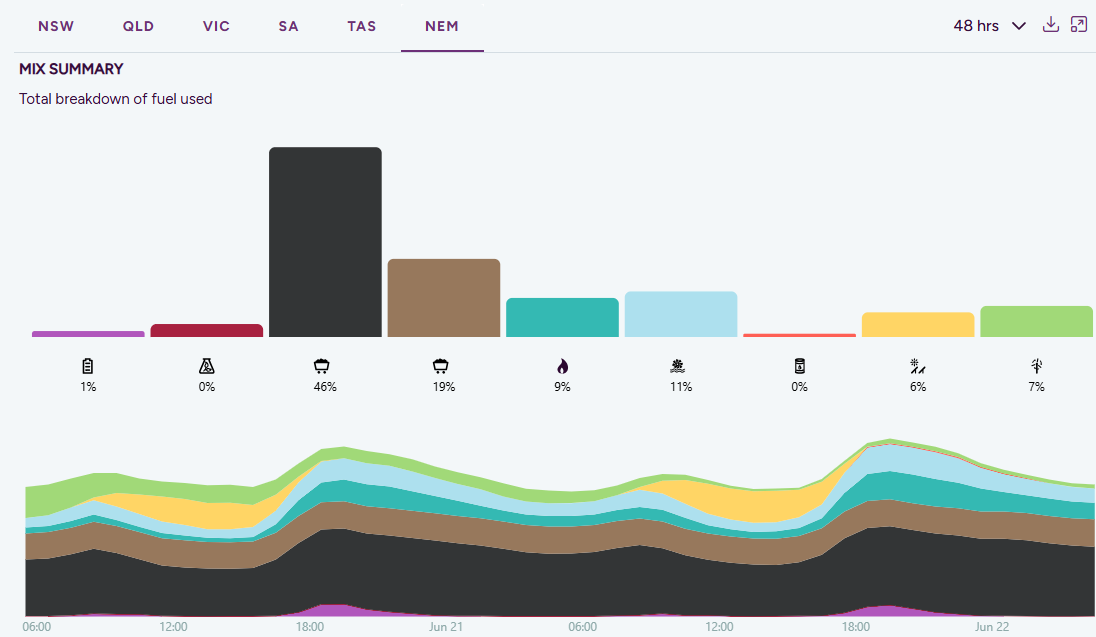
NEM power mix – 48 hours to June 2022
NSW has been hit especially hard, with 78% of power coming from coal in the past 48 hours and only 13% from wind and solar:
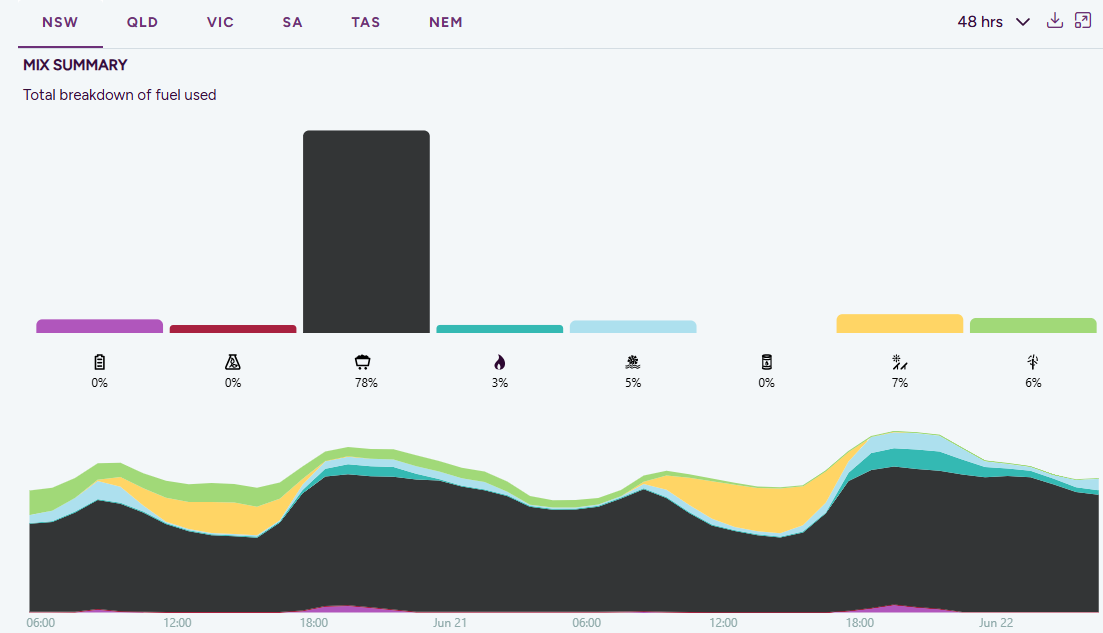
NSW power mix – 48 hours to June 2022
How can Australia realistically expect to expand data centres and the population, as well as electrify the vehicle fleet, while closing down coal generation?
Reality is already starting to bite.
