
New Zealand humiliates Australia on housing affordability
Housing affordability in New Zealand is improving rapidly, unlike in Australia.
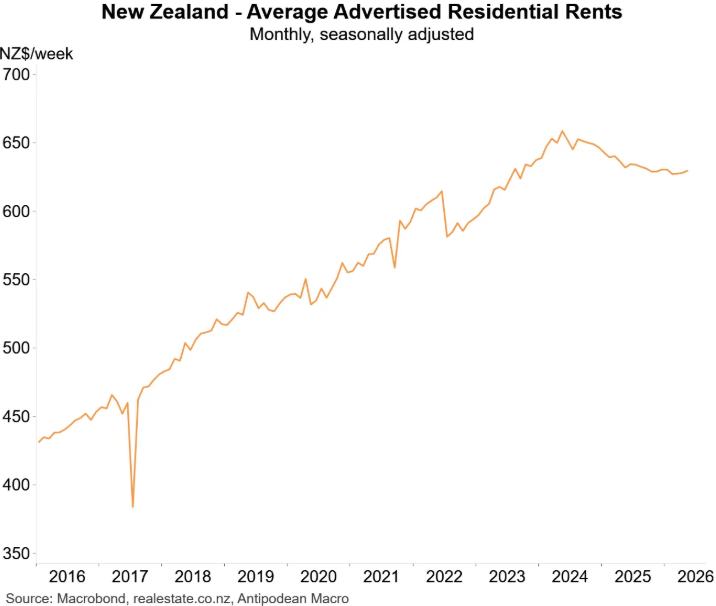
Turning to the rental market first, the following chart from Justin Fabo at Antipodean Macro shows that advertised rents in New Zealand have been falling since 2024:
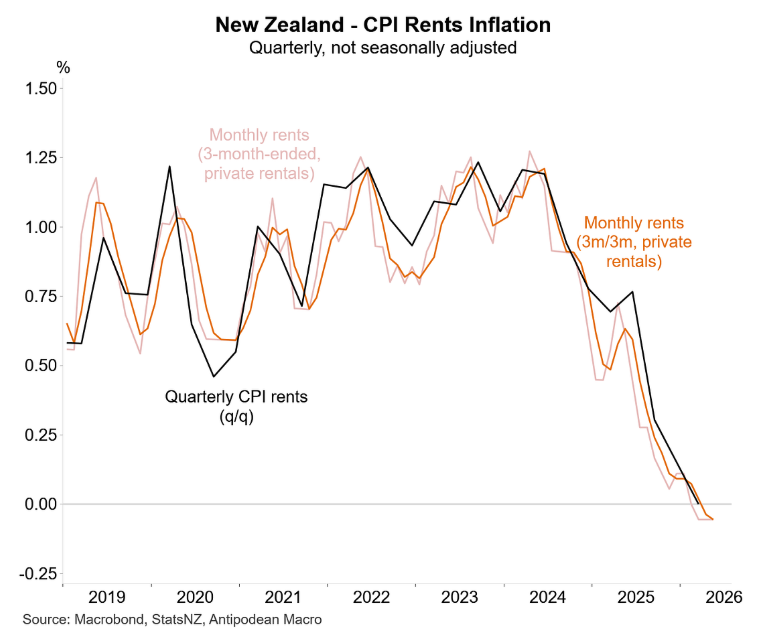
Rents as measured in the CPI have also posted negative growth, helping to keep overall underlying inflation low:
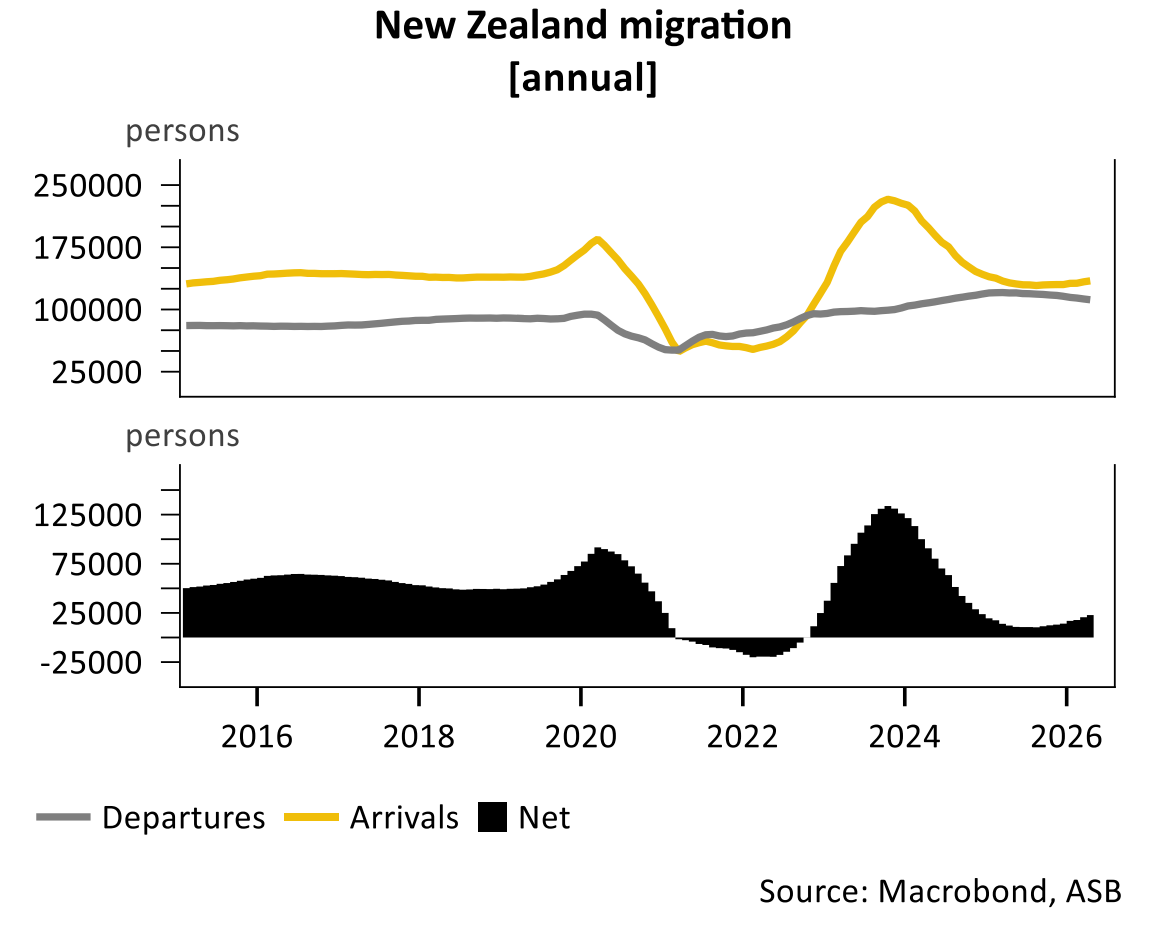
A key driver of the falling rental growth is the sharp decline in net overseas migration, which is tracking at historically low levels way below the post-pandemic peak:
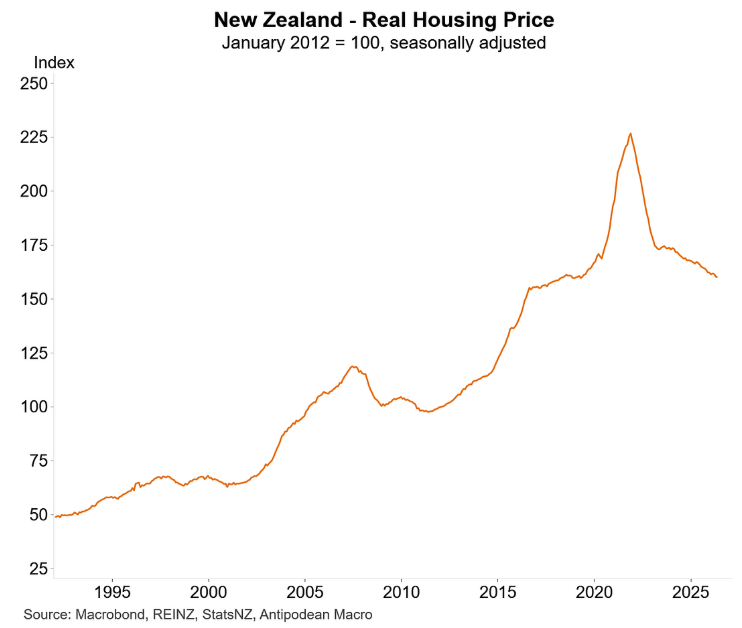
New Zealand home prices have also become far more affordable following heavy declines across all major markets.
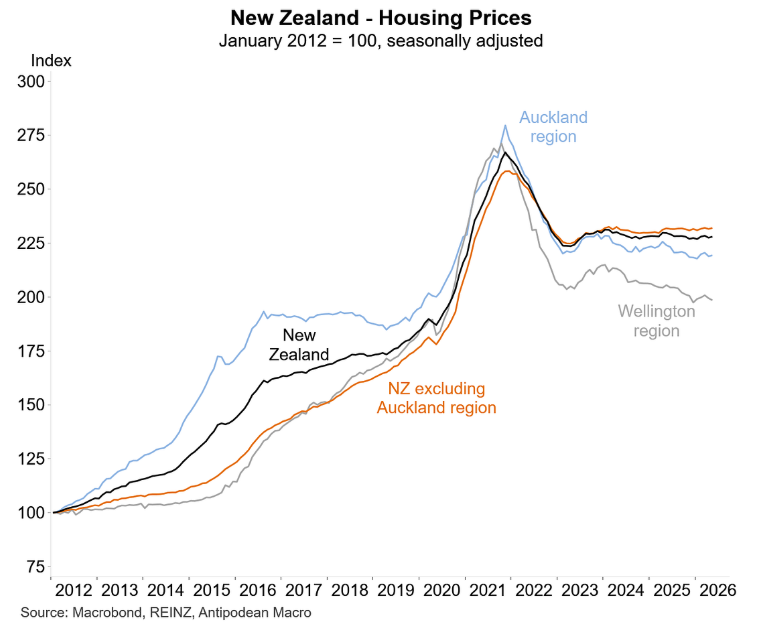
As illustrated below by Justin Fabo, real national home prices in New Zealand have fallen back to where they were in 2019:
Demographia’s International Housing Affordability Survey illustrates the contrast between Australia and New Zealand.
The 2022 Demographia Housing Affordability Survey ranked New Zealand as having one of the world’s most expensive housing markets, with a median multiple of 11.2 in 2021. This was well above Australia’s median multiple of 8.0 in 2021.
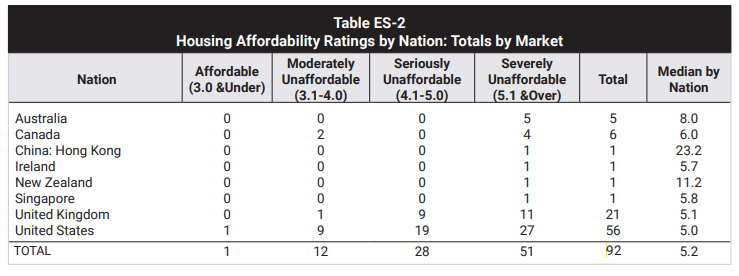
Source: 2022 Demographia Housing Affordability Survey
However, the latest Demographia survey, released last week, shows that in 2025, New Zealand’s median multiple fell to 7.7. By contrast, Australia’s median multiple rose to 9.9 in 2025.
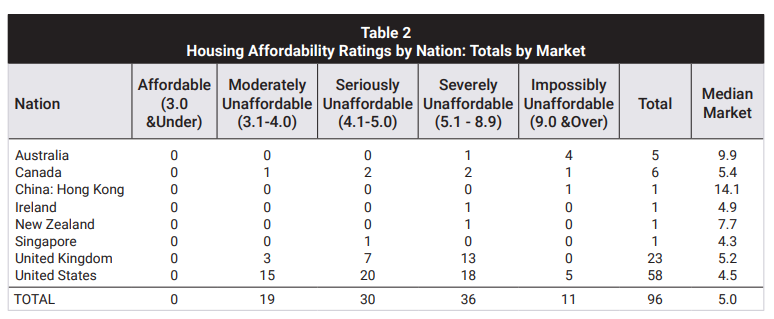
Source: 2026 Demographia Housing Affordability Survey
The difference is that the New Zealand government allowed the property market to deflate, making it more affordable. This included running a significantly smaller migration program.
In contrast, Australian politicians have actively supported home prices through demand-side stimulatory policies such as the Albanese government’s 5% deposit scheme for first-time home buyers, the expansion of the Help-to-Buy shared equity scheme, changes to lending rules that prohibit banks from including student debts in loan serviceability assessments, and ongoing high immigration.
Australia has actively added demand-side fuel to the housing bonfire, whereas New Zealand has not.
That said, Australian home prices have now entered a correction phase, assisted by the federal government’s changes to negative gearing and capital gains tax. Therefore, next year’s Demographia report should show an improvement.
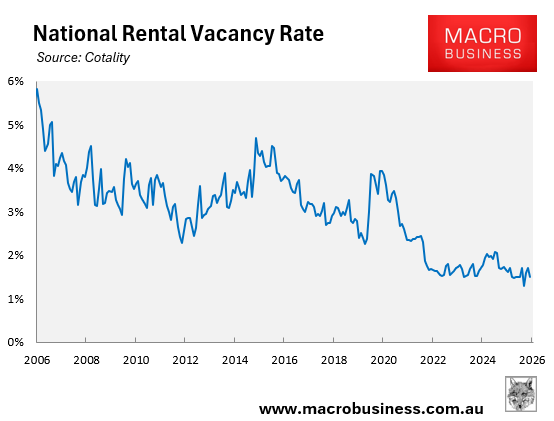
However, it is a different story for Australia’s rental market, which continues to tighten amid turbo-charged immigration.
Rental vacancy rates in Australia remain at historical lows:
Whereas advertised rents continue to rise faster than wages:
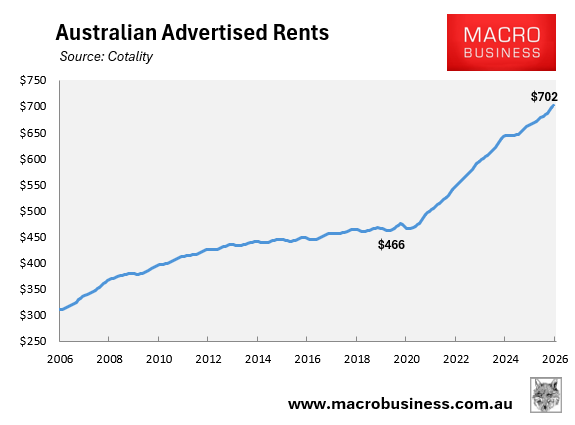
Therefore, unlike in New Zealand, Australian tenants will remain under intense pressure.
