
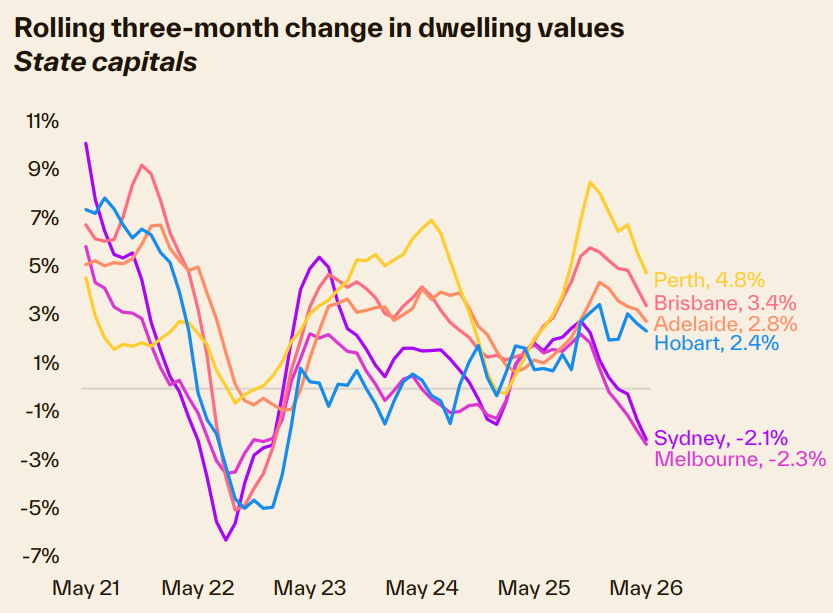
Cotality’s dwelling values results for May confirmed that Sydney and Melbourne are experiencing price corrections, with values declining by more than 2% over the quarter:
Source: Cotality
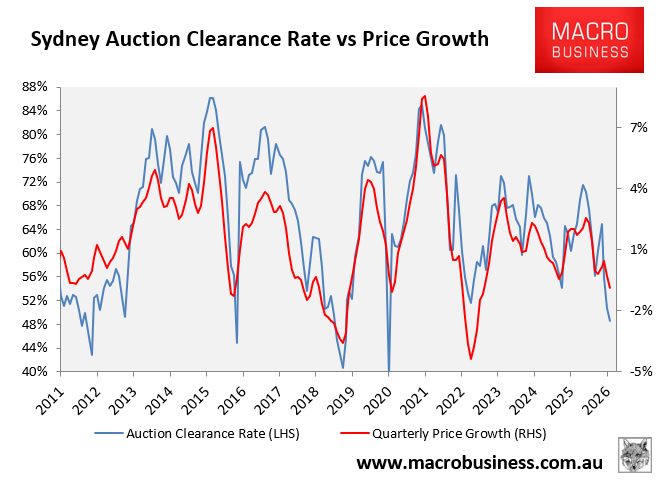
The latest auction results were abysmal for both markets, with Sydney’s average monthly clearance rate plunging to 49% in May to its lowest level since April 2020:
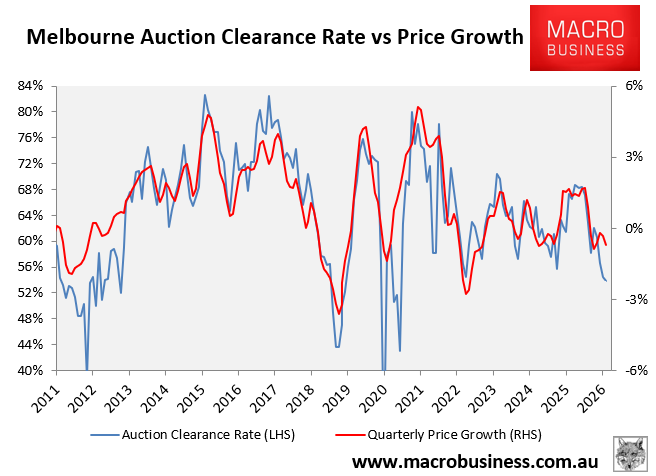
Melbourne’s auction clearance rate in May fell to 54%, its worst result since July 2022:
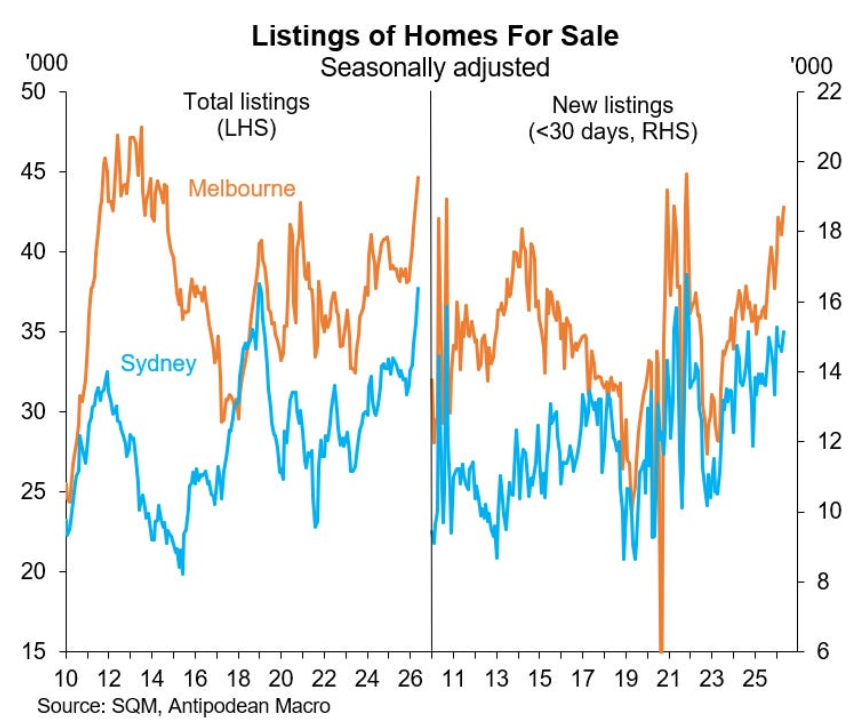
Meanwhile, as illustrated below by Justin Fabo from Antipodean Macro, for sale listings are piling up in both markets at the same time as buyer demand has evaporated:
CBA has downgraded its house price forecasts following the federal budget, with Sydney and Melbourne now forecast to experience heavy price corrections this year:
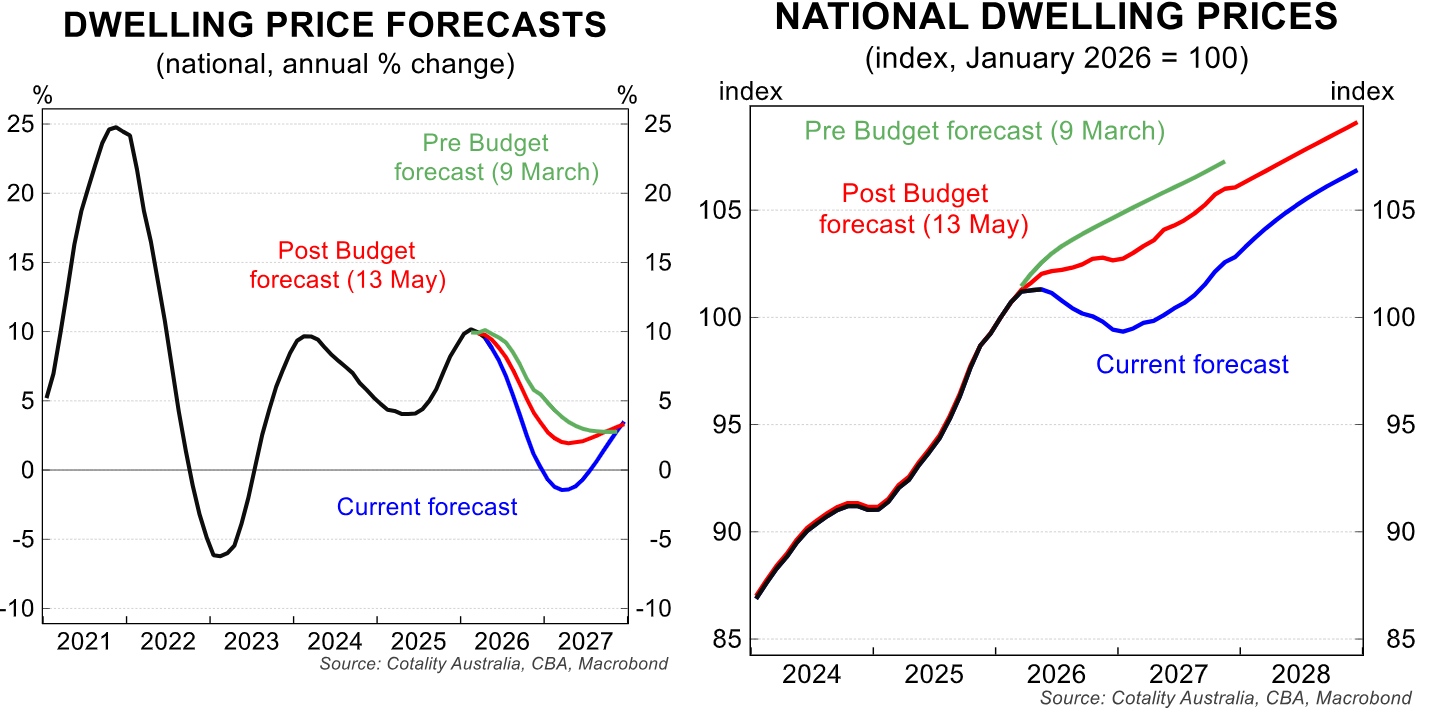
CBA now forecasts that Sydney and Melbourne dwelling values will decline by 6% and 7%, respectively, in 2026 but will rebound by 3% in 2027:
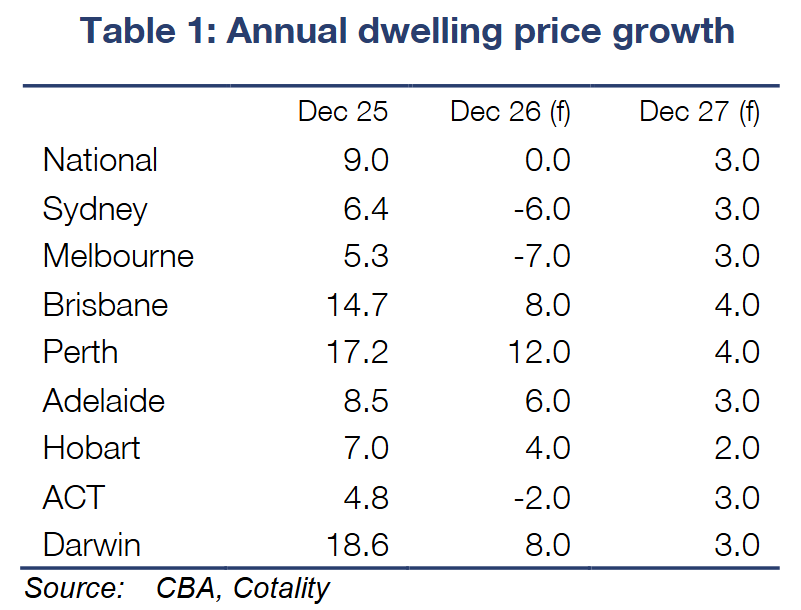
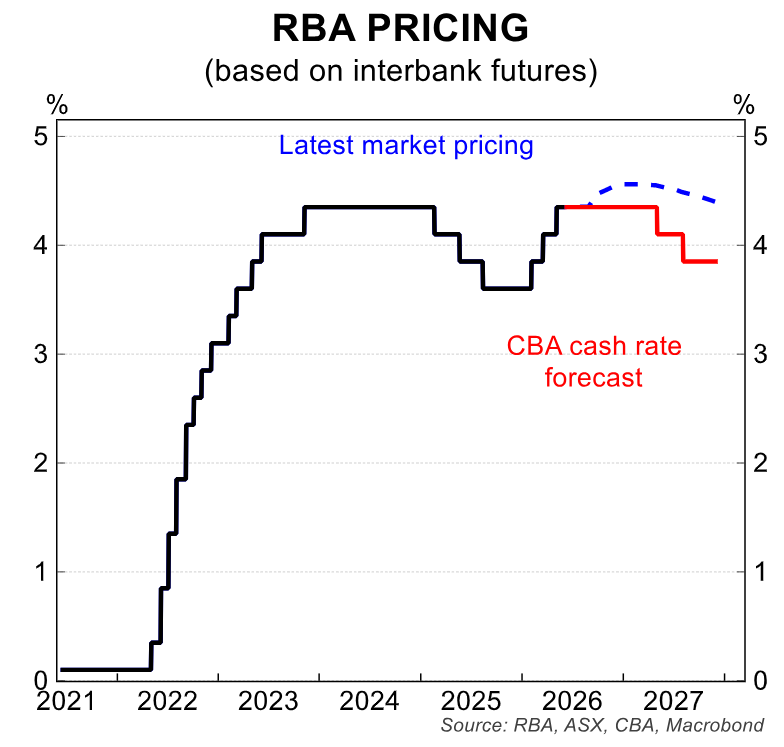
Two forecast rate cuts by the RBA next year will drive this rebound:
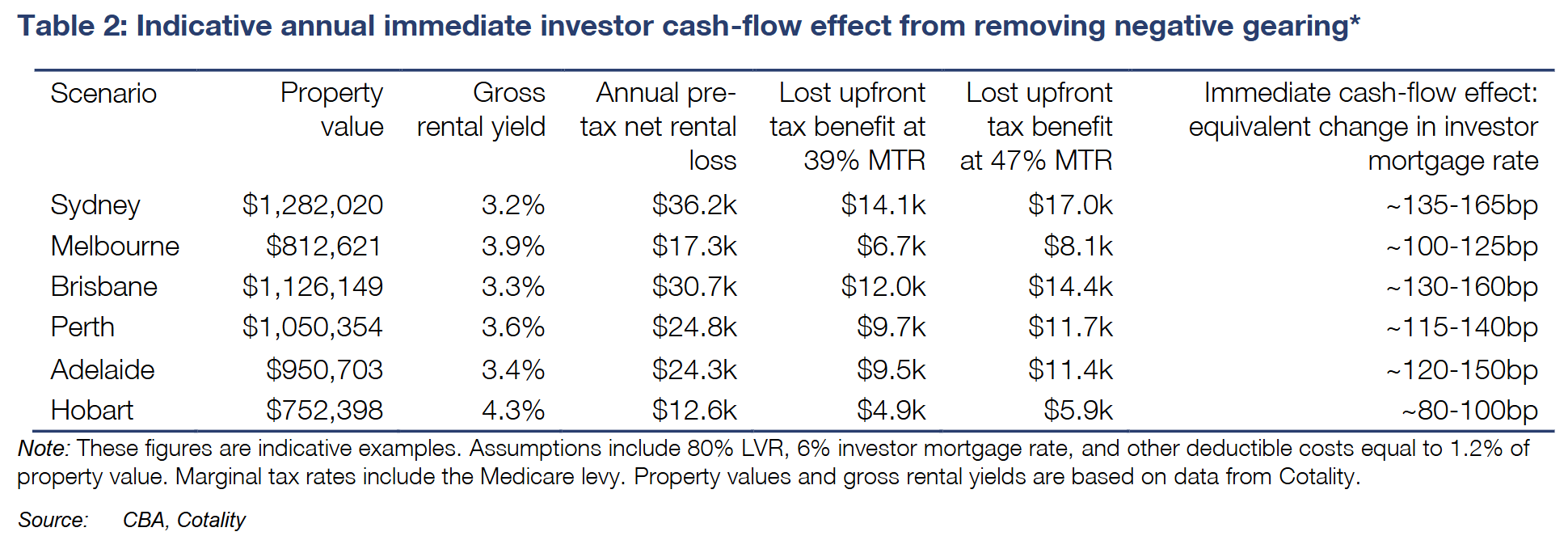
CBA estimates that the changes to negative gearing and CGT announced in the federal budget on cash flow for property investors will be the equivalent to 135-165 bp of monetary tightening for Sydney, with lesser impacts for the other markets:
My view is that the RBA’s dwelling price forecasts are optimistic, and I see the market experiencing its largest price correction in 40 years, beating the 8.2% decline recorded between 2017 and 2019:
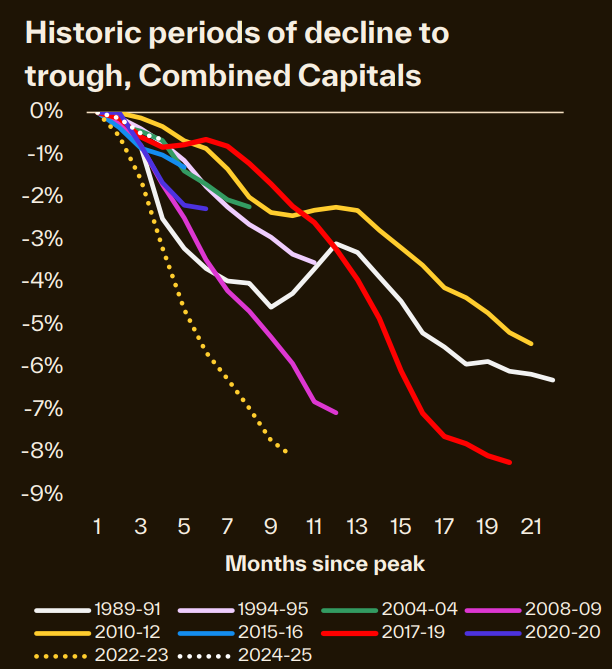
Source: Cotality
The gap between prices and capacity to pay has never been greater.
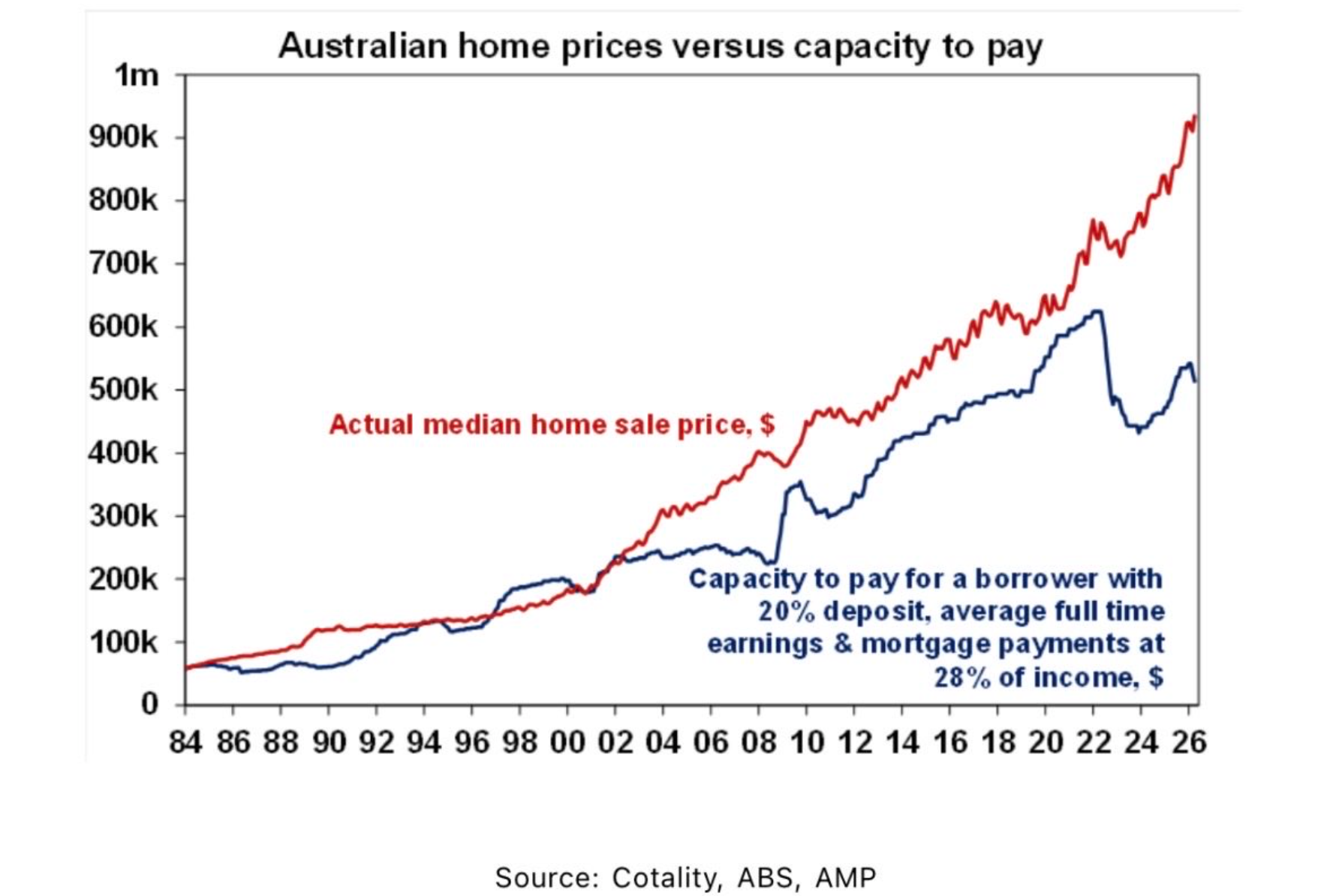
With the housing market facing a multitude of headwinds, including unaffordability, high interest rates, reduced borrowing capacity, consumer gloom, weakening economic activity, and rising unemployment, the ingredients are in place for a significant price correction.
