
The past week has seen two major banks pivot on interest rates. They now expect the Reserve Bank of Australia (RBA) to keep the official cash rate on hold until mid-next year, before delivering cuts.
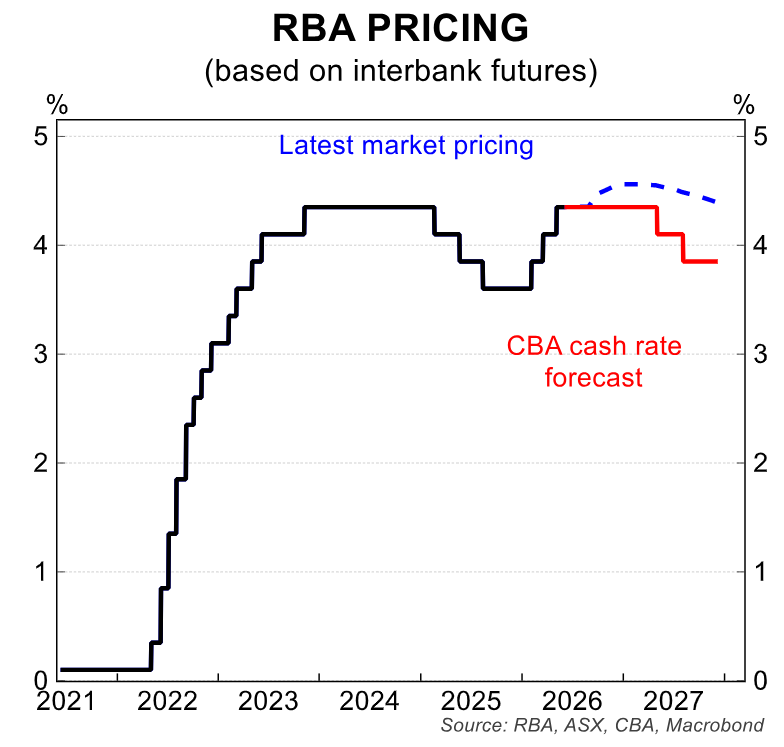
CBA was the first to change its view, last week forecasting that the RBA will remain on hold at 3.35% until early 2027, followed by rate cuts at next year’s May and August monetary policy meetings:
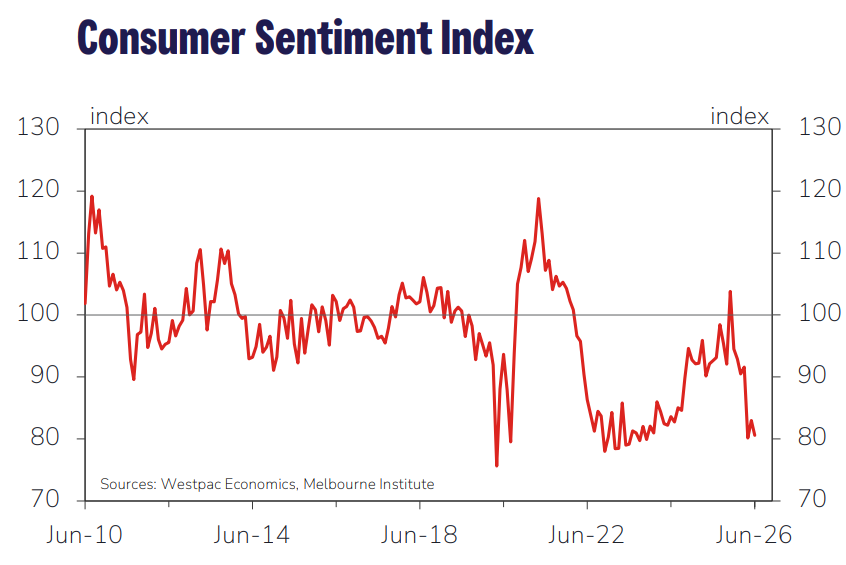
NAB has joined the CBA, predicting that the RBA will begin cutting rates in the first half of next year, prompted by economic headwinds such as historically weak consumer sentiment, falling home prices, the war in Iran, and the federal government’s controversial budget tax reforms.
NAB forecasts that the official cash rate will settle at 3.60% by the end of 2027, implying that the RBA will reverse this year’s three rate cuts and return the official cash rate to its February level.
“The next move in the cash rate is likely to be down, but the timing is uncertain”, NAB chief economist Sally Auld and the bank’s head of Australian economics, Gareth Spence, said.
“Should activity data weaken more quickly than anticipated, the RBA will cut earlier than we currently forecast”.
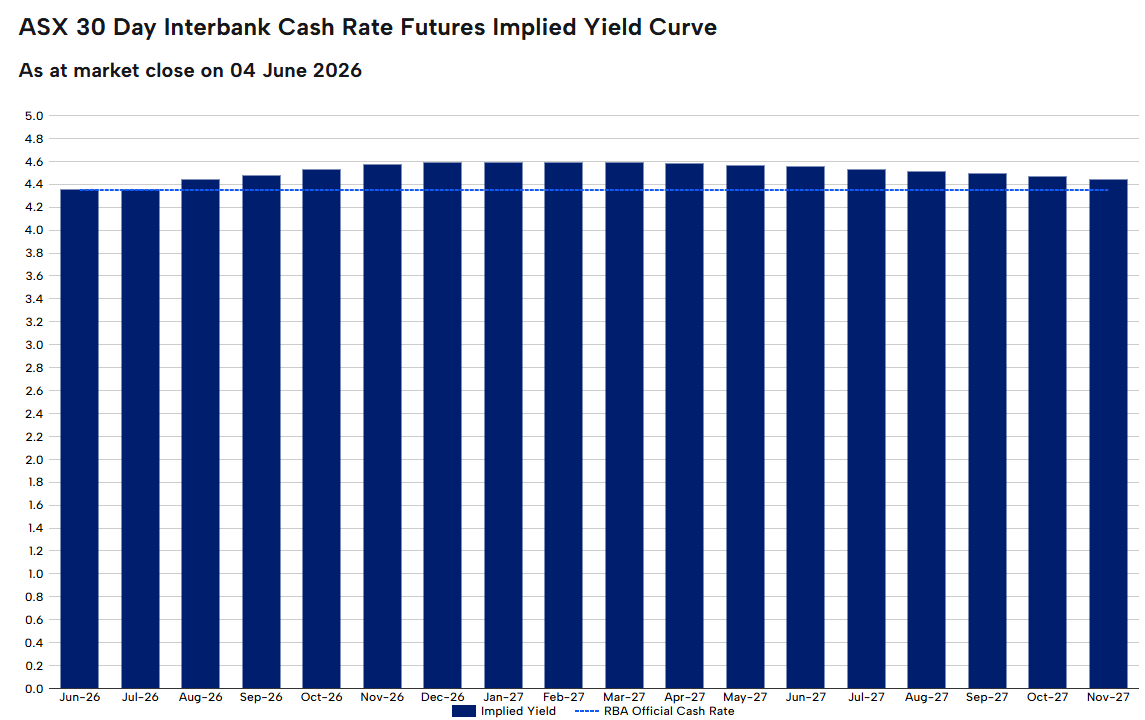
For now, Australia’s interest rate futures market does not share the view of CBA and NAB. It is still forecasting that the RBA will deliver one more interest rate hike this year.
I share a similar view to NAB and CBA that we have likely seen the end of rate hikes.
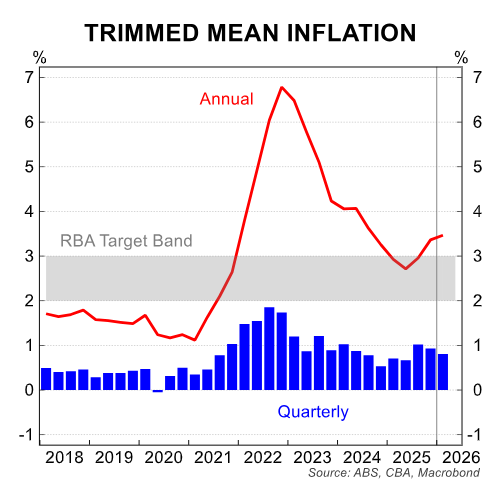
While inflation remains above the RBA’s 2% to 3% target band, it would likely take solace in the fact that the housing market has stalled, with values now trending lower across the combined capital cities.
Australia’s unemployment rate is also rising faster than the RBA had forecast, with the economy entering another per capita recession following a 0.1% decline in per capita GDP in the March quarter.
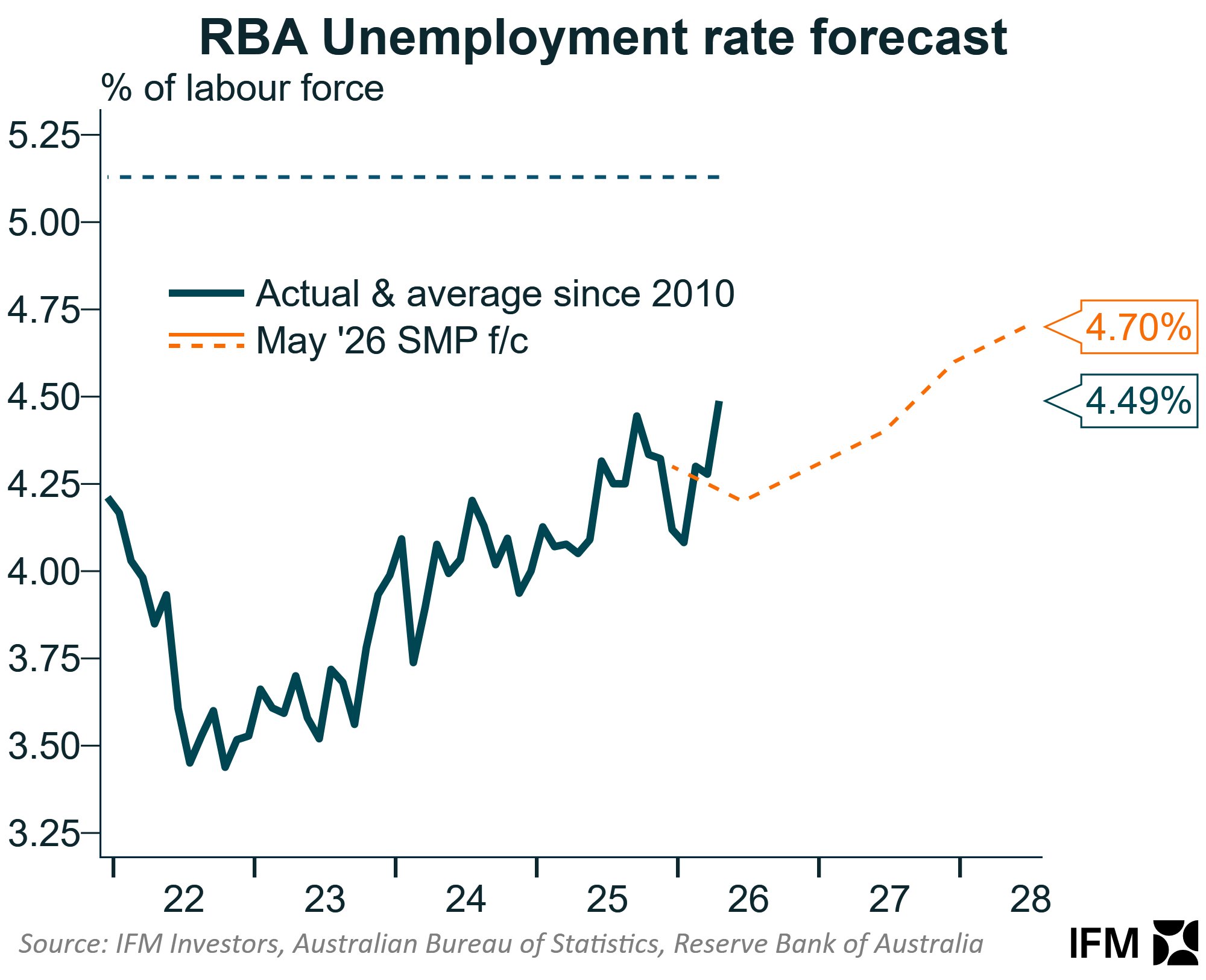
The data, therefore, suggests that the economy is softer than the RBA had anticipated and that monetary policy is already restrictive.
For months, I have argued that the RBA would tighten too much this year and then cut next year as the economy teeters on the brink of recession.
NAB and CBA seem to share a similar view.
