
Australian tenants are facing deteriorating conditions, with Cotality’s results for May showing accelerated rental growth and vacancy rates returning to record lows.
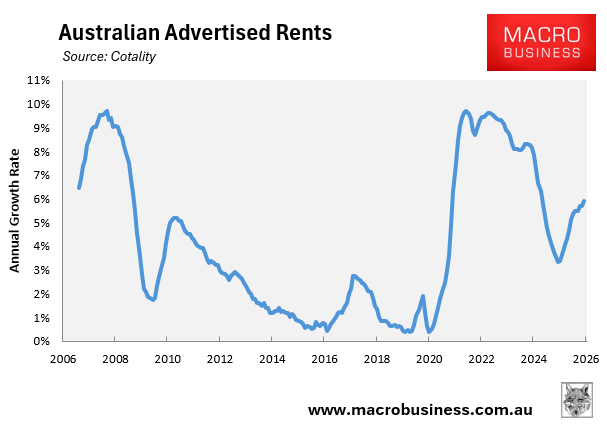
Annual advertised rental growth in Australia rose to 5.9% in May, the largest annual increase since September 2024.
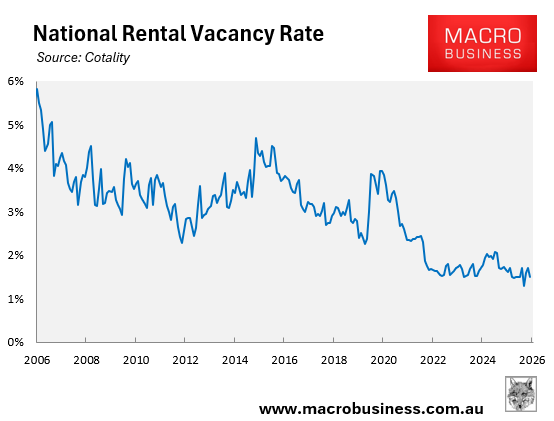
The increase in advertised rents comes as the national rental vacancy rate fell to a historical low of just 1.5%.
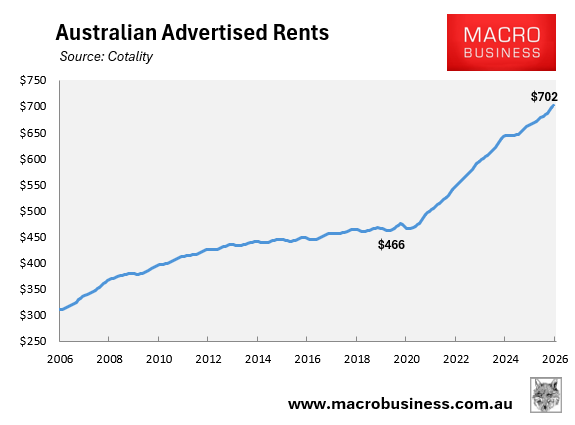
National advertised rents have now risen by 51% since the end of 2019, adding around $11,200 to the annual cost of renting for the median Australian tenants.
Cotality research director Tim Lawless stated that the surging rents are likely driving tenants into group accommodation to save on costs:
“Upward pressure on rents is likely to persist due to very low vacancy rates. The national vacancy rate dipped to 1.5% in May, in line with the record lows seen in 2022 and 2023, when the catch-up phase of overseas migration pushed vacancy rates lower”…
“With the cost of renting up about $204 a week over the past five years, renters are likely to be at or approaching a ceiling on how much they can pay, potentially driving structural changes in rental demand”.
“While the data is hard to come by, it’s likely rental households are becoming larger as group households and multigenerational households become more common”.
Cotality’s latest weekly market indicators report suggests that the rental market continues to tighten.
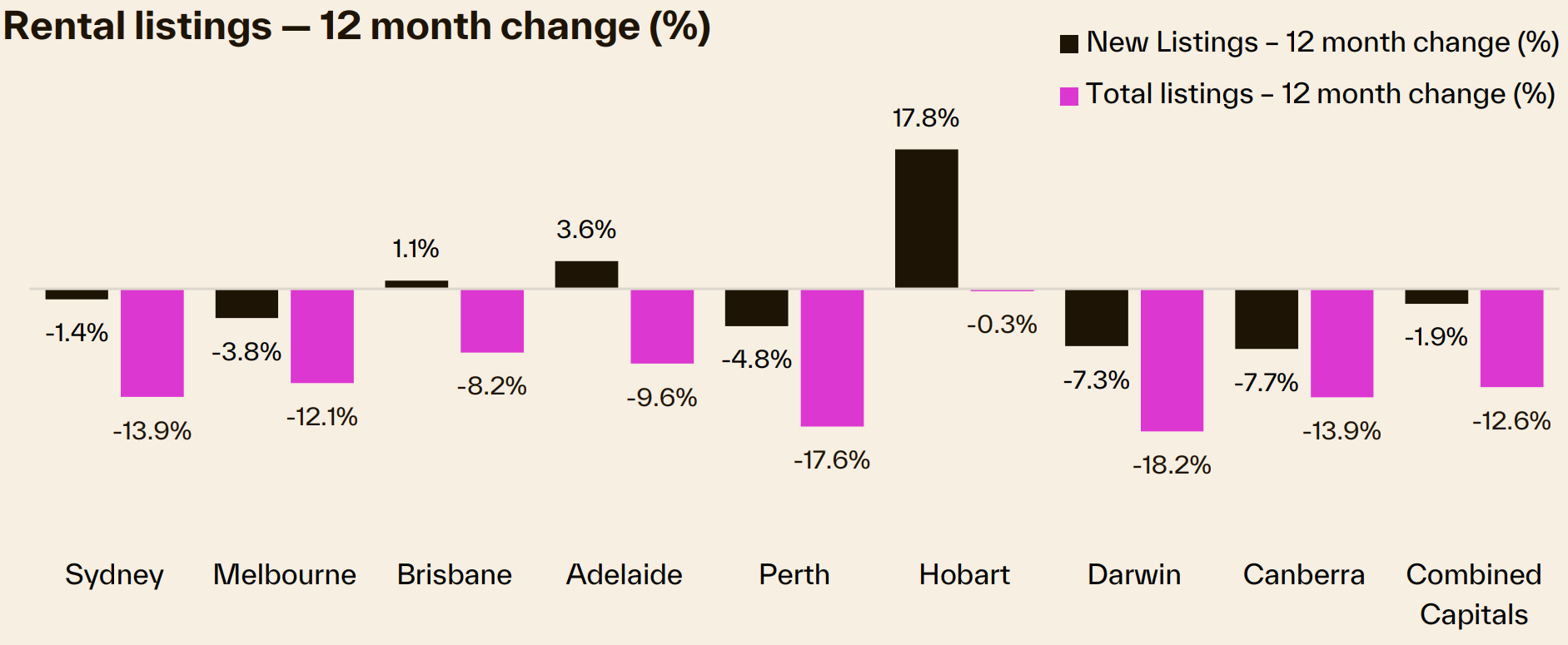
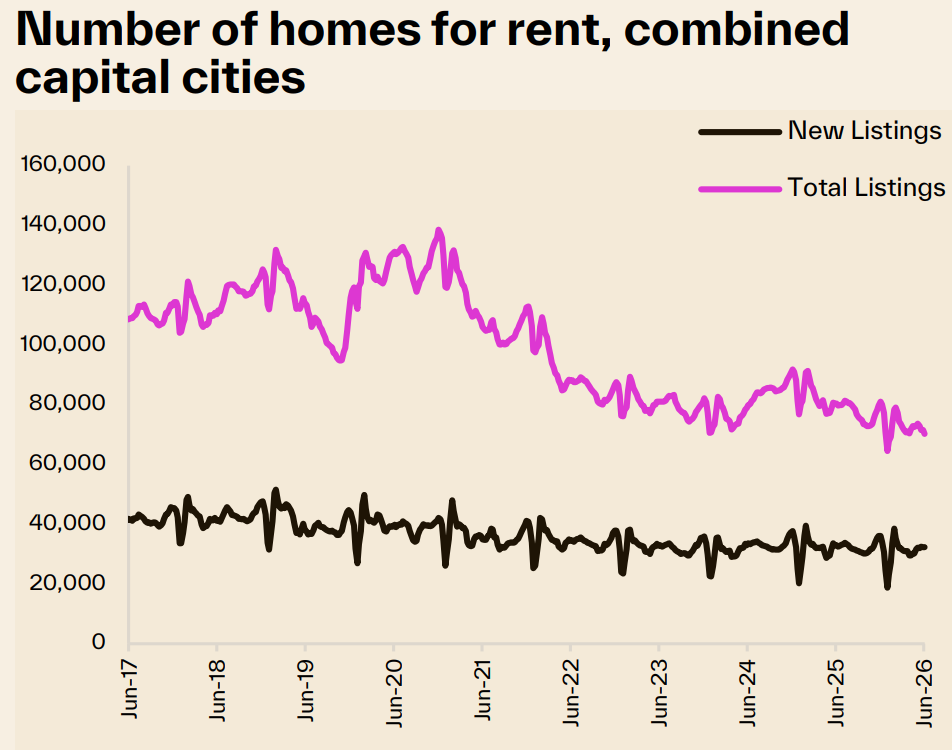
As illustrated below, rental listings across the combined capital cities have fallen by 12.6% over the past 12 months, with every capital city market experiencing falls:
Source: Cotality
The following chart, which plots listings at the combined capital city level, shows that total listings are tracking at their lowest level in recorded history for the month of June:
Source: Cotality
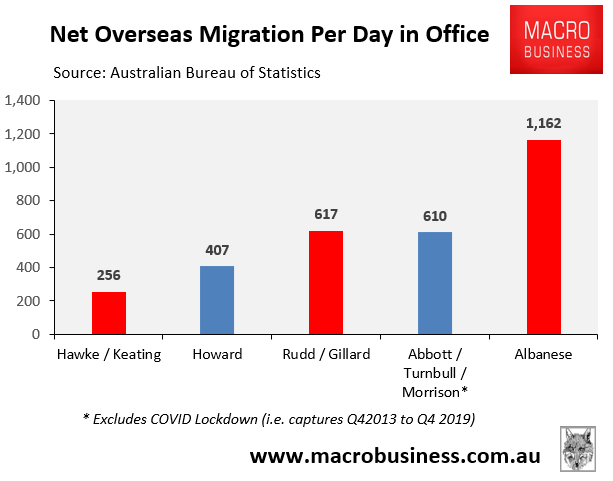
The rental crisis in Australia is being fueled by recent excessive levels of net overseas migration, which has overwhelmed the nation’s rental market with around 1.3 million more people seeking accommodation.
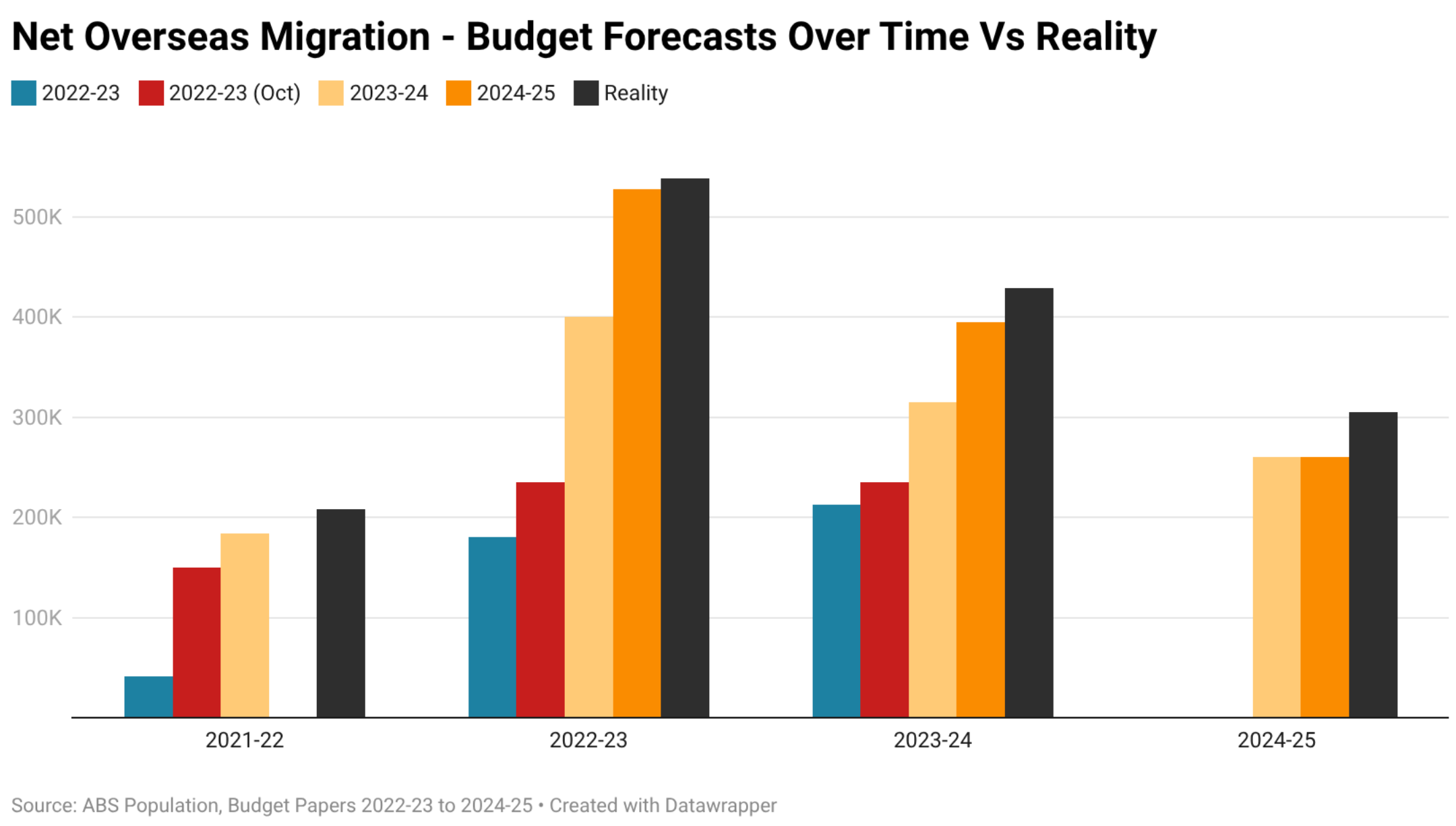
Recent federal budgets have dramatically underestimated the strength in net overseas migration:
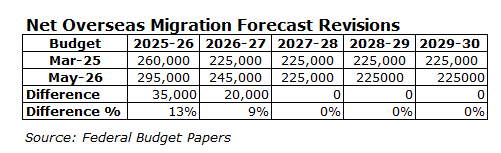
Last month’s federal budget raised net overseas migration by 55,000, which inevitably increases demand pressure on the nation’s housing market.
Meanwhile, the supply side of the housing market remains bottlenecked by soaring input costs, labour shortages, and high interest rates.
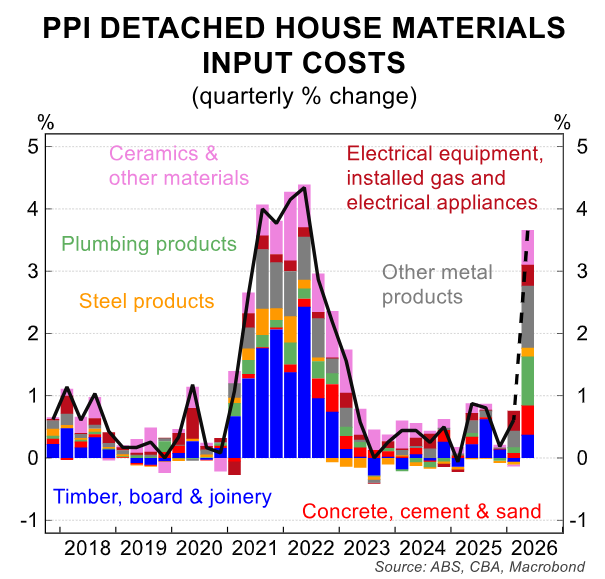
Accordingly, CBA has downgraded its forecast for dwelling construction following the war in the Middle East and the latest uplift in input costs.
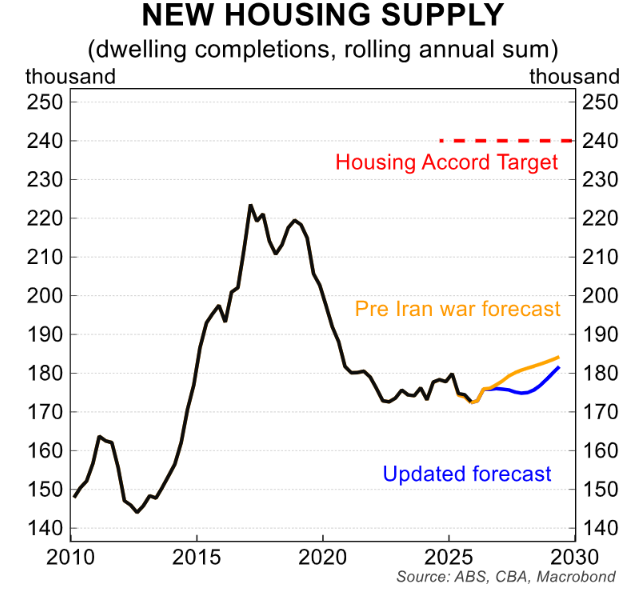
So long as the federal government continues to run an excessive migration program in a supply-restricted market, Australia’s rental crisis will continue to deteriorate.
