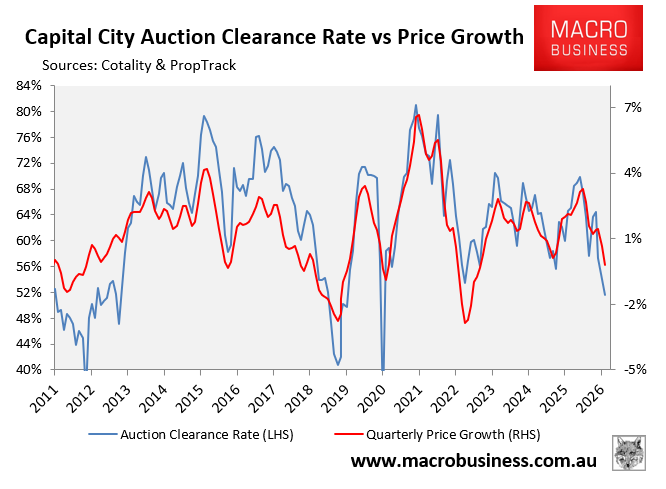
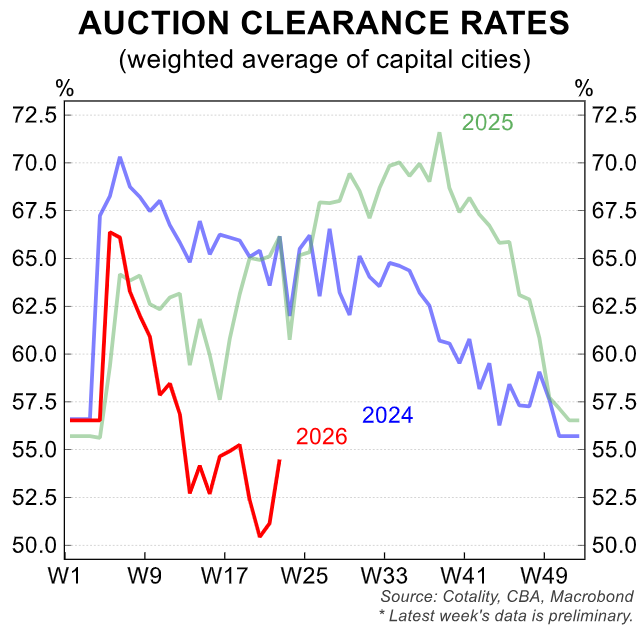
May 2026 marked a new low-water mark for Australia’s auction market, with the national clearance rate plunging to an average of 52%, the lowest result since the depths of the COVID-19 pandemic in April 2020.
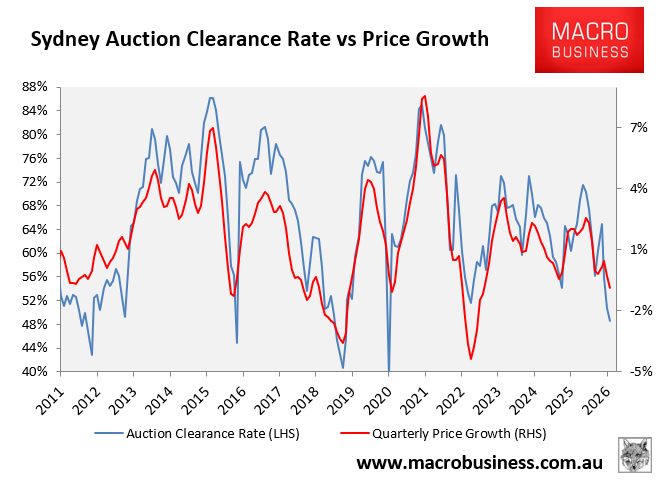
The decline in the national clearance rate has been driven by Sydney, which recorded an average rate of just 49%, also the lowest result since April 2020.
Melbourne’s auction clearance rate in May also declined to 54%, the equal lowest result since July 2022.
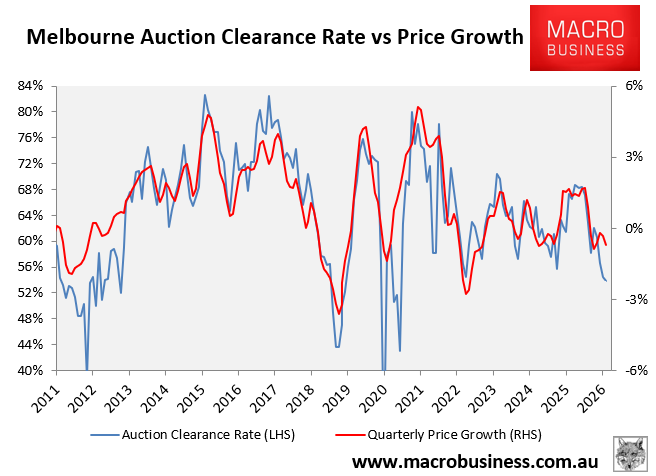
As illustrated clearly above, auction clearance rates have historically been strong leading indicators for price growth, suggesting more downside ahead.
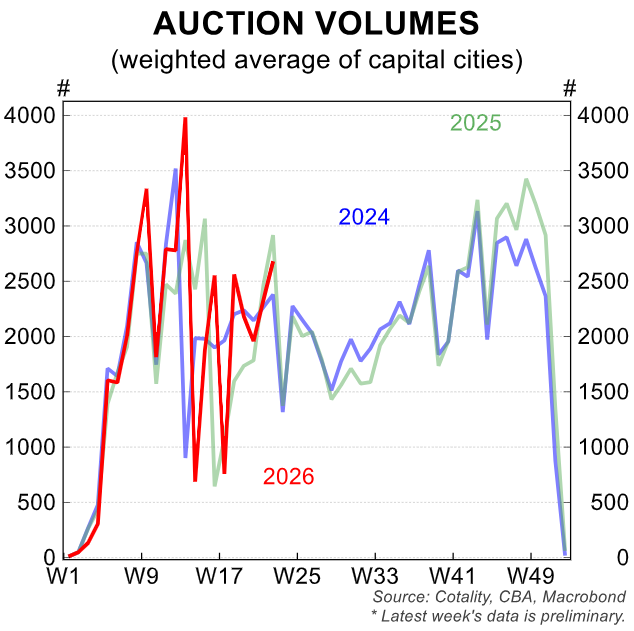
Analysis released this week by CBA showed that auction volumes nationally are running at high levels compared to the same time in 2024 and 2025:
However, CBA shows that auction clearance rates are tracking way below both 2024 and 2025, suggesting that demand may have collapsed:
Sydney’s and Melbourne’s auction markets, in particular, are weak:
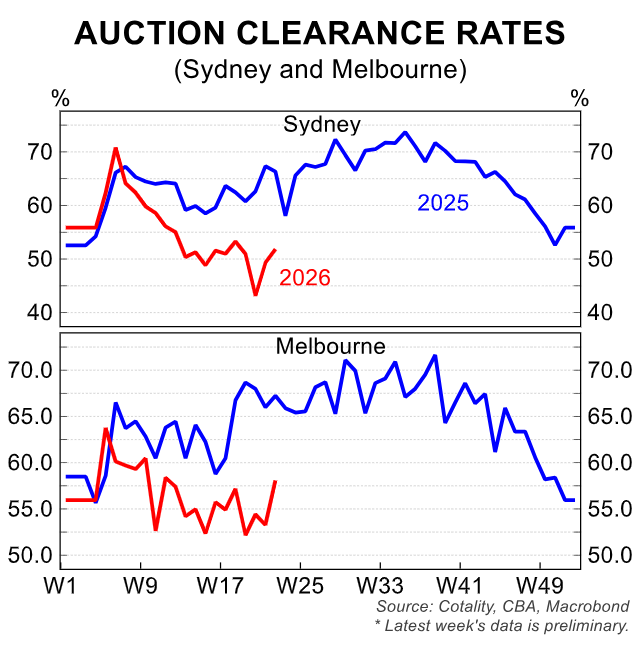
CBA noted that clearance rates “declined after housing tax policy changes were announced in the 2026-27 Commonwealth Budget”.
Moreover, CBA noted that price declines have been sharpest in Sydney and Melbourne suburbs with more expensive housing:
“Declines in housing prices have tended to be largest in areas with higher median house prices. Three-month housing price declines have been the largest in Melbourne’s Inner and Outer East, and Sydney’s Eastern and North Western suburbs”.
These suburbs are priced outside the federal government’s 5% first-home buyer deposit scheme caps and have also been most heavily impacted by the rise in mortgage rates and the resulting reduction in borrowing power.
“The decline comes amid three interest rate increases so far in 2026, higher oil prices and lower consumer confidence, and proposed tax policy changes for housing investors in the 2026-27 Commonwealth Budget”, CBA noted.
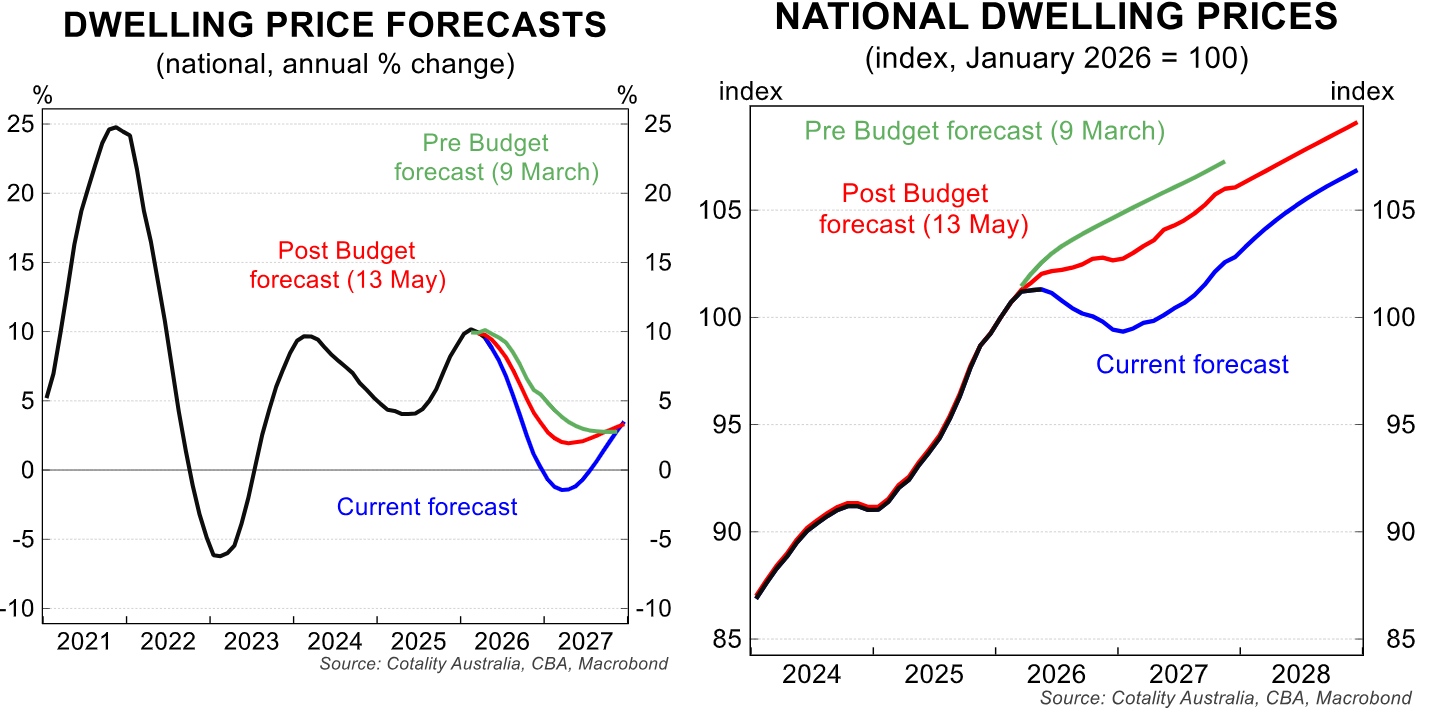
“We expect softness in the housing market to continue in the near-term as the impact of the tax policy changes, higher interest rates and lower confidence continues to push price growth lower”.
Indeed, CBA this week downwardly revised its forecast for dwelling value growth amid the “multiple headwinds”: