
Australia’s housing market is entering a bear market driven by Sydney and Melbourne.
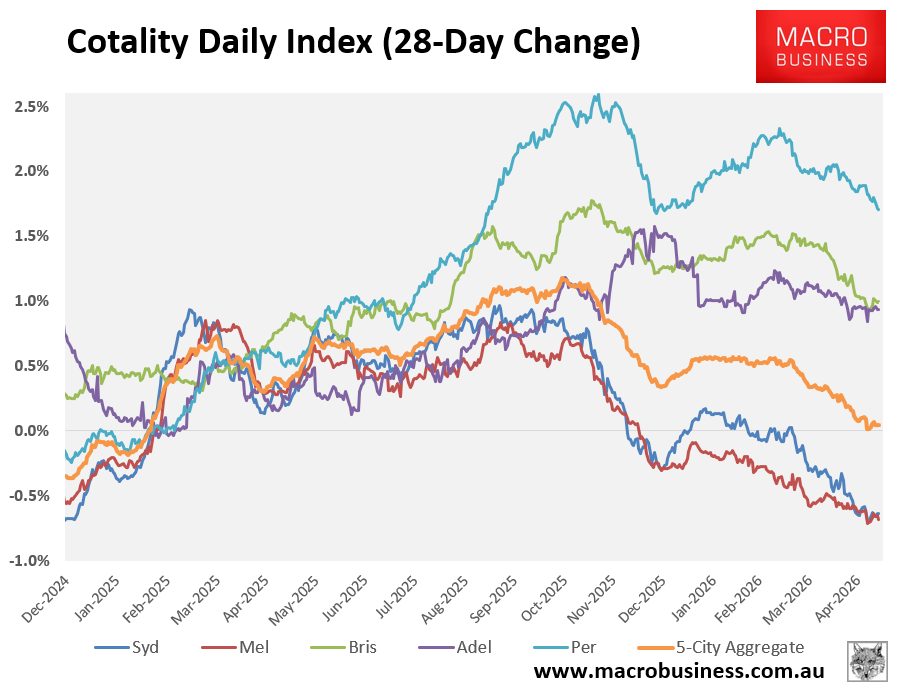
Price growth has stalled, and auction clearance rates have declined to multi-year lows. Sales volumes have also fallen below the five-year average:
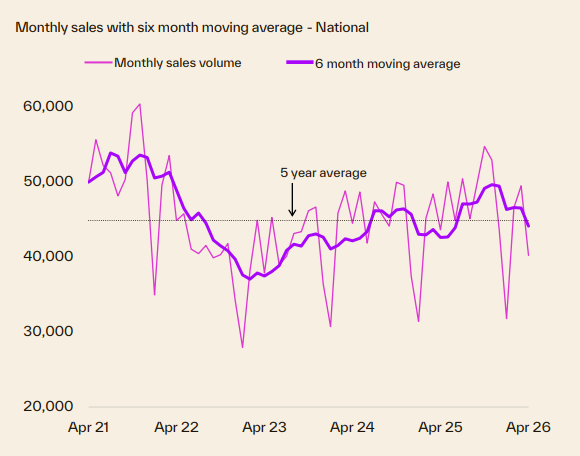
Source: Cotality
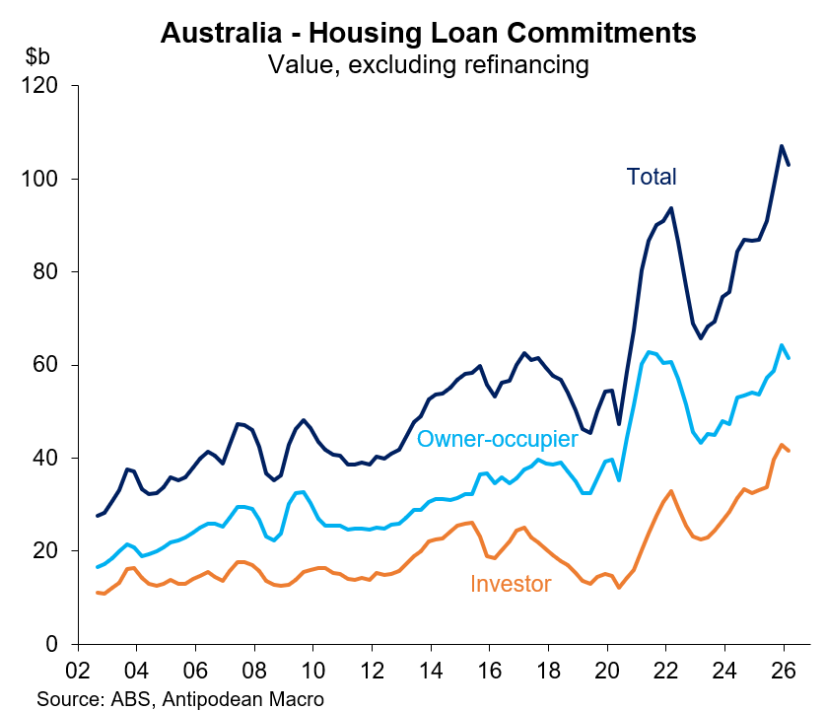
On Wednesday, the Australian Bureau of Statistics (ABS) released data on mortgage commitments, showing that the value of new housing loan commitments in Australia fell by 3.8% in the March quarter, with both owner-occupiers and investors posting declines:
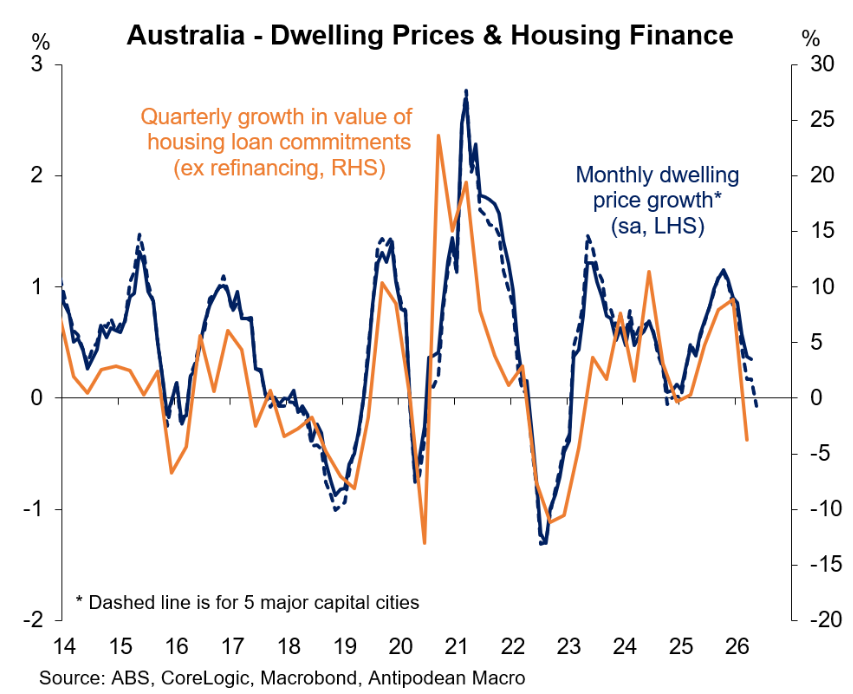
As illustrated below by Justin Fabo from Antipodean Macro, the decline in new housing loan commitments in the March quarter has occurred alongside weaker housing price growth:
More downside is still to come. Mortgage rates have yet to fully reflect the Reserve Bank of Australia’s (RBA) three consecutive interest rate hikes. And the interest rate futures market forecasts that the Reserve Bank will raise rates one to two more times by the end of this year.
Meanwhile, the federal budget’s changes to negative gearing and the capital gains tax (CGT) are certain to lower investor demand and place downward pressure on home prices.
Indeed, the federal budget papers assume that the combined changes to negative gearing and CGT will lead to a modest, single‑digit decline in national home prices over the next two years — roughly 2% to 4% below the baseline forecast.
The impact is front‑loaded, concentrated in 2026–27, as investor demand for existing dwellings falls.
Finally, the RBA forecasts that unemployment will rise over the period ahead, which will, other things equal, lower housing demand.
The most significant price decline recorded by Cotality over the past 40 years was in 2017-19, when values fell by 8.2% amid credit tightening following a period of solid growth. Values also fell by 8.1% over 9 months in 2022-23 as interest rates rose from emergency lows post-pandemic:
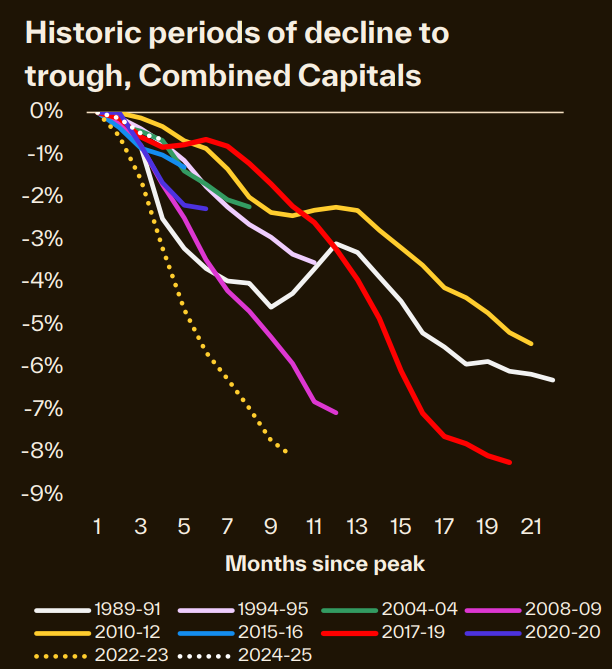
Source: Cotality
Given the Australian housing market’s record overvaluation relative to incomes and the headwinds cited above, values look poised to record their largest decline in at least 40 years.
