
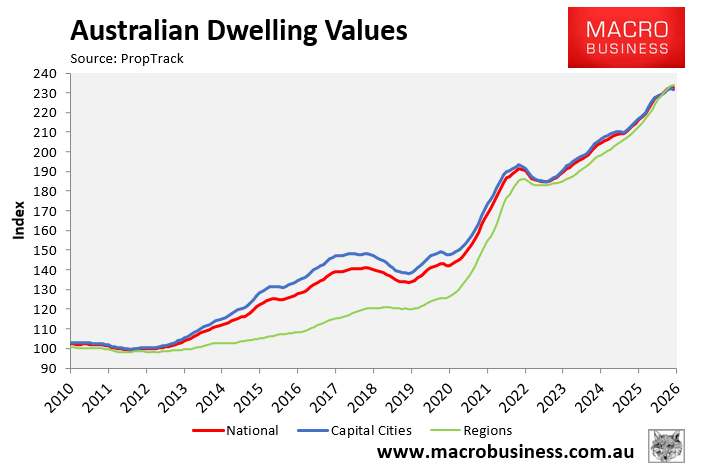
Australia’s dwelling values surged by 14% over the past two years, according to Proptrack, although they declined by 0.1% in April.
Much of this growth has been driven by investor demand.
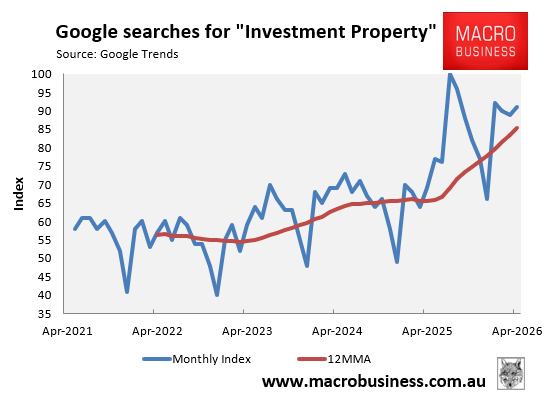
In the second half of 2025, Google searches for “investment property” surged, but they slowed in the early months of 2026, albeit remaining strong.
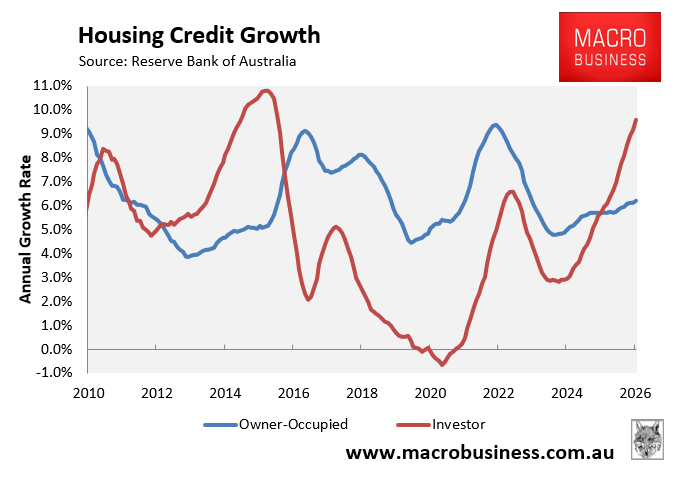
Meanwhile, the latest credit aggregates data from the Reserve Bank of Australia (RBA) show that annual investor mortgage growth hit its highest level since September 2015 at 9.6%, easily exceeding the 6.2% growth in owner-occupier mortgages.
Looking ahead, investor mortgage growth is likely to slow sharply.
First, the Reserve Bank of Australia (RBA) has delivered three consecutive interest rate hikes, with one to two more hikes expected before the end of 2026.
Second, next week’s federal budget is expected to replace the capital gains tax (CGT) discount with the less generous pre-1999 inflation-indexation method.
The Albanese government is also expected to ban negative gearing on existing dwellings going forward, while retaining it for newly constructed dwellings – effectively implementing the policy it took to the 2019 federal election.
The combination of higher interest rates, less generous CGT rules, and the ban on negative gearing for established homes is highly likely to result in significantly lower investor demand in the future and, as a result, lower house price growth.
As Domain illustrates below, investor demand has historically been negatively correlated with first home buyer (FHB) demand, meaning investors have crowded out FHBs:
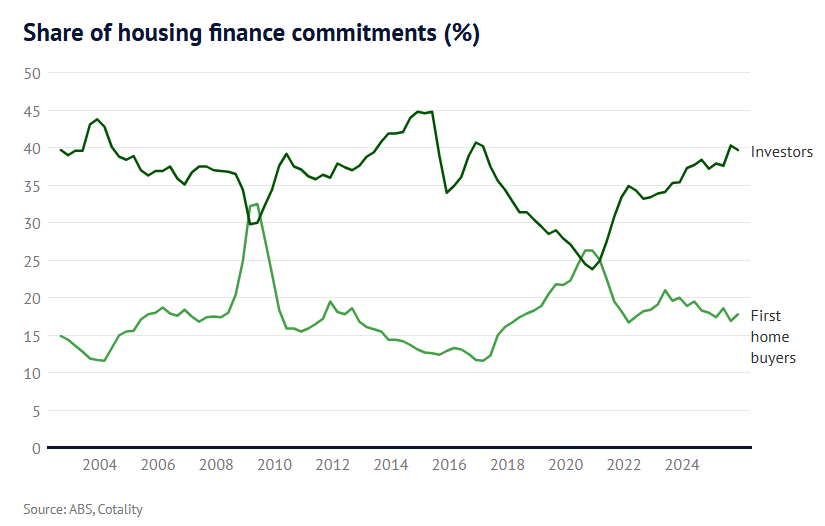
As a result, the tax changes should reduce investor demand, which will increase participation from FHBs and raise the homeownership rate.
