
Stephen Johnson from The Nightly argues that Melbourne housing is at “bargain prices”. Why? Because Melbourne is the only major Australian city where house prices have barely risen since 2021 — up just 5.8% — leaving many suburbs still at “pre‑COVID” price levels.
This contrasts with Brisbane, Perth, and Adelaide, where values have almost doubled over the same period.
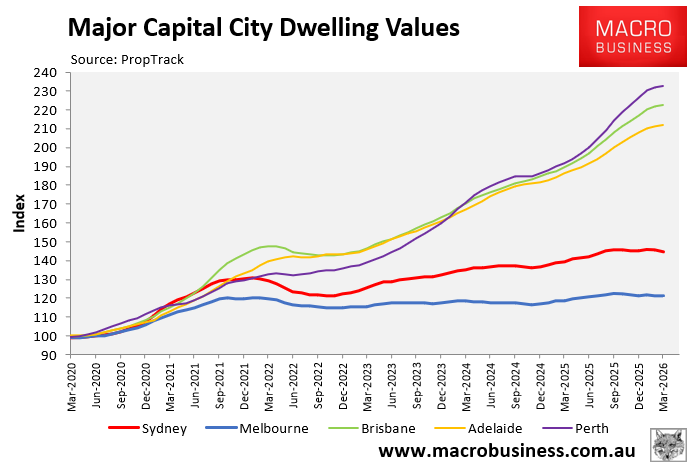
Johnson notes that Melbourne home prices peaked in March 2022, just before the RBA’s rapid tightening cycle. The city’s lockdowns, population outflows, and slower recovery have kept demand softer than in other capitals.
Investors — especially those with holiday homes on the Mornington Peninsula — are selling due to Victoria’s new annual land tax (flat $975 on land values as low as $50k, until 2033) and fears of federal government CGT discount changes and negative gearing reforms in the upcoming Budget.
This uncertainty has triggered panic selling in prestige postcodes like Sorrento and Portsea.
As a result, Melbourne is the only capital where wage growth has outpaced property price growth since COVID, with the median price rising far less than the 19.8% increase in full‑time earnings.
This makes Melbourne uniquely affordable relative to incomes.
The following chart, which tracks Melbourne’s median house price against the other capital cities since the early 1970s, shows that relative affordability is tracking at its most favourable level since the early-1980s:
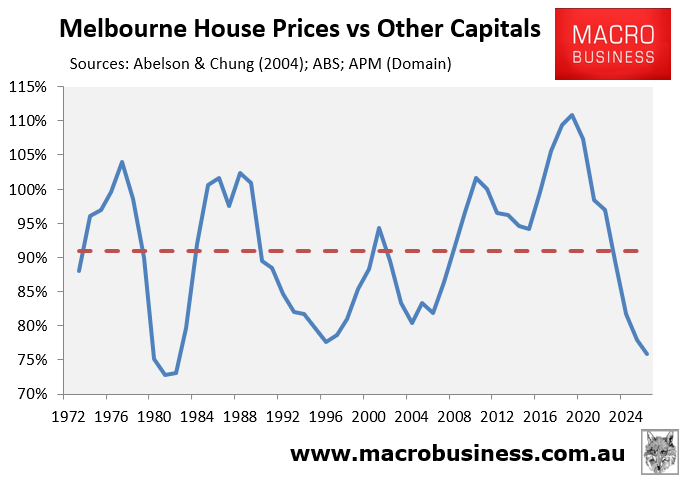
Based on this chart alone, it would appear that Melbourne housing is indeed a “bargain”.
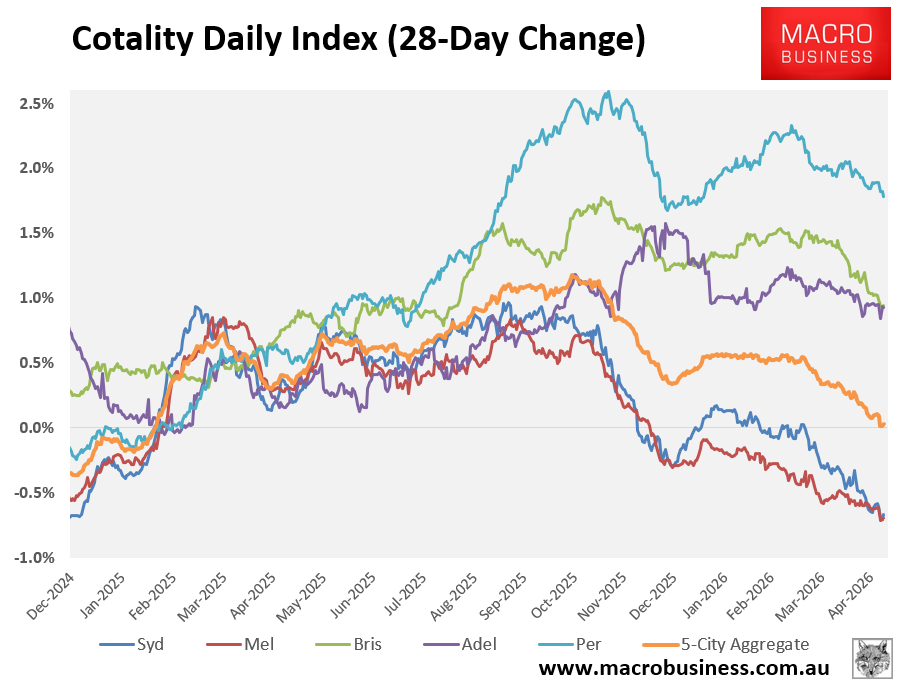
That said, Melbourne dwelling values continue to decline at the equal fastest pace in the nation, according to Cotality:
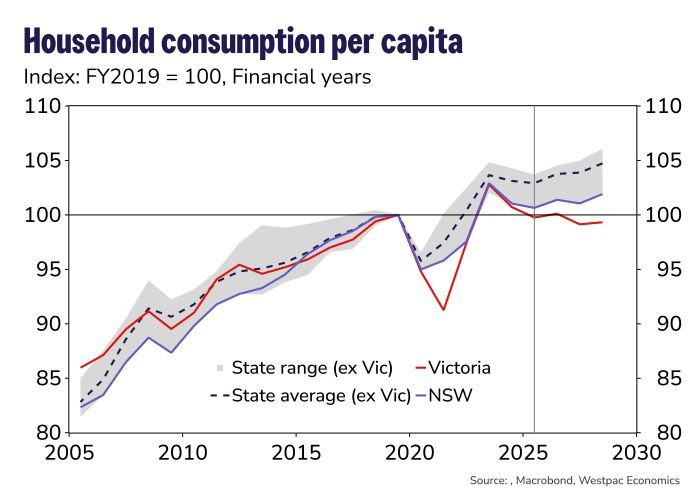
The latest state forecasts from Westpac also show that Victorian household consumption per capita is expected to decline over the next few years:
Victoria’s per capita gross state product is also forecast to decline:
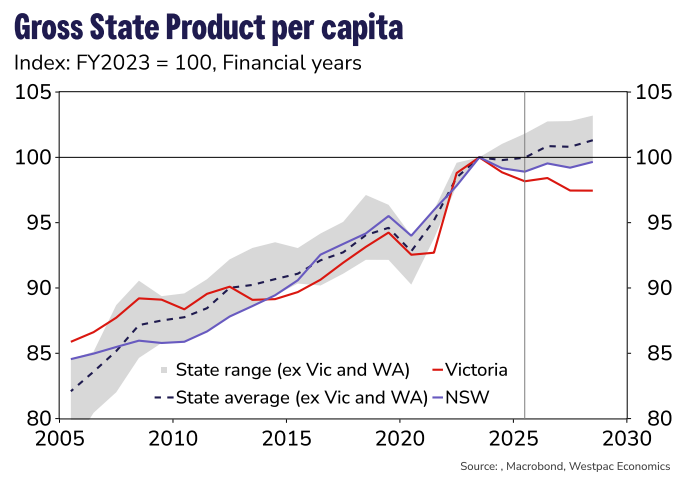
Sadly, Victoria has become an economic sinkhole. It is overregulated, overtaxed, drowning in debt, and has no competitive advantages over the other main states.
Reflecting this outlook, Cotality’s Tim Lawless told the Nightly that Melbourne’s housing market is “more sensitive and fragile” due to weaker economic fundamentals.
Thus, while Melbourne housing is a relative “bargain”, its price outlook remains poor due to the city’s poor economic fundamentals.
