
Advertisement
The budget papers show that the Treasury’s base case is that the inflation rate will ease to 2.5% in 2027, after peaking at a forecast 5% in mid-2026. This is based on expectations that the price of crude oil will fall.
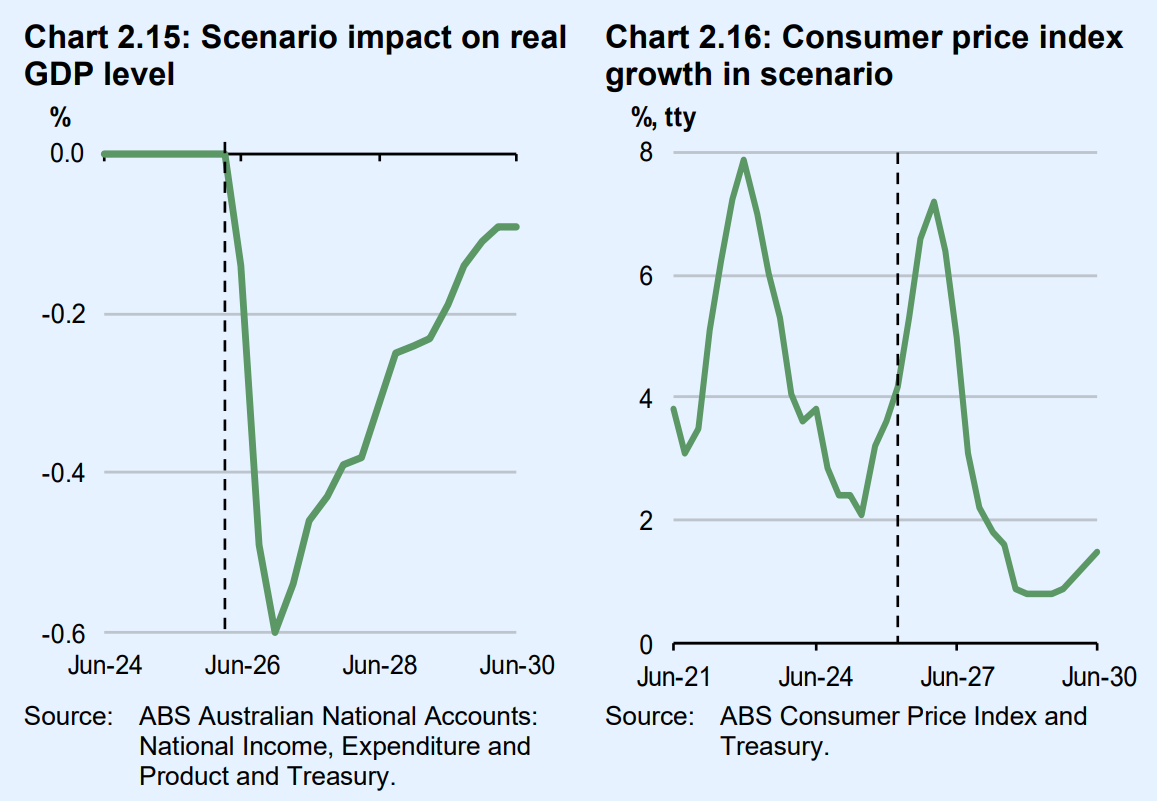
However, the Treasury’s worst-case scenario modelling suggests that inflation will rise above 7% if a protracted war in the Middle East pushes crude oil prices above $US200 a barrel in the September quarter.
In turn, such an outcome would reduce real GDP growth by 0.5% over the next two financial years and result in an official unemployment rate of 5% in 2027-28.
The full text of this article is available to MacroBusiness subscribers
Cancel at any time through our billing provider, Stripe
About the author

Leith van Onselen is Chief Economist at the MB Fund and MB Super. He is also a co-founder of MacroBusiness.
Leith has previously worked at the Australian Treasury, Victorian Treasury and Goldman Sachs.
Advertisement