
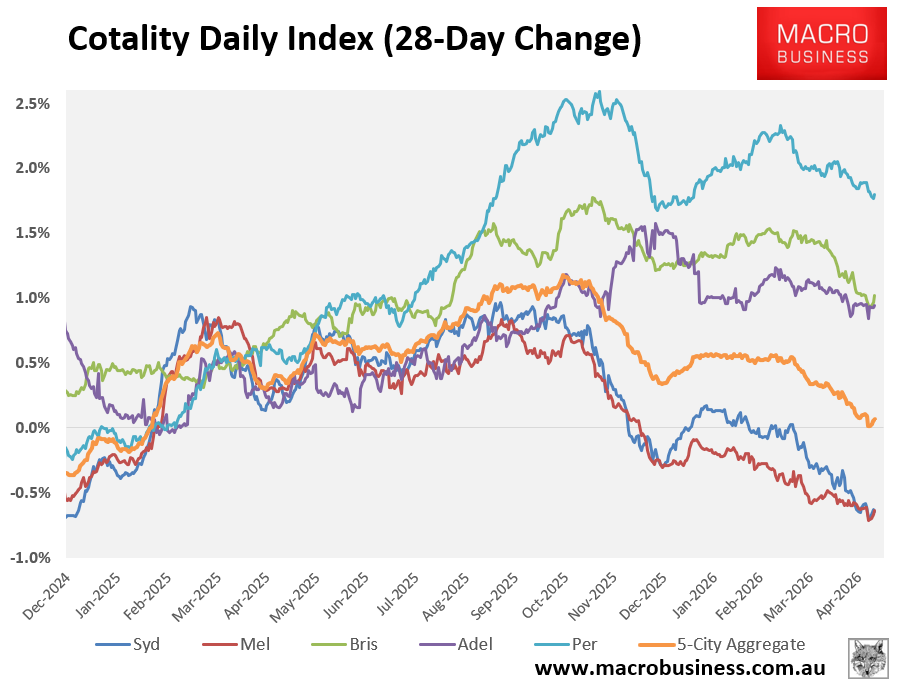
According to Cotality, Sydney and Melbourne, Australia’s two largest housing markets, are locked in correction mode and have experienced several months of declining values.
Leading Sydney auctioneer Tom Panos described the conditions as the “toughest in seven years” in his weekend market wrap.
“I haven’t seen this marketplace as challenging as this since probably that period of 2017 to 2019. This is the hardest I’ve seen the market in six or seven years. No question about it”, Panos said.
“I’m actually even seeing it now in the lower price points. They are also getting some sort of resistance”.
Panos pointed to the pending changes to negative gearing and capital gains taxes in Tuesday’s federal budget, which have created a wave of uncertainty, paralysing buyers.
“It is the last Saturday before we have the biggest changes, the most dramatic changes, that we have seen probably for many people, particularly young people, in living memory”, Panos said.
“So this time next week, ladies and gentlemen, we’ll be operating in a new world of real estate taxation laws”.
“And I can tell you today’s results, 2 out of 10 [auctions sold], were not good. It’s indicative of the fact that many buyers are sitting back and they’re waiting”.
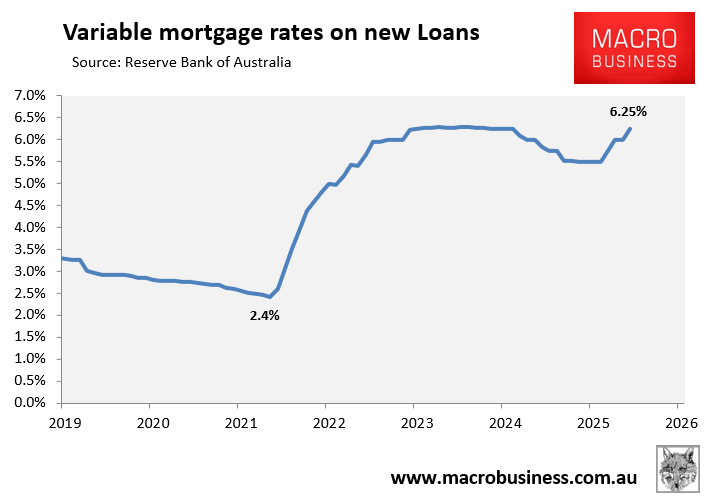
Panos also believes that last week’s third consecutive interest rate hike from the Reserve Bank of Australia (RBA) has broken the market.
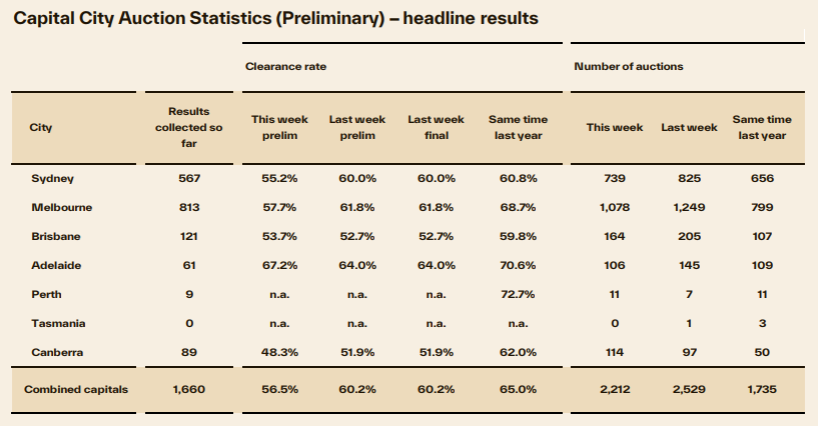
The broader auction results were poor. Cotality recorded a national preliminary auction clearance rate of only 56.5%, the second-weakest result of the year, following the seasonally impacted Easter long weekend.
Results were weak across the three major capital city markets, with each recording preliminary clearance rates in the 50s.
Source: Cotality
With the RBA forecast to deliver at least one more rate hike this year, and possibly two, it is difficult to see how the market will recover.
The following chart from Shane Oliver summarises the fundamental problem facing the housing market:
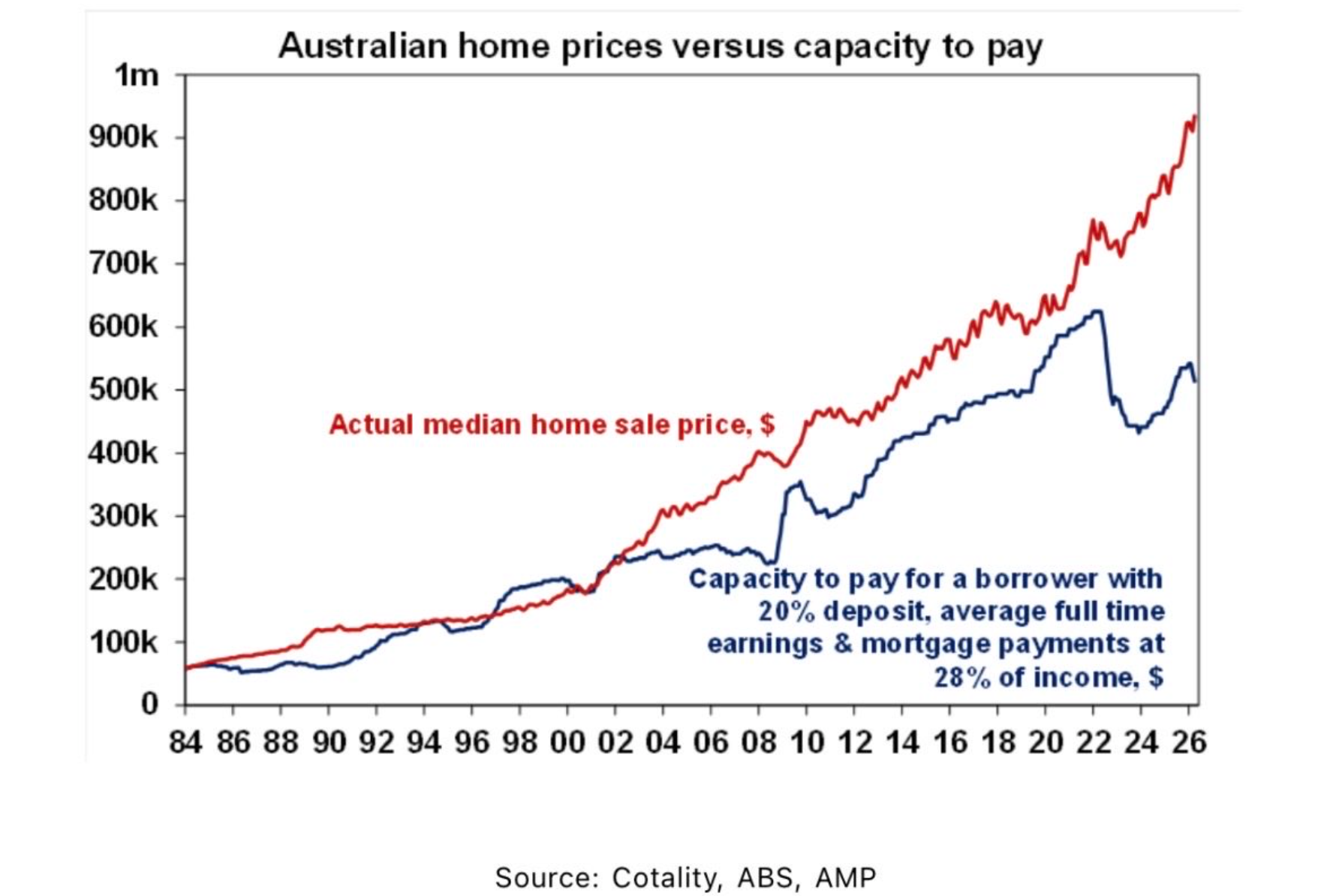
Australian housing values have grown beyond what buyers can afford at prevailing interest rates.
Therefore, as interest rates rise, home prices nationally will fall.
The jaws must close, with the red line falling towards the blue line. Home prices must converge with borrowing capacity.
