
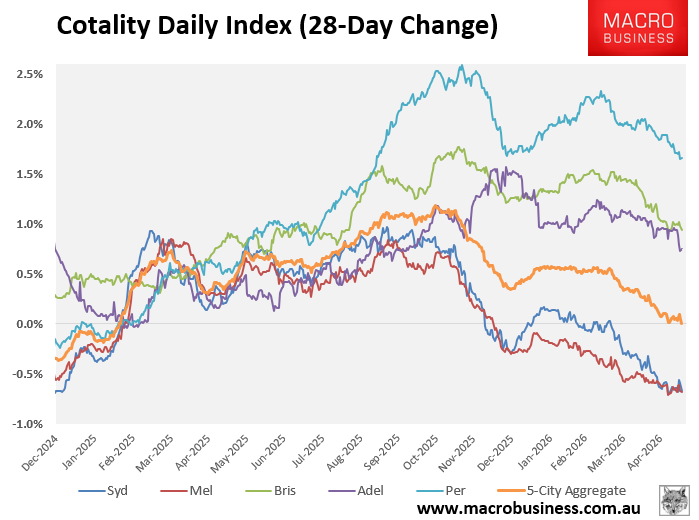
After teetering for weeks, Cotality’s daily dwelling values index, which tracks home prices across the five major capital city markets, finally hit ‘donut day’ on Sunday.
That is, the 5-city aggregate index recorded 0% growth over the past 28 days, as illustrated below, driven by 0.7% price declines across both Sydney and Melbourne:
Home values nationally will now very likely enter a prolonged period of negative growth, driven by a ‘perfect storm’ of factors.
First, home values nationally have completely detached from the fundamentals of borrowing capacity, as illustrated below by Shane Oliver from AMP:
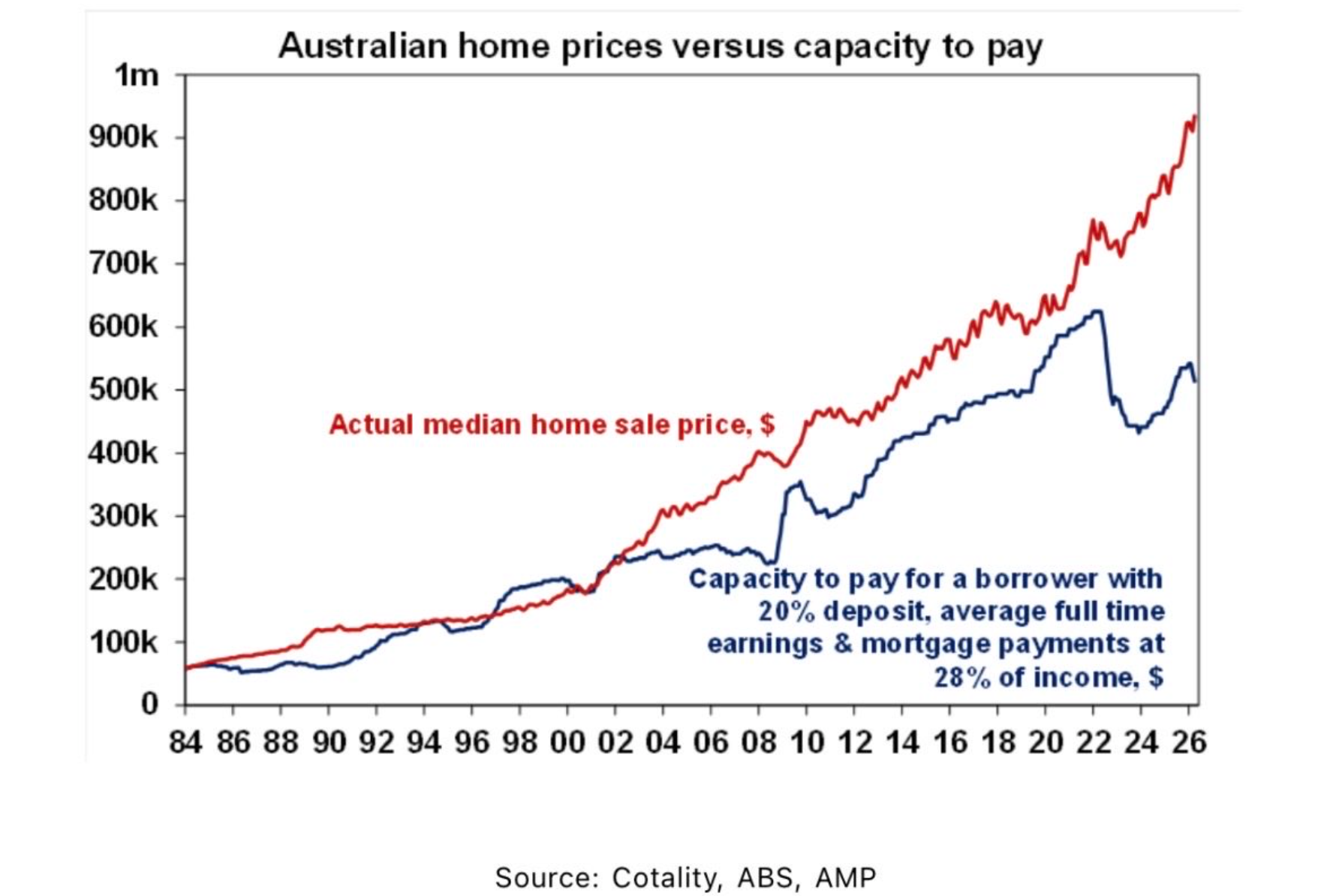
The above chart from Oliver is a few months old and has not captured the past two rate hikes from the Reserve Bank, nor the expected one or two more hikes expected by the end of the year, which will lower the blue line.
To cut a long story short, home prices need to fall to bridge the gulf with the capacity to pay.
Second, the federal budget’s changes to negative gearing and capital gains taxes are certain to reduce investor demand, removing a key growth driver from the housing market.
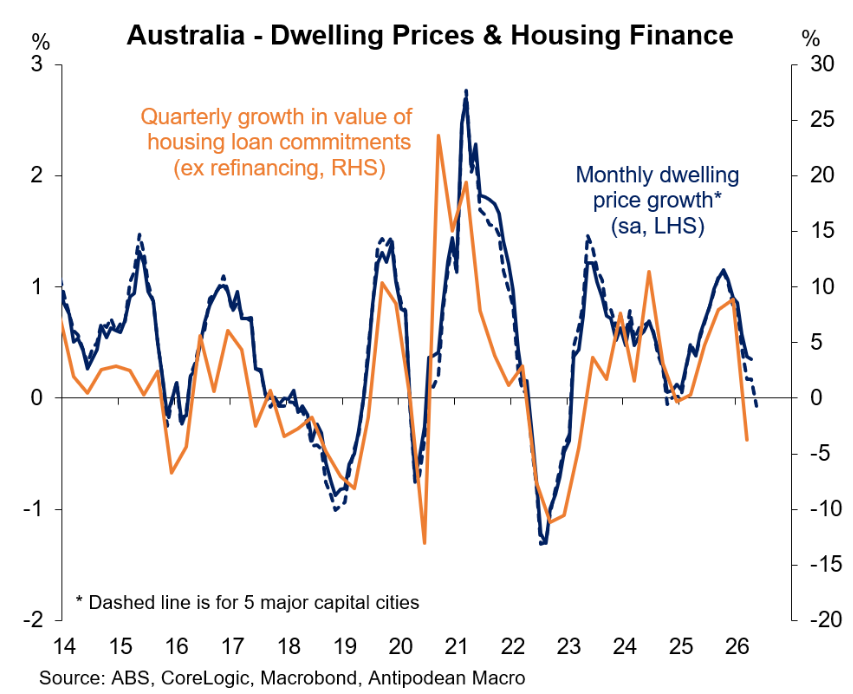
Finally, the nation’s unemployment rate is likely to increase owing to higher interest rates and the global energy shock, putting downward pressure on home prices.
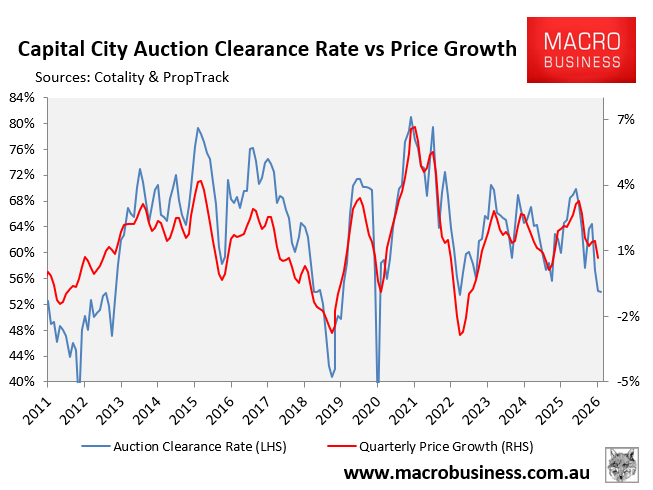
Already, the nation’s auction clearance rate has fallen sharply, a metric that has historically been one of the strongest leading indicators of prices.
The number of home sales has also fallen below the 5-year average in both monthly and six-month average terms, suggesting softer buyer demand:
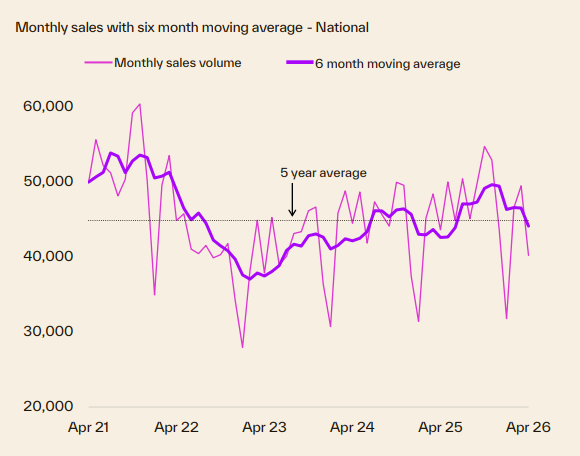
Source: Cotality
In short, Australia’s house price correction has just begun.
In my view, it is likely to be the largest decline in 40 years, exceeding the 8.2% peak-to-trough decline recorded between 2017 and 2019 amid the credit tightening surrounding the banking royal commission and concerns about Labor’s proposed reforms to negative gearing and the capital gains tax, which have now finally come to fruition.
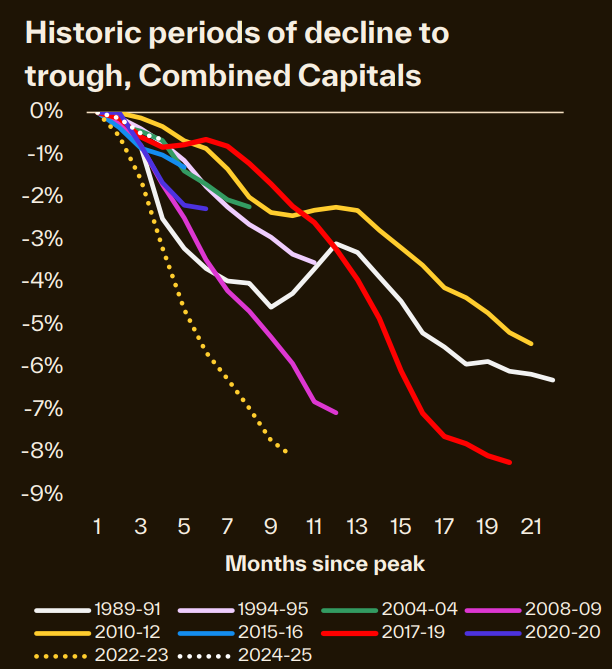
Source: Cotality
It is only a matter of time before the losses recorded in Sydney and Melbourne broaden to the other markets.
