
Gas cartel central is freaking out. AFR.
Resources Minister Madeleine King didn’t attend the Australian Energy Producers conference in Adelaide this week, but her ears must have been on fire rather than merely burning.
The gas industry escaped Jim Chalmers’ fervent budget wish to impose a big new tax on exporters only because of Anthony Albanese’s fear of the harm this would do to Australia’s reputation as a reliable supplier to Asian LNG customers and investors.
Santos chief executive Kevin Gallagher says “supply will start to dry up and you will get mass panic because the manufacturers will not be able to buy gas”.
“The irony is that despite long-running concerns about imminent shortages of domestic gas, the east coast is well supplied at the moment.”
Santos is the most evil company in Australia, and that is saying something
It is the primary cause of the Australian East Coast inflation problem, industrial hollowing out, collapse in productivity, real income shrinkage and falling living standards.
That’s quite an achievement for the firm. How did it do it? Let’s go way back to GFC times.
As Santos worked toward approving its company-transforming Gladstone LNG project at the start of this decade, managing director David Knox made the sensible statement that he would approve one LNG train, capable of exporting the equivalent of half the east coast’s gas demand, rather than two because the venture did not yet have enough gas for the second.
“You’ve got to be absolutely confident when you sanction trains that you’ve got the full gas supply to meet your contractual obligations that you’ve signed out with the buyers,” Mr Knox told investors in August 2010 when asked why the plan was to sanction just one train first up.
“In order to do it (approve the second train) we need to have absolute confidence ourselves that we’ve got all the molecules in order to fill that second train.”
But in the months ahead, things changed. In January, 2011, the Peter Coates-chaired Santos board approved a $US16 billion plan to go ahead with two LNG trains from the beginning….as a result of the decision and a series of other factors, GLNG last quarter had to buy more than half the gas it exported from other parties.
…In hindsight, assumptions that gave Santos confidence it could find the gas to support two LNG trains, and which were gradually revealed to investors as the project progressed, look more like leaps of faith.
…When GLNG was approved as a two-train project, Mr Knox assuredly answered questions about gas reserves.
“We have plenty of gas,” he told investors. “We have the reserves we require, which is why we’ve not been participating in acquisitions in Queensland of late — we have the reserves, we’re very confident of that.”
But even then, and unbeknown to investors, Santos was planning more domestic gas purchases, from a domestic market where it had wrongly expected prices to stay low. This was revealed in August 2012, after the GLNG budget rose by $US2.5bn to $US18.5bn because, Santos said, of extra drilling and compression requirements.
In short, Santos created the East Coast gas cartel because it had to buy all remaining third-party gas to meet its export contracts.
The rest is history. Skyrocketing power prices, no more cars, or plastic, or urea, or much of anything, and paralysing cost increases for any would-be business ensuring there aren’t any.
Back to the present and we can say with absolute confidence that the only reason the East Coast gas market is not following the global shock, as it did during the Ukraine War, is this very discussion about gas reservation.
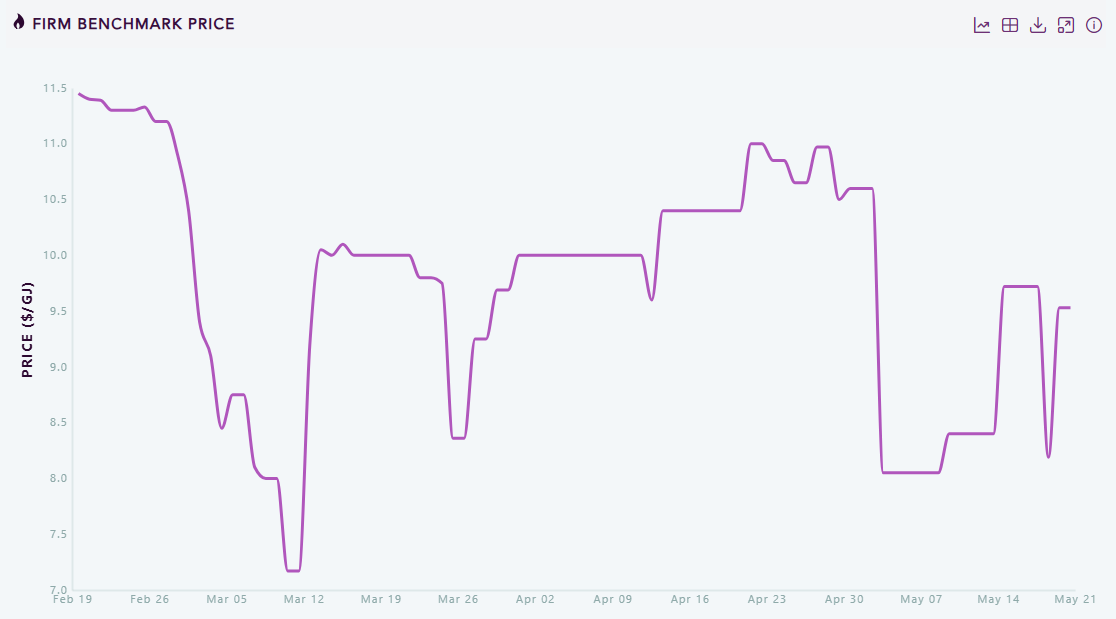
Of the three QLD LNG cartleliers, STO is being isolated.
The other two already supply the local market.
ORG already supplies roughly 30% of its export sales to the local market with gas, so it will only take a minor hit on uncontracted gas.
Shell supplies 12% of its export volumes locally, so it will need to up its game.
Santos supplies about 8% of its export volumes locally. But its GLNG parasite buys roughly 20% of its export volumes from third parties, meaning it is a net destroyer of local supply.
The government must stand firm on this.
STO must be forced to buy this gas offshore instead of using it to supply its contracts and to idle one of its two local trains.
Futures past Iran War prices a few years from now are cheap as the US gas glut builds. STO must supply its contracts from these.
STO made the mistake. We should no longer pay for it.
Could it be that the gas hippopotamus is no more?
