
The federal government touted the expanded 5% home deposit scheme, introduced on 1 October 2025, as an affordability measure.
However, analysts, including me, cautioned that such demand-side interventions are usually self-defeating with respect to affordability, as they drive up property prices.
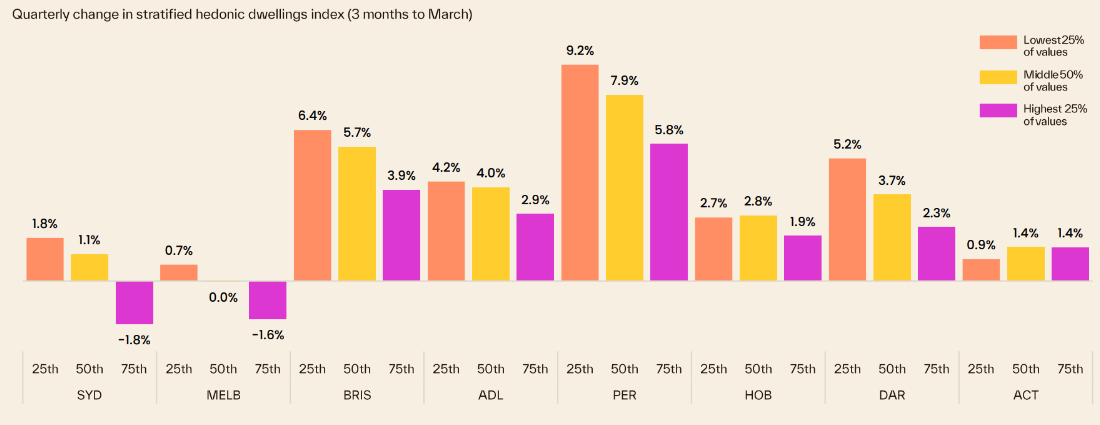
Cotality’s latest housing chart pack illustrated this point. As shown below, prices for homes in the bottom 25% quartile, which are well within the 5% deposit scheme’s price caps, rose the most in the three months to March 2026 across all major capital city markets.
Source: Cotality
In contrast, the most expensive 25% of homes, which are outside of the price caps, saw the slowest price growth across all capital city markets save the ACT.
Cotality has released further research on the impact of the expanded 5% deposit scheme on home prices.
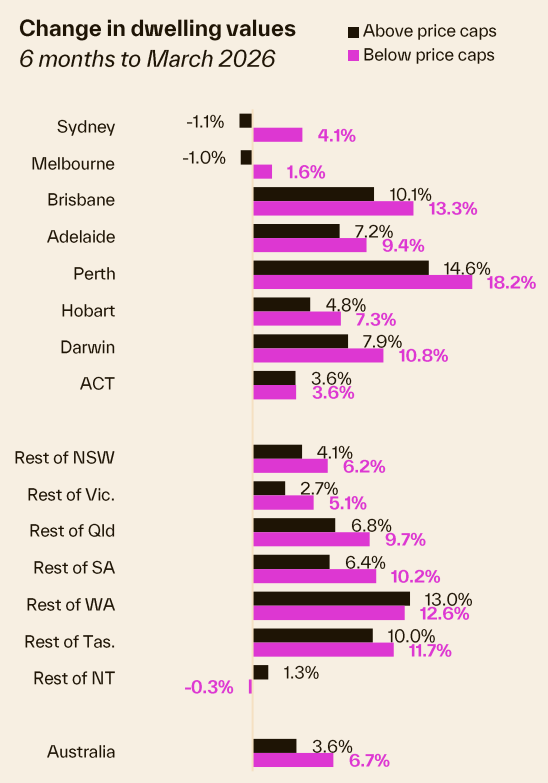
Over the first six months of the expanded scheme, Cotality’s data show that homes with a value under the price caps have increased in value by 6.7%, compared with a 3.6% rise for properties with an estimated value above the price caps.
Source: Cotality
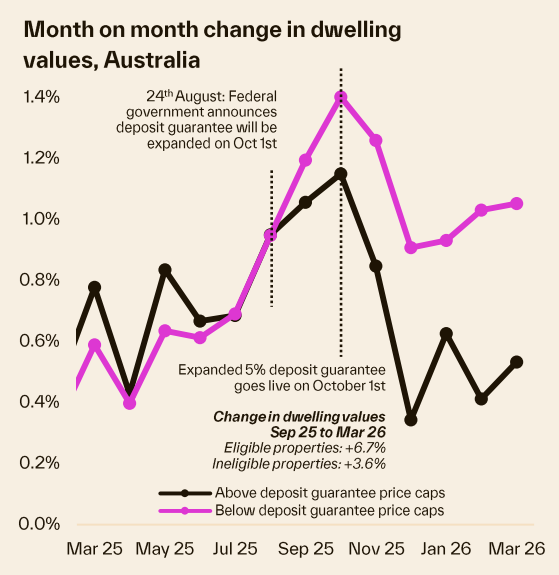
As shown below, momentum was building in the sub-price caps market following the announcement of the expanded 5% deposit scheme in late August 2025.
Source: Cotality
Cotality research director Tim Lawless believes that anticipation of increased competition and price pressure after the scheme’s launch likely brought forward demand from those who didn’t necessarily need to rely on the deposit guarantee, such as investors.
Moreover, with affordability tightening and borrowing capacity stretched, buyer demand is likely being pushed towards the more affordable end of the market.
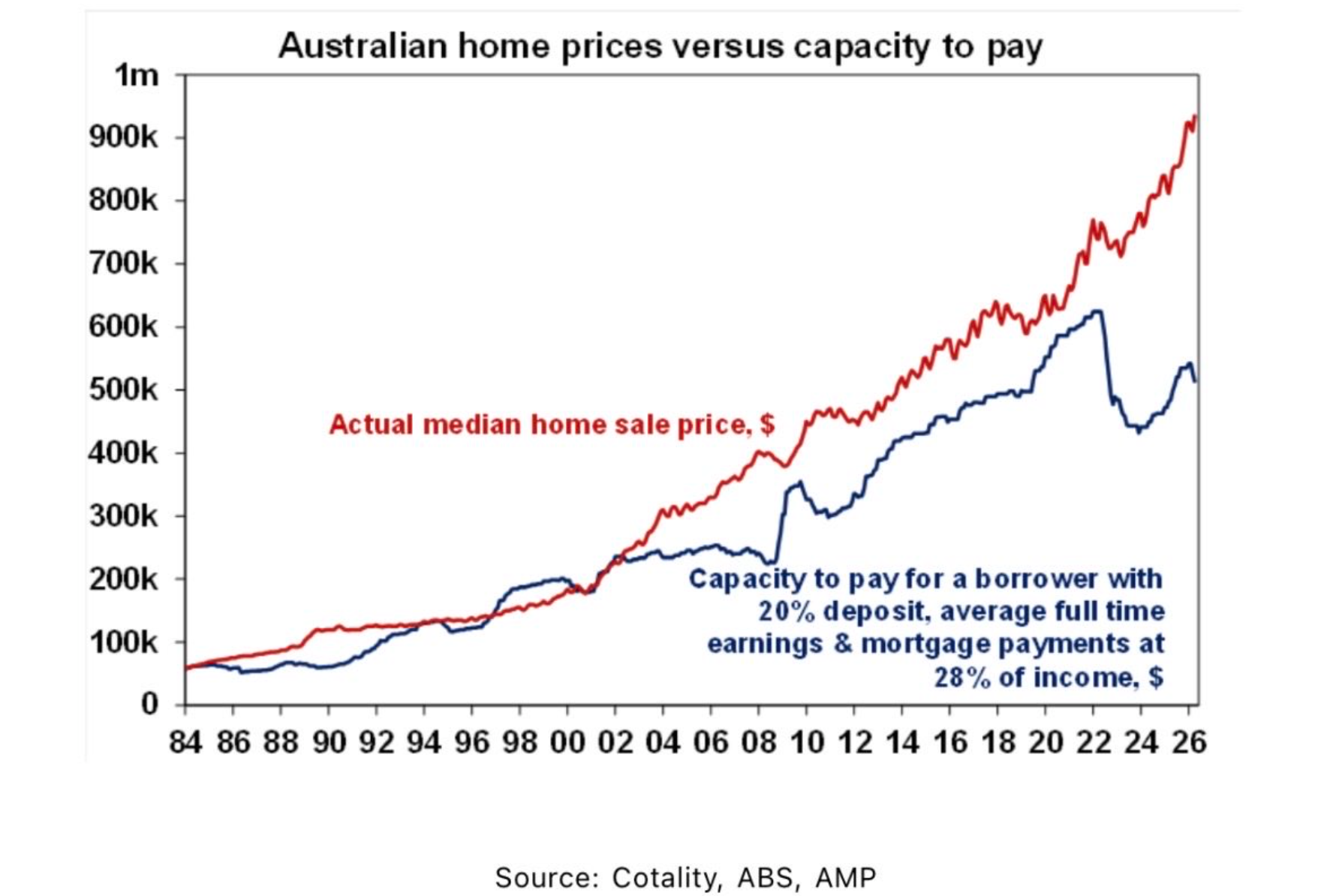
Chart by Shane Oliver (AMP)
Following the strong 6.7% price growth recorded over the past six months, the number of submarkets priced below the price cap has shrunk.
“At the end of September last year, just before the expanded deposit guarantee going live on October 1st, 48.6% of suburbs nationally had a median house value below the price caps, and 92.7% of suburbs had a median unit value below the caps”, Cotality noted.
“By the end of March, this portion had dropped to 39.5% and 89.1%”.
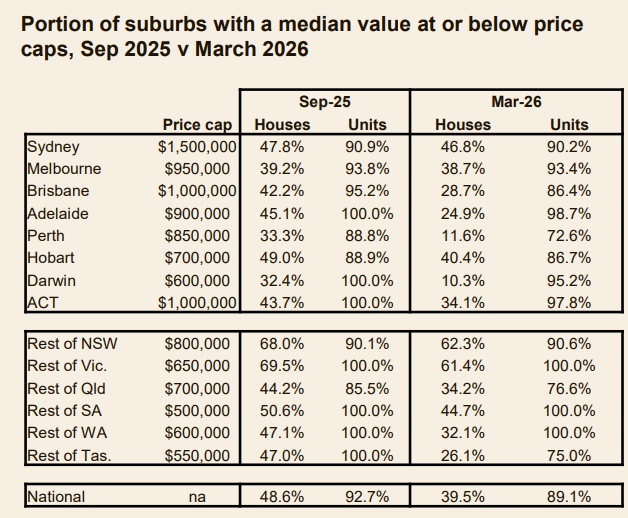
Source: Cotality
As illustrated above, Perth, Brisbane and Adelaide have experienced particularly large declines in the number of suburbs priced below the price caps.
Clearly, the expanded 5% deposit scheme drove up the prices of entry-level homes, ultimately making them more expensive for first home buyers.
Future first home buyers will face the prospect of paying more for housing and holding larger mortgages than they otherwise would have without the 5% deposit scheme.
