
The Australia Institute’s senior economist, Matt Grudnoff, has written another article blaming the capital gains tax (CGT) discount for Australia’s housing affordability woes, while absolving the role played by excessive immigration-driven population growth.
According to Grudnoff, “the CGT discount is the culprit for big increases in house prices in the past two decades. After it was introduced in 1999, prices began to increase much faster than incomes”:
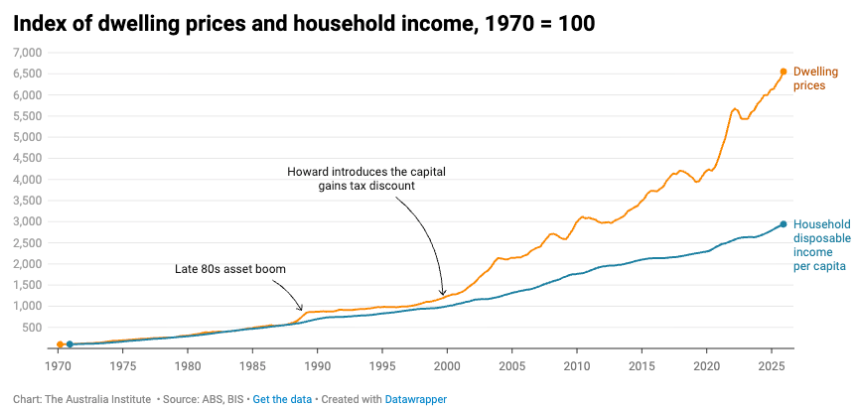
While the CGT discount would have contributed marginally to Australia’s house price inflation, Grudnoff conveniently ignores that home prices have soared globally over the same period:
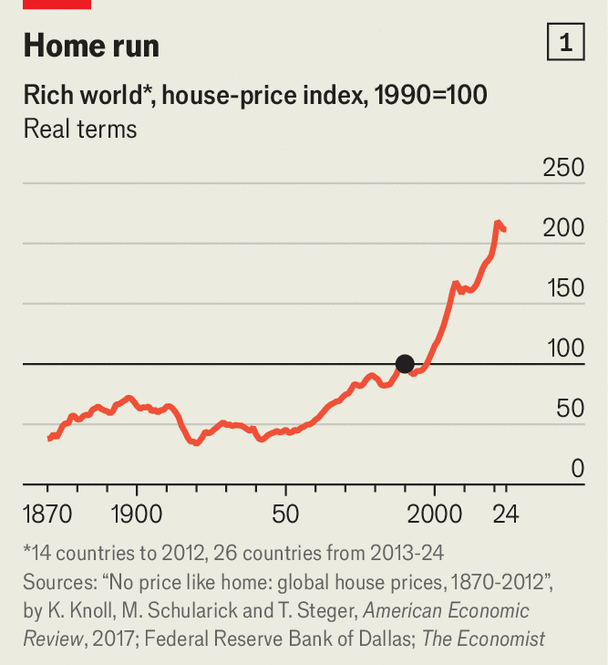
Chart from The Economist Magazine
This suggests that global deregulation of bank capital rules and mortgage financing played the most significant role.
Even so, I agree with Grudnoff that Australia should reduce the attractiveness of the CGT discount and negative gearing, as this would improve purchase affordability at the margin, slightly increase homeownership rates, and boost the federal budget.
My bigger issue with Grudnoff’s analysis is his claim that Australia’s housing supply has kept pace with its world-beating population growth, driven by immigration.
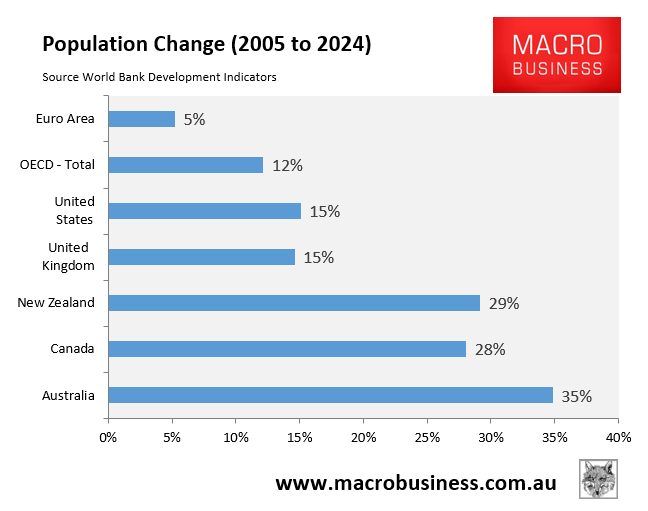
According to Grudnoff:
“If we look at the past 10 years, the population has increased by 16%. For the number of homes to have kept up with the growth in population, they must have increased by at least 16%. But, they have actually increased by 19%”.
The number of homes is increasing faster than the population. We can see this below”:
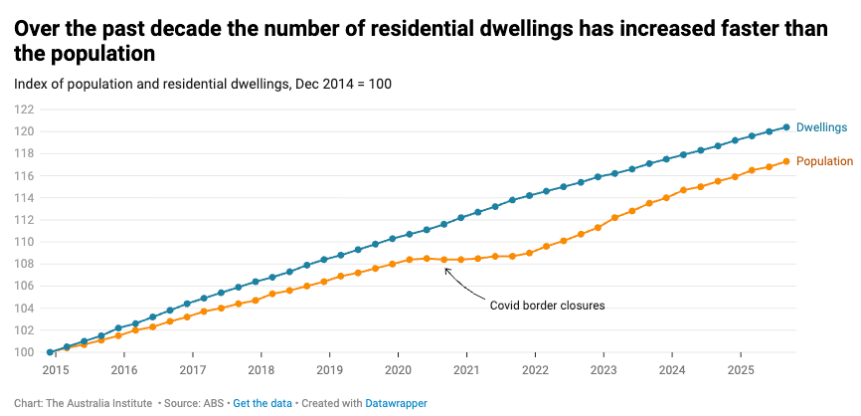
I see several issues with Grudnoff’s analysis of supply.
First, Australia’s fertility rate has collapsed well below replacement. Therefore, the average household size has shrunk, and Australia needs more homes for any given population size.
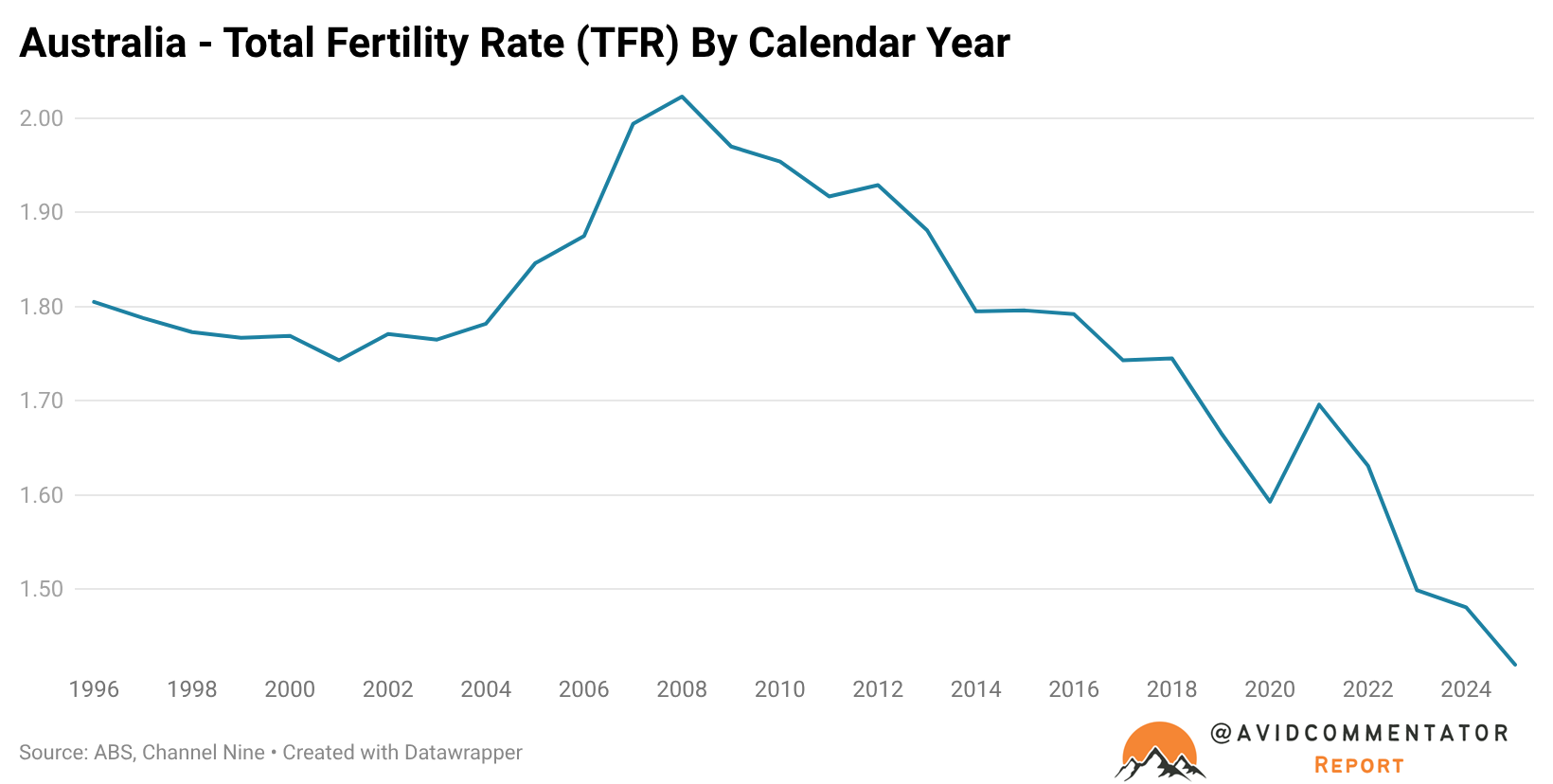
As a result, the adult working-age population grew faster in the decade to September 2025 (i.e., by 18%) than the overall population did (i.e., by 16%).
Second, Grudnoff has cherry-picked 2015 for the start of his analysis, even though ‘Big Australia’ immigration began a decade earlier in 2005.
Indeed, AMP chief economist Shane Oliver forecast last year that Australia has a cumulative housing shortage of at least 200,000 dwellings, which began when net overseas migration was more than doubled in the mid-2000s:
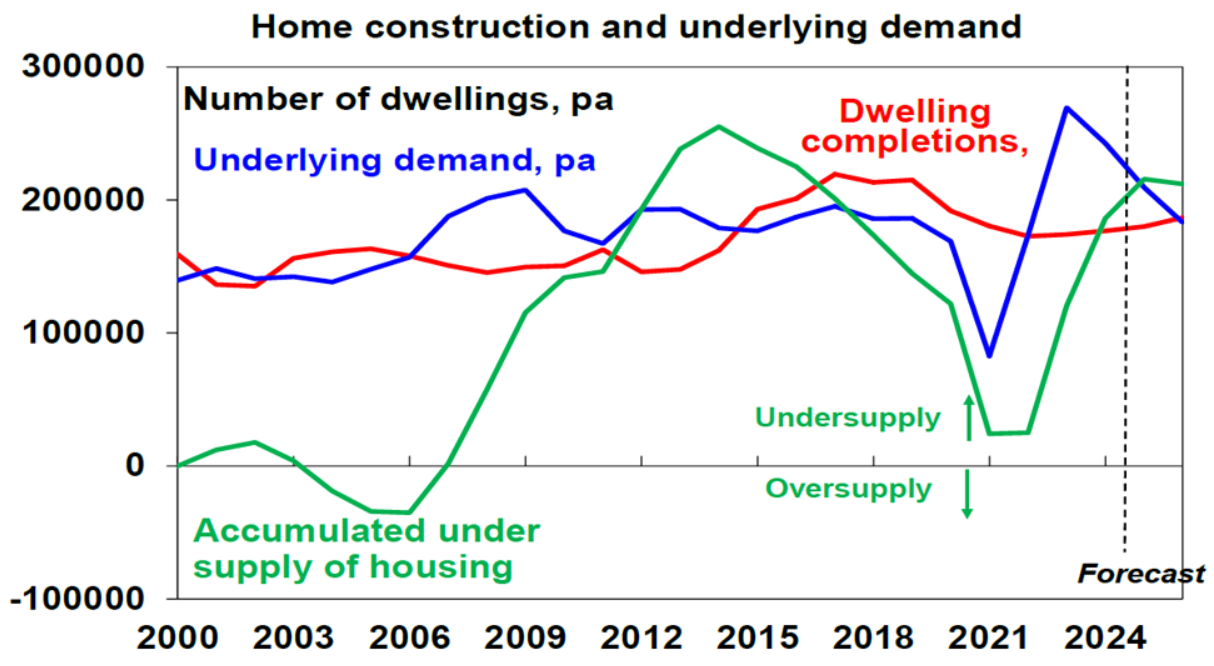
Source: Shane Oliver (AMP)
Third, Grudnoff’s claims are at odds with the assessment of the federal government’s own National Housing Supply and Affordability Council (NHSAC), which categorically states that Australia has a housing shortage that is getting worse.
In its State of the Housing System 2025 report, the NHSAC repeatedly states that:
- Australia has a structural undersupply of housing
- New construction is not keeping up with population growth
- The shortage will worsen by 79,000 dwellings by 2029
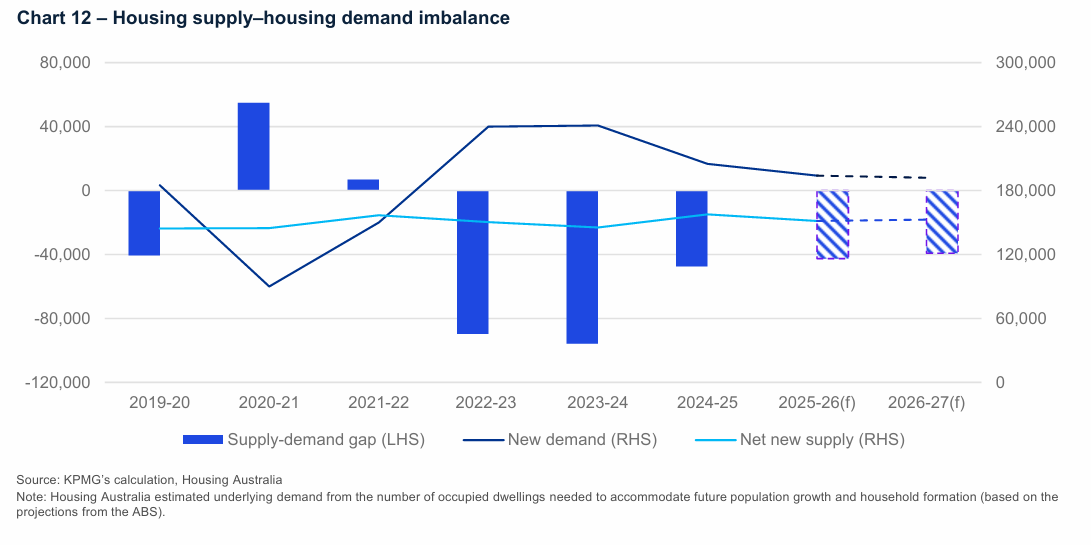
KPMG’s latest housing report shows that Australia had a shortage of 40,000 homes in 2019-20, even before the pandemic, with shortages also expected each year between 2022-23 and 2026-27:
Fourth, Grudnoff is conspicuously silent on the rental market, which is experiencing extreme shortages.
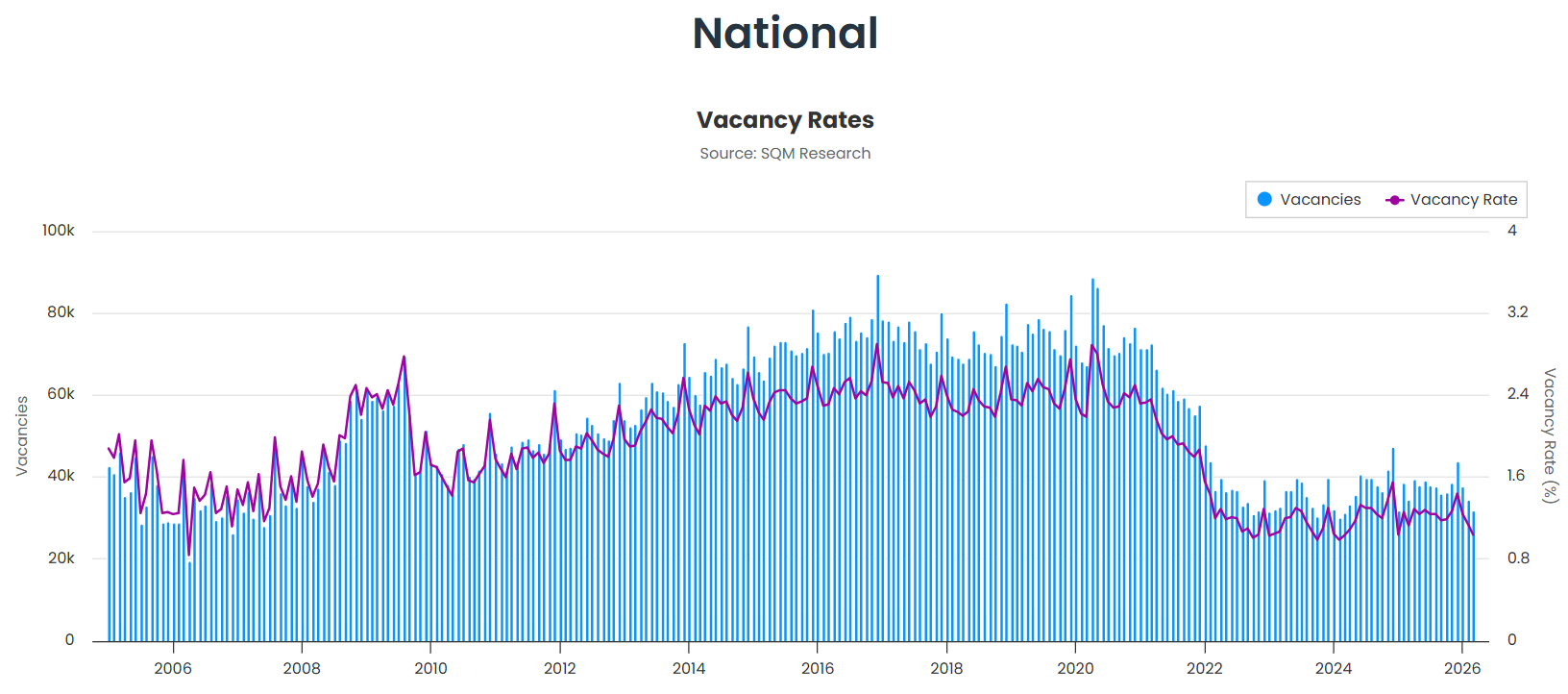
The national rental vacancy rate is tracking at an historical low:
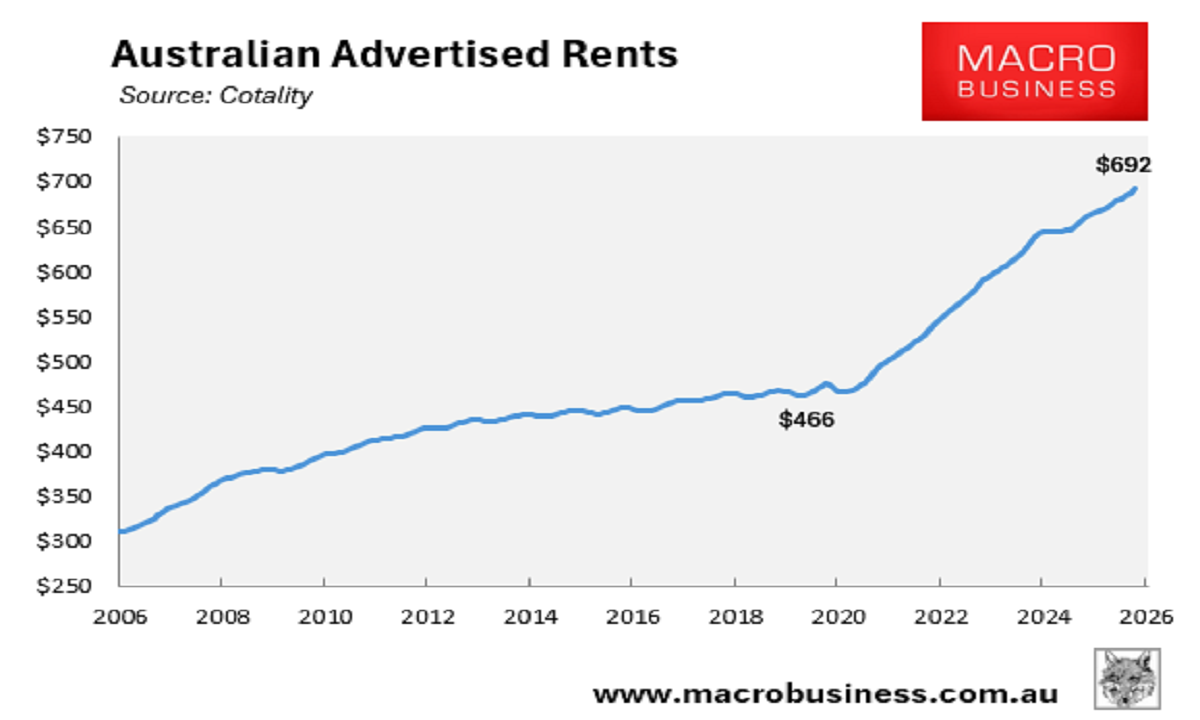
National advertised rents have soared by 48% since the end of 2019, adding around $11,700 to the annual cost of renting:
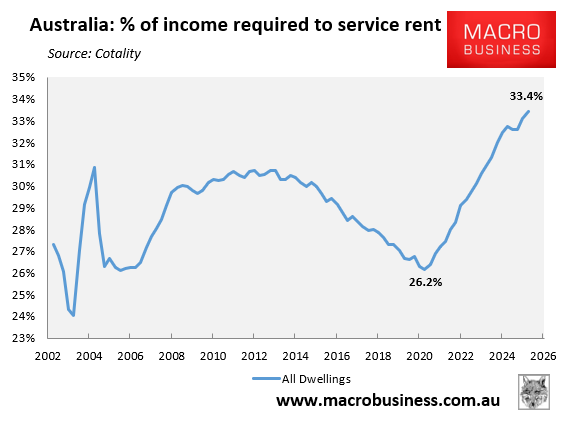
Rental affordability is also tracking at its worst level in recorded history:
Therefore, Australia clearly hasn’t built enough homes to meet the needs of its rapidly growing population.
The first-best solution, therefore, is to copy Canada and restrict immigration to a level well below the nation’s capacity to build housing and infrastructure.
Doing so would help lower rents immediately while also easing some pressure on prices.
First home buyers, in particular, would benefit directly via:
- Paying lower rents, thereby increasing their ability to save a housing deposit; and
- Through downward pressure on prices.
The Australia Institute used to talk sense on immigration. However, it now runs interference on the issue.
