
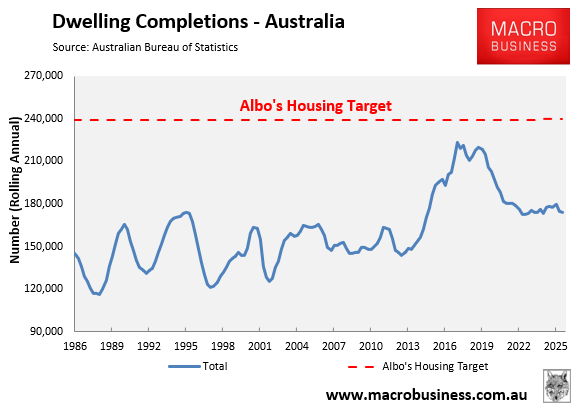
The Australian Bureau of Statistics’ (ABS) most recent dwelling completions data revealed that over the first 15 months of the National Housing Accord, 81,000 (27%) fewer homes were constructed than needed to meet the government’s target of building 1.2 million homes over five years, starting July 1, 2024:
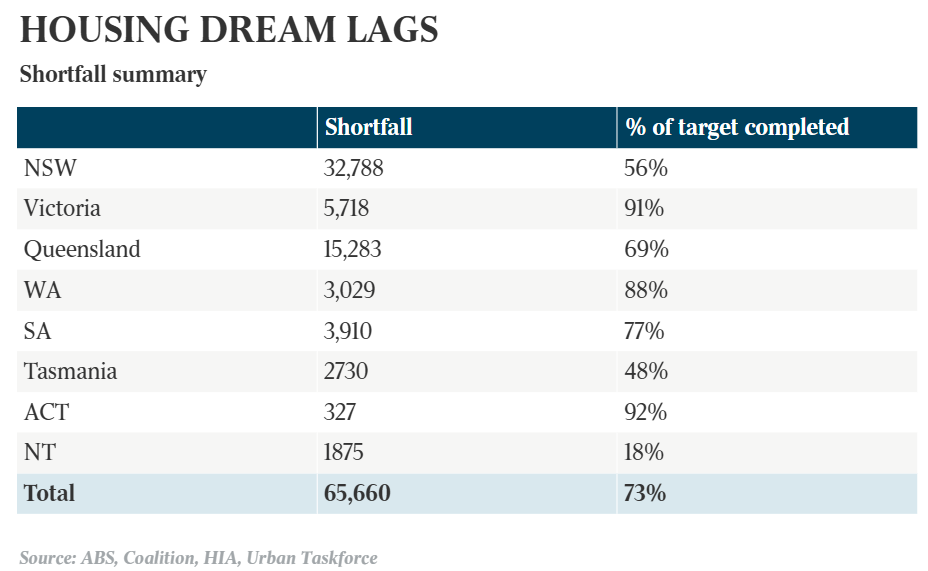
New South Wales’ and Queensland’s housing shortfalls are the most severe out of the major housing markets:
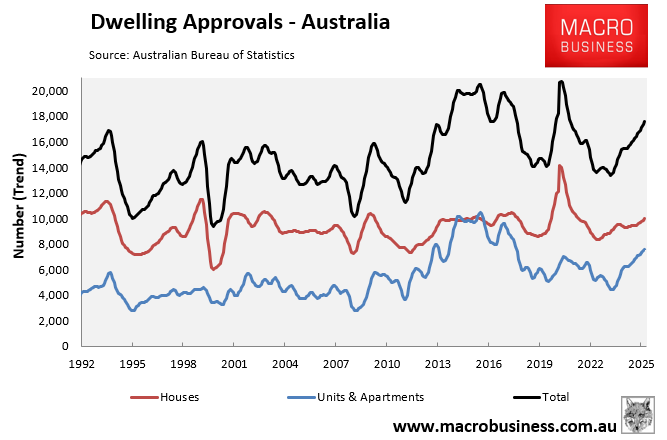
On Wednesday, the ABS released dwelling approvals data for February. While the number of approvals improved over the month, they remained below the government’s housing target.
Over February, 17,570 dwellings were approved for construction, below the 20,000 required to meet the National Housing Accord’s target:
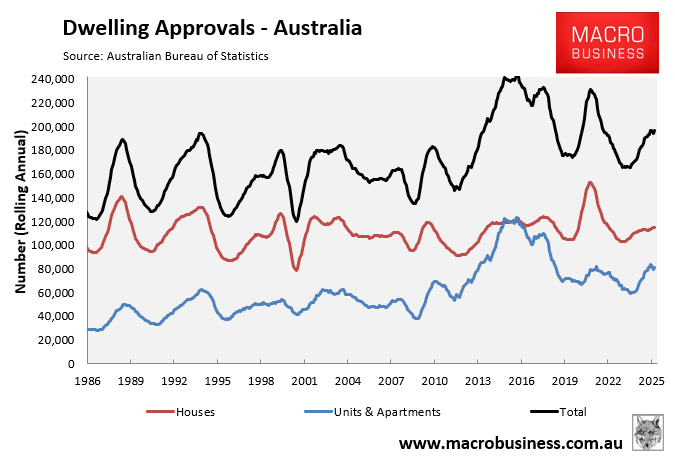
Annual dwelling approvals have stalled, with 196,500 dwellings approved in the year to February 2026, slightly below where they were in the year to December 2025:
The next chart plots monthly dwelling approvals against the 20,000 run rate required to meet the National Housing Accord’s target:
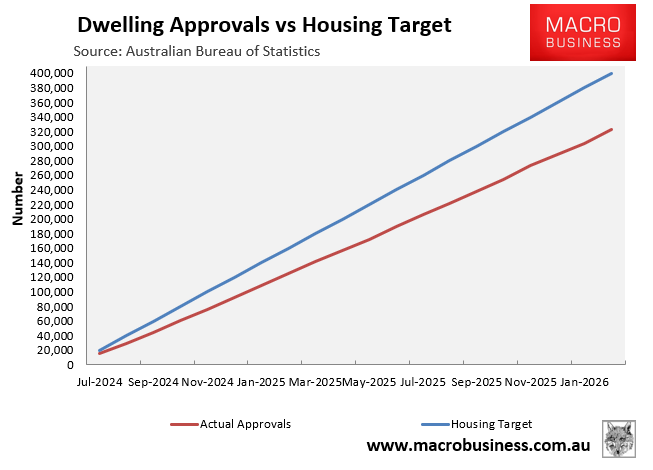
Dwelling approvals were 77,660 (19%) below the target during the first 20 months of the Housing Accord.
The situation is worse than it appears, as approval for construction does not guarantee completion.
Dwelling approvals have exceeded completions by approximately 5% over the past decade. Consequently, the approvals data indicate that the National Housing Accord’s target will be even more challenging to achieve.
Since the onset of the COVID-19 pandemic in 2020, Australia’s housing supply has been severely restricted by:
- Structurally higher interest rates.
- A circa 40% rise in construction costs.
- A circa 33% rise in residential lot values.
- Labour shortages and high insolvency rates in the construction industry.
Shane Oliver, chief economist at AMP, recently estimated that Australia’s cumulative housing deficit is between 200,000 and 300,000 dwellings, depending on assumptions about household size.
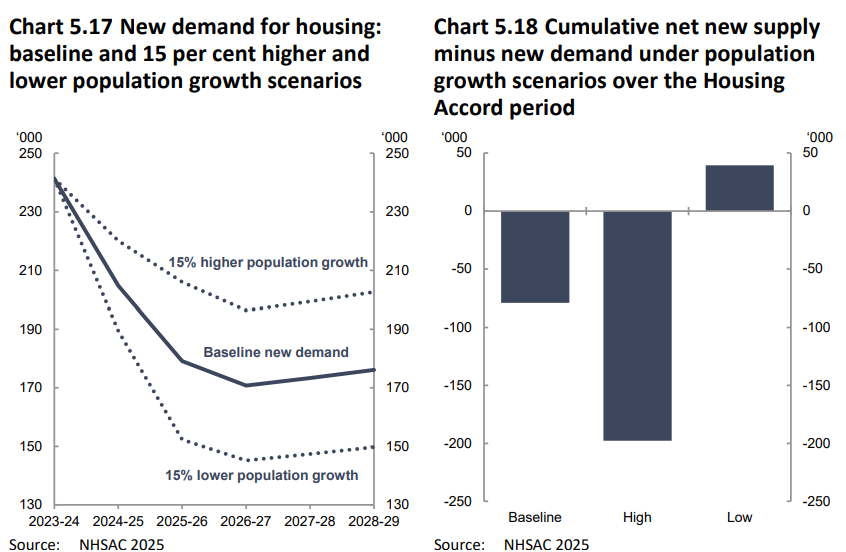
The National Housing Supply and Affordability Council’s (NHSAC) State of the Housing System report, released in May 2025, forecast that population demand would outpace supply over the entire five-year Housing Accord period, resulting in a cumulative shortage of 79,000 homes and possibly 200,000 if population growth is 15% faster than Treasury forecasts:
Why the housing shortage will worsen:
The supply situation has worsened in the period ahead owing to the expected surge in interest rates and rising materials costs arising from the global energy shock.
The RBA has already delivered back-to-back 25-bps interest rate hikes, and financial markets have forecast three further hikes this year, bringing the cash rate to an 18-year high of 4.85%.
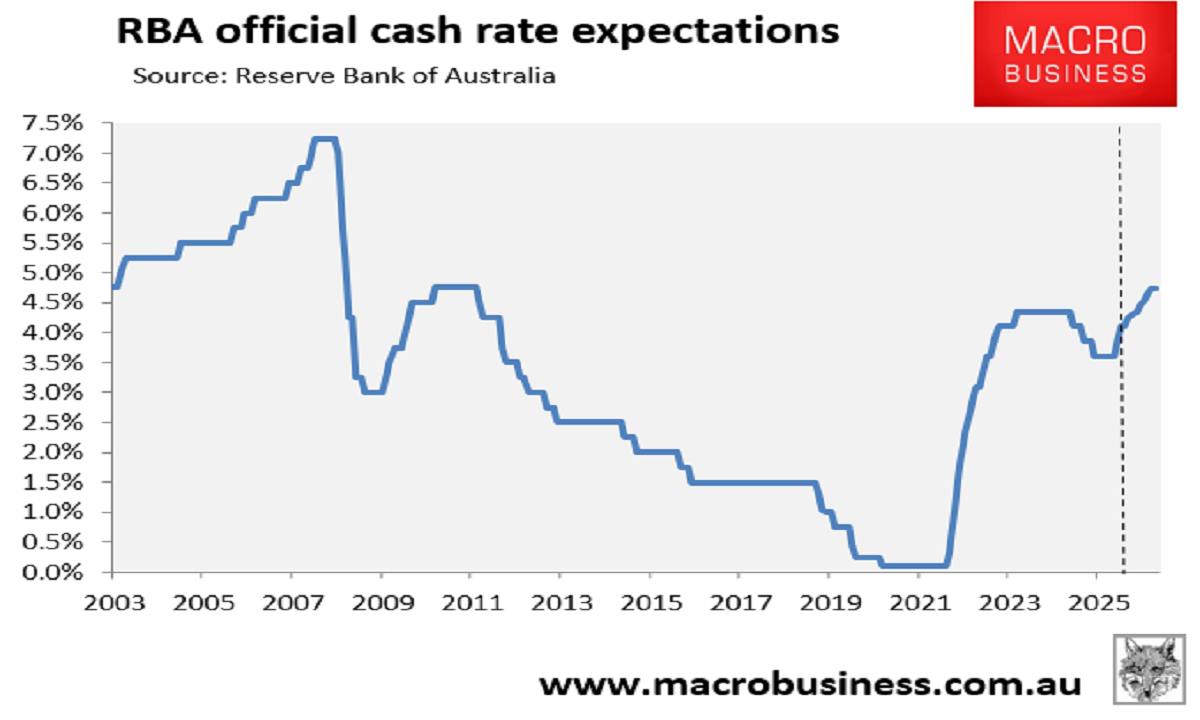
Significantly higher interest rates will reduce demand for new homes by lowering borrowing capacity and increasing financing costs for developers.
Meanwhile, materials costs are expected to increase significantly on the back of higher energy costs.
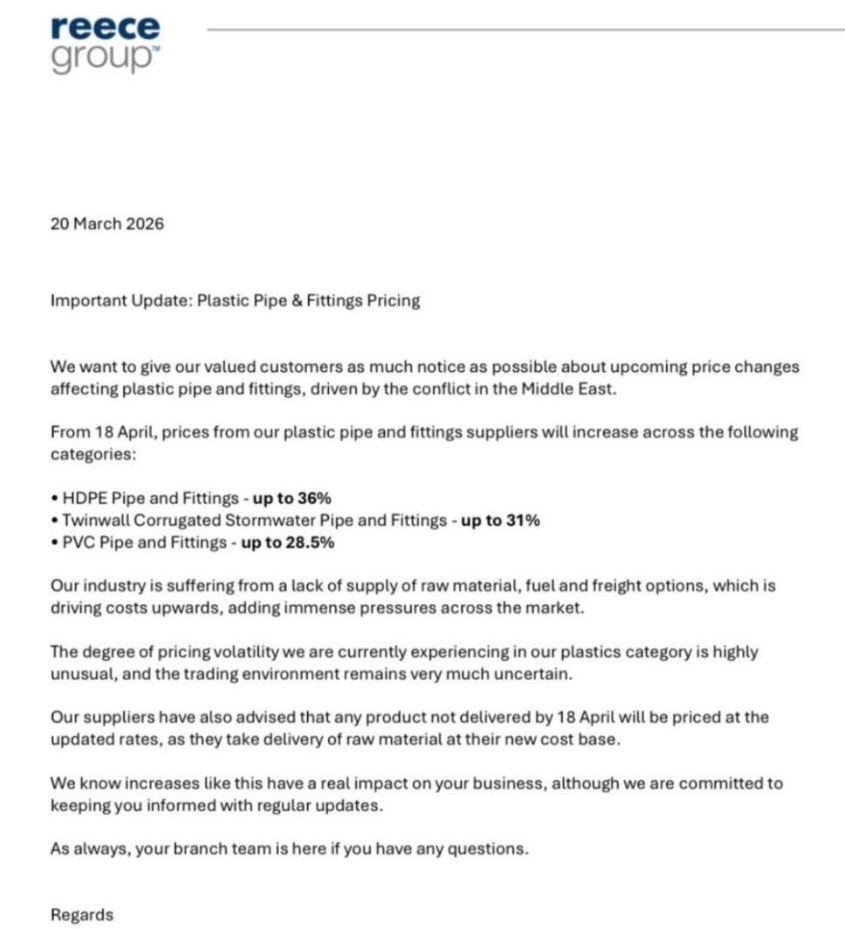
For example, Reece Group recently lifted their prices by around 30% to account for rising energy and freight costs:
Bricks, concrete, and other residential building supplies are also highly sensitive to rising energy and freight costs.
At the same time, Treasurer Jim Chalmers conceded last month that net overseas migration (NOM) will be higher than expected due to fewer departures.
The upcoming federal budget will reportedly forecast NOMs of more than 300,000 this financial year, up from 260,000 in last year’s budget.
NOM in the forward budget estimates will also likely be revised higher.
As illustrated above by NHSAC, higher population growth under NOM implies a greater housing shortfall over the five-year National Housing Accord period.
The Takeaway:
Housing demand from immigration continues to expand, while supply is tightening due to worsening economic conditions.
The Albanese government needs to follow Canada’s playbook and slow the inflow of migrants to alleviate pressure on the housing market.
Otherwise, Australia’s housing shortage and rental crisis will deteriorate further.
