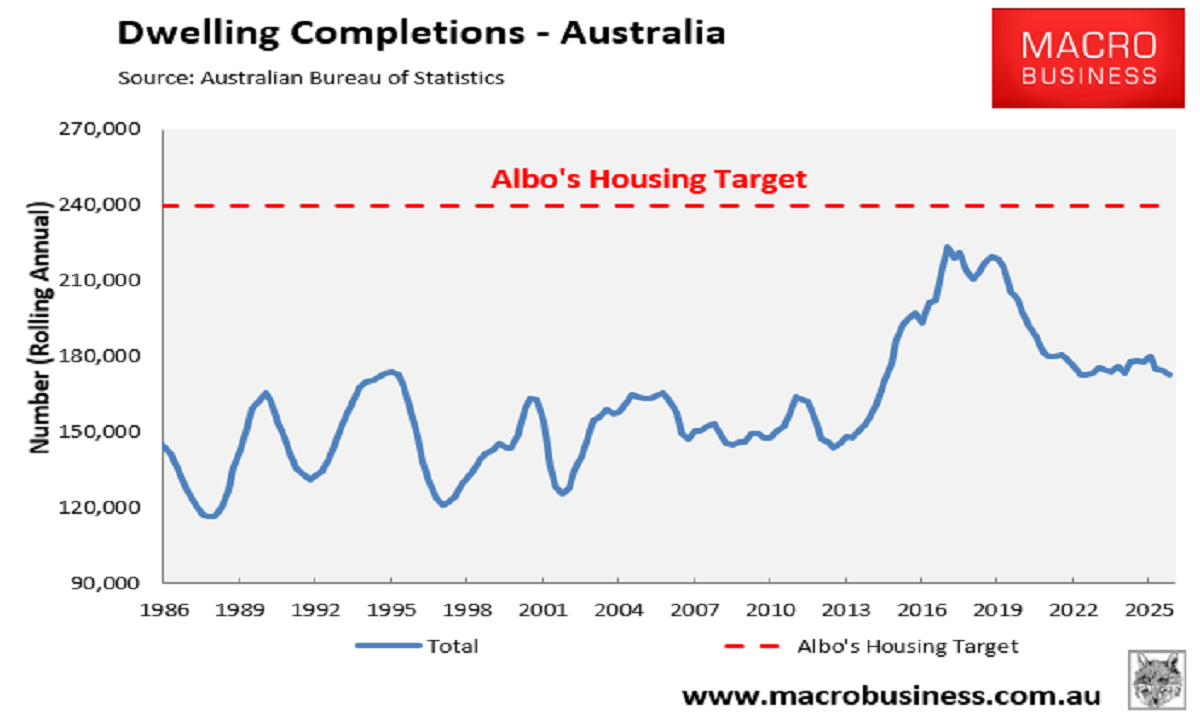
Australian residential construction costs have soared by more than 40% since the start of the COVID-19 pandemic.
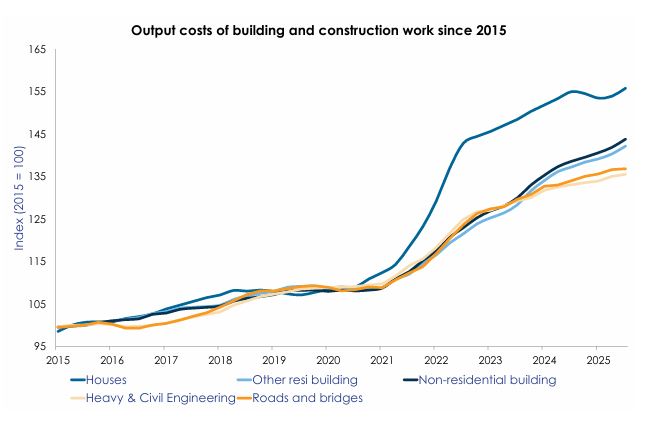
As a result, the average cost of building a dwelling in Australia has increased by 74% since the end of 2019, from $328,300 to $570,650 as at the end of 2025:
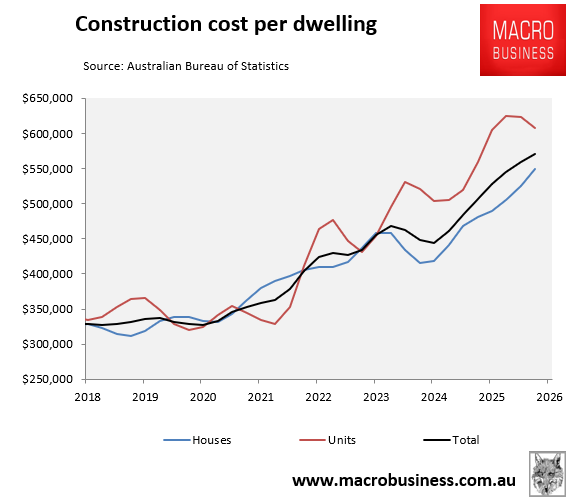
The average cost of building a detached house has increased by 62%, from $339,300 to $549,900, whereas the average cost of building a unit has increased by 90%, from $319,750 to $608,250.
Earlier this month, the CEO of Australia’s second-largest residential land developer, Satterly Property Group, warned that the cost of new houses could increase by up to $50,000 as a result of the war in the Middle East.
CEO Nigel Satterley cited a 37% increase in the cost of PVC piping, a 25% increase in the price of cement, and a 50% rise in the cost of quarry products.
The cost of preparing a block of land has also increased by $20,000, according to Satterley, due to the increased cost of diesel.
Deicorp, a privately owned Australian property development and construction group, also warned that “feasible projects are now marginal, and marginal projects are now unfeasible” due to the rise in costs.
This week, the AFR reported that the construction sector is being hit by a fresh inflationary wave, driven by global energy shocks and supply chain disruptions.
Material costs are rising across the board, squeezing builders, undermining project feasibility, and threatening housing delivery timelines.
For example, Boral has more than doubled its concrete surcharge as the Middle East conflict drives up global energy and commodity costs, from $18.84 per m³ up from $8.14 last month. The increase will add around $400 to a standard 20 m³ house slab.
Rival Holcim has also added a surcharge of around $9.50 per m³.
Plumbing and bathroom supplies are also spiking. Tradelink (200 stores nationwide) will lift prices sharply from June, with toilets and toilet seats rising by 35%, plastic piping rising by 30%, and tapware, brass fittings and other products also rising from May 1.
This follows Reece Group lifting plastic pipe prices by up to 36% last week.
Bathroom renovators and builders have already reported a 10% overall increase in supply costs.
To add further insult to injury, financial markets expect at least another two 25 bp rate hikes this year, which would push the official cash rate to a 15-year high:
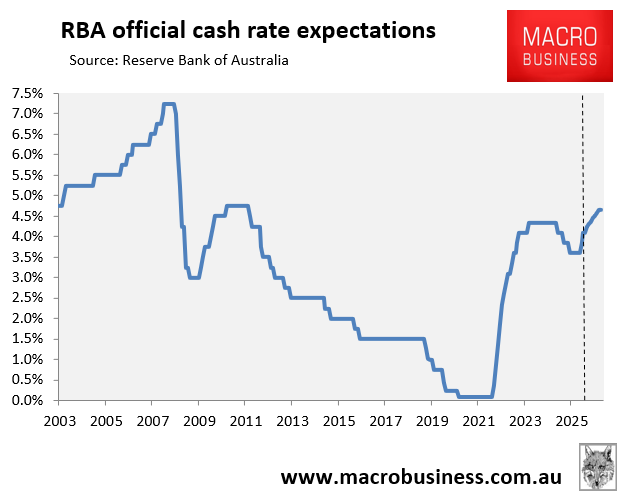
Higher interest rates will increase financing costs for developers and reduce buyers’ capacity to pay, thereby acting as another constraint on housing construction.
The economic reality is that the housing supply curve continues to shift left, meaning fewer homes will be built and they will cost more.
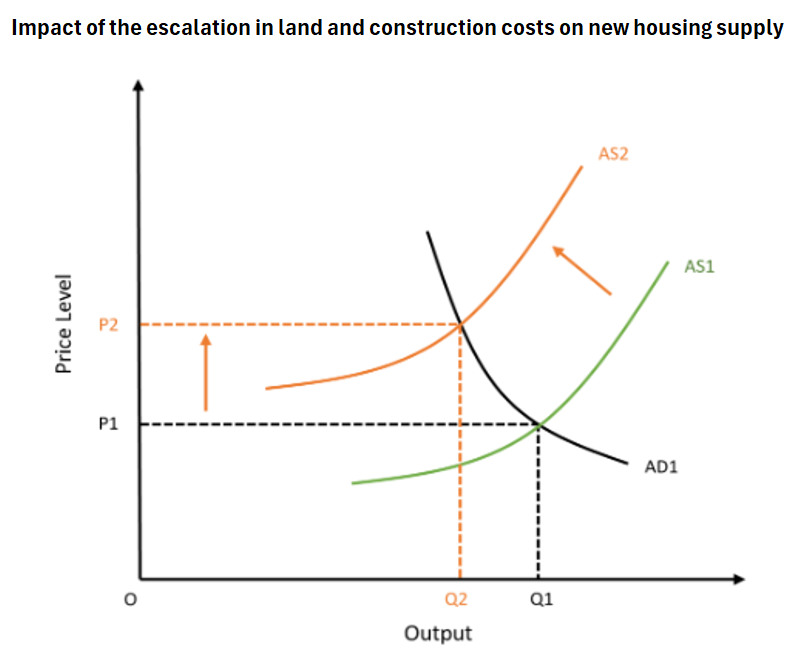
As a result, the Albanese government’s 1.2 million housing target, already tracking 27% below its required run rate, will inevitably lag further behind.