
The latest consumer sentiment survey from the Westpac Melbourne Institute, released on Tuesday, revealed that Australians have become more pessimistic about house prices.
The house price expectations index fell by 10.2% in April but remains fairly bullish overall.
On the other hand, homebuyer sentiment rose by 3.5% in April but remained soft by historical standards.
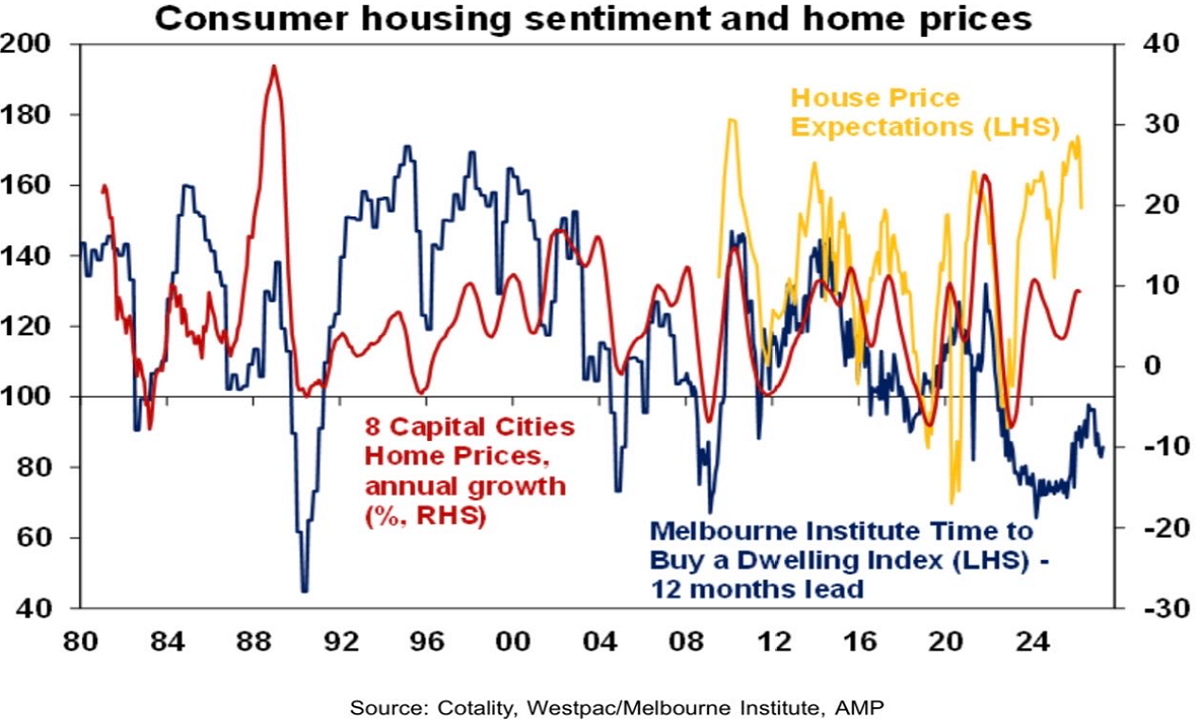
Chart by Shane Oliver (AMP)
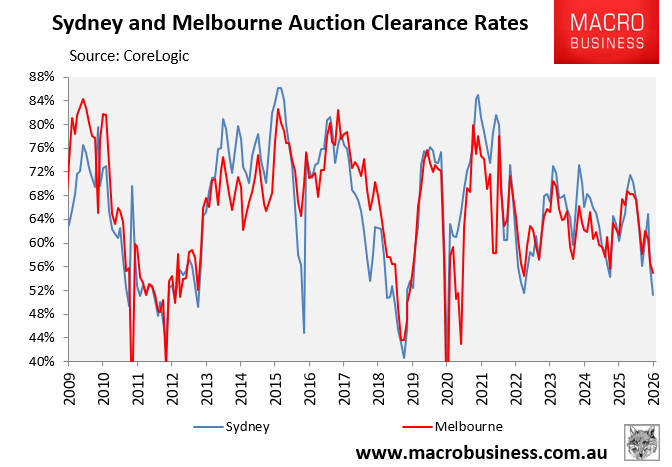
The decline in consumer expectations for house prices is likely driven by the two largest markets, Sydney and Melbourne, which have experienced sharp declines in auction clearance rates and falling prices.
Both Sydney’s and Melbourne’s final auction clearance rates have collapsed to the low-to-mid 50s, reflecting a sellers’ market:
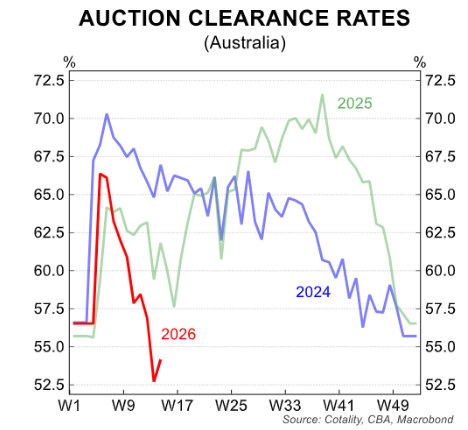
As illustrated below by CBA, auction clearance rates have been tracking well below the rates seen at this time in 2024 and 2025:
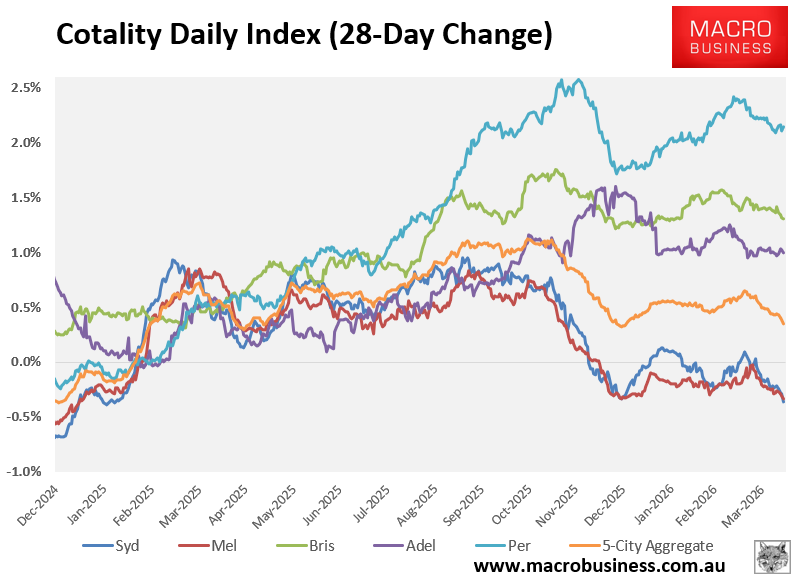
Dwelling values in both markets are also falling sharply, likely driving more bearish sentiment.
The outlook for price growth is negative, owing to expected cuts to property tax concessions in the upcoming federal budget, expected rising interest rates, and uncertainty surrounding the economy and job market.
The interest rate futures market is pricing in at least two, and possibly three, more 25 bp interest rate hikes by the end of the year, which would obviously increase mortgage repayments and reduce borrowing capacity.
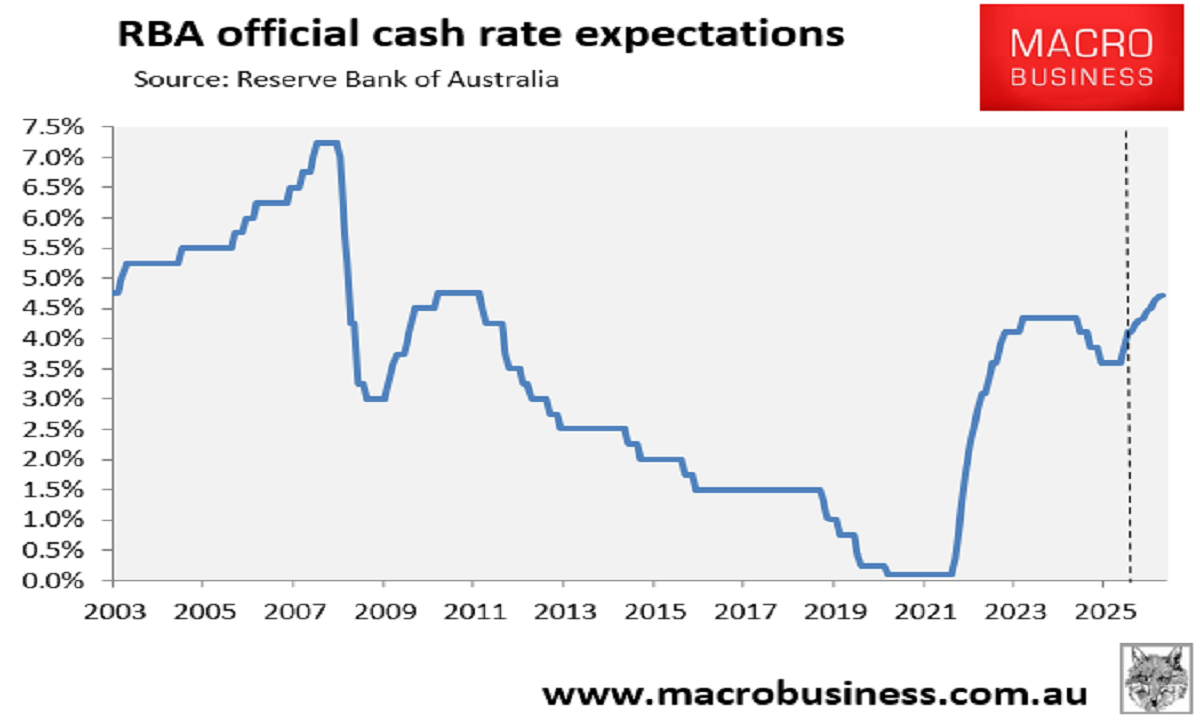
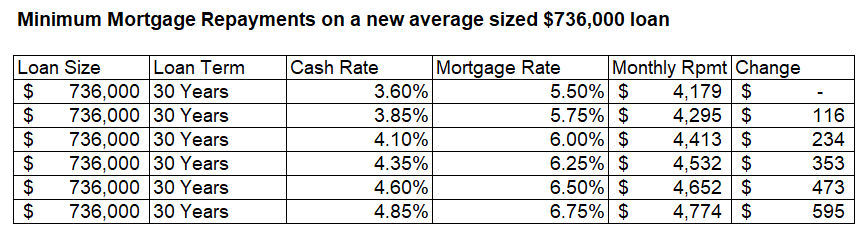
Based on the average new mortgage size of $736,000, four interest rate rises in 2026 would add $473 to the cost of servicing teh average new mortgage, whereas five hikes would add $595 to monthly mortgage servicing costs:
At the same time, the Westpac-Melbourne Institute’s Unemployment Expectations Index rose to its highest level since August 2020 during the COVID-19 pandemic, just before the federal government significantly expanded its JobKeeper policy to prevent widespread job losses.
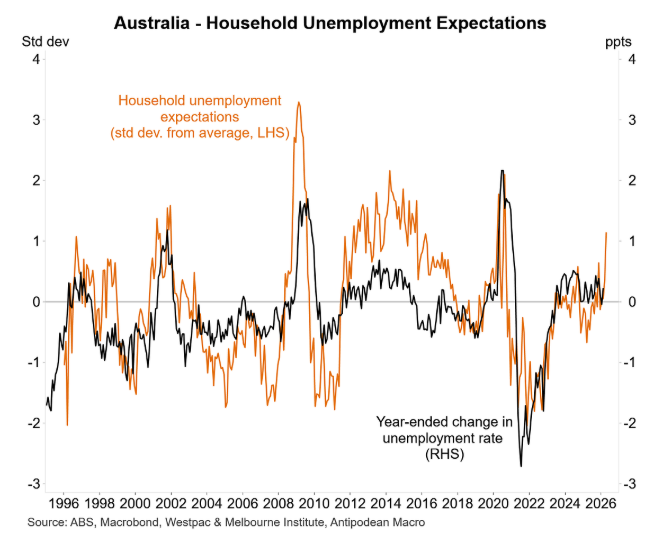
Chart by Justin Fabo from Antipodean Macro
The reality of rising interest rates, falling prices in the two main capital city markets, concerns around job security, and likely changes to property tax concessions explain the reduced consumer sentiment towards house prices.
