Two weeks ago, I flew to Sydney to record an SBS Insight special examining the immigration debate in Australia.
The scissor reel below showcases my three appearances on the episode:
SBS did a competent job presenting my arguments with only minor editing. For example, I mentioned that virtually every opinion poll over the past decade shows that Australians want lower immigration, but this was left on the cutting room floor.
As with all such shows, I would have said more if I could.
Below is a transcript of my appearance, alongside some charts for added context.
Kumi Taguchi (Presenter):
Leith, you’re an economist with an interest in migration and its impact on housing. What do you make of the numbers?
Leith van Onselen:
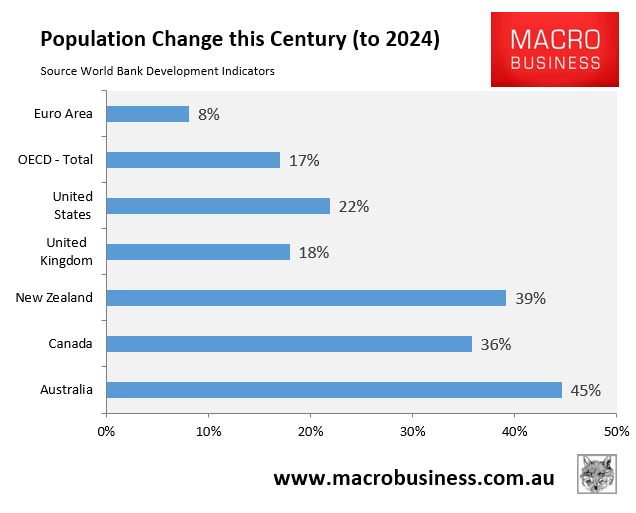
We’ve never had a period as strong as this over a 5 and a half year period. And the pressure here has been felt most acutely in the rental market.
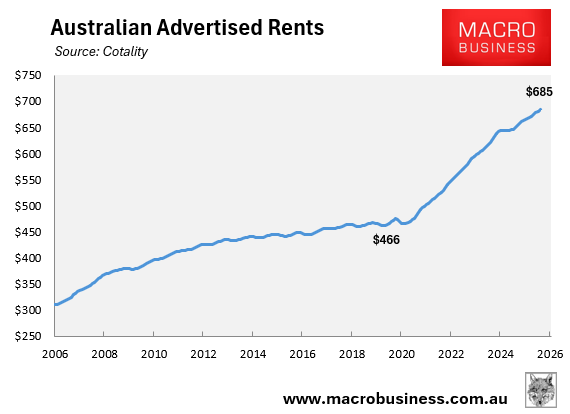
According to Cotality, median advertised rents in Australia have increased by 43% over the past 5 years across the nation. And that’s added on average $10,600 to the annual cost of renting a home, which is a hell of a hit.
Now, according to AMP chief economist Shane Oliver, the housing shortage is currently between 200,000 and 300,000. And the federal government’s own National Housing Supply and Affordability Council (NHSAC) forecast that demand through population growth is going to exceed supply for the next 5 years. And the housing shortage is going to worsen by another 79,000 on top of that.
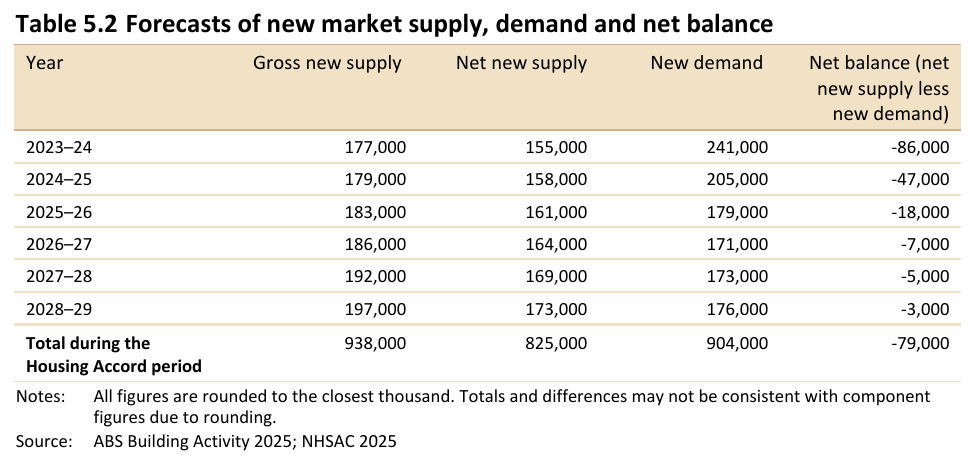
So, this just means that it’s terrible news if you’re a renter because unfortunately population demand is projected to continue exceeding supply.
Kumi Taguchi (Presenter):
Much of the research finds that immigration has a neutral to positive impact on the economy long term. Do you agree?
Leith van Onselen:
Well, certainly if you grow the population by one and a half per cent every year, you’re going to grow the economy by one and a half per cent. But that’s not the thing that matters.
The thing that matters is per capita growth and per capita living standards.
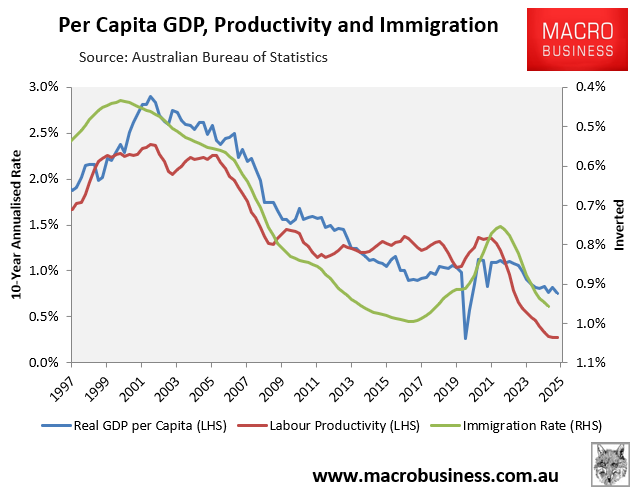
So GDP is just one measure. All it measures is economic activity. And on on that front, Australia’s per capita GDP growth has actually fallen as we’ve had this strong migration.
More importantly, I’m more concerned about the other factors. So my children being able to live in a detached house with a backyard rather than having to live in a shoe box apartment. Livability indicators like traffic congestion, all those sorts of things. Those are the sorts of measures that aren’t captured in this debate.
Kumi Taguchi (Presenter):
Leith, is it possible to have this conversation without racist undertones?
Leith van Onselen:
I think we should be able to focus on the numbers here. So, I’d argue that 2000 was peak Australia. We had the Sydney Olympics. National pride was huge.
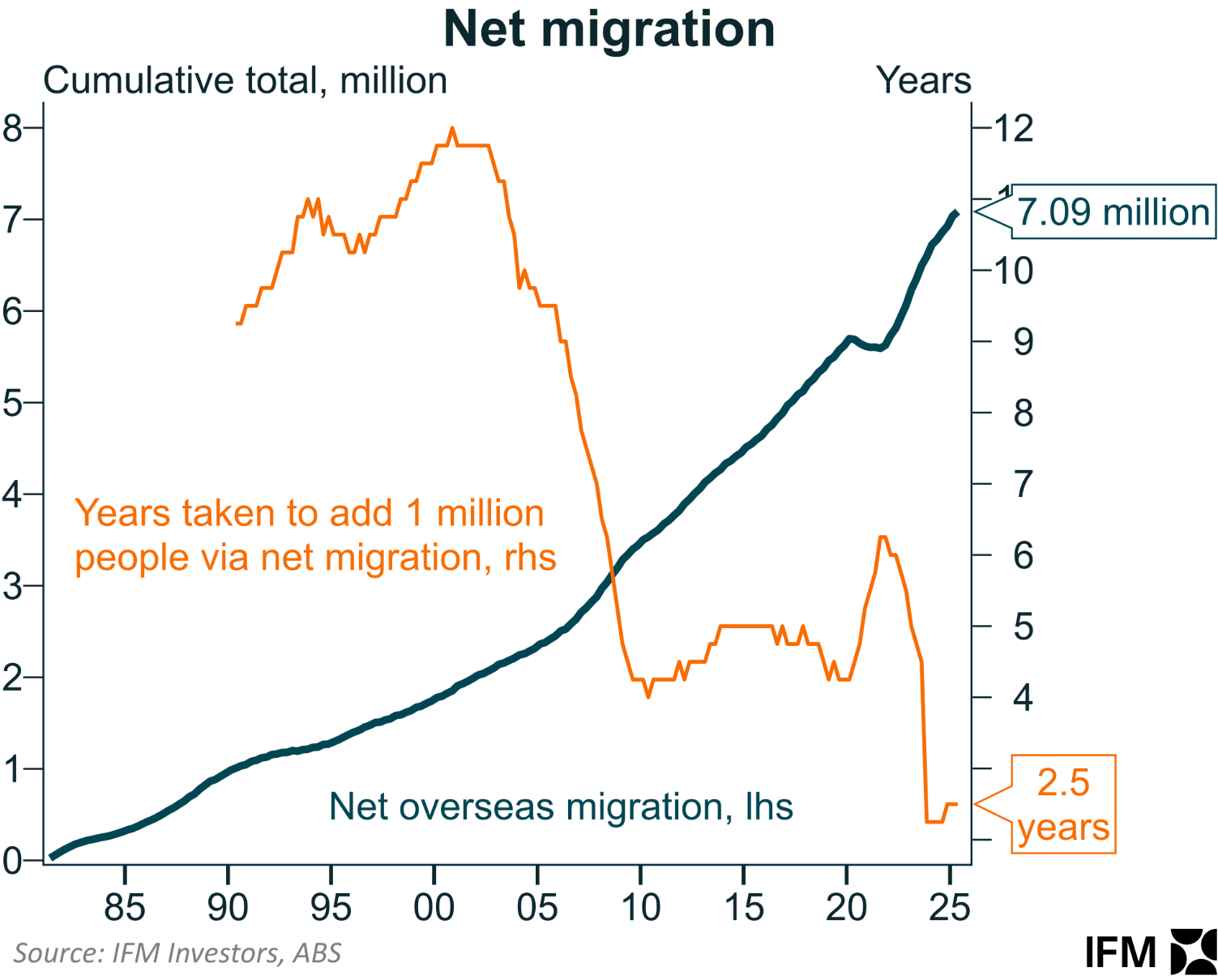
The net overseas migration in 2000 was 110,000. And it had taken Australia 12 years to add 1 million people to the population up to the year 2000 through net overseas migration.
In the most recent period up to June 30 last year, it had taken just two and a half years to add 1 million people through net overseas migration.
So we’ve run migration more than four times higher in the most recent period than we did in the year 2000.
None of these issues were cropping up then, or very few of them. Yet we had a significantly smaller migration system of 110,000 people back then. So I don’t see why we can’t debate the numbers here. It’s about the numbers, not all this other stuff which is really a distraction.
Kumi Taguchi (Presenter):
How do you feel about this concept that some people from overseas are more welcome than others?
Leith van Onselen:
That’s obviously unfortunate. I think again we need to get back to the economics of this and the numbers of people that are coming in.
It’s always unfortunate if people are getting targeted based on their skin colour or race, etc. Nobody wants to see that.
To me, a great Australian is someone who embraces the country and their love of the country.
Kumi Taguchi (Presenter):
Leith, why are people like Marty turning away from major political parties?
Leith van Onselen:
Well, because they’ve experienced the downside. It’s one of the strongest growth rates in the advanced world and they’ve witnessed the fallout. Infrastructure, housing, all crush-loaded. Services have not kept pace and unfortunately, we’ve just grown too fast.