
‘Don’t mention the war’ – Words, meaning, and our lived experience

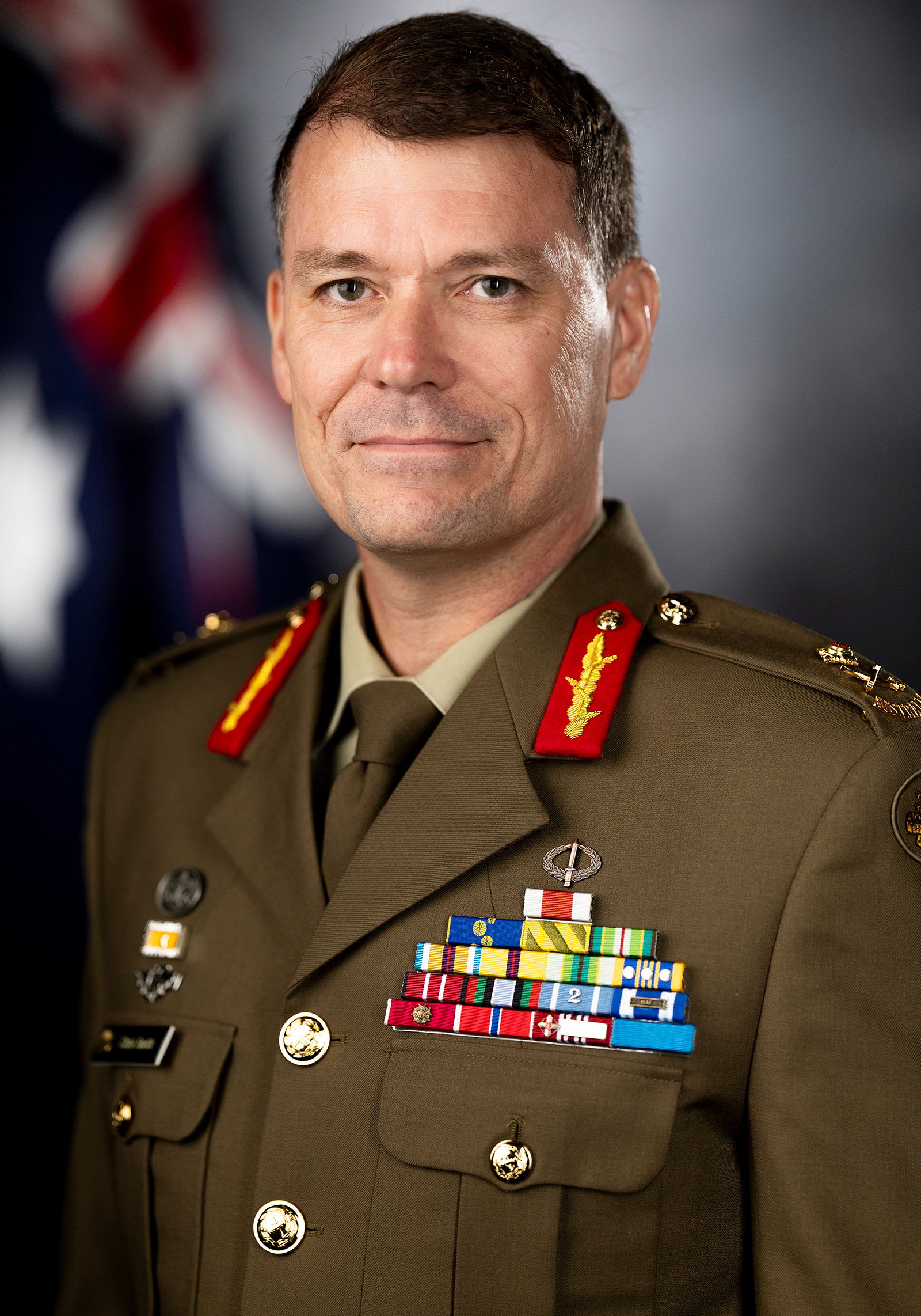
Major General Chris Smith DSC AM CSC teed off at the culture of managerialism affecting military decisions. His thoughts could be applied far more widely than just the military, and he should be applauded.
“At the point of definition, those at the other end of your rifle are the enemy, and you are their enemy. They will see their job as knocking off you and whoever is supporting you, and our job is to knock them off. If they surrender: great. But if they are as committed as you they will not surrender, and they will be drilled and motivated and armed the same way you are. We can only hope the resources available to us – the kit, the systems, the situational awareness and the operational intel – are better than theirs. In the seconds and minutes that shape many engagements none of that is known, and into the great unknown we need an often surprisingly small number of young men to go at it with the right attitude and drill, and a preparedness to push the envelope to get a win. It can be ugly.”
The above words were stated to me verbatim by a senior military man more than a decade ago while we were discussing the implications of training and the complexity of the modern battlefield. They came back to me when reading of Major General Chris Smith’s observations about managerialism having obscured the reality of war so much that even those responsible for carrying out war had lost sense of what war was actually about.
Bravo to the General, he has stated the simple truth.
The reasons the military see the conflict are that ultimately they are preparing for the above. Their training means that they plan and prepare for as many exigencies as they think plausible. Their accountability to those they send into battle means that they will be as straightforward with the facts as possible too. Often laid out in manuals and drilled into those taking part. It is not, by the time the military are involved, about negotiation or consultation and includes little moral dimension. The military is about having those in the camos shooting.
As Smith observed, the phenomena extends far beyond the military into nearly every facet of policy and social outcome of all government. And this is where the implication descends on the public. The public doesn’t have any need to carry out combat operations under fire, so the need for someone to call out language which obscures meanings, inputs, and outcomes isn’t there.
But the rest of us see the “unavoidable creep of managerial speak” on a daily basis whenever core issues relating to the Australian economy are presented. Even worse, the messages presented to us as the public have ceased to be questioned by the media who report them, giving rise to the phenomenon—inconceivable in the military—of key drivers of data and rationale being espoused to us never actually getting a look in when issues come to the public.
The most obvious is, of course, housing. The narratives that have driven a generation’s worth of housing reportage are these.
- Rising houses prices are good.
- Easier access to credit will enable more people to buy houses.
- People will take up living in apartments.
- Foreign buyers have no impact on housing prices.
- Land banking developers releasing land when their profit motives are satisfied has no impact on house prices.
- Housing costs are rising because supply isn’t keeping up with demand.
And whenever either side of mainstream politics discusses housing, the policy or discussion revolves around credit access, apartment buildings, and undersupply of construction, against a backdrop of barely muted celebration when the reporting of rising house prices comes through.
There is rarely a mention of the numbers of people requiring houses and the population growth driven by immigration for a generation, which has been the biggest single driver of that. When discussion does eventually get around to foreign student numbers, the narrative is even further obscured by the concepts of ‘education exports’ and the general idea that the students are only here to study when the data tells us many are here to migrate.
What Major General Smith sees as potentially ‘something rotten’ in his profession translates seamlessly into a public suspicion of politicians, bureaucrats and vested interests amidst a proliferation of ‘nonsensical and theoretically implausible concepts’ that have become detached from reality.
What Smith identifies as shaping decision-making in Army command goes even further in the public domain. The key players no doubt shape the language affecting decisions, but what the public gets is political spin positing the decision makers are doing something when in actuality they probably aren’t—apart from selling out future Australians and cementing in rising prices.
When Smith notes
“We don’t talk about ‘problems’. We have ‘challenges and issues to meet, face and overcome’. We speak with unnecessary jargon and gibberish.
“It epitomises how Western militaries, including ours, have allowed modern managerial and advertising logic and double speak to pollute the profession.”
And further observes
“Putting aside the unavoidable creep of managerial speak and postmodernism into everyday language, in the Australian Army’s case, I think it derives from ignorance, which manifests as a form of hubris,”
He could easily be talking about the experience of the public by the ‘profession’ of public interest administration, especially with regard to housing and other policy dynamics. The Jargon, the gibberish, the double-speak, and the hubris are all there.
But his comments are equally applicable well beyond housing policy.
The national interest revolving around gas exports is another field ripe with doublespeak, jargon and sales pitches to the public paying the price for policy mismanagement.
A generation ago there was alarm when Chinese visitors first started coming to Australia, with the more entrepreneurial amongst them taking the opportunity to buy baby powder at far lower prices than possible in China and to ship it there each Chinese New Year. The alarm was about the baby powder available for babies in Australia, and the ensuing outcries meant that retailers began to restrict sales to ensure domestic supply met domestic demand.
For some reason Australian gas exporters return less benefit to Australia than the brewing industry, as Senator Pocock has rightly identified in the Senate. That goes to a number of nations that take cheap gas from Australia, which Australia receives no economic benefit from, and resell it into the global market to make profits Australia’s gas exporters don’t make here.
The narratives which the Australian public have been told over more than a decade are:
- Exporters will develop their own supply.
- The connection of the Moomba Sydney gas pipeline to the Gladstone LNG terminal was so exporters could also supply the domestic market.
- The reversal of that pipeline was a short-term measure to meet contracts until local fields were developed.
- Australia is now focused on renewable energy.
- The LNG trains developed were such massive investments that exporters have a right to amortize their investment through the taxation system.
- If Australia declares force majeure on gas export contracts, it will mean Australia is a sovereign risk investment destination
None of which takes us away from the fact that Australian gas prices have soared over the last 14 years and that this has meant Australian electricity prices have also soared. From there, those rising prices have hammered both households and the remnants of Australian manufacturing, costing significant numbers of Australian jobs.
And no discussion of the integrity of communications would be complete without looking at Australia’s population Ponzi.
Since the early 2000s we have been told that
- Increased immigration would help lower upward wage pressures as the commodity boom commence.
- A trebling of Net Overseas Migration since 2005 was simply because of increasing numbers of students.
- We need increased numbers of migrants to offset an ageing population.
- We need increased immigration because Australians will not do some jobs.
- We need increased immigration because we lack some skills (notably nursing and care).
- Australia has always been a nation of immigrants.
- The sudden jump after 2022 was simply to ‘catch up’ to previously planned immigration.
- Questioning immigration volumes opens the door to neo Nazis and the ‘far right’.
While over that same period Australia has shed export-facing sectors of the economy to the point that employment growth is currently almost solely government driven and economically unsustainable.
At the same time the streets and railways of major cities are overcrowded, jammed with unplanned-for population growth driven solely by immigration volumes.
All of the above leads to our mainstream media ceasing to carry competing narratives and commentary, with ‘editorial guidelines’ meaning that those with competing views are consigned to non-broadcast or publication. This serves the political purpose of those making decisions and vested interests but also serves to broaden the gulf between the lived experience and the assertions coming out from those who tell us they make decisions in our interests.
So when Major General Smith refers to a “general failure of moral courage” and a “loss of historical perspective” in military leadership culture, ordinary Australians can see exactly the same within a far broader range of outcomes affecting Australians.
While we should be grateful that the Army at least has someone calling it out from within, it would be nice to see more people calling out groupthink and yes-men across a far broader range of issues blighting contemporary Australia.