
Construction sector has too many suits, not enough tradies
Ross Elliott of The Pulse wrote an outstanding article about the administrative bloat that has enveloped Australia’s planning industry.
Elliott notes that lawyers he has spoken with told him “they didn’t really know how many [planning-related] pages of rules and regulations were now in force—just that it would be so many as to be impossible to count”.
The Planning Institute of Australia advocates for more town planners rather than reducing red tape. Elliott believes it is a waste of human intelligence for a university-educated town planner with a HECs debt to focus on mindless administrative tasks.
To illustrate his argument, Elliott shared the following chart from Jonathan O’Brien, the founding editor-in-chief of Inflection Points, which depicts the rise in the number of planners relative to construction workers over the last 30 years:
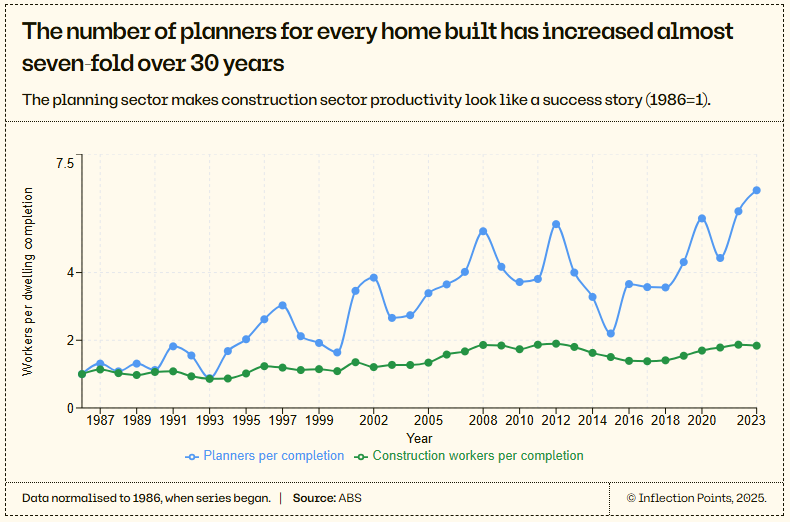
O’Brien also posted the following chart showing that Australia is developing considerably fewer homes per planner than it was 30 years ago:
The number of Australian planners has even grown faster than dwelling values:
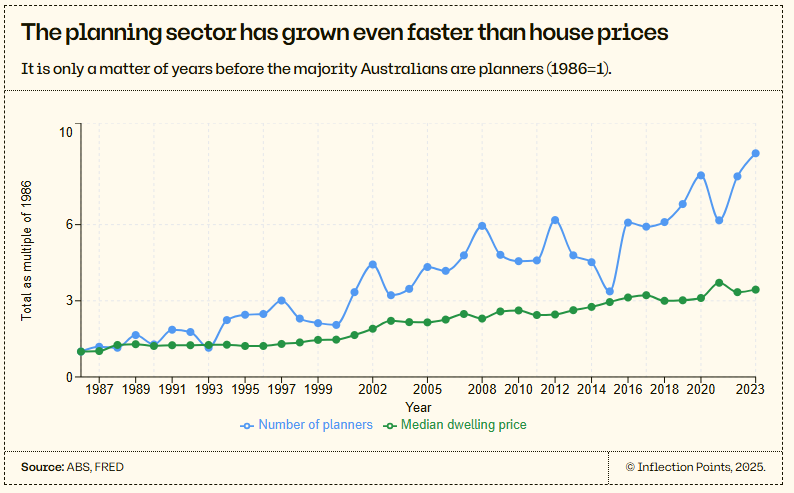
Thus, the evidence clearly indicates that administrative complexity has consumed the planning industry, lowering productivity.
Master Builders Australia’s (MBA) pre-budget submission also notes the bureaucratisation of the homebuilding industry.
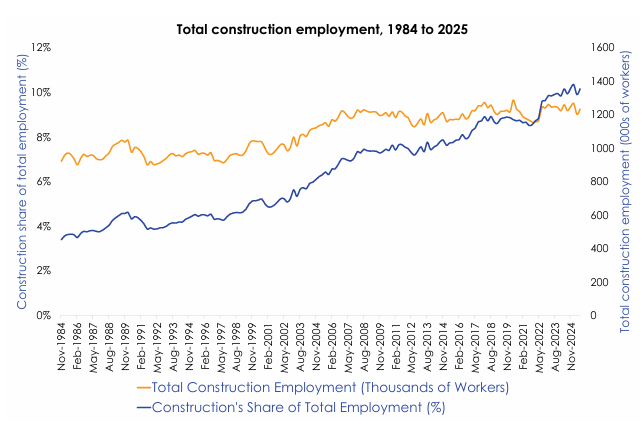
As illustrated below by MBA, the number of Australians working in construction increased significantly over the past 40 years, both in raw number terms and as a share of total employment:
However, tradies make up only one half of the construction workforce today versus around 53-54% up until the early 2000s:
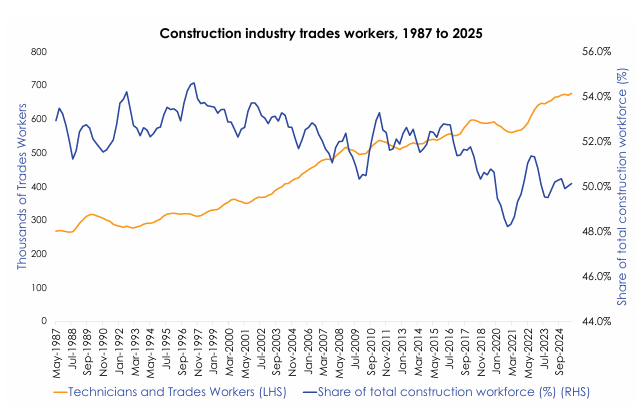
As illustrated above, the share of tradies working in construction fell sharply over the past decade.
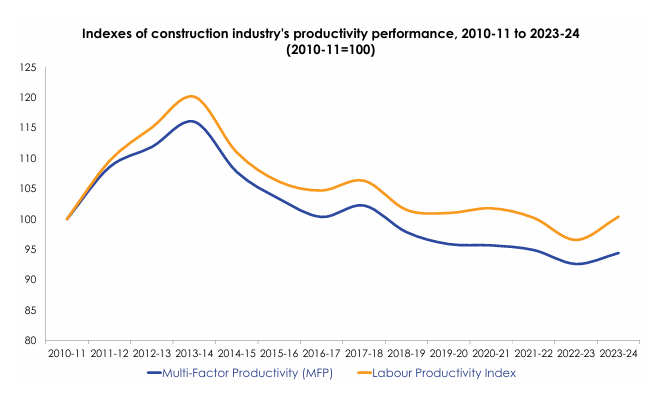
This administrative bloat has contributed to the overall reduction in construction sector productivity:
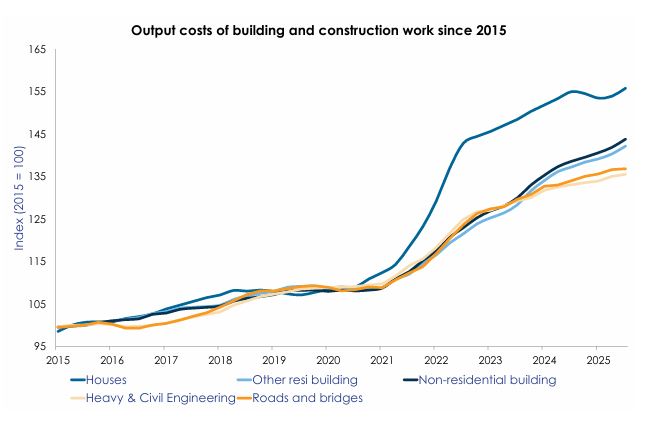
Residential construction costs have also soared, in part reflecting the lower productivity:
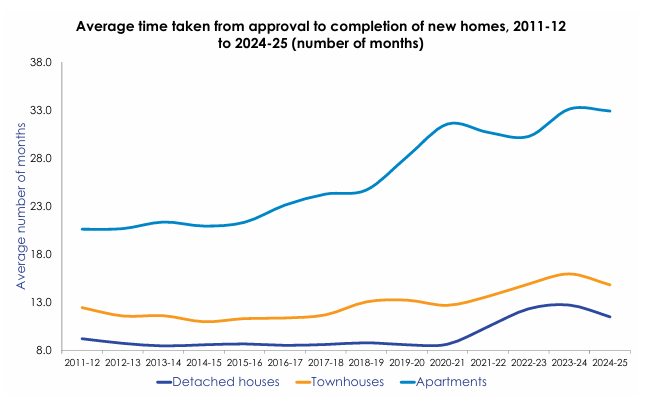
The time taken to build new housing has likewise ballooned, especially for apartments, reflecting lower productivity:
Australia’s housing supply situation is made worse by the fact that few migrants work in construction.
According to the Grattan Institute, migrants who arrived in Australia within the five years to 2021 accounted for only 2.8% of the construction workforce, even though they make up 4.4% of total workers.
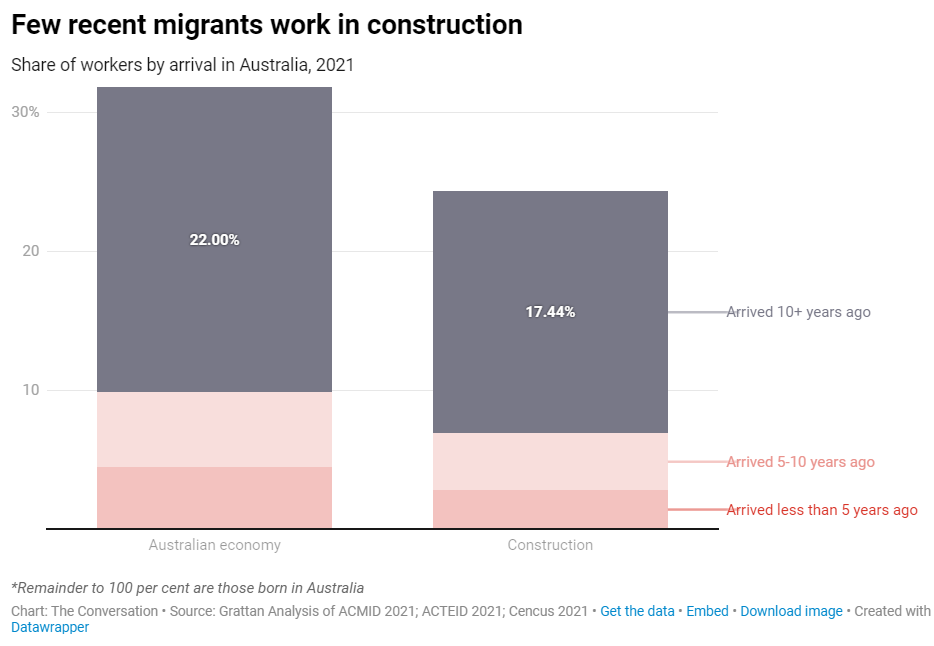
As a result, Australia’s migration program dramatically raises demand for housing and infrastructure while not increasing supply.
The Takeaway:
The Albanese government has a five-year target of building 1.2 million homes, equating to 240,000 units per year, and the program began on July 1, 2024.
However, as of the September quarter of 2025, only 219,000 homes had been completed, falling 27% short of the 300,000 needed to meet the target.
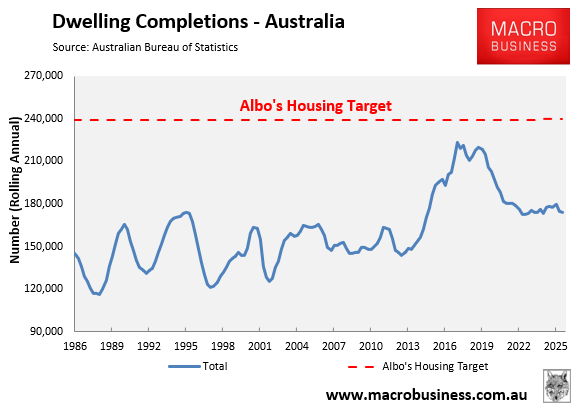
Without major productivity gains in the construction sector, Australia’s housing production rate will remain inadequate to keep pace with the nation’s strong population growth.
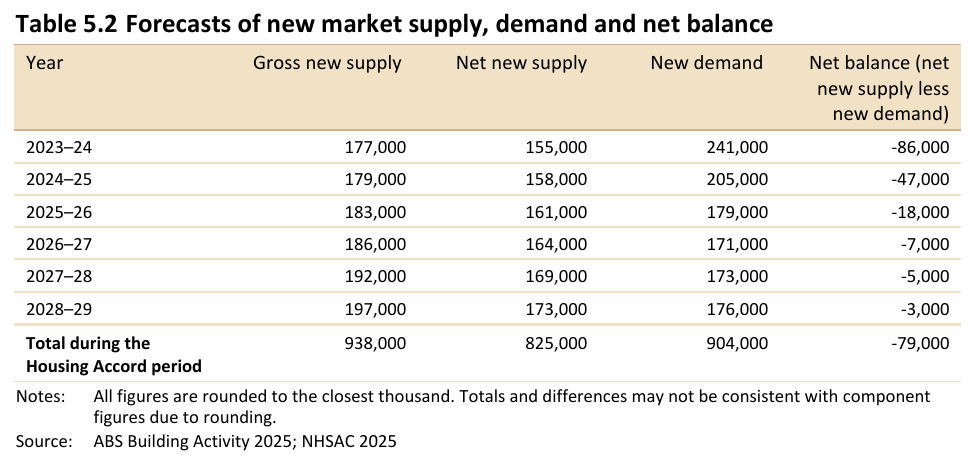
In fact, the federal government’s own National Housing Supply and Affordability Council (NHSAC) forecast a cumulative shortfall of 79,000 homes over the five-year Housing Accord period:
Australia clearly needs to reduce administrative complexity and red tape while operating a significantly smaller, more targeted migration system.
Otherwise, the nation’s housing shortage and rental crisis will worsen.
