
Richard Denniss, co‑Chief Executive Officer of The Australia Institute, published an article dismissing the claim that Australia is suffering from a housing shortage.
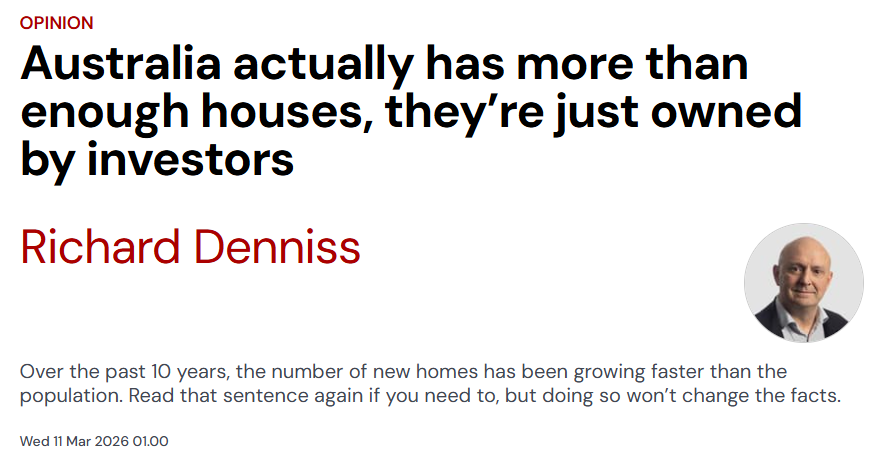
Denniss claims that “Australia actually has more than enough houses, they’re just owned by investors”.
He cited ABS data on the number of dwelling showing that “over the past 10 years, the number of new homes has been growing faster than the population”.
“Going back even further shows the same results. Comparing the 2001 census to the most recent census in 2021, the population increased by 34%, but the number of dwellings increased faster, by 39%”.
Denniss instead blames Australia’s housing crisis on two primary factors:
- the 50% capital gains tax (CGT) discount; and
- negative gearing.
“Every time a property investor buys an existing house to rent out, they just reduced the supply of housing for the young family looking for a place to make their own”, Denniss argues.
“The reason that cutting the CGT discount will lead to a big increase in supply of homes for owner occupiers is not that it will make builders build faster, but because it will make hundreds of thousands of property speculators decide they don’t want to hang on to so many houses”.
“And when the tax concessions for capital gains aren’t so generous, there will be fewer property speculators showing up at auctions, and they won’t be so willing to bid as high as they currently do, leading to a reduction in demand”, Denniss says.
I agree with Denniss that Australia should reduce the attractiveness of the CGT discount and negative gearing, as this would improve purchase affordability at the margin, increase home ownership rates slightly, and boost the federal budget.
However, Denniss’ argument that Australia has built enough homes this century based off raw percentage increases in the housing stock is asinine.
First, Australia’s fertility rate has collapsed well below replacement. Therefore, the average household size has shrunk and Australia needs more homes for any given population size.
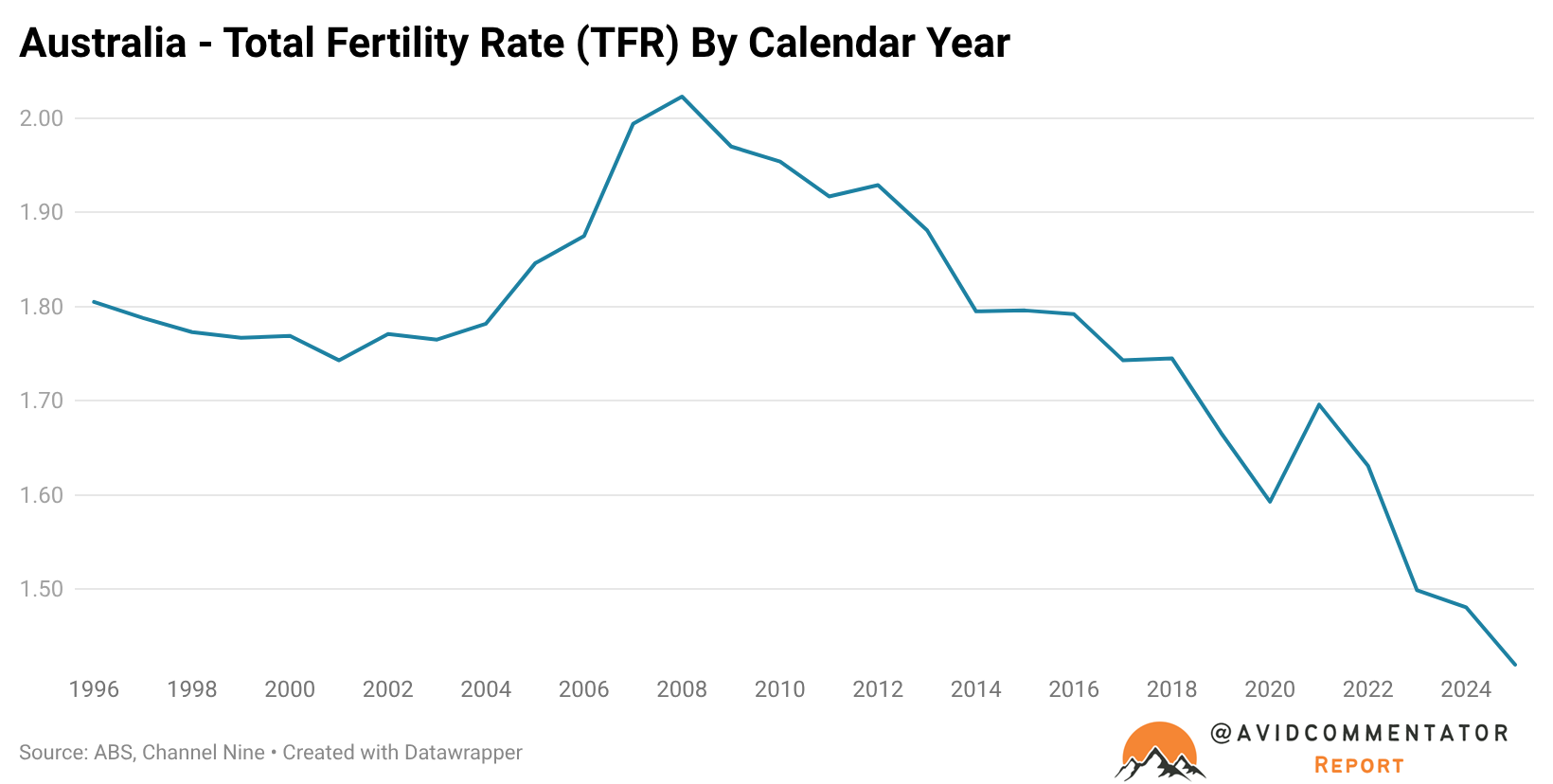
As a result, the adult working-age population grew significantly faster in the decade to June 2025 (i.e., by 54%) than the overall population did (i.e., by 46%).
Second, Denniss’ claims contrast with the assessment of the federal government’s own National Housing Supply and Affordability Council (NHSAC), which categorically says that Australia has a housing shortage, and it is getting worse.
In its State of the Housing System 2025 report, the NHSAC repeatedly states that:
- Australia has a structural undersupply of housing
- New construction is not keeping up with population growth
- The shortage will worsen by 79,000 dwellings by 2029
AMP chief economist Shane Oliver also forecast last year that Australia has a cumulative housing shortage of at least 200,000 dwellings, which began when net overseas migration was more than doubled in the mid-2000s:
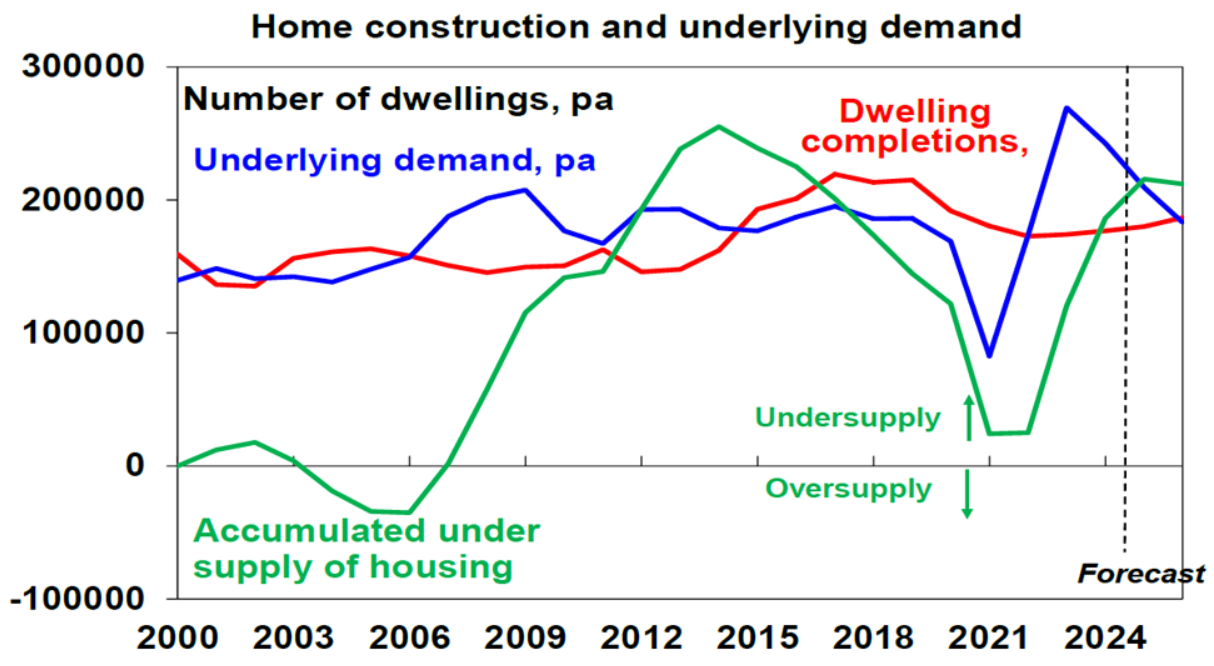
Source: Shane Oliver (AMP)
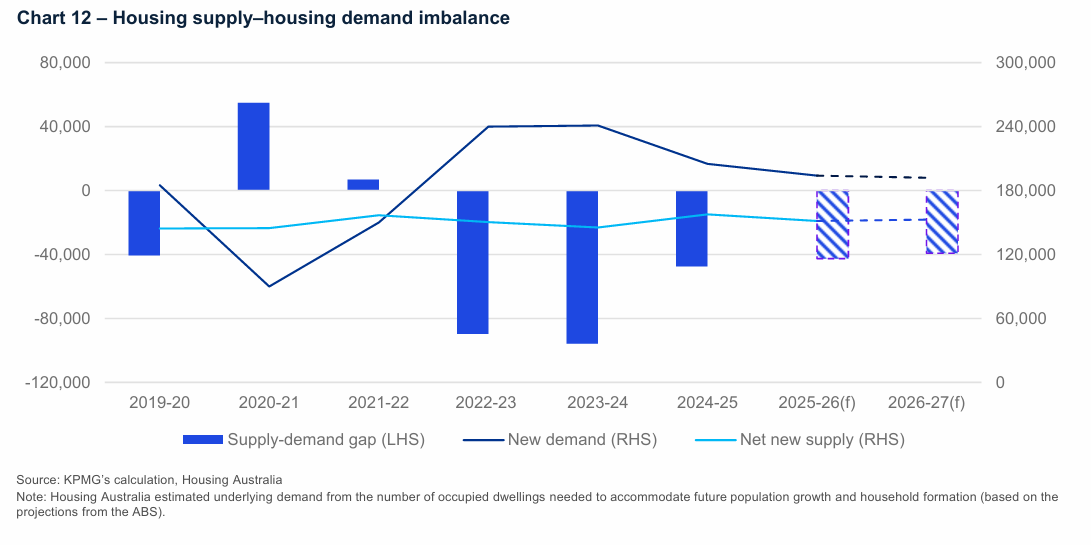
Whereas KPMG’s latest housing report shows that Australia had a shortage of 40,000 homes in 2019-20, even before the pandemic, with shortages also expected each year between 2022-23 and 2026-27:
Finally, Richard Denniss is conspicuously silent on the rental market, which is experiencing extreme shortages.
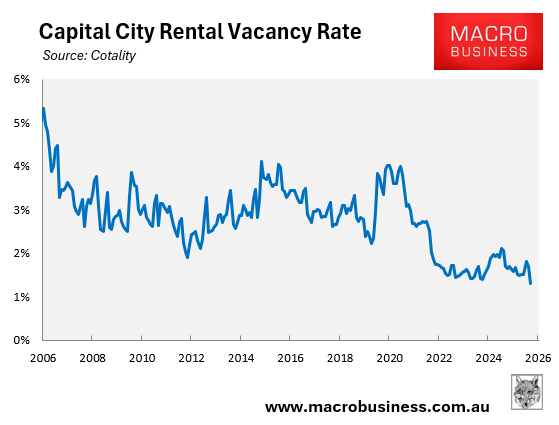
The national rental vacancy rate is tracking at a record low:
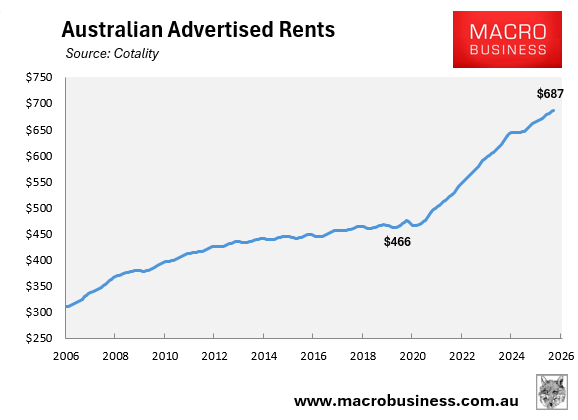
National advertised rents have soared by 47% since the end of 2019:
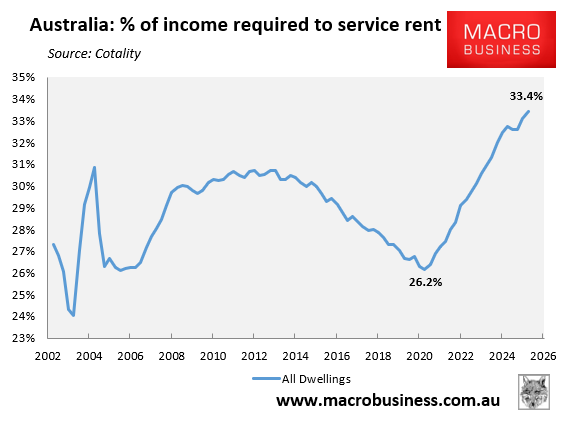
And rental affordability is tracking at its worst level in recorded history:
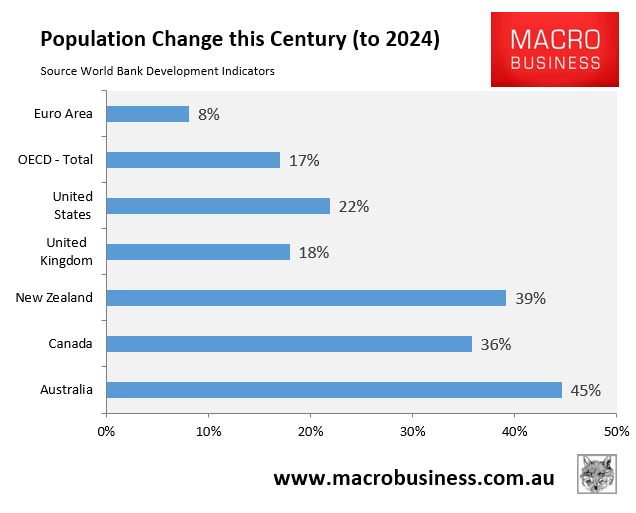
Contrary to Richard Denniss’ claims, Australia has not built enough homes for its ballooning population.
The first best solution, therefore, is to copy Canada and restrict the flow of immigration to a level well below the nation’s capacity to build housing and infrastructure.
Doing so would help to lower rents immediately while also taking some pressure off prices.
First home buyers would benefit directly via:
- Paying lower rents, thereby increasing their ability to save a housing deposit; and
- Through downward pressure on prices.
The Australia Institute used to talk sense on immigration. But now it runs interference on the issue.
