
With the likelihood of a protracted war in the Middle East increasing, Australia is facing rising energy prices on three fronts.
Rising Oil (Petrol and Diesel) Prices:
The price of oil has already risen and should continue to do so as global supplies are halted and the Straits of Hormuz seize up.
All Iran needs to do is sink an oil tanker or two, and the Straits will close for the foreseeable future.
There is also the risk that nations will panic to stockpile energy supplies, driving prices up further.
The implications for Australia are obvious: higher petrol and diesel prices and rising costs to transport goods by road, rail and ship.
All goods in Australia are transported using diesel fuel. Therefore, rising diesel prices will add cost-push inflation to the entire freight supply chain, which will ultimately be passed on as higher prices.
Rising gas prices:
East Coast Australia doesn’t have a functioning reservation policy requiring gas companies to supply Australians before exporting. The domestic gas price is directly linked to the international market.
Global gas prices are rising, in part because exports from Qatar – the third biggest exporter – have stopped.
Thus, East Coast Australia is facing higher gas prices, which will impact industry and households as we head into winter.
Manufacturers reliant on gas are most exposed, as are Victorian households that use gas for heating in winter.
Rising electricity prices:
Gas is a key marginal price setter in the wholesale electricity market. As a result, rising gas prices mean rising electricity prices.
We saw the impact when Russia invaded Ukraine, and gas and electricity prices both spiked. We risk a repeat of this scenario.
What should the federal government do?
There isn’t much that Australia can do about rising oil prices, given that we are an importer.
However, given that East Coast Australia is a major gas exporter, exporting around three-quarters of its gas, policymakers should decouple the domestic gas price from the international market.
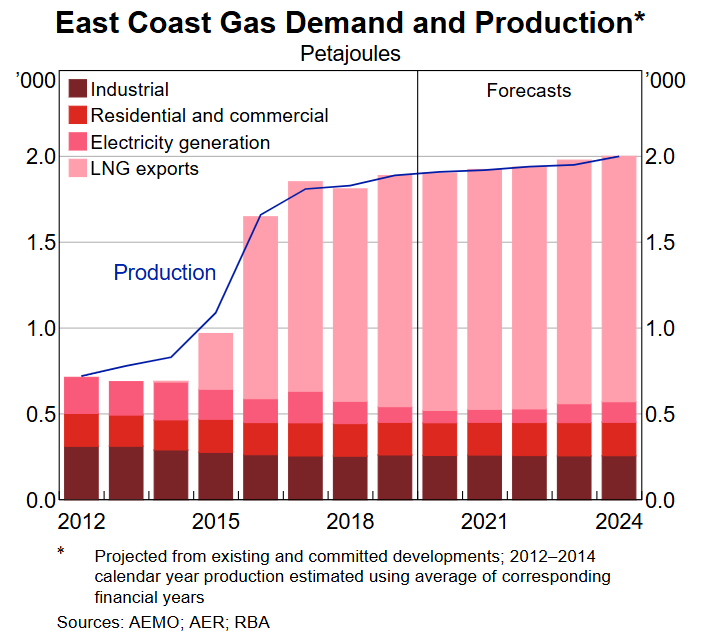
This could be achieved by implementing an export levy on spot gas above $7 per gigajoule, with higher levies applying as the price rises.
Doing so would incentivise gas producers to supply the domestic market.
Any gas exported on the spot market would also raise tax revenue, which could then be recycled as bill relief for households and businesses.
One couldn’t envisage a situation where consumers in Middle Eastern oil-exporting nations like Saudi Arabia pay $2 or more for a litre of petrol.
Australia is the equivalent of a Middle East oil exporter when it comes to gas. Therefore, Australians shouldn’t be expected to pay international prices for gas.
I discussed this topic in my weekend Treasury of Common Sense on Radio 2GB/4BC:
