
On face value, Australia’s labour market is in a solid position.
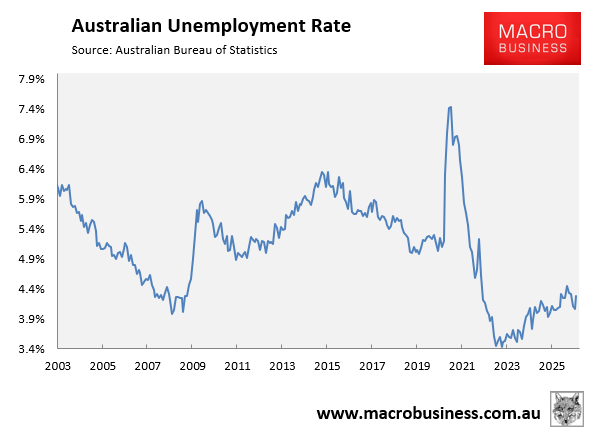
The nation’s unemployment rate remained at a historically low 4.3% in February 2026, well below the decade average of 4.9%:
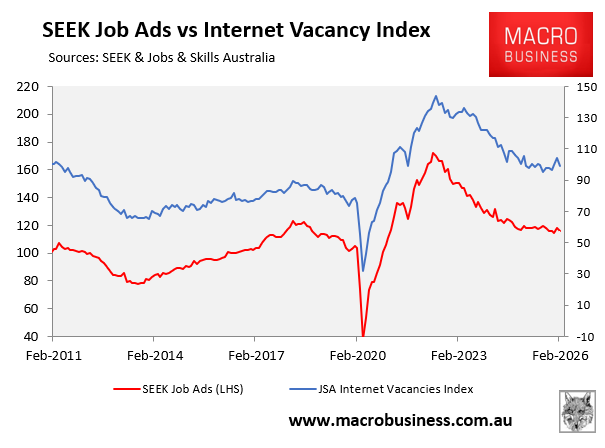
Australia’s job advertisements and job vacancies are also tracking slightly above pre-pandemic levels:
However, there are economic storm clouds on the horizon in the form of the Reserve Bank of Australia’s (RBA) monetary tightening, the global energy shock, and the expansion of artificial intelligence (AI).
The RBA has already delivered back-to-back rate hikes, and the interest rate futures market has fully priced two more hikes before the end of the year, which would take the official cash rate to 4.60%—its highest level in 15 years.
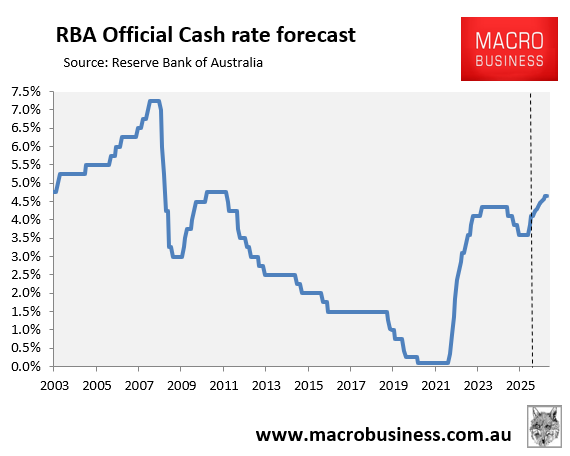
Such monetary tightening would place further financial strain on households and businesses, resulting in a slower economy and higher unemployment, other things equal.
The RBA’s tightening has also coincided with soaring global energy prices amid the war in the Middle East.
Australia is especially vulnerable given its extreme reliance on diesel fuel for freight, mining, agriculture, emergency services, and backup power generation.
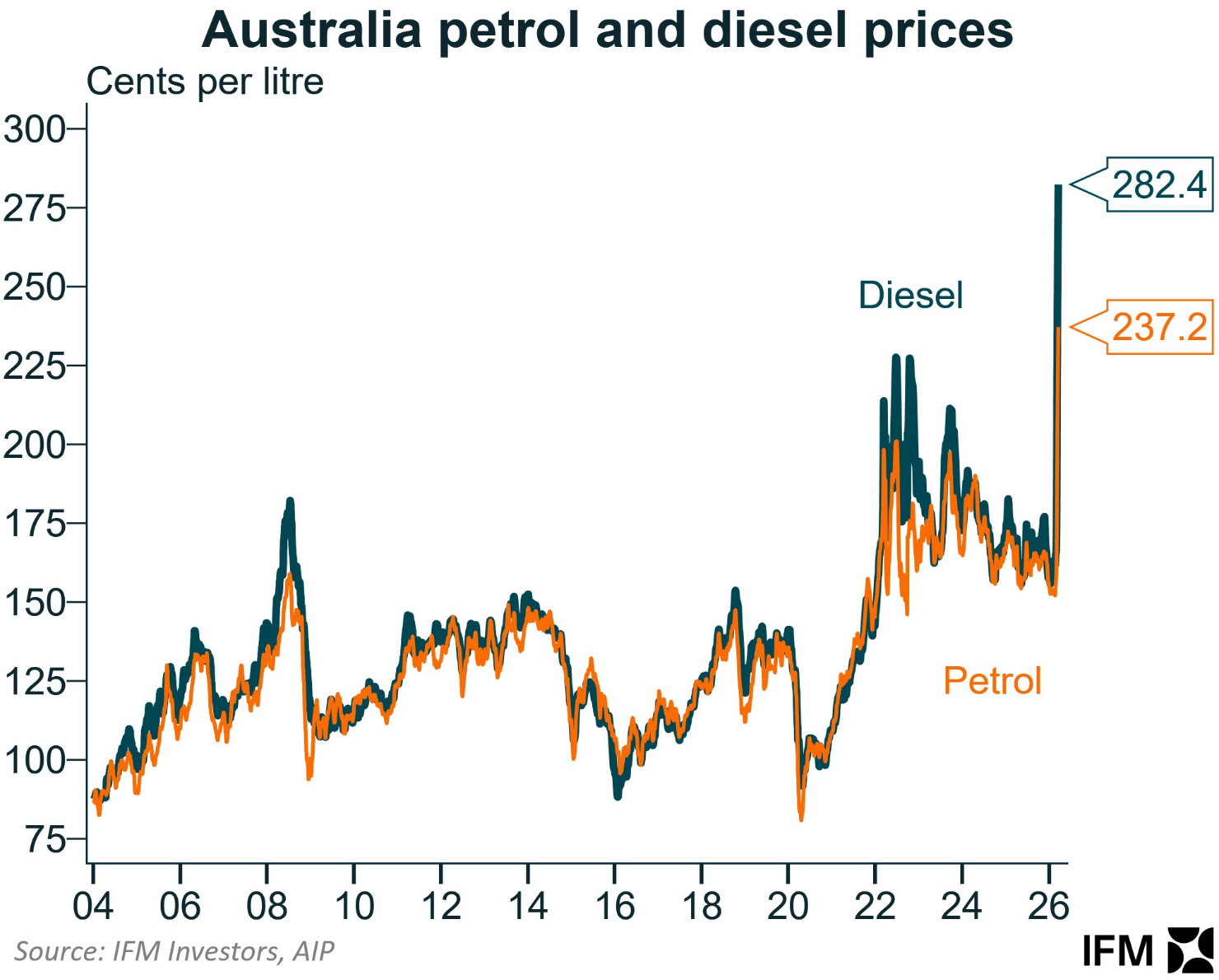
The prospect of diesel fuel shortages could literally shut down parts of the economy, resulting in recession and higher unemployment.
Finally, the rapid expansion of AI risks widespread job losses across many industries.
The latest note from Tim Toohey at Yarra Capital warned that if AI is “deployed at scale in Australia over the next two years”, then the nation’s unemployment rate could hit 6% or higher:
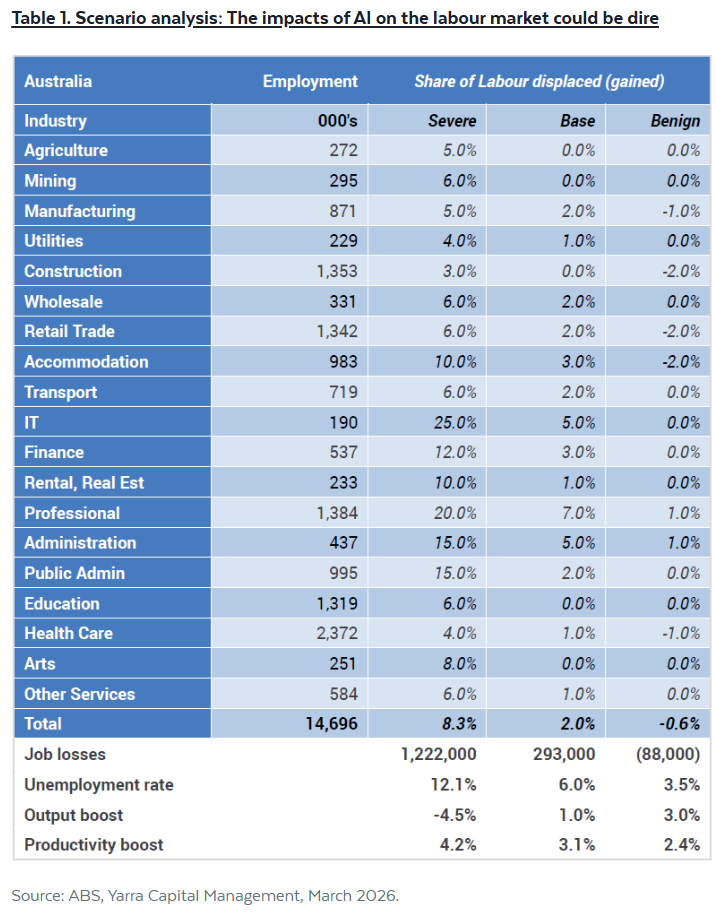
Toohey’s analysis does not include the potential adverse effects on unemployment arising from the global energy shock and higher interest rates, which would compound the AI impacts.
Indeed, the latest Mercer survey of Australian senior executives, human resources personnel, and employees found that 100% of HR managers believe their company will cut jobs due to AI within two years, with 60% believing that one in five jobs will be lost because of AI.
Thus, however you cut it, Australia faces a potential sharp rise in unemployment.
The federal government’s high immigration policy will exacerbate the problem, since the labour force continues to grow at a faster pace than before the pandemic, with 413,000 working-age adults added in the year to January 2026:
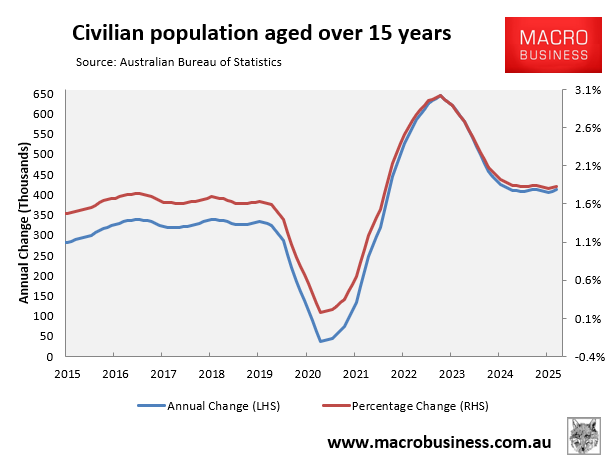
Treasurer Jim Chalmers admitted last week that net overseas migration would remain stronger for longer, suggesting that the labour force will continue to grow at a historically strong pace in the period ahead.
Strong growth in labour supply in an economy experiencing weak demand is a recipe for significant rises in unemployment.
