
The Australian Bureau of Statistics (ABS) has released the February labour force report, which recorded a rise in the headline unemployment rate to 4.3% (up from 4.1% in January) despite the creation of 48,900 jobs over the month:
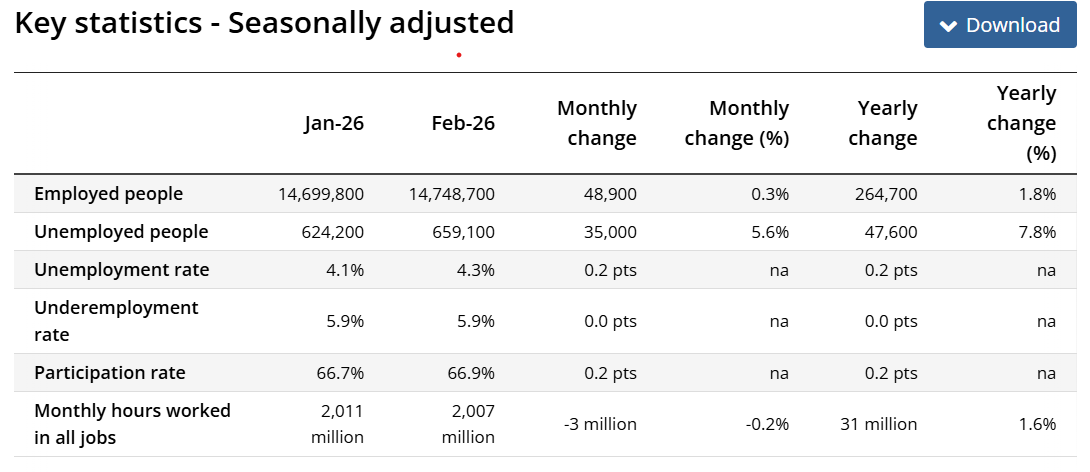
However, monthly hours worked declined by 0.2%, suggesting the jobs data isn’t as strong as it appears.
The decline in hours worked was due to part-time employment rising by 79,000 people, while full-time employment fell by 30,000 people.
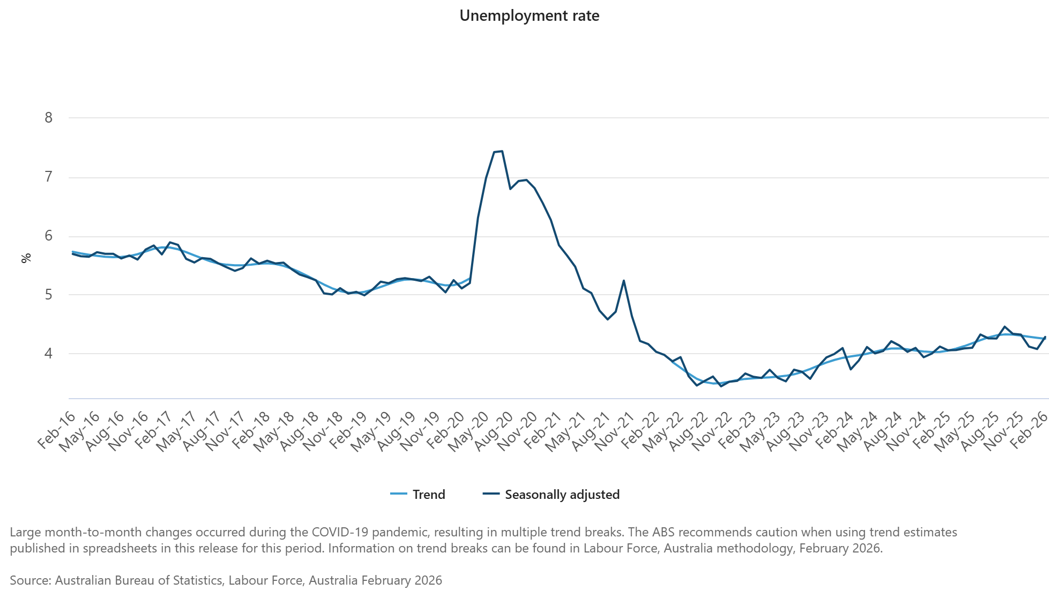
Even so, the trend unemployment rate fell marginally from a revised 4.3% in January to 4.2% in February:
This data obviously pre-dates the war in the Middle East, which has sent global energy prices (oil and gas) soaring and threatens to plunge the world into a severe recession.
Australia is especially exposed, given that it has only around 30 days of liquid fuel supplies—roughly one-third of the International Energy Agency’s minimum requirement of 90 days—and has minimal domestic petroleum refining capacity with only two facilities in operation (versus seven in the early 2000s).
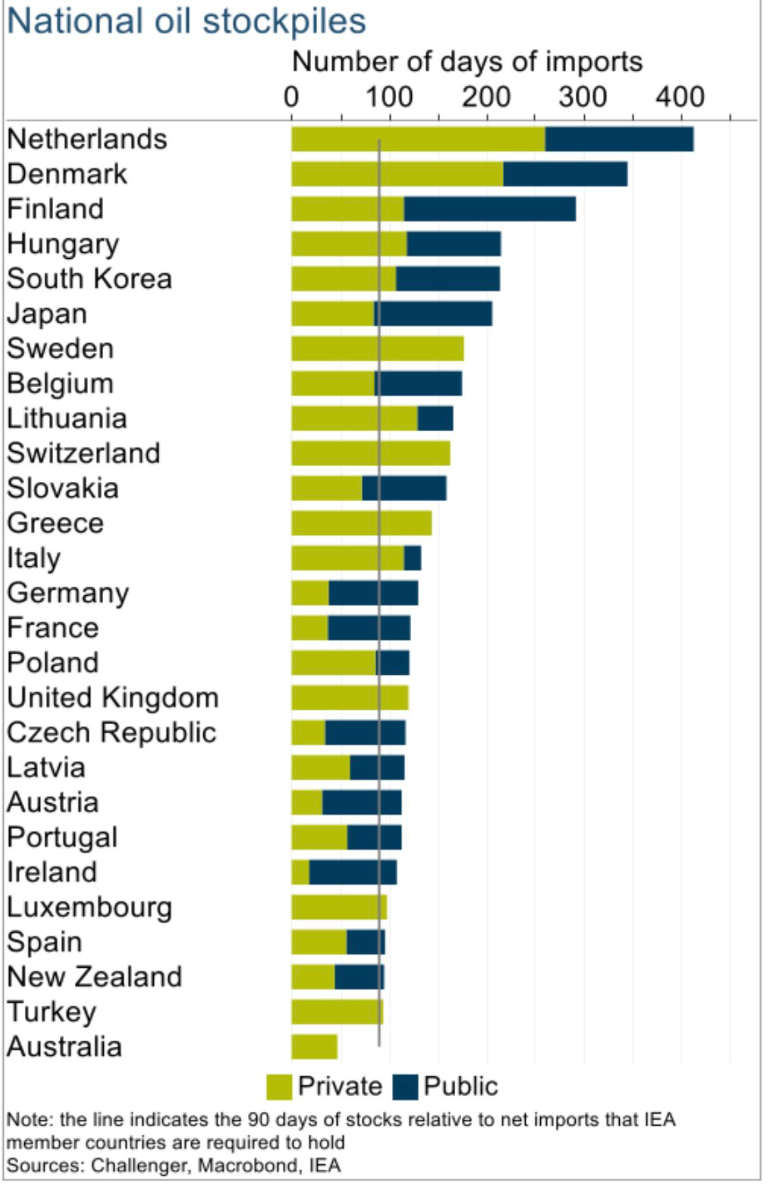
Australia is also one of the world’s most diesel-dependent economies, particularly in mining, agriculture, freight, and backup power generation.
The strong probability of diesel supply shortages literally risks shutting down Australia’s economy, resulting in a deep recession and surging unemployment.
These ABS figures, therefore, should be considered the ‘calm before the unemployment storm’.
The Reserve Bank of Australia (RBA) was too hasty in lifting rates this week, despite the poor inflation outlook.
I would not be surprised to see the RBA slashing rates by year’s end, similar to what it did during the Global Financial Crisis, where it hiked into the bust.
