
When your leadership challenge turns into a joke before it even starts, it’s not a good look. Crikey.
I rarely agree with Crikey these days, but Bernard Keane is right about this.
Is Angus Taylor carrying out the single worst major party leadership challenge in Australian political history?
…The stuttering, bumbling, on-again-off-again nature of Taylor’s “assault” (one feels compelled to put any active-sounding word in air quotes when referring to him) should give every Liberal MP considering backing him pause. Forget the Australian gold standard of being unable to organise a piss-up in a brewery; Taylor has given us a new standard of incompetence: unable to organise a leadership challenge in a party rating 18%.
The only person who can head off what will be a debacle that will leave us bereft of a meaningful opposition for the rest of this parliamentary term is Andrew Hastie…Hastie is the only Liberal MP who can start rebuilding the Coalition as a political force, even if he’s going to drag it to the right to do so. He’s the only potential leader who can galvanise his team, who can attract voters, including One Nation supporters, to have another look at a party they’ve rejected, and who can take the fight to a woeful Labor government. His advantage, greater than his inexperience and polarising quality, is that he actually believes in things — compared to Taylor, who’d need six polls, a dozen focus groups and a $400,000 consultant’s report before signing up to anything.
Sea Bass Taylor is an agrarian aristocrat. Quite apart from his flapping aquatic demeanour and delivery, how is he going to take it to One Nation with any persuasive conviction?
Sea Bass Taylor embodies traditional LNP values as a Rhodes Scholar, an economics graduate, and a successful agribusinessman. These are the features of past Conservatism in Australian politics.
The rising values of the right are nativism, national interest, deglobalisation, hard borders, sovereignty, sovereign authenticity, and championing local workers.
Some call this populism, and in some cases (such as Trump) it is, but there are many breeds of it, embodied in figures like the centre-right’s Mark Carney of Canada or the centre-left’s Mette Frederiksen of Denmark, pragmatic politicians who have shifted enough with the pendulum to neutralise the populist outriders. Angus Taylor is the worst possible choice to do that.
Look at where ON is most popular: working people.
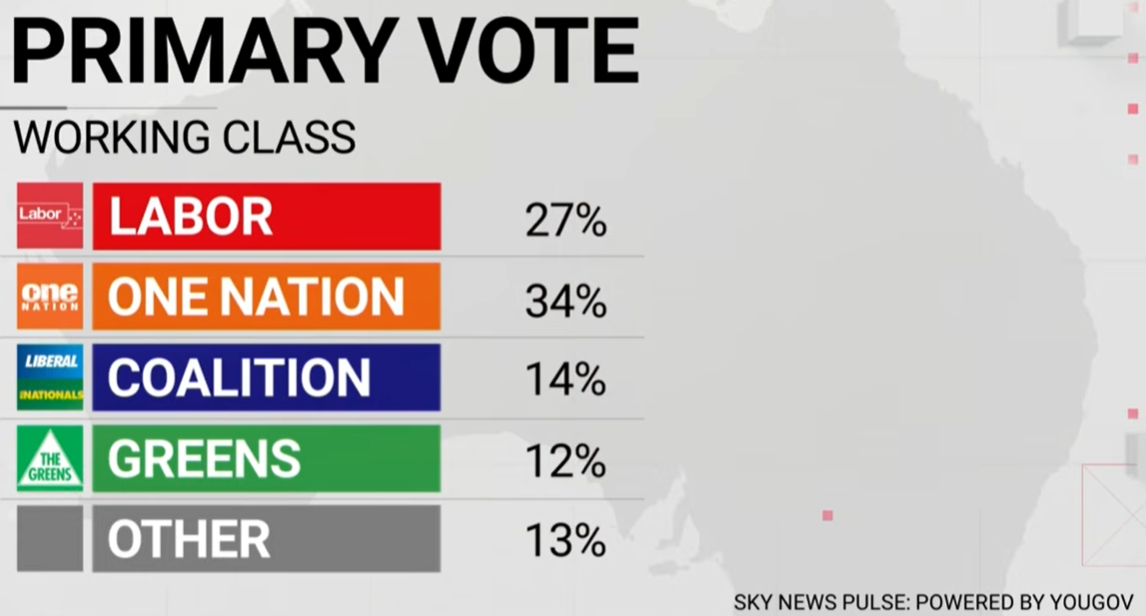
Sea Bass Taylor will entrench One Nation as the official opposition. And the longer that goes, the harder it will be to shift. See Trump Republicans and UKIP in the UK.
This is not a moment for returned favours, back-slapped quid pro quo, and master-and-apprentice promotions. This is a critical moment that demands transformation.
It is existential, and if the LNP can’t see it, it is doomed all the more.
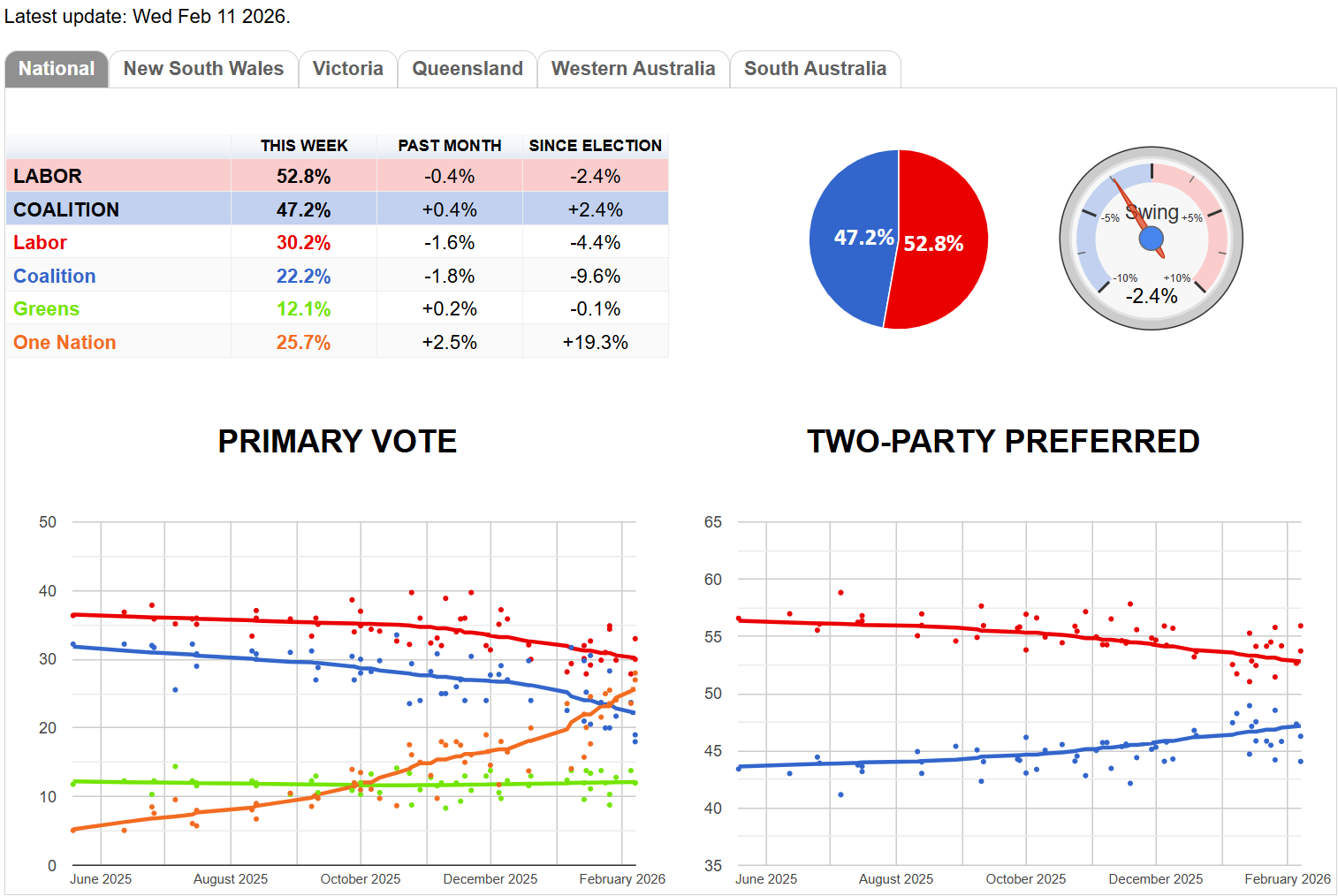
There isn’t any major national polling showing much personal support for Sea Bass Taylor right now.
His personal approval ratings are in the low teens in some polls, and he is largely unknown.
But most polls show that voters are unhappy with the Coalition and its unclear leadership, giving his challenge more political momentum.
That is, his challenge seems more about him than about the country.
I would go so far as to say that if the LNP elects Sea Bass Taylor, then Andrew Hastie should open a conversation with One Nation about becoming its leader and dragging it into semi-respectability.
But don’t ask me; ask Sea Bass Taylor’s greatest supporters at Sky News.
Why must Canberra always make all of the worst choices before it makes the right one?
