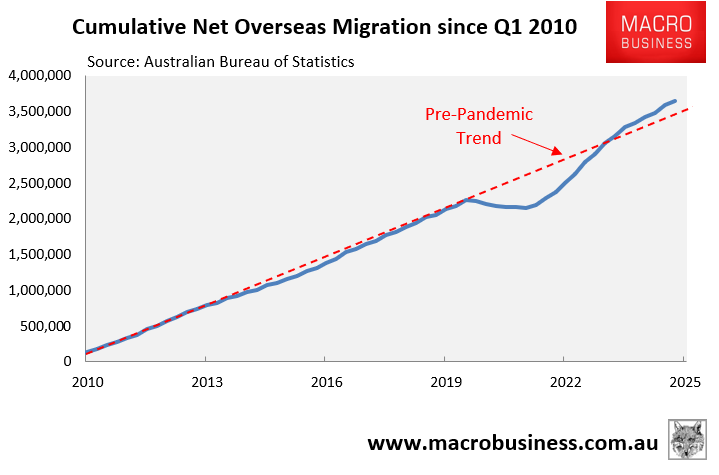
Since the end of 2019, Australia has recorded the strongest net overseas migration (NOM) in the nation’s history, with 266,000 net migrants arriving annually, including the Covid-19 border closures:
According to Shane Oliver at AMP, Australia’s cumulative housing shortage is tracking somewhere between 200,000 and 300,000, depending on assumptions about the number of people per dwelling:
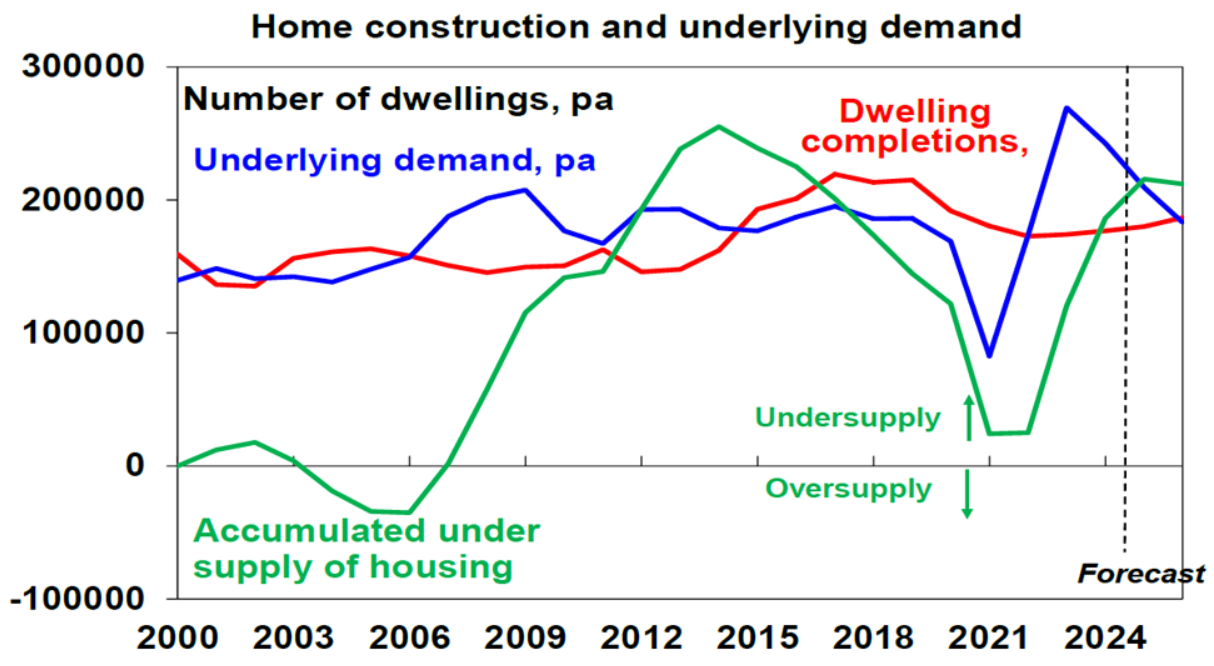
Chart by Shane Oliver (AMP)
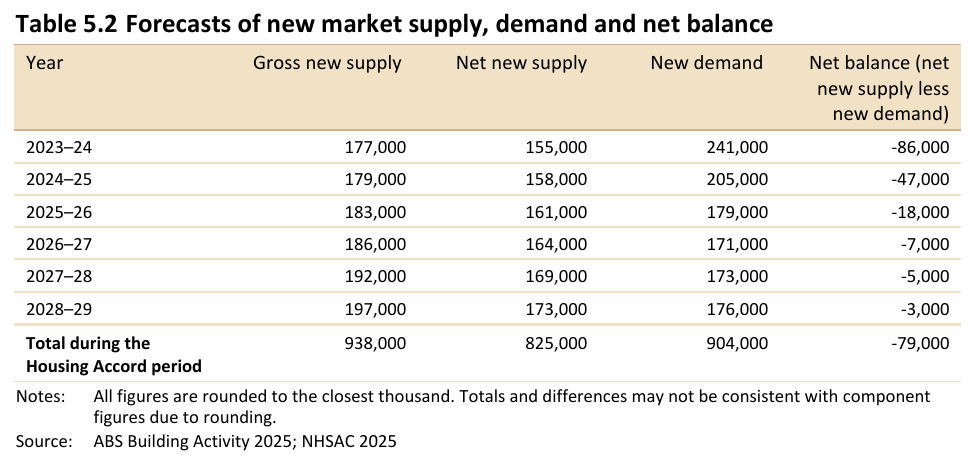
The federal government’s own National Housing Supply and Affordability Council (NHSAC) forecast that Australia’s housing shortage would worsen by 79,000 over the five years to 2028-29, as the population expands faster than new dwellings can be built:
Understandably, the record migration surge has caused angst in the community about housing affordability, fueling a swing towards One Nation.
Despite the obvious shortfall in housing supply, explicitly stated by NHSAC, media commentators still try to claim that running one of the world’s largest migration systems has little discernable impact on the housing market.
The latest example of this gaslighting comes from Millie Muroi, Economics Writer at The SMH, who claims that it is wrong to blame immigration for expensive house prices:
Immigration is driving up house prices in Australia, right? Sorry, but you’re looking at the wrong people.
Yes, those moving to Australia add to demand for housing (after all, they need somewhere to stay).
But last financial year, nearly two-thirds of these people were on temporary visas and half were international students. They might push up rents, especially in the capital cities where they tend to move, but these migrants rarely look to buy a place when they arrive, and many leave once their visa expires.
We also know they contribute a lot when they’re here. Migrants do the jobs many of us don’t want to (from hospital and healthcare work to hospitality shifts) and contribute more in tax than they tend to benefit from government services, as well as filling skills shortages in areas such as construction: the very thing we need to build more houses.
Muroi goes on to argue that cutting immigration would be costly, despite arguing last month that maintaining a high immigration rate is also costly and will worsen housing shortages:
Without investment in the infrastructure and housing needed to support a larger population, and without shifting some of the tax burden back onto older, wealthier Australians, we risk everyone ending up with a smaller slice of the economic pie.
Slowing down our population growth comes with costs, but so does keeping it going…
Muroi also claims that excessive investor demand via generous tax breaks is driving up house prices:
If you believe migrants drive up demand, you should be just as outraged—if not more—about most investors…
The problem is that the rules we’ve set give a leg-up to property investors—most of whom don’t need it—crushing many first home buyers in the process…
While immigrants seem to cop a disproportionate amount of blame (probably because they’re easy to spot), there’s a less visible group propelling demand for housing.
While it is true that excessive property investment helps to inflate prices, it has minimal impact on rents, which is the bigger concern from an affordability perspective.
Excessive immigration, on the other hand, has a mild inflationary impact on house prices and a huge impact on rents. Muroi conveniently ignores this rental impact.
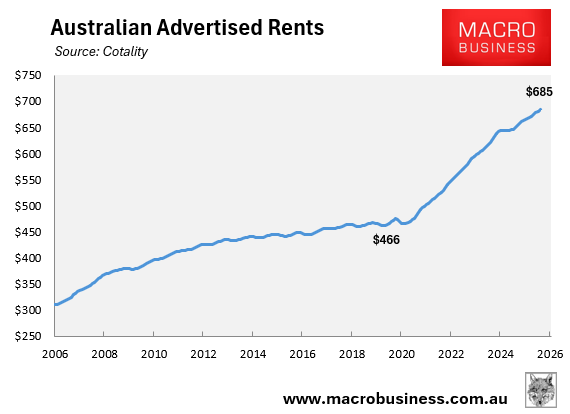
Since the end of 2019, the record net migration flows (i.e., 266,000 per annum) have driven up national advertised rents by 47%, according to Cotality, adding $11,400 to the annual cost of renting:
High levels of immigration are especially detrimental for first home buyers since it:
- Increases the cost of renting, thereby making it harder to save a housing deposit; and
- Helps to push up the price of homes, making it more expensive to purchase.
By contrast, property tax concessions only harm first home buyers by pushing up prices while having no impact on rents.
Therefore, excessive levels of immigration are worse from an overall housing affordability perspective than property tax concessions.
Of course, the optimal policy approach is to address both issues simultaneously, which Muroi has failed to argue.