
Caitlin Fitzsimmons, the environment and climate reporter for The Sydney Morning Herald, has written an article challenging the common belief that younger Australians are being locked out of home ownership.
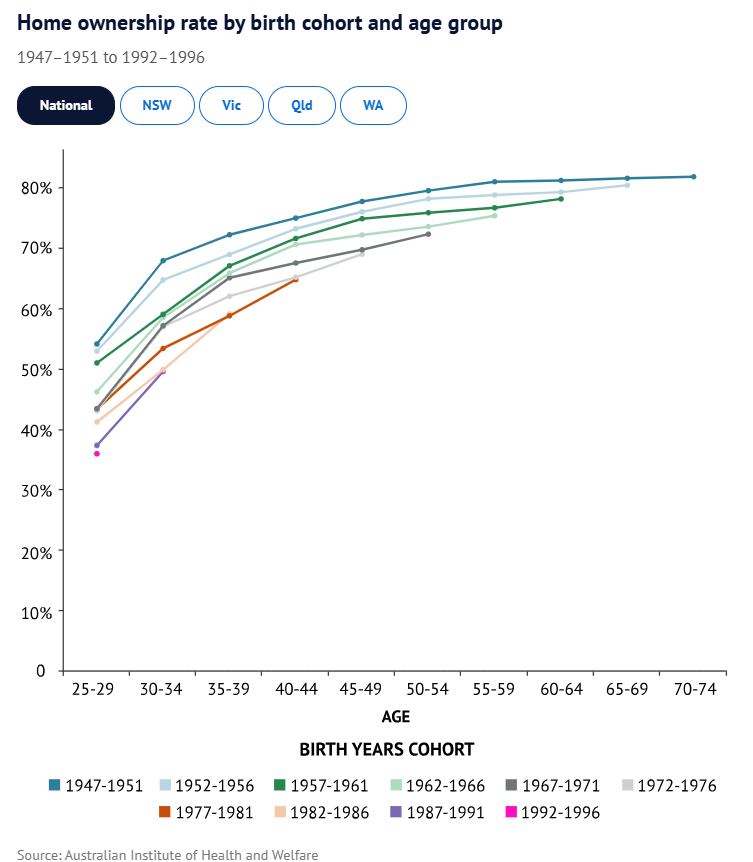
While it’s true that people in their 20s are buying later than previous generations, Fitzsimmons points to Census data compiled by the Australian Institute of Health and Welfare (AIHW) showing that Millennials are rapidly catching up in their 30s and early 40s, in some cases, overtaking Generation X at the same age.
Fitzsimmons cites two examples from the data:
- Older Millennials (born 1982–86) had a 59.2% home ownership rate in their late 30s (2021), slightly higher than younger Gen X (born 1977–81) at the same age in 2016.
- Middle Millennials (1987–91) caught up to older Millennials in their early 30s.
She also argues that Millennials are more likely to be children of wealthy Baby Boomers and receive more financial assistance from the ‘Bank of Mum and Dad’.
There are several issues with Fitzsimmons’ analysis.
First, the data is only current to the 2021 Census. Since then, housing affordability—both to purchase and rent—has collapsed.
The following chart plots Australia’s dwelling value to income ratio, as measured by Cotality in its latest housing affordability report:
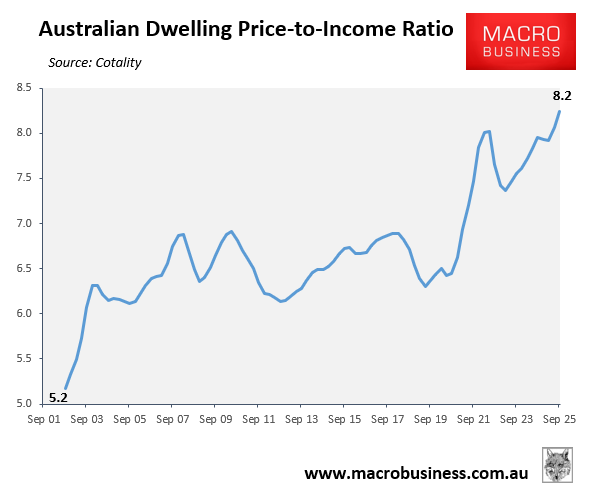
In the September quarter of 2025, Australia’s dwelling price-to-income ratio was 8.2, up from 7.2 times at the time of the 2021 Census.
Second, due to the sharp rise in interest rates since the 2021 Census, the percentage of household income required to meet repayments on the median new mortgage has risen from 28% in 2021 to 45% as of the September quarter of 2025, according to Cotality:
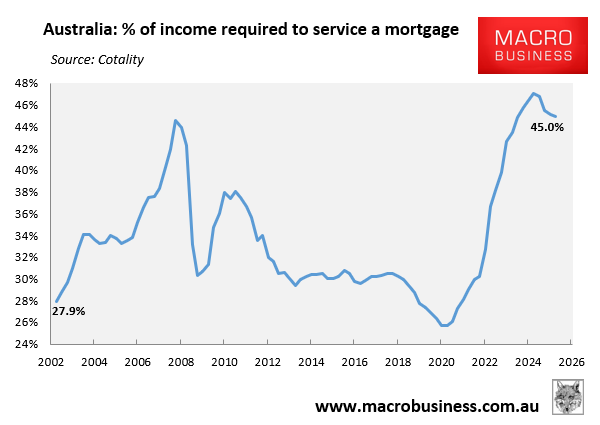
The latest 25-bp rate hike from the Reserve Bank, which is expected to be followed by more, would only make the situation worse.
Third, Cotality estimates that the number of years required to save a standard 20% deposit has increased from 9.6 at the time of the 2021 Census to a record 11.0 as of the September quarter of 2025:
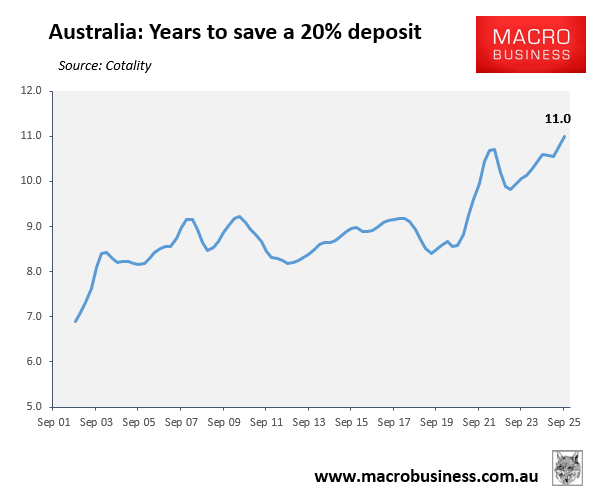
While the federal government’s 5% deposit scheme for first home buyers reduces the deposit gap, it also comes at the expense of larger mortgages, making borrowers more vulnerable to interest rate rises.
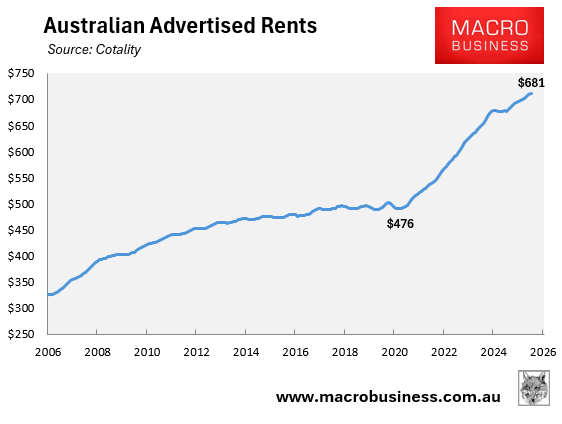
Finally, saving a deposit has become more difficult due to the 43% rise in national advertised rents over the past five years, which has added around $10,600 to the annual cost of renting, according to Cotality:
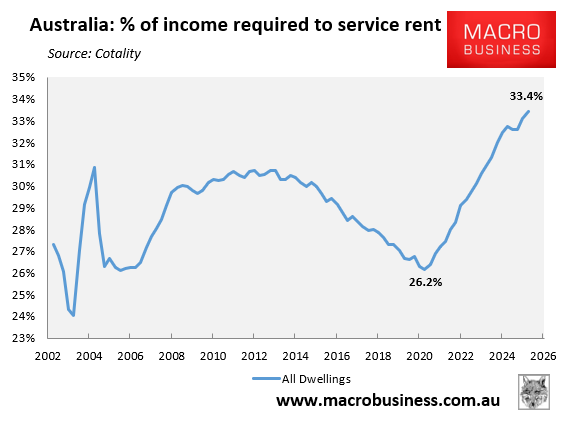
Cotality says that rental affordability has never been worse in Australia, with the median tenant household sacrificing a record 33.4% of their income servicing rent, up from 27% at the time of the 2021 Census:
Given that most first home buyers rent before they purchase, severe rental inflation makes it more difficult for them to save enough to become owner-occupiers.
The evidence above is clear. Housing affordability has worsened significantly since the 2021 Census, and home ownership has never been more difficult in Australia.
