In the decade to June 2025, NSW’s population expanded by 977,703, driven by 884,772 net overseas migration (NOM). The state lost 245,211 residents to other jurisdictions over the last decade, which was mostly offset by a natural increase of 403,898 (i.e., births minus deaths).
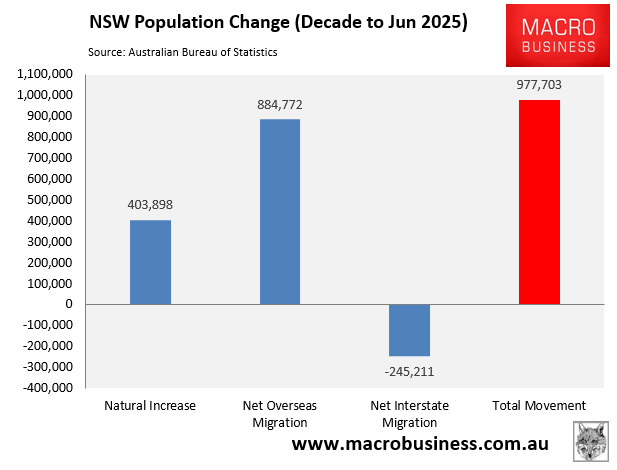
With NSW’s fertility rate of only 1.55 births per woman, most of the natural increase in the state’s population was also due to net overseas migration, i.e., migrants having children.
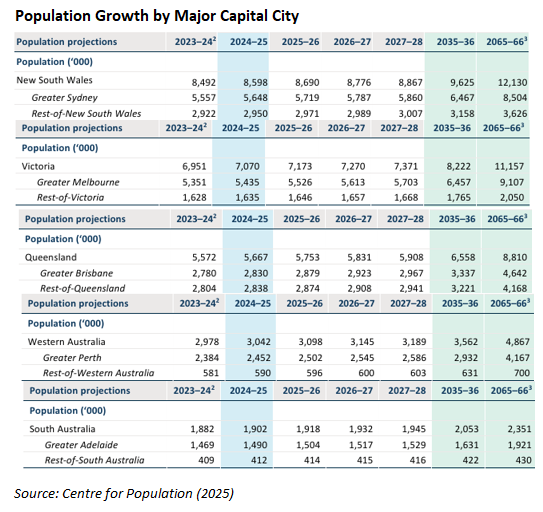
The latest projections from the Centre for Population show that Sydney will grow by 2.85 million people to 8.5 million by 2065-66, driven almost entirely by NOM, which is projected to add 2.77 million.
Sydney is projected to lose around 1.55 million residents to other jurisdictions, almost fully offsetting the 1.50 million residents expected to be gained through natural increase (i.e., births minus deaths), again driven by NOM (i.e., migrants having children).
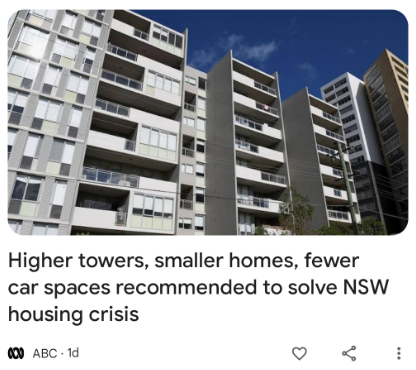
Sydney is currently experiencing record low housing affordability, both to purchase and rent, which the NSW Productivity and Equality Commission wants to solve by cramming residents into tiny high-rise apartment towers with reduced storage and natural light, smaller balconies, and fewer car spaces:
Multi-billionaire Meriton apartments founder Harry Triguboff told The Australian newspaper over the weekend that all developers are now building smaller apartments, for the simple reason that they cost less to buy.
“Now because they (apartment buyers) can’t afford it I am building them smaller … to sell easier”, Triguboff said.
“It’s everyone. We are building them smaller to sell them easier”, adding that his apartment buyers were previously Australian and Chinese. “Now we have Australians, Indians, and the Chinese still there. We also have Indonesians and Malaysians”.
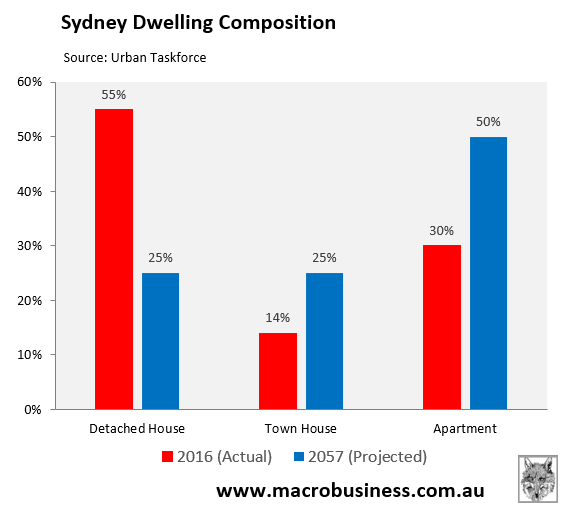
The Urban Taskforce projected that Sydney’s housing composition will completely transform over the coming decades from a majority of detached houses to a majority of apartments and townhouses:
Meanwhile, the SMH reported that due to the chronic shortage, the NSW government has approved nearly 1,000 homes on floodplains to ease the housing crisis.
The NSW government has moved to rezone land at Marsden Park North for 960 new homes and a major employment precinct, despite previously warning that development in the Hawkesbury–Nepean Valley could put lives at risk due to extreme flood exposure.
The Hawkesbury–Nepean is considered Australia’s highest unmitigated flood‑risk region. In 2023, Planning Minister Paul Scully publicly ruled out “building on high‑risk flood plains”.
However, with the state under pressure to deliver more housing, and with approvals lagging well behind demand, the government has moved ahead with the rezoning.
The Insurance Council warns, “There are already more than 240,000 homes in Australia that face a severe to extreme risk of flooding—we should not be adding to this”.
The obvious question arising from the above is: instead of consigning future Sydney residents to live in high-rise shoeboxes or on floodplains, why not slash immigration and prevent Sydney from growing into a megacity of 8.5 million people?
Nobody voted for endless high immigration, and most Australians do not support it.