
In 2024, the NSW Productivity and Equality Commission warned that high housing costs were causing a “brain drain” among 30- to 40-year-olds in Sydney.
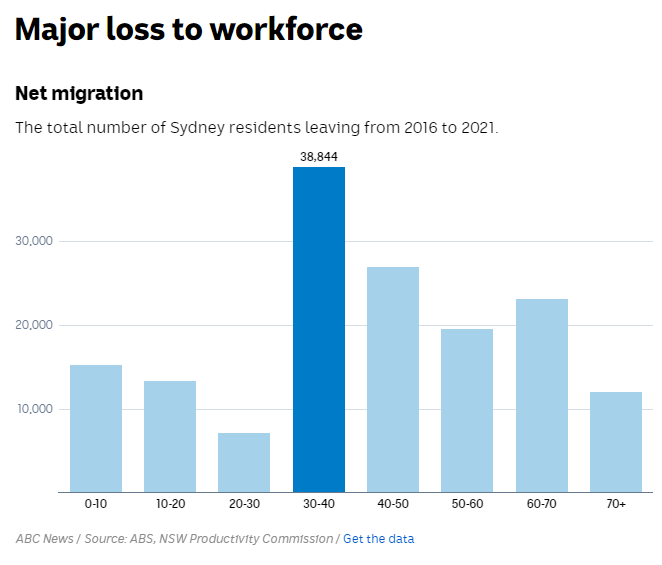
The NSW Productivity and Equality Commission estimated that Sydney lost around 35,000 persons aged 30 to 40 between 2016 and 2021.
According to the most recent quarterly population figures from the Australian Bureau of Statistics (ABS), the population of New South Wales (NSW) increased by 101,821 during the financial year 2024-25, driven almost entirely by net overseas migration (NOM) of 91,573:
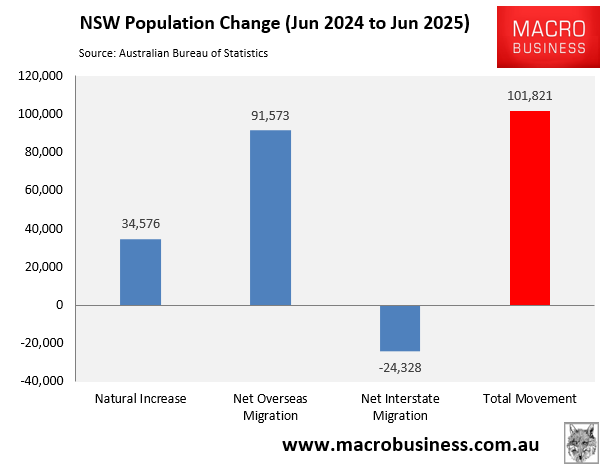
As shown above, the natural increase (births minus deaths) of 34,576 was largely offset by the departure of 24,328 residents to neighbouring states and territories.
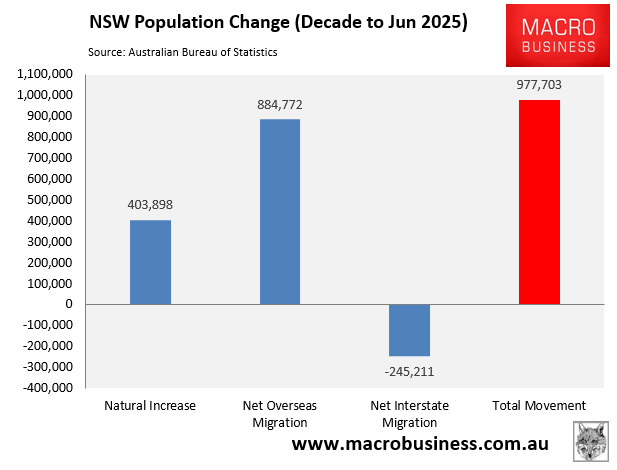
In fact, NSW lost 245,211 residents to other states over the last decade, which was more than compensated for by 884,772 net overseas migrants and 403,898 natural increase.
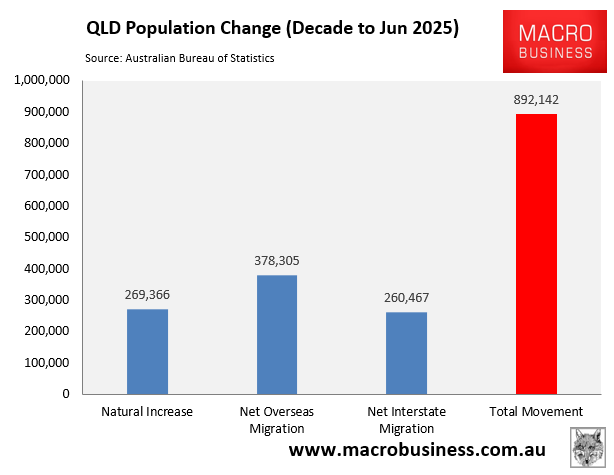
The majority of residents leaving NSW appear to have landed in Queensland.
In the decade to 2025, Queensland received 260,467 residents from other states (almost the same number that left NSW), as well as 378,305 people from overseas.
The main reason inhabitants are leaving NSW in droves is Sydney’s housing, which is the most expensive in the country and in short supply amidst never-ending mass migration from abroad.
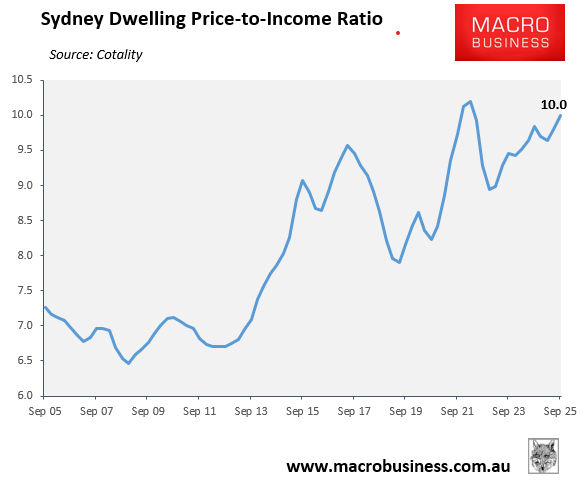
Cotality’s latest housing affordability report showed that Sydney’s median home price relative to median household income was an absurd 10.0 in the September quarter of 2025, well above the national average of 8.2:
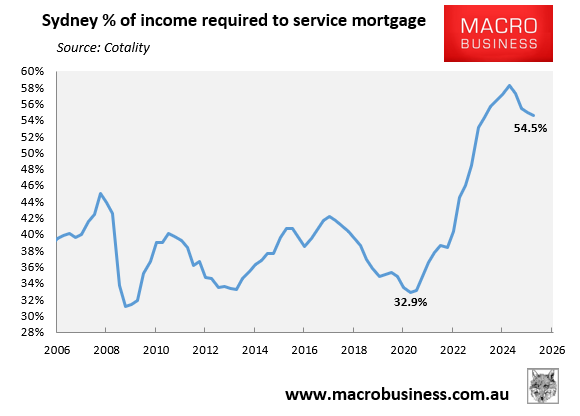
A median Sydney household was required to spend 54.5% of its income to service a new mortgage on the median-priced home in the September quarter of 2025. This was easily the highest in the nation, well above the national average of 45.0%:
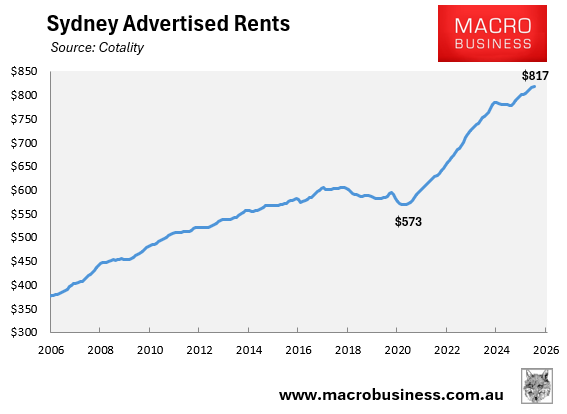
The affordability situation is just as bad in the rental market, where the median advertised rent has soared by nearly 43% over the five years to the December quarter of 2025, adding $12,700 to the annual cost of renting for the median Sydney tenant.
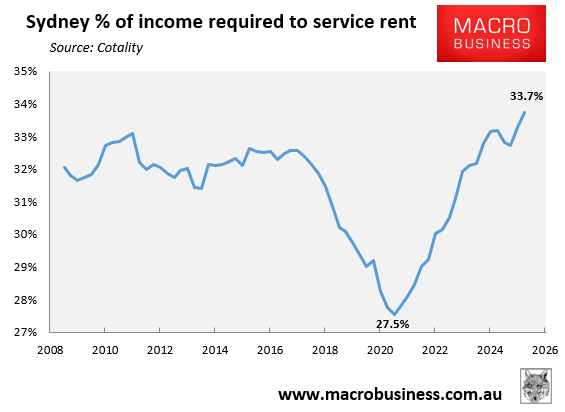
As a result, the percentage of income required to service rent on the median Sydney home was a record high of 33.7% in the September quarter, up from a low of 27.5% in the December quarter of 2020:
Given Sydney’s diabolical housing affordability, is it any surprise that families are fleeing to more hospitable locations?
Perhaps policymakers don’t care because they are more than replacing the lost residents with overseas migrants.
The loss of residents is projected to continue into the future.
The 2025 Population Statement from the Centre for Population projects that Sydney’s population will expand by 2.85 million to 8.5 million by 2065-66. Sydney’s population growth will be driven almost entirely by NOM of 2.77 million.
However, Sydney is projected to lose around 1.55 million residents to other states, which will almost fully offset 1.50 million residents gained via natural increase (i.e., births minus deaths).
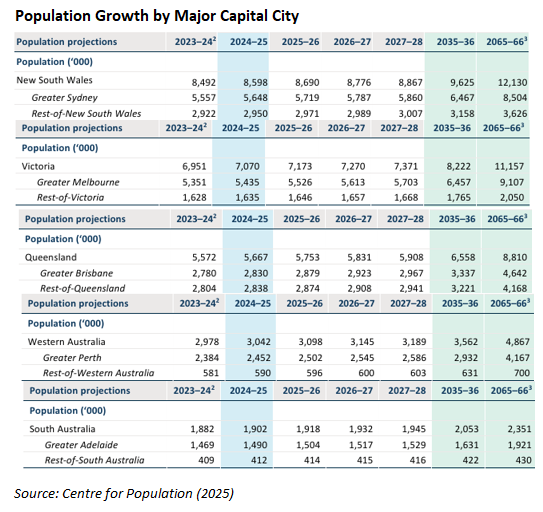
By comparison, Brisbane is forecast to grow by around 1.8 million over the next 41 years to 4.6 million.
Brisbane’s population increase is projected to come from a combination of NOM (877.4 million), net internal migration (365.1 million), and natural increase (462.0 million).
Therefore, with immigration projected to remain indefinitely high and housing affordability worsening, incumbent families will continue to leave Sydney.
Instead of reducing immigration to take the pressure off housing, the NSW Productivity and Equality Commission’s brainiac approach involved packing Sydneysiders into high-rise shoebox apartments. This would be achieved by deregulating housing supply, allowing for the construction of taller towers, smaller apartments, reduced storage and natural light, smaller balconies, and fewer car spaces.
As a result, Sydney is projected to transform into a high-rise shoebox city that is increasingly unsuitable for raising children.
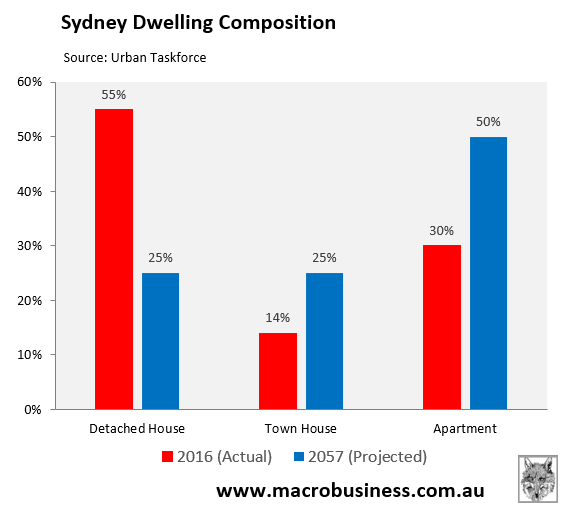
No wonder families are leaving Sydney.
I discussed these issues in my weekend Treasury of Common Sense on Radio 2GB/4BC:
