
Cotality’s rental review for the December quarter has been released, and it shows that Australia’s rental crisis continues.
Vacancy rates were 1.7% in the December quarter, down from 2.1% a year earlier and significantly below the pre-COVID average. National advertised rents also rose by 1.3% in the December quarter, boosting annual growth to 5.2%.
With rural markets outpacing cities (6.2% vs. 4.8%), rental listings remain scarce, down 11% year over year and 17% below the five-year average.
Affordability pressures are worsening: households are now spending a record 33.4% of their income on rent, and the median weekly rent is $681, up 42.9% over the past five years.
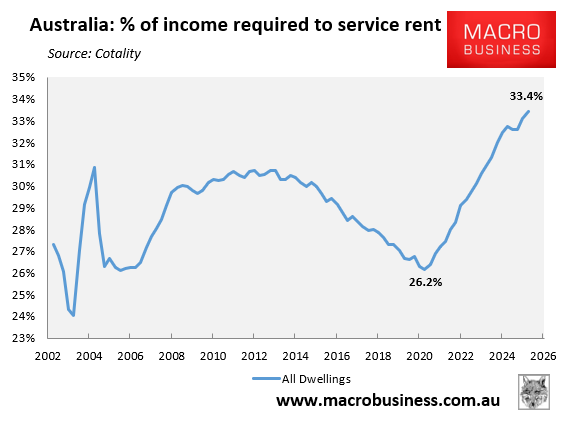
This is terrible news for renters since it puts further pressure on inflation and the outlook for cash rates.
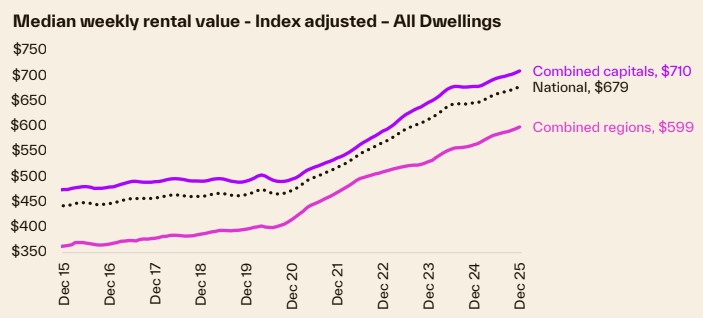
After a period of reprieve, the disaster is deteriorating once more.
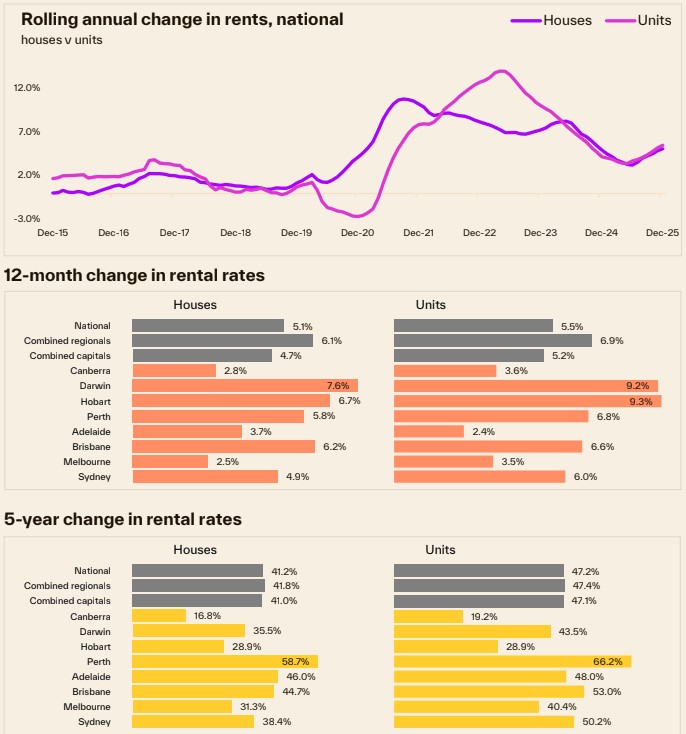
In fact, the median Australian renter is required to pay $10,655 more per year to rent the median advertised home than they did five years earlier.
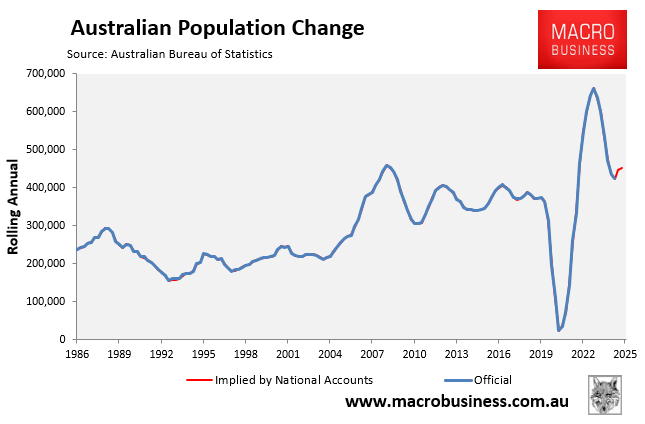
The culprit is well-known and deteriorating. Stronger population growth was reported in last month’s Q3 national accounts:
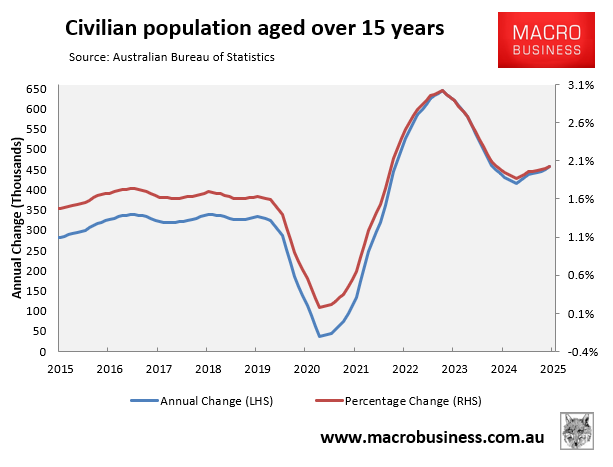
The monthly labour force survey for November also reported that working-age population growth has firmed:
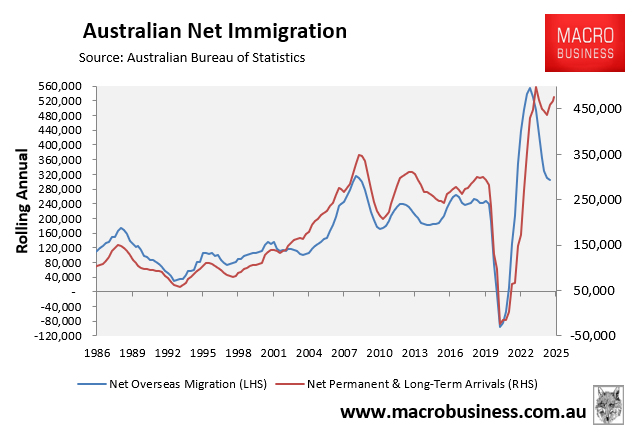
While annual net overseas migration (NOM) in the year to June 2025 moderated to 310,000 (still very high historically), the more timely monthly net permanent and long-term arrivals data, which had previously tracked NOM (in a directional sense) for 30 years, has surged higher:
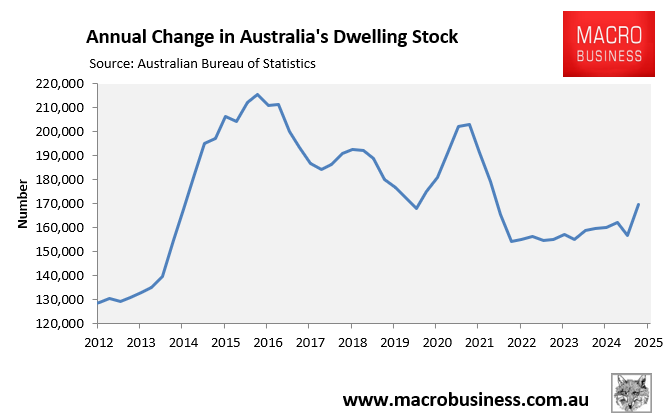
Thus, immigration and population growth remain at extreme levels, and rental stock is simply not keeping up:
In the end, Australia’s federal government must reduce immigration to a level below the country’s ability to construct housing and infrastructure in order to alleviate the rental crisis.
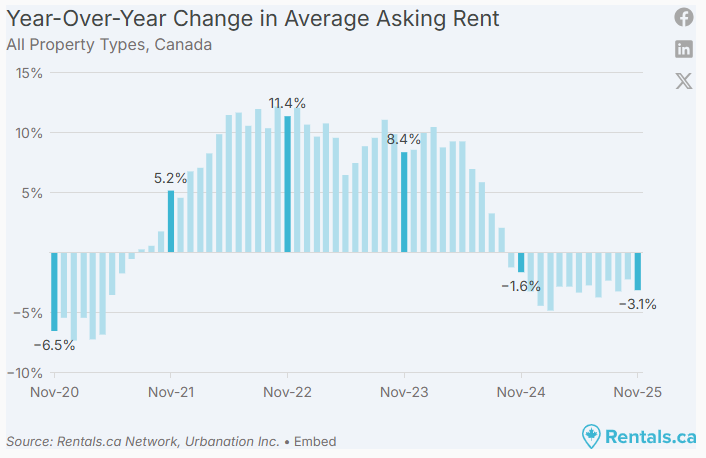
This is precisely what Canada has done, which has resulted in 14 months of declining rents:
If not, tenants in Australia will continue to endure needless suffering.
