
Just before Christmas, the Albanese government released its wet lettuce East Coast gas reservation policy, which has arrived too late and will do little to improve gas supply and affordability.
The main problem with the policy is that it will apply only to new gas projects from 2027 and will require exporters to set aside between 15% and 25% of their gas production for domestic use.
As a result, any extra gas supplies will only arrive when new projects are finished or when existing contracts roll off from 2030:
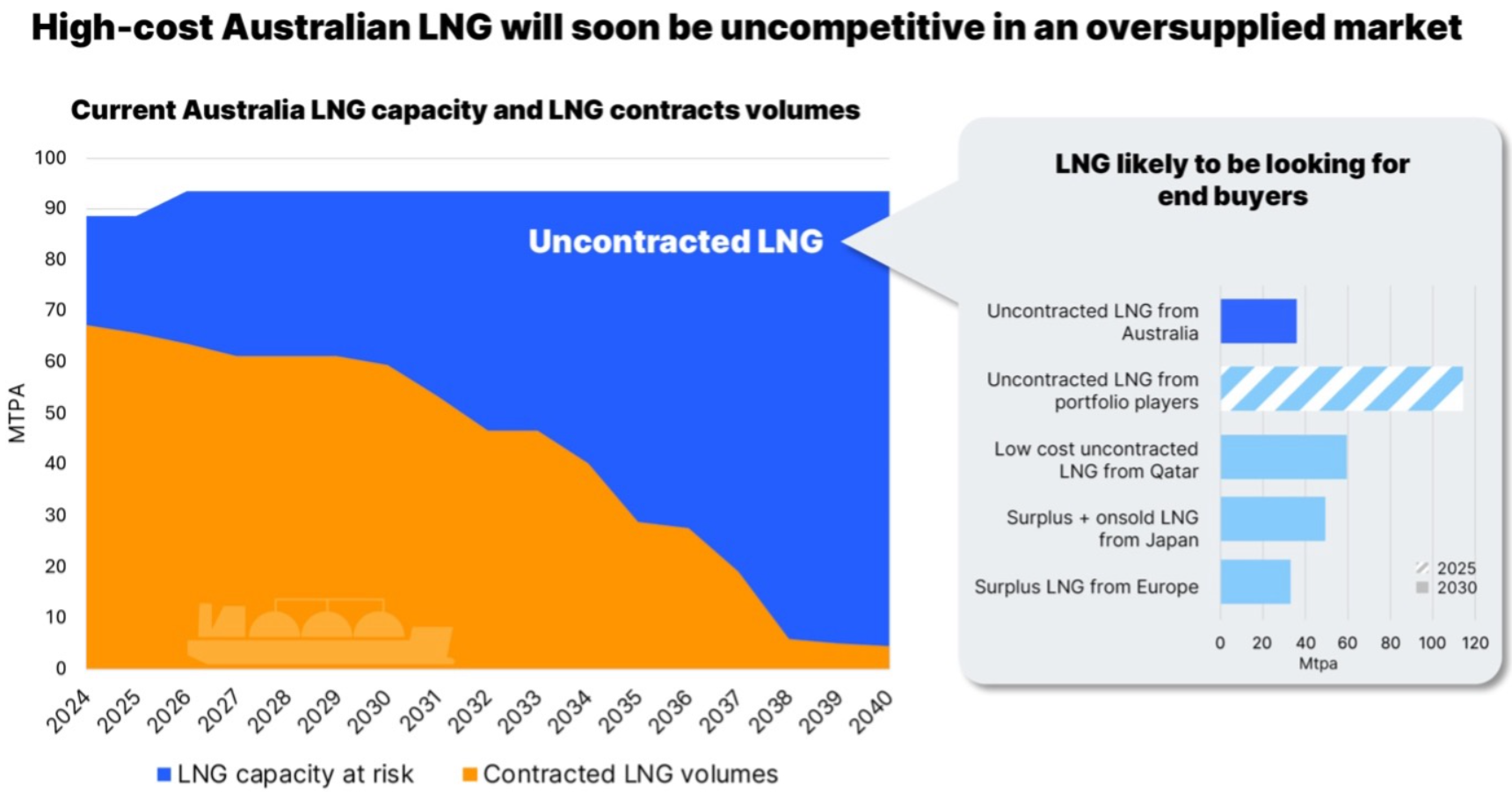
Unlike the Coalition’s policy taken to the last election, Labor’s reservation plan won’t stop the gas cartel from exporting uncontracted (spot) gas.
Therefore, Labor’s reservation policy will do little to increase gas supply in the short to medium term.
Echoing my concerns, former independent federal MP Rex Partick, who forced the Turnbull Liberal government to establish the Australian Domestic Gas Security Mechanism (ADGSM) in 2017, which granted the federal government the right to impose reservation in the East Coast gas market, labelled Labor’s reservation policy a “treasonous betrayal” at Michael West.com:
The reservation scheme only starts in 2027. That means nothing will change in the next 18 months.
And even when the scheme does kick in it will do very little. No retrospectivity means that there will be a 0% domestic reserve on massive amounts of existing gas and a 15-25% reserve on tiny amounts of new gas…
And so, the gas cartel members are left grinning like the Cheshire Cat.
It’s no change for them. They get to charge foreign customers high prices, charge Australians a motza too, transfer their profits offshore to minimise their tax and pay no royalties (PRRT was even more pathetic in the recent MYEFO). And the Government is content in letting them do that.
The Albanese Government has put commercial interests, and it’s mainly foreign commercial interests, before our national interest…
The newly announce gas policy is, in summary, a big win for the gas cartel and a big win for gas users in Japan and South Korea. But it’s a massive loss for Australian consumers and Aussie manufacturing companies…
Most of the mainstream media has reported the announcement as a policy win, when in truth, it’s a treasonous betrayal.
Rex Patrick is right, of course.
At a minimum, Labor should have bolted on the Coalition’s gas reservation policy taken to the last election. This policy promised to impose levies on uncontracted (spot) gas exports to force the sale of this gas in the domestic market.
The Coalition also committed to investing $1 billion in a Critical Gas Infrastructure Fund to increase gas pipeline and storage capacity.
Extra pipeline capacity and storage are required to ensure gas flows to Victoria during the peak winter months, when the north-south pipeline is at full capacity.
Regrettably, Madeleine King, the Minister of Federal Resources, labelled the Coalition’s gas reservation proposal a “thought bubble”, which explains why Labor hasn’t copied it.
However, imposing export levies on uncontracted gas would increase domestic supplies immediately, alleviating shortages and lowering prices.
Any spot gas that is still exported would also raise budget revenue, which could then be recycled into consumer bill relief (paid for by the cartel).
Sadly, Labor’s gas reservation policy is grossly inadequate and won’t alleviate supply and price pressures for at least five years, once existing LNG contracts begin to expire.
As a result, Australian consumers and industry will continue to suffer from rising gas and electricity prices.
