
Iron ore crazy man keeps on dancing

Advertisement

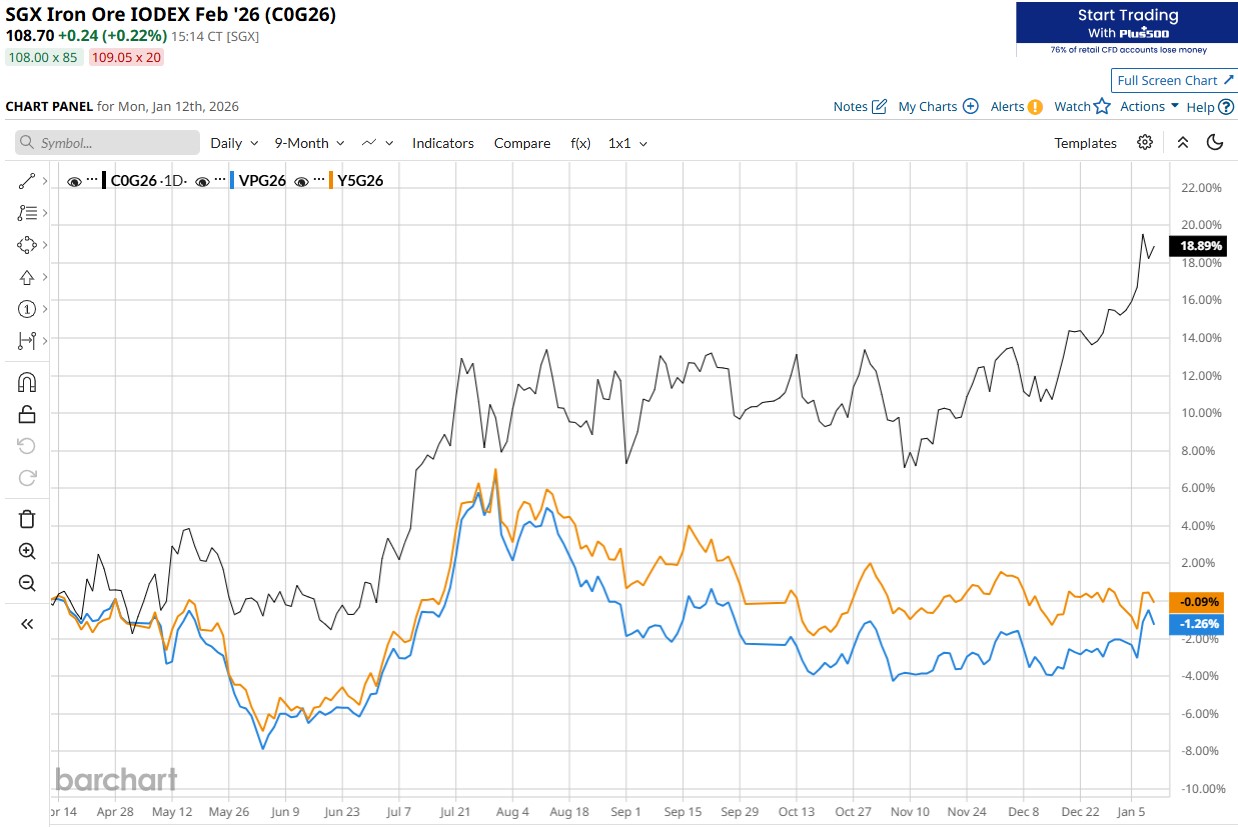
Dancing, dancing, dancing! There is no stopping the iron-ore-crazy man.

Except for one small problem. Steel mill margins are being obliterated.
These developments will weaken the start of 2026 steel production, especially because steel product inventories are higher than last year.

Advertisement

And there is another problem. The iron-ore-crazy man is dancing on top of the largest pile of dirt anybody can remember, at 162.7mt.

This is where all the iron ore is going. Into a red Chinese mountain that is accumulating at an annualised rate of approximately 60 mt, a reasonable proxy for seaborne oversupply.

Advertisement

New supply from Simandou has begun to arrive slowly, owing to delays in its locomotive fleet. Even so, it managed two shipments in December, roughly 400k tonnes that will now add directly to the enormous pile.

The cadence of shipments will accelerate meaningfully in Q2 as more locomotives arrive. Although we may only do 15-20mt in total stock this year, by H2 it will be loading at a flow rate of double that, and that is what matters to prices.

Because the Chinese property market remains weak, investment is declining owing to anti-involution, and steel export growth is exhausted, China needs to quickly introduce a substantially larger stimulus package than last year; otherwise, additional iron ore will depress prices sooner rather than later.

Advertisement

Even so, my view remains that Chinese steel output will fall by another 3% this year as iron ore supply increases by another 20mt, doubling today’s iron ore surplus to well above 100mt.

It’ll take sub-$90 iron ore to clear that.

Dance on, iron-ore-crazy man!

About the author
David Llewellyn-Smith is Chief Strategist at the MB Fund and MB Super. David is the founding publisher and editor of MacroBusiness and was the founding publisher and global economy editor of The Diplomat, the Asia Pacific’s leading geo-politics and economics portal. He is also a former gold trader and economic commentator at The Sydney Morning Herald, The Age, the ABC and Business Spectator. He is the co-author of The Great Crash of 2008 with Ross Garnaut and was the editor of the second Garnaut Climate Change Review.