
Interest rates are balanced on a knife’s edge
Labour force data released last week by the Australian Bureau of Statistics (ABS) showed that the nation’s official unemployment rate eased to a seven-month low of 4.1% in December.
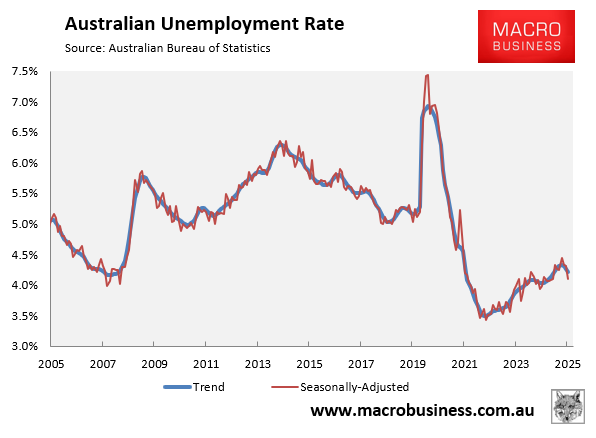
The result compared with 4.3% in November and economists’ expectations that unemployment would rise to 4.4%.
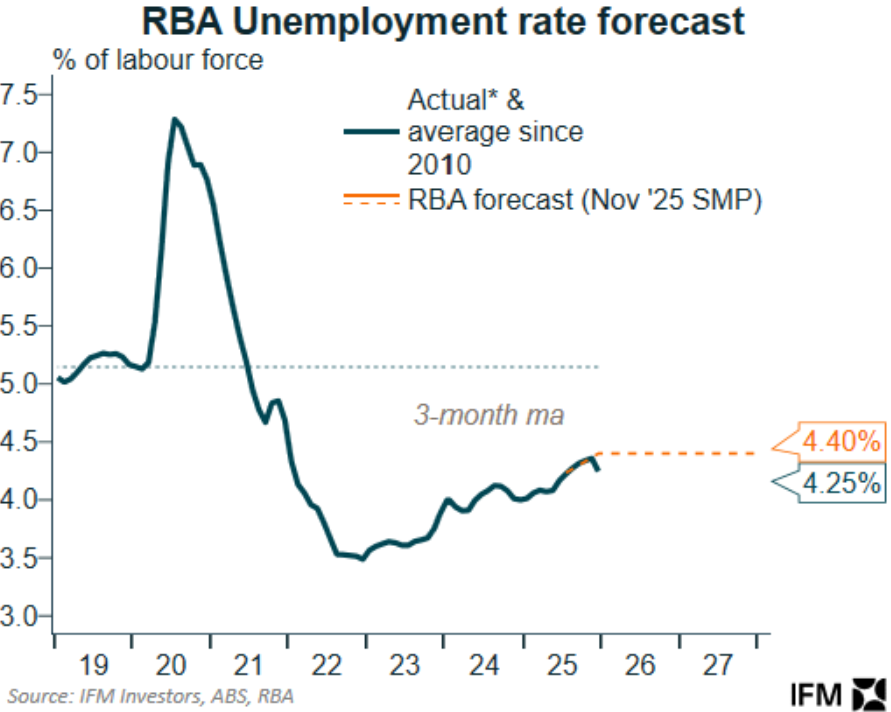
The latest Statement of Monetary Policy (SoMP) from the Reserve Bank of Australia (RBA) also forecast that unemployment would rise to 4.4% and remain at this level for the next two years:
The result was also strengthened by the fact that the economy added 65,000 jobs in December, well above economists’ forecasts.
The financial markets had projected a 30% likelihood of an interest rate hike in February. However, this rose to more than 50% in response to the latest jobs data.
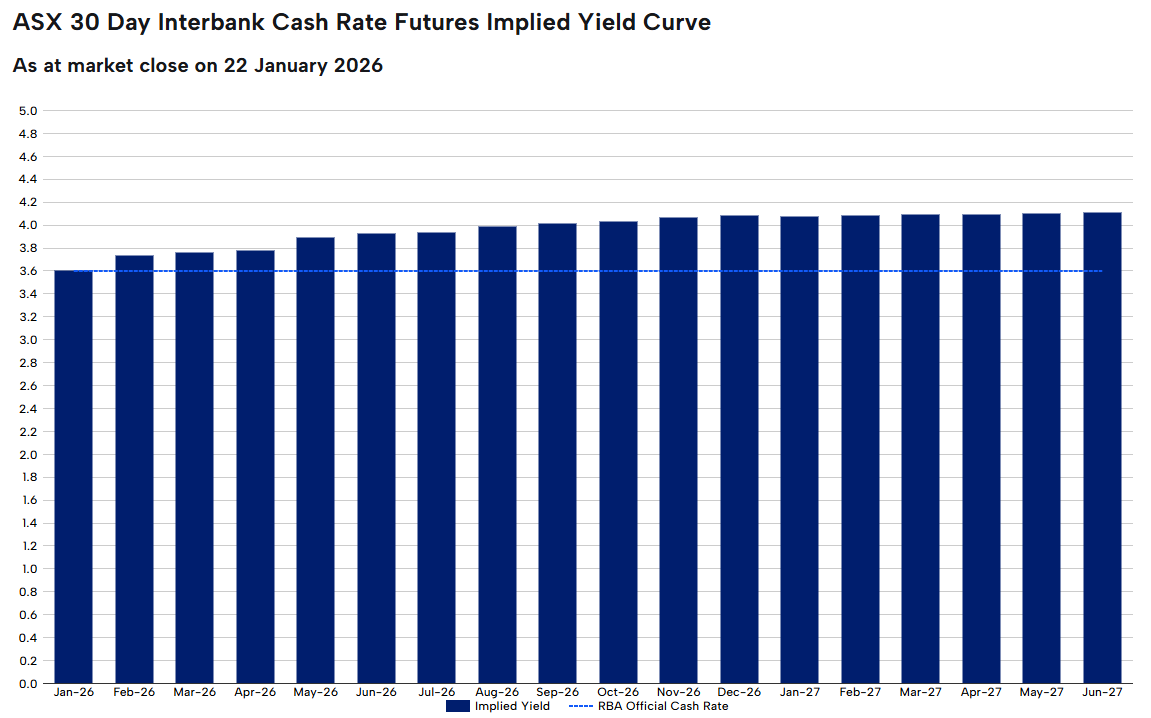
Financial markets are also tipping two 25 bp rate hikes this year.
The RBA has two mandates: to ensure both price stability and full employment—two goals that often require balancing competing economic pressures.
The first of these mandates—price stability—requires the RBA to maintain a 2–3% annual inflation target, measured by the Consumer Price Index (CPI).
The second mandate—full employment—requires the RBA to aim for the maximum sustainable level of employment without triggering inflation.
These two goals can conflict. That is, lowering interest rates may boost employment but risks higher inflation, whereas raising rates may curb inflation but slow hiring.
With Australia’s headline unemployment rate falling to a seven-month low of 4.1% in December and underlying inflation remaining above the 3% target in November, the chance of a rate hike at the February monetary policy meeting has greatly increased.
That said, a rate rise is no certainty, and the upcoming inflation report for the December quarter, due for release on Wednesday, will be the key determining factor for the RBA’s upcoming decision on interest rates.
A trimmed mean inflation print at 0.9% or above for the December quarter would likely nudge the RBA into hiking at its February meeting.
Thus, all eyes are on Wednesday’s fourth-quarter CPI release from the ABS.
