
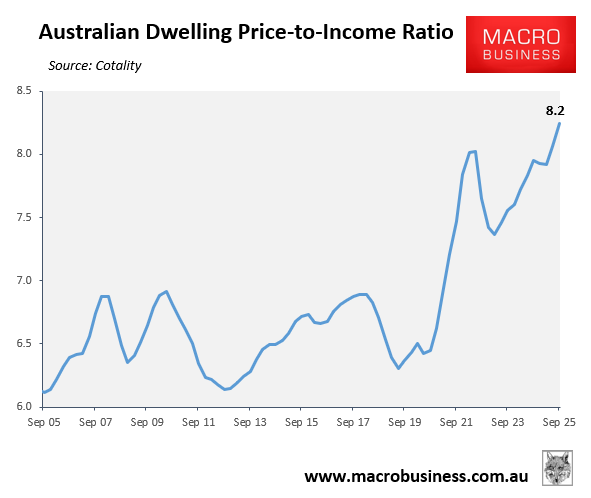
Australian housing valuations, in relation to household incomes, have never been more stretched:
Cotality’s December chart pack valued the average Australian home at an astonishing $1,079,000, turning the average homeowning Australian into a housing millionaire.
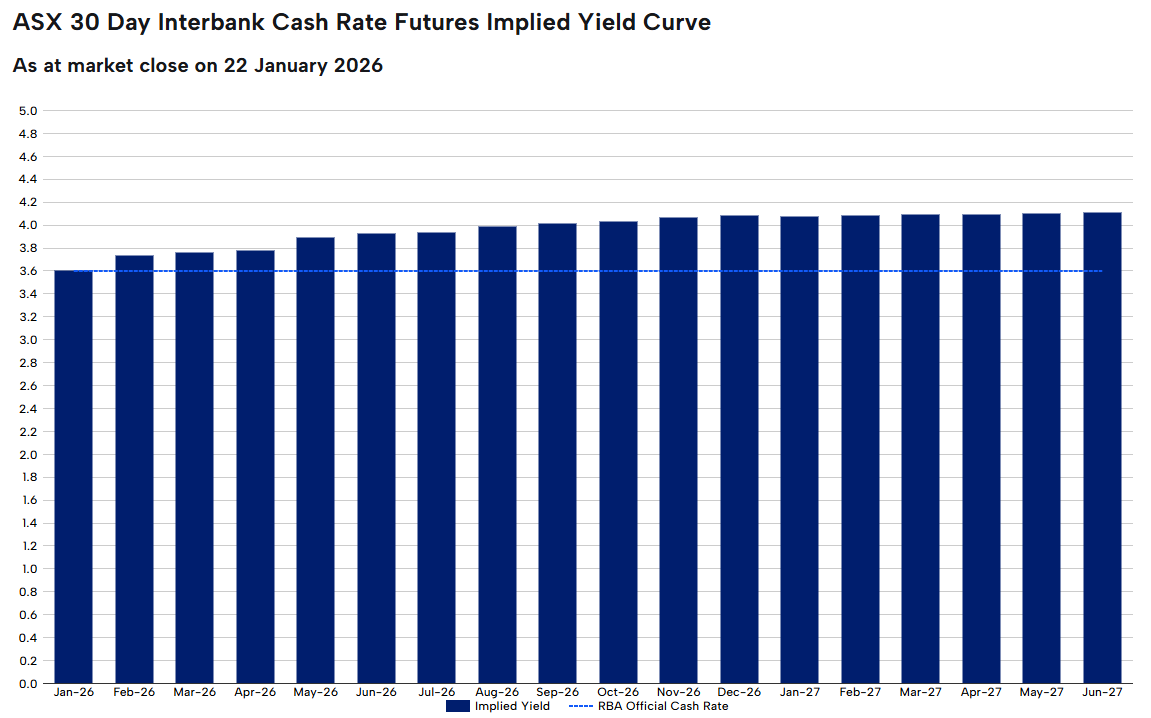
The Reserve Bank of Australia (RBA) is predicted by financial markets to hike the official cash rate (OCR) twice this year, bringing the OCR to 4.10% and variable mortgage rates to approximately 6%.
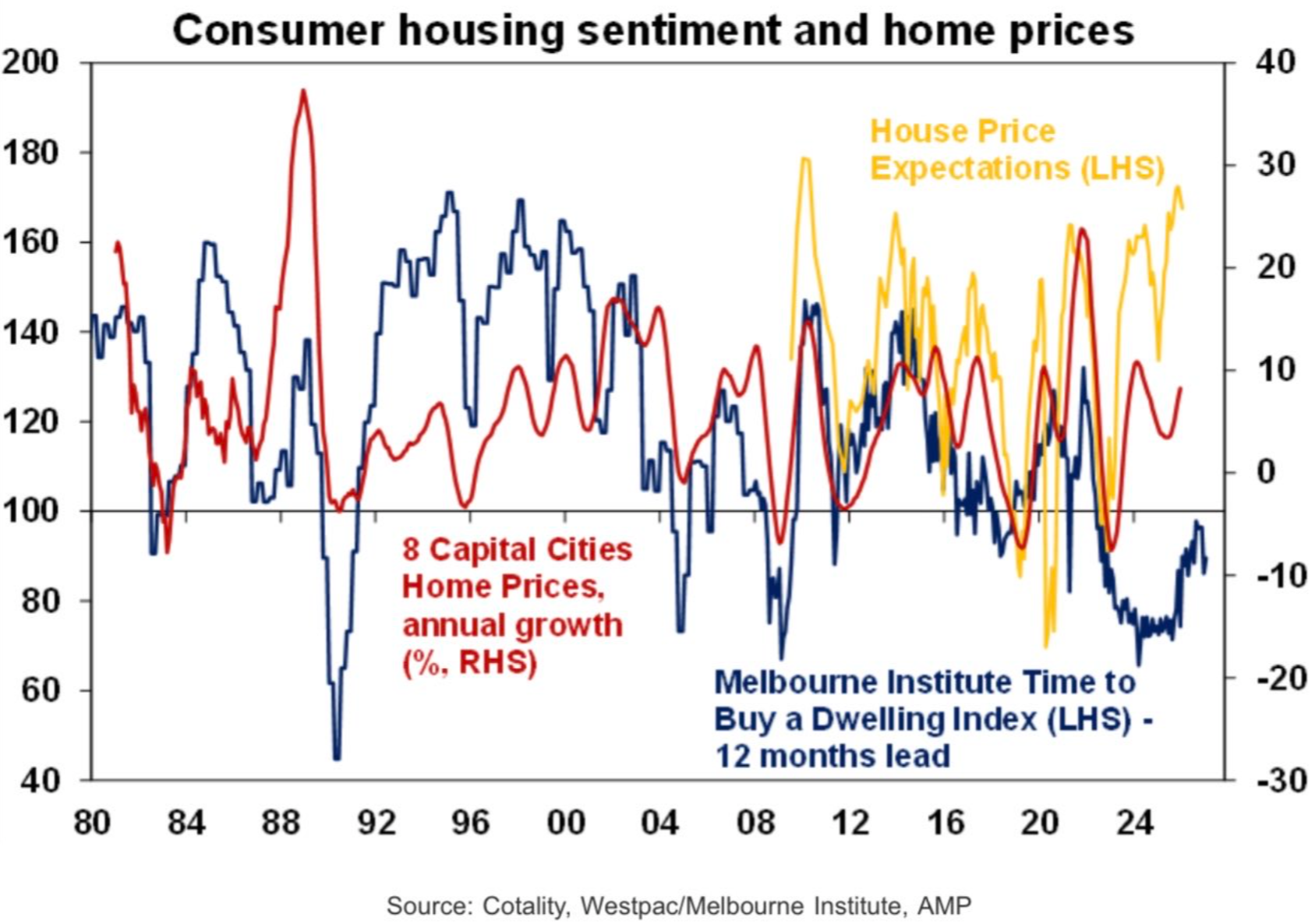
Despite the shocking affordability and the prospect of mortgages becoming significantly more expensive, Australians remain rock solid in their belief that home prices will continue to rise.
As illustrated below by AMP chief economist Shane Oliver, the latest Westpac consumer sentiment survey revealed that household house price expectations were tracking at close to a 16-year high, although perceptions regarding whether it’s a good time to buy a dwelling remain relatively low:
New Cotality research supports the above findings, showing that 87% of property and finance professionals expect dwelling values to rise in 2026, whereas only 3.5% expect prices to fall.
Nearly half anticipate growth above 5%, reflecting continued optimism after an 8.6% national value rise in 2025 (which added around $71,400 to the median home).
“Housing conditions were strong through most of 2025, which explains the broadly positive sentiment”, Cotality research director Tim lawless said.
“However, national averages distort the variation of performances and market conditions at a local level, and it’s those differences that are becoming more important as affordability and policy settings diverge”.
Queensland, Western Australia, and South Australia lead national sentiment due to:
- Strong internal migration
- Tight rental markets
- Chronic housing shortages
- Relative affordability (especially in SA)
“Strong internal migration, tighter rental markets and a persistent shortage of housing have combined to support all three of these markets”, Lawless said.
“Those fundamentals remain largely intact but it’s not surprising to see Queensland and Western Australia agents optimistic about price growth in 2026 given their respective fundamentals and economic prospects”.
By comparison, NSW’s sentiment is being suppressed due to high dwelling values and stretched serviceability, whereas Victoria’s continues to lag due to higher property taxes and reduced investor participation.
“Victoria stands out for the scale of investor selling, policy settings and higher holding costs all of which have weighed on activity, even as first home buyers now account for a larger share of lending”, Lawless said.
More broadly, the Albanese government’s 5% deposit scheme has lifted first home buyer activity.
Over 75% of agents reported increased activity after the First Home Guarantee expansion, with more than 21,000 buyers utilising the 5% deposit scheme since October.
However, affordability is worsening, with less than half of suburbs now falling under the scheme’s price caps.
Lawless notes that while risks are rising, the lack of new housing supply in 2026 should help prevent significant price declines.
“The market is entering 2026 from a position of strength however there is a cloud of uncertainty around inflation and interest rate settings as well as affordability challenges, all of which are likely to weigh on housing confidence”, Lawless said.
“However, given we aren’t likely to see a material supply response in 2026 either, this should help to offset any downside risk to home values trending substantially lower”.
I will add that listings remain very tight in Brisbane, Perth, and Adelaide, whereas they are more abundant in Sydney and Melbourne, which partly explains the divergence in sentiment:

In other words, Brisbane, Perth and Adelaide resemble the housing ‘Hunger Games’, which is fueling the ‘fear of missing out’ and strong price growth.
