
Wednesday’s CPI inflation release for December was a shocker that, alongside the decline in the nation’s unemployment rate to 4.1%, suggests that the Reserve Bank of Australia (RBA) will hike the official cash rate at next month’s monetary policy meeting.
The policy-relevant trimmed mean inflation rose by a stronger-than-expected 0.9% over the December quarter to be 3.3% higher over the year and 3.9% higher on a six-month annualised basis:
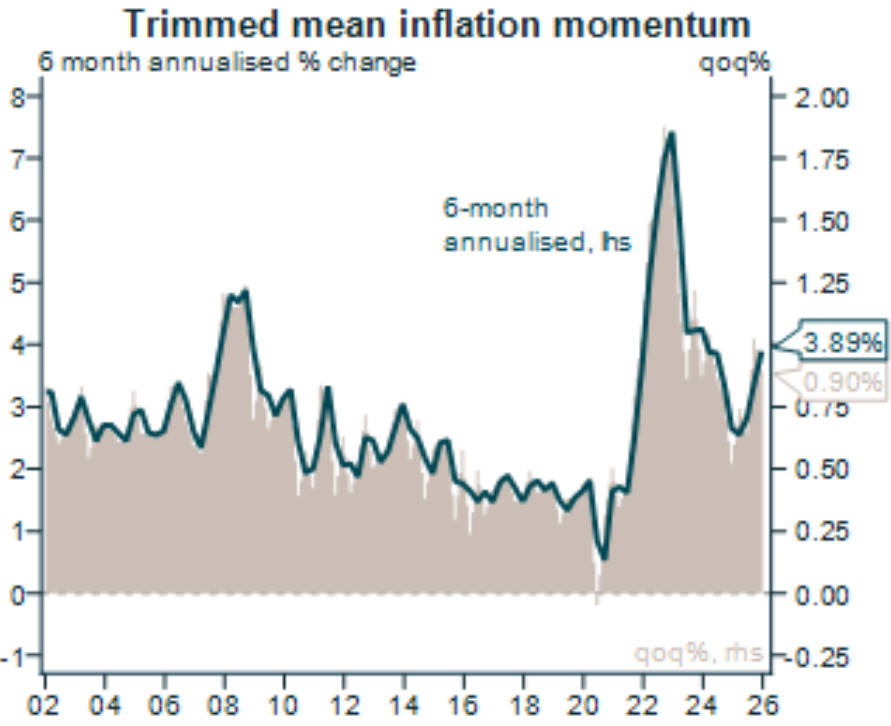
Source: Alex Joiner (IFM Investors)
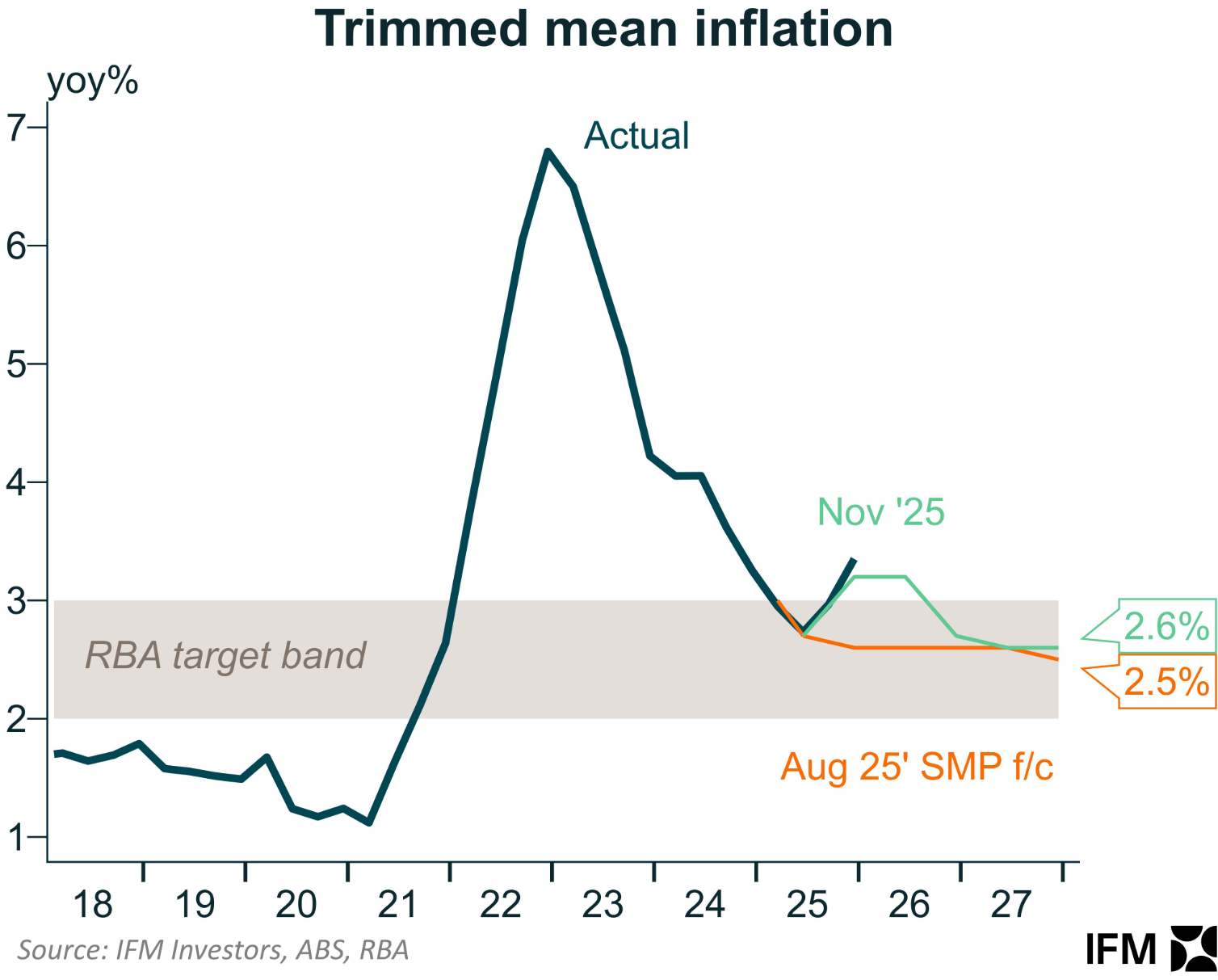
The result was significantly above the RBA’s November forecast, as well as easily breaching the RBA’s inflation target of 2% to 3%:
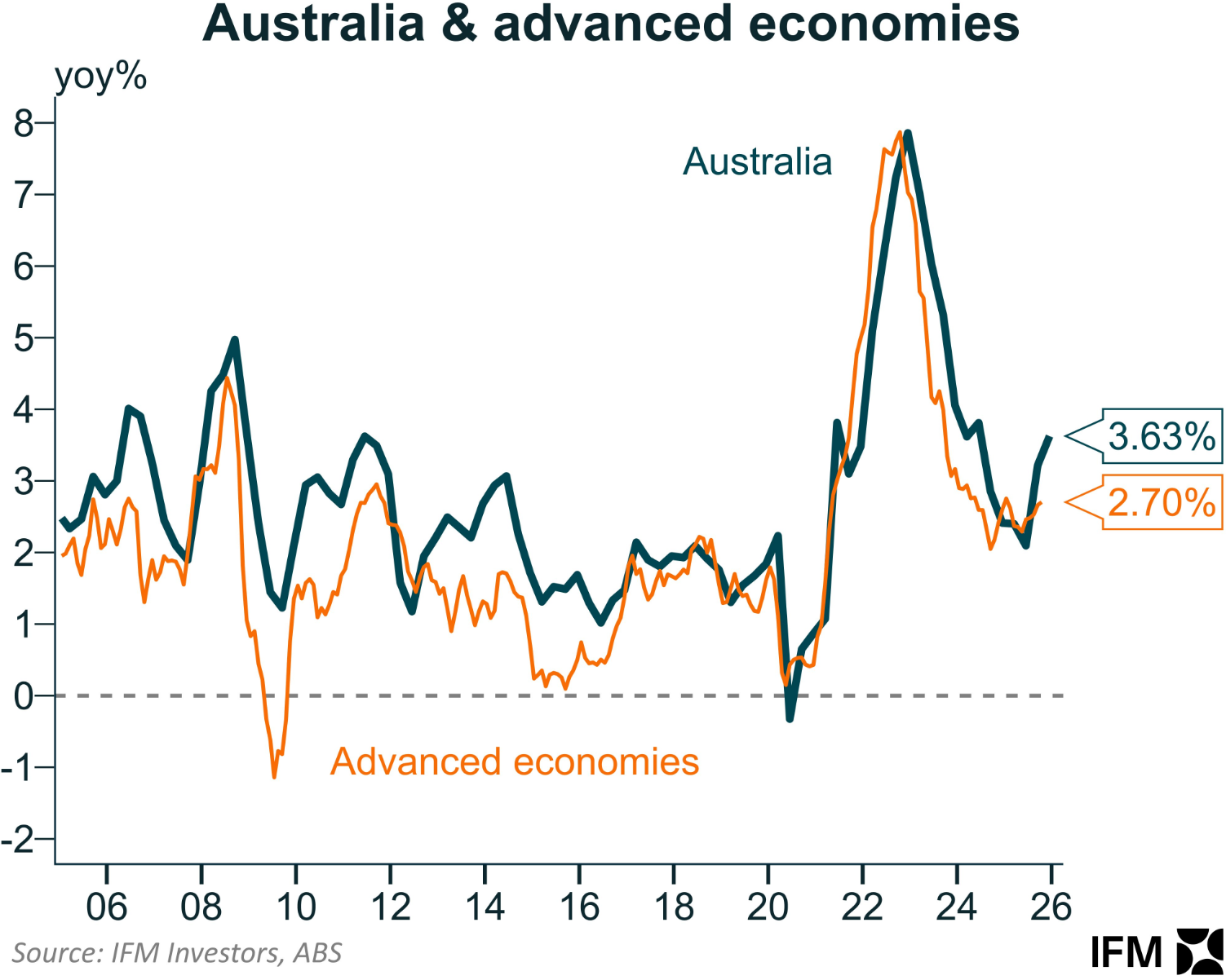
As Alex Joiner from IFM Investors shows below, Australia’s inflation is now tracking well above the advanced economy average:
As noted on Thursday, administered price inflation—i.e., price increases in goods and services where the government or a regulator, not the market, sets or heavily influences the price—has driven the latest bout of inflation:
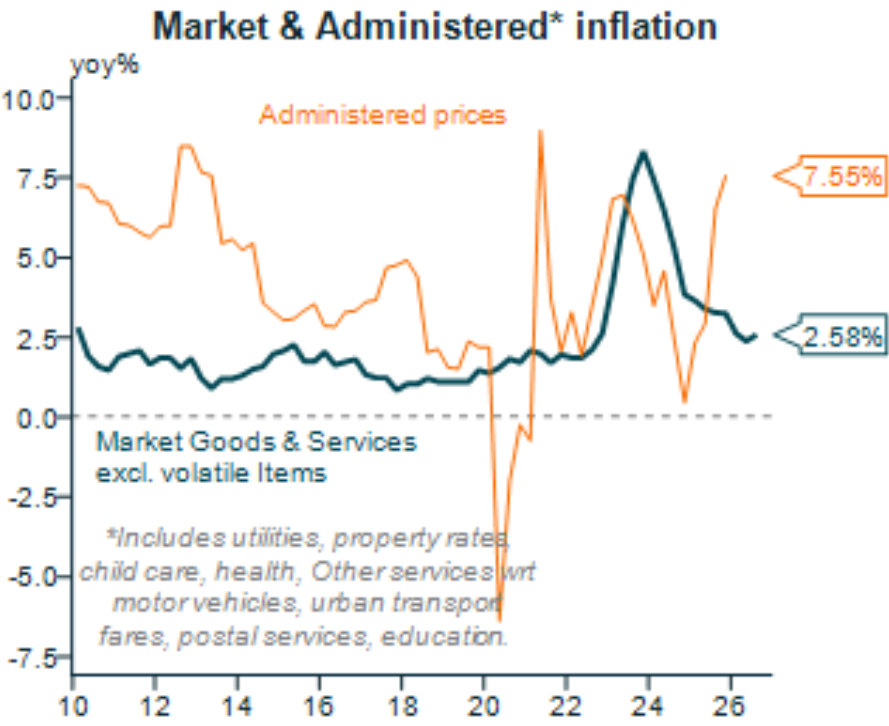
Source: Alex Joiner (IFM Investors)
This poses a problem for the RBA since administered prices are typically comprised of essential services where the government sets the price directly, or a regulator approves price changes, or pricing is tied to policy decisions rather than market forces.
As a result, the RBA can’t directly influence administered prices with interest rates, since they are not market‑driven.
The next chart from Joiner highlights the issue in a different way, with non-tradable inflation, which comprises around two-thirds of the CPI basket, rising at a swift 4.6% annually, well above tradeable inflation of 2.0%:
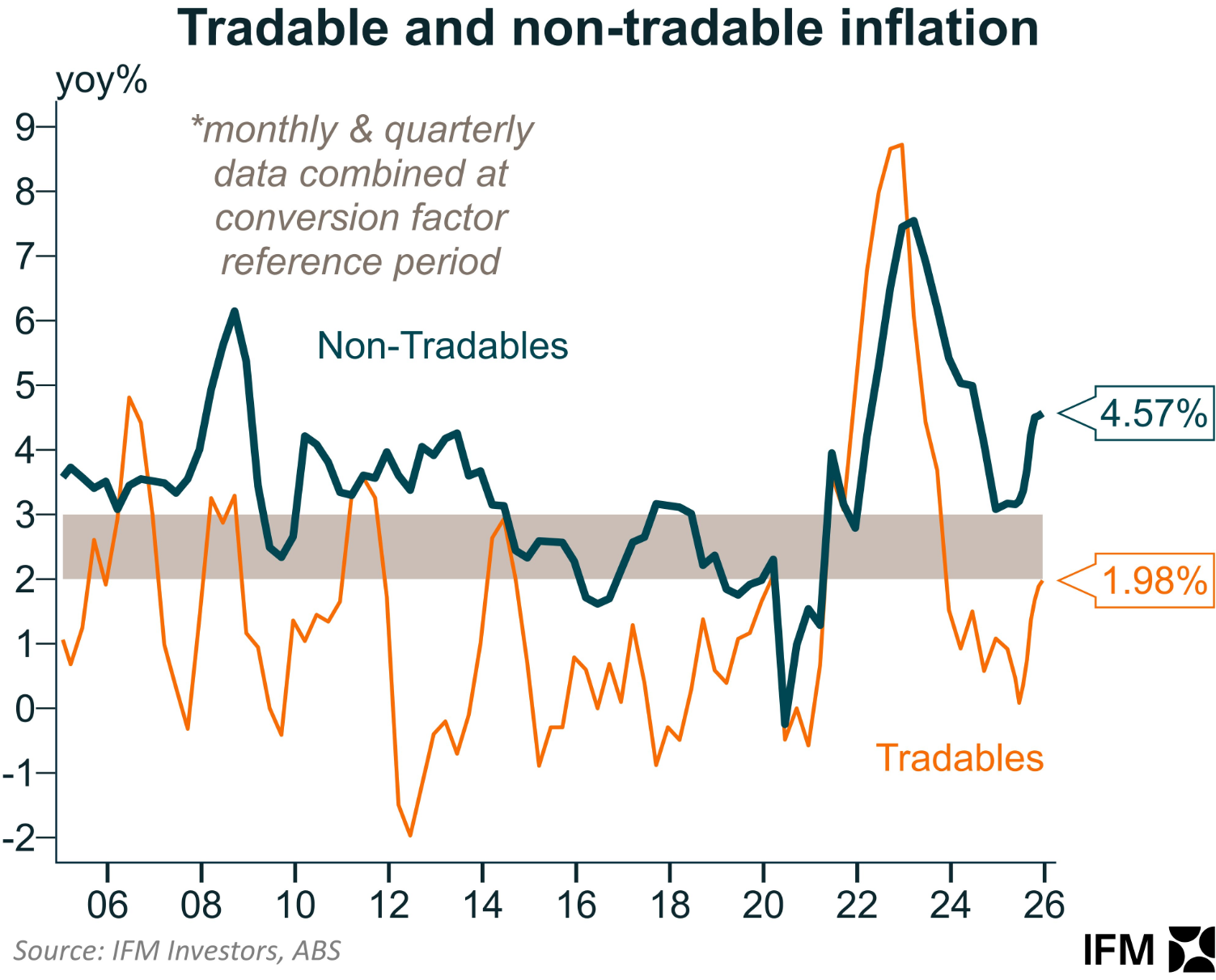
The above charts show how Australia’s inflation is homegrown and largely driven by loose fiscal policy and energy policy failures.
These charts also illustrate why Australia’s governments need to take responsibility for taming inflation, because the RBA’s simple, blunt instrument of interest rates won’t work.
Looking ahead, Australia’s CPI inflation will remain under pressure from rising energy prices.
While electricity prices fell in the December quarter according to the CPI figures, the respite will be short-lived as rebates roll off and the reality of actual electricity prices flows through to households:
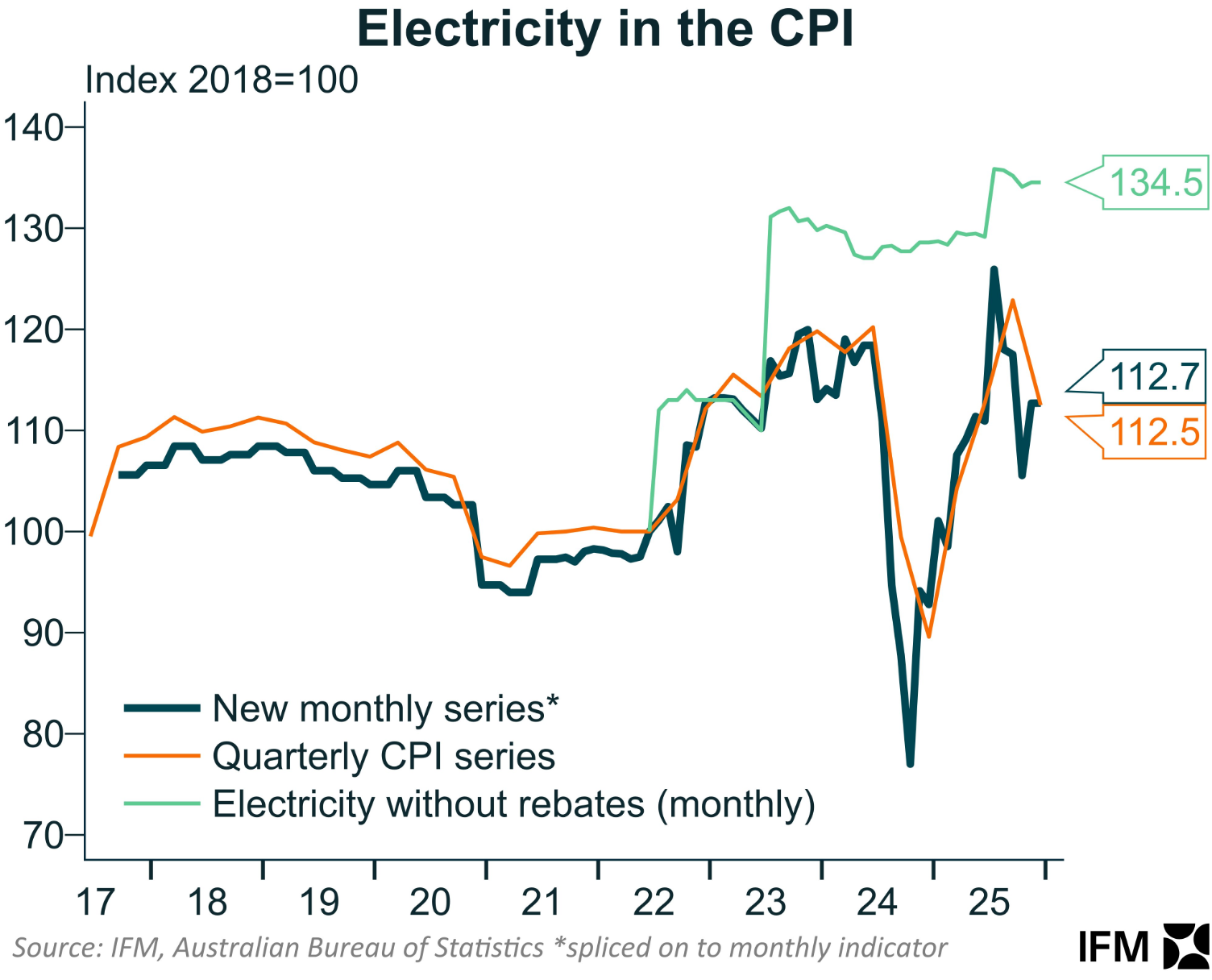
With gas and electricity prices continuing to rise due to government policy failure, they will continue to stoke inflation across the supply chain.
RBA rate hikes will merely treat the symptoms of inflation by squeezing other areas of the economy harder to bring overall CPI inflation down.
Only genuine government policy action can treat the problem of soaring energy costs and administered price inflation.
