
Wednesday’s quarterly Consumer Price Index (CPI) inflation print from the Australian Bureau of Statistics (ABS) printed hotter than expected, raising the likelihood that the Reserve Bank of Australia (RBA) will hike the official cash rate by 25 bps at next month’s monetary policy meeting.
The headline CPI rose by 3.8% in the 12 months to December 2025, up from a 3.4% rise in the 12 months to November 2025. The result also beat economists’ expectations of a 3.6% rise.
The largest contributor to annual inflation in December was Housing, up 5.5%. This was followed by Food and non-alcoholic beverages, up 3.4%, and Recreation and culture, which rose by 4.4%.
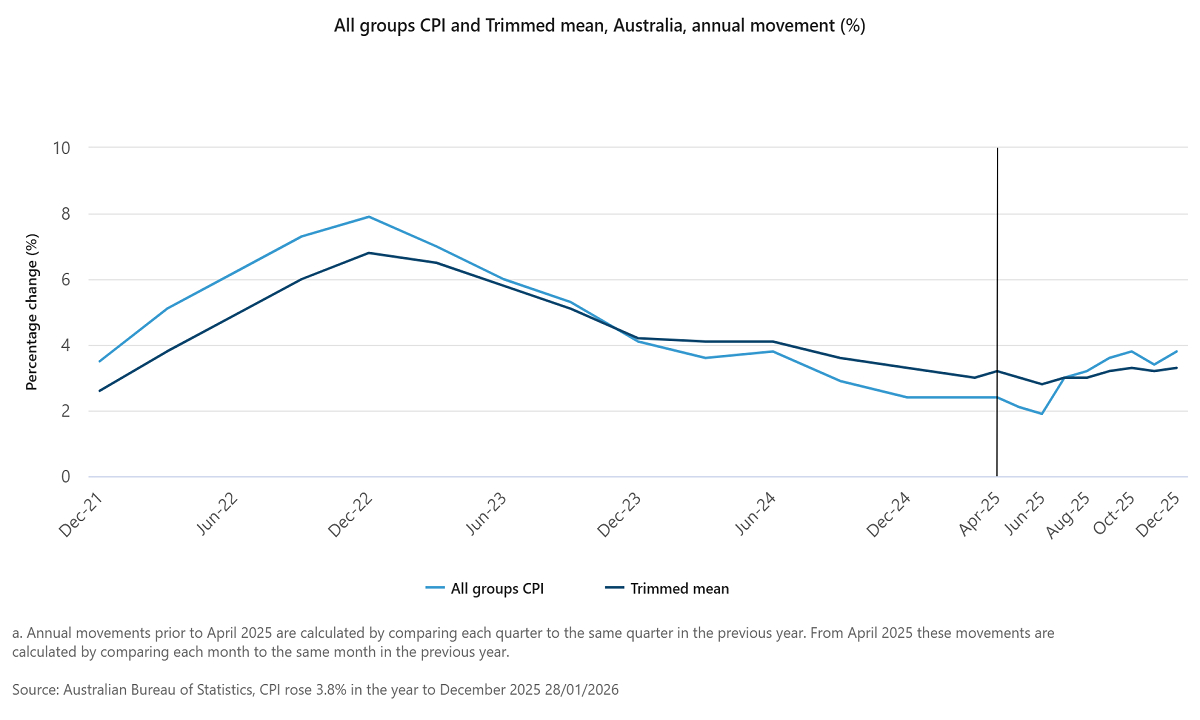
The policy-relevant trimmed mean inflation rose by 0.9% in the December quarter, which the RBA will still see as the most important measure, and 3.3% in the 12 months to December 2025, up from 3.2% in the 12 months to November 2025.
As illustrated below by Alex Joiner from IFM Investors, trimmed mean inflation accelerated to 3.9% on a six months annualised basis:
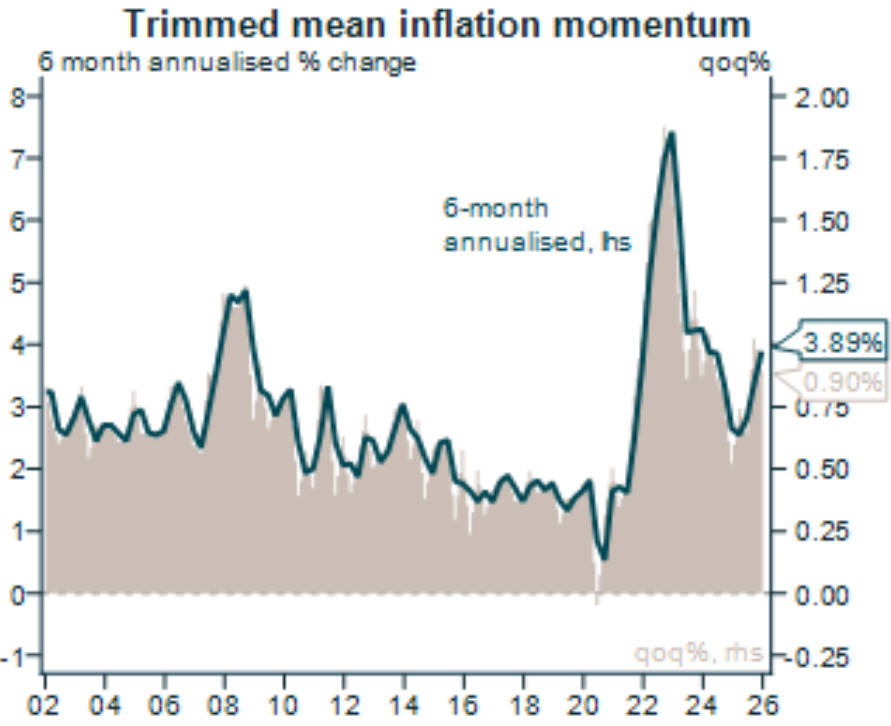
“Along with the upside surprise on headline inflation, there’s a strong case for the RBA to hike next week”, Joiner said on Twitter (X).
Joiner is right, of course.
The RBA has two mandates: to ensure both price stability and full employment—two goals that often require balancing competing economic pressures.
The first of these mandates—price stability—requires the RBA to maintain a 2–3% annual inflation target, measured by the CPI.
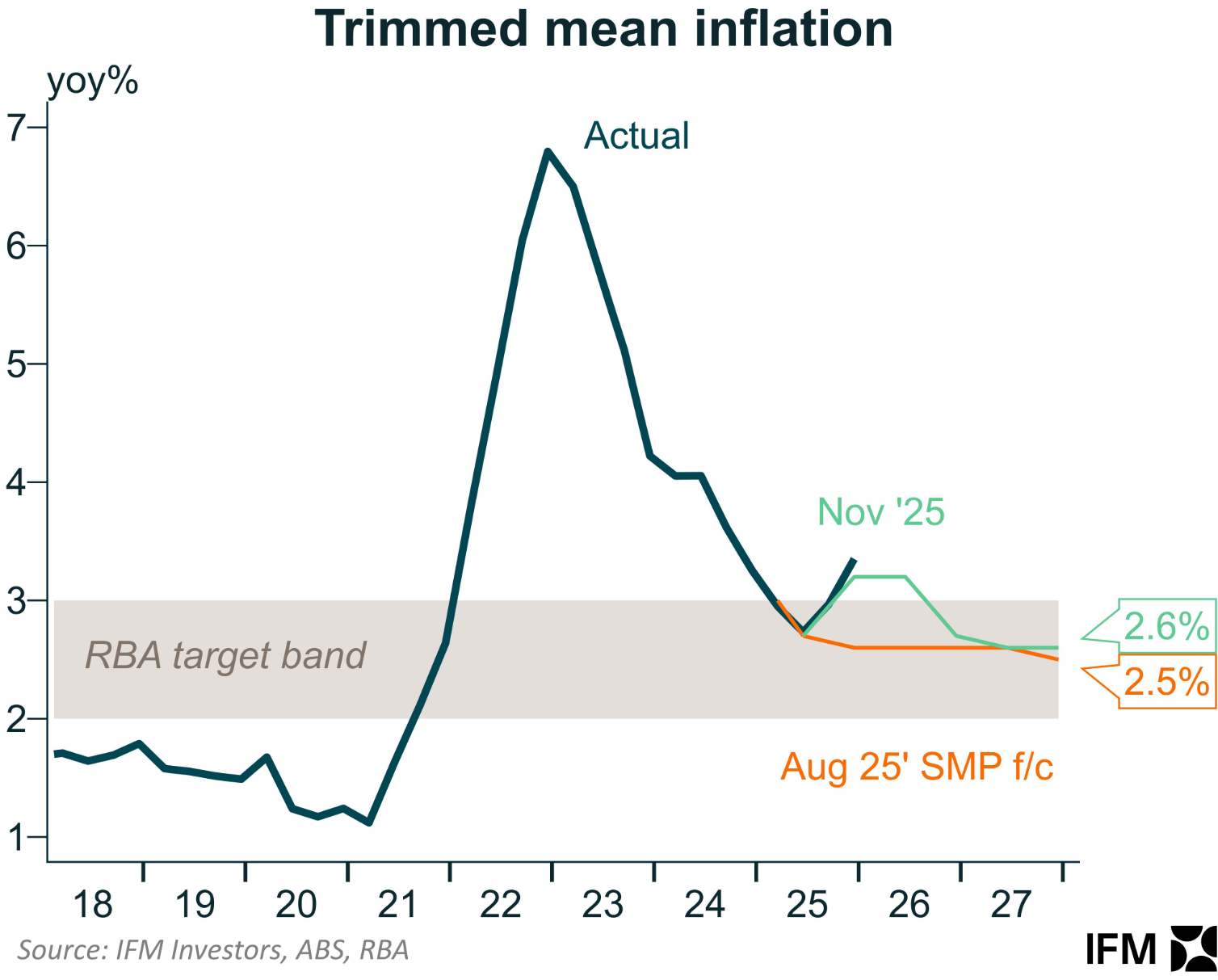
The current inflation rate and the building momentum are obviously above the RBA’s target.
The second mandate—full employment—requires the RBA to aim for the maximum sustainable level of employment without triggering inflation.
Labour force data released last week by the ABS showed that the nation’s official unemployment rate eased to a seven-month low of 4.1% in December.
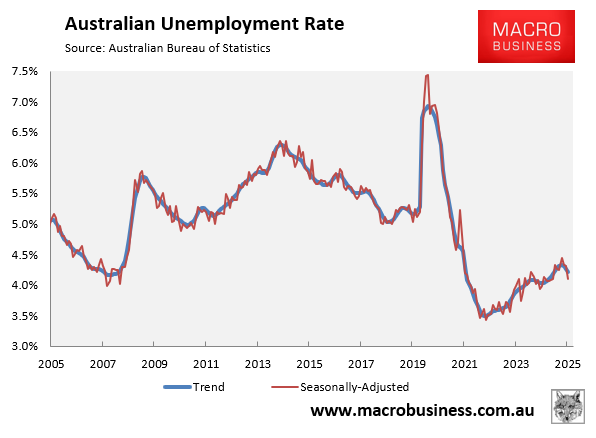
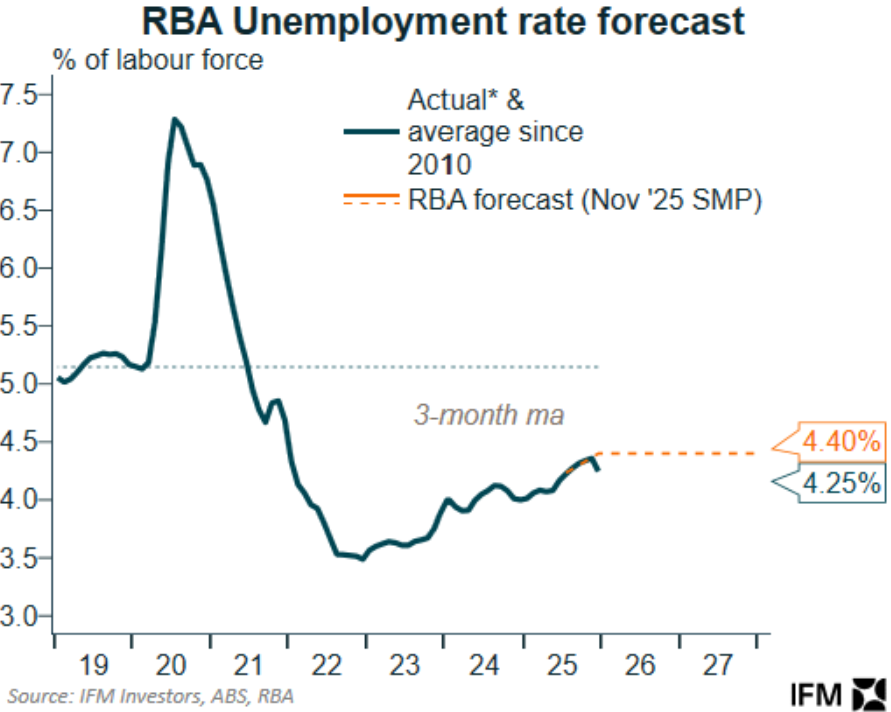
The latest Statement of Monetary Policy from the RBA also forecast that unemployment would rise to 4.4% and remain at this level for the next two years:
The result was also strengthened by the fact that the economy added 65,000 jobs in December, well above economists’ forecasts.
With Australia’s headline unemployment rate falling to a seven-month low of 4.1% in December and underlying inflation remaining significantly above the 3% upper bound target in Q4, the RBA is highly likely to lift rates at next month’s monetary policy meeting.
