
The Aussie trade balance for November was out yesterday and shows one great, big trend: a disappearing trade surplus.
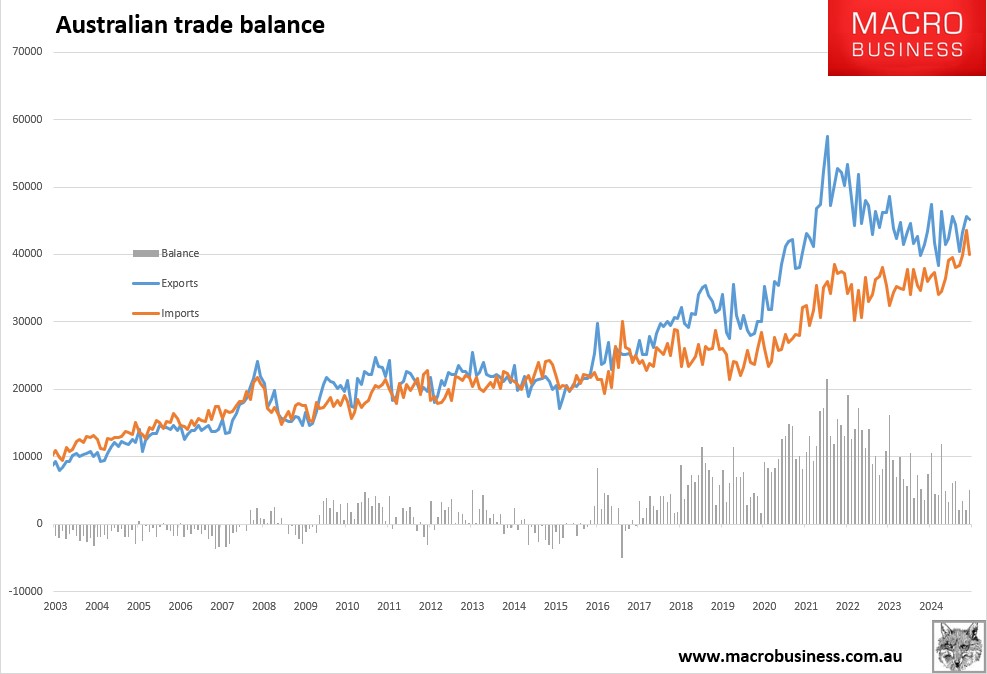
Some of this was always going to happen as the post-Ukraine War commodities mania subsided.
I expect we’ll be running a deficit by year’s end as iron ore and energy continue to fall, despite gold.
There is one more important factor at work. While the surplus was always going to shrink, after the launch of COVID and Cold War 2.0, it would have made a lot of sense to diversify our trade away from China.
ScoMo managed some of it, but Albo has taken us right back to the bad old days of dependence, so much so that we’re fast headed for a trade deficit with China.
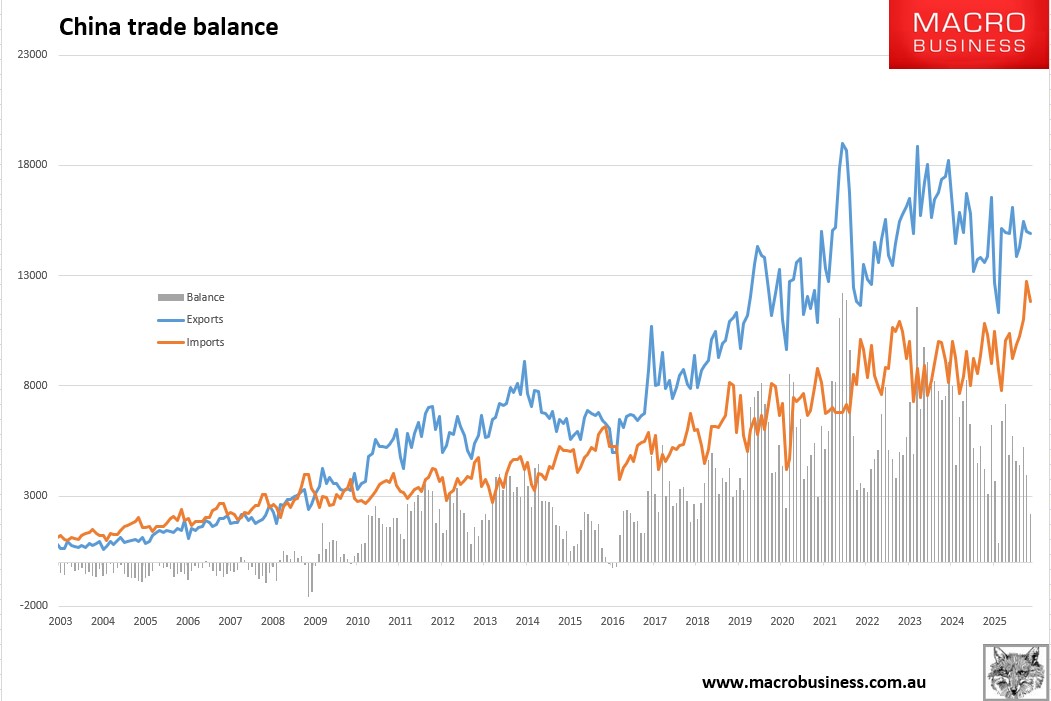
This is Albonomics at work:
- Import foreigners to consume imported foreign goods.
- Allow foreign corporations to gut the commodity endowment, most notably in gas, but across the board.
- Ensuring local industry is uncompetitive and offshored at speed, lifting imports.
This is the worst-case commodity economy mismanagement.
- A nonrenewable resource is squandered and stolen.
- The population is force-grown to reduce the per capita take on the crumbs that are left over.
- Living standards crumble.
- The democracy is inexorably undermined by trade dependencies upon foreign autocracies.
Albo is the worst mismanager in a long line of mismanagers dedicated to destroying the Australian way of life via wasted riches, imported wars, and autocratic foreign dependencies.
Japan is an example of a mature national response to China trade coercion.
In 2010, similar curbs were introduced after the arrest of a trawler captain who crashed into a Japanese Coast Guard vessel. They spooked Tokyo badly, and officials worked to reduce reliance on Chinese imports from 90% at the time to less than 60% today. That’s still too high, but the nation has significant stockpiles built up during more cooperative times. It now also imports Australian minerals, processed in Malaysia.
It’s not the only way Tokyo has sought to lessen its exposure over the years. Since at least 2005, when anti-Japanese riots erupted across China, it has sought to be less dependent on China as a manufacturing base. It developed the “China Plus One” strategy that encouraged companies to diversify and build factories in Southeast Asia, though it took time for them to come around.
But that took a brain.
