
My latest podcast with Martin North at Digital Finance Analytics (DFA) explained why Australia is experiencing its worst rental crisis in living memory.
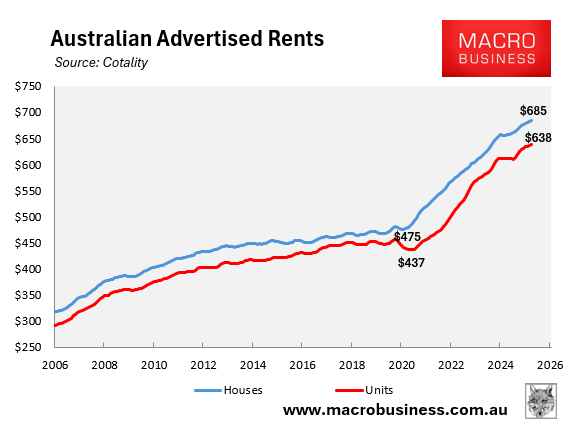
To summarise, Australian rents have soared by 44% over the past five years, according to Cotality, adding around $10,600 to the annual cost of renting the median home.
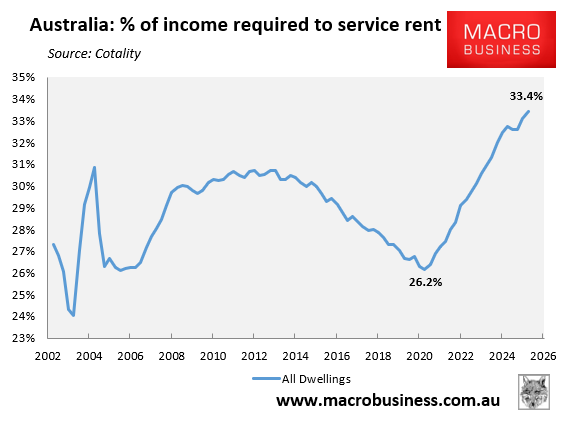
As a result, rental affordability in Australia has collapsed to a record low, with the median household required to spend 33.4% of their income to rent the median advertised home, up from 26.2% five years earlier:
The primary reason rents have surged is the unprecedented increase in net overseas migration after borders reopened following the COVID-19 pandemic.
As illustrated below, the number of temporary migrants in Australia surged by nearly one million from the pandemic trough. There are also around 600,000 more temporary migrants in Australia today than at the peak in 2019, before the pandemic landed and the border was closed.
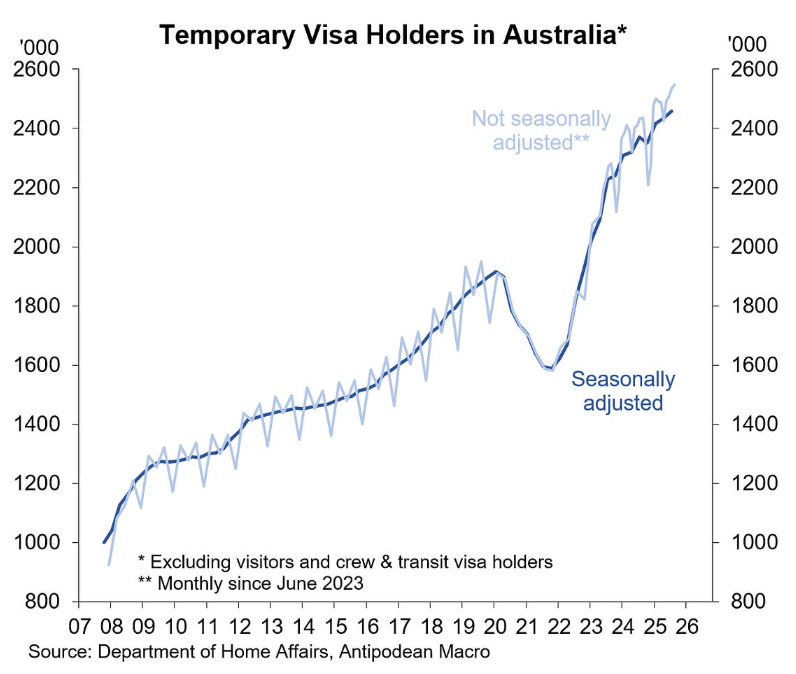
Chart by Justin Fabo at Antipodean Macro
Since the end of 2019, net overseas migration (NOM) has averaged 266,000 annually. This is significantly higher than the 226,000 average NOM in the 15 years of ‘Big Australia’ leading up to the pandemic.
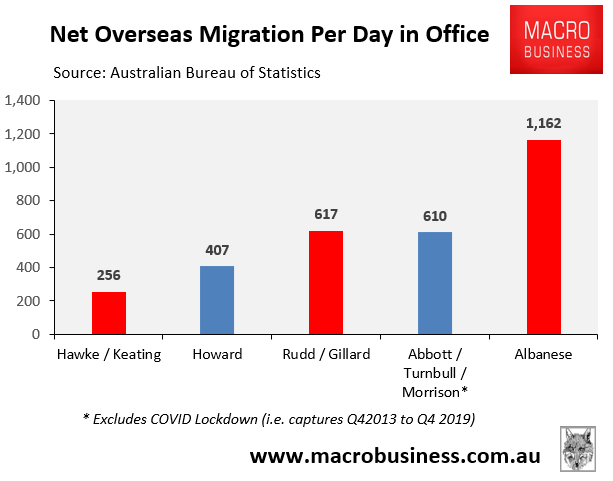
In fact, since the Albanese government was elected in mid-2022, NOM has averaged a whopping 424,400 annually, equating to 1,162 net migrants landing every day over Labor’s first three years and 1,273,200 net migrants in total.
As illustrated below, this level of NOM under Labor is nearly double the daily average recorded by the previous Coalition government before the pandemic (i.e., between Q4 2013 and Q4 2019). It is also far higher than anything recorded in Australia’s history.
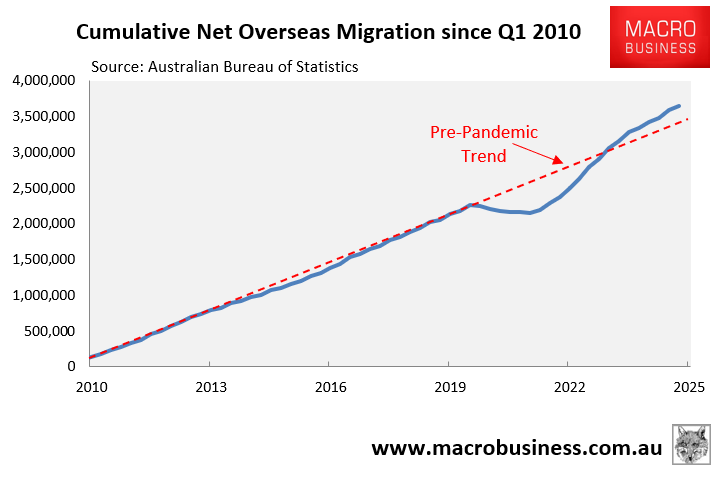
As a result, Australia’s NOM is running well above the pre-pandemic trend, having more than ‘caught up’ for the lost migration during the COVID-19 border closure:
Alex Joiner, chief economist at IFM Investors, highlighted the extremeness of Australia’s recent immigration with the following chart:
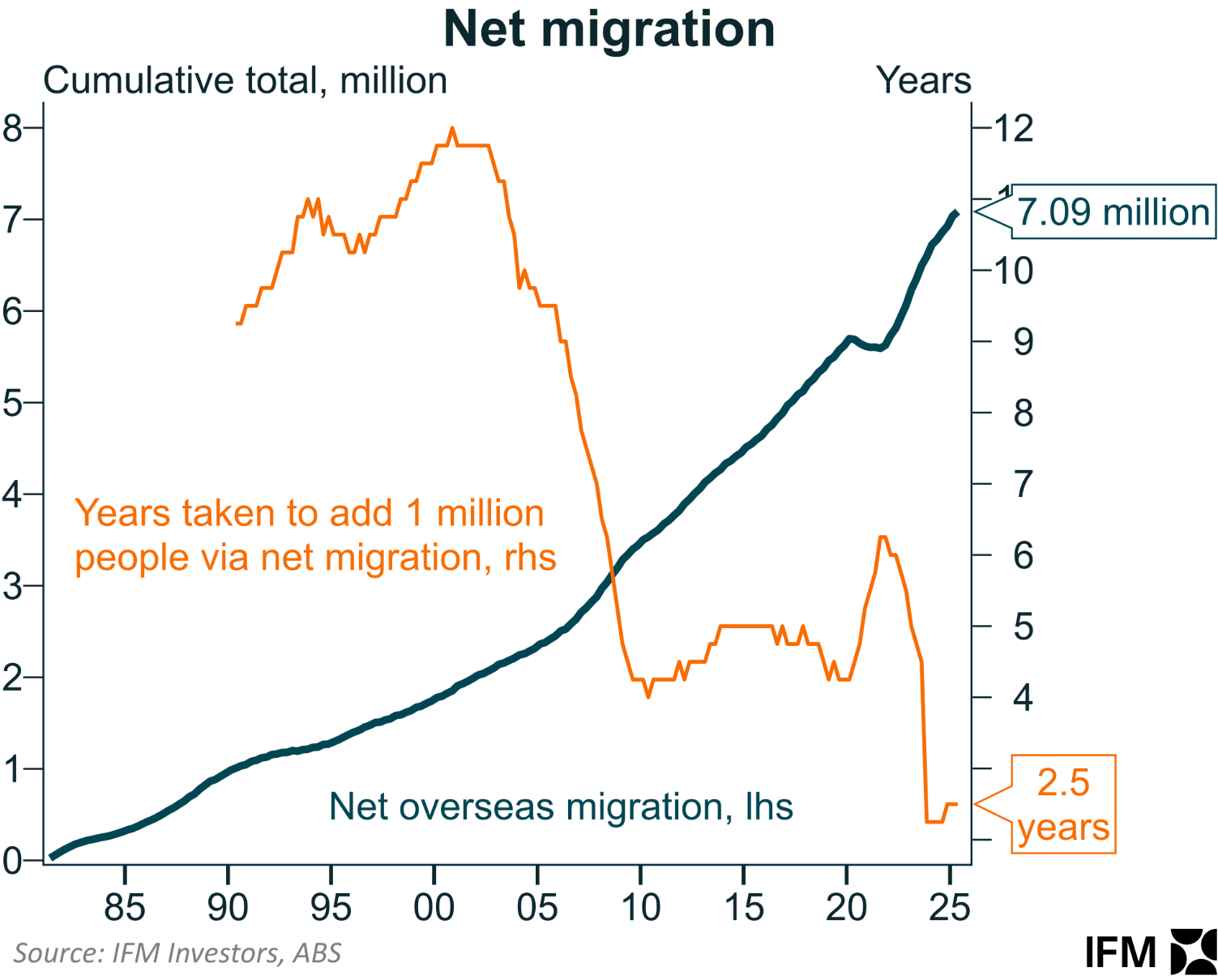
According to Joiner, as of Q2 2025 (the latest data point), it took only 2.5 years for Australia to add one million people via NOM. This is more than four times faster than in Q4 2020, when it took 12 years to add one million people to Australia’s population via NOM.
Of course, this immigration surge has arisen at the same time as Australia’s new housing supply has been badly suppressed:
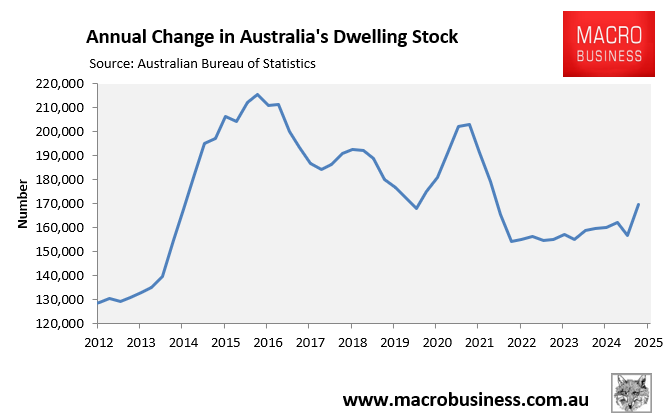
The result is that Australia’s rental market has tightened, with a record-low vacancy rate and soaring rents, according to Cotality.
The number one solution to Australia’s rental crisis, therefore, is to significantly reduce immigration to a level below the nation’s capacity to supply housing and infrastructure.
