
Alex Joiner from IFM Investors published the following chart on Twitter (X) last week, showing the explosive growth in Australia’s net overseas migration (NOM), particularly since the end of the Covid-19 pandemic.
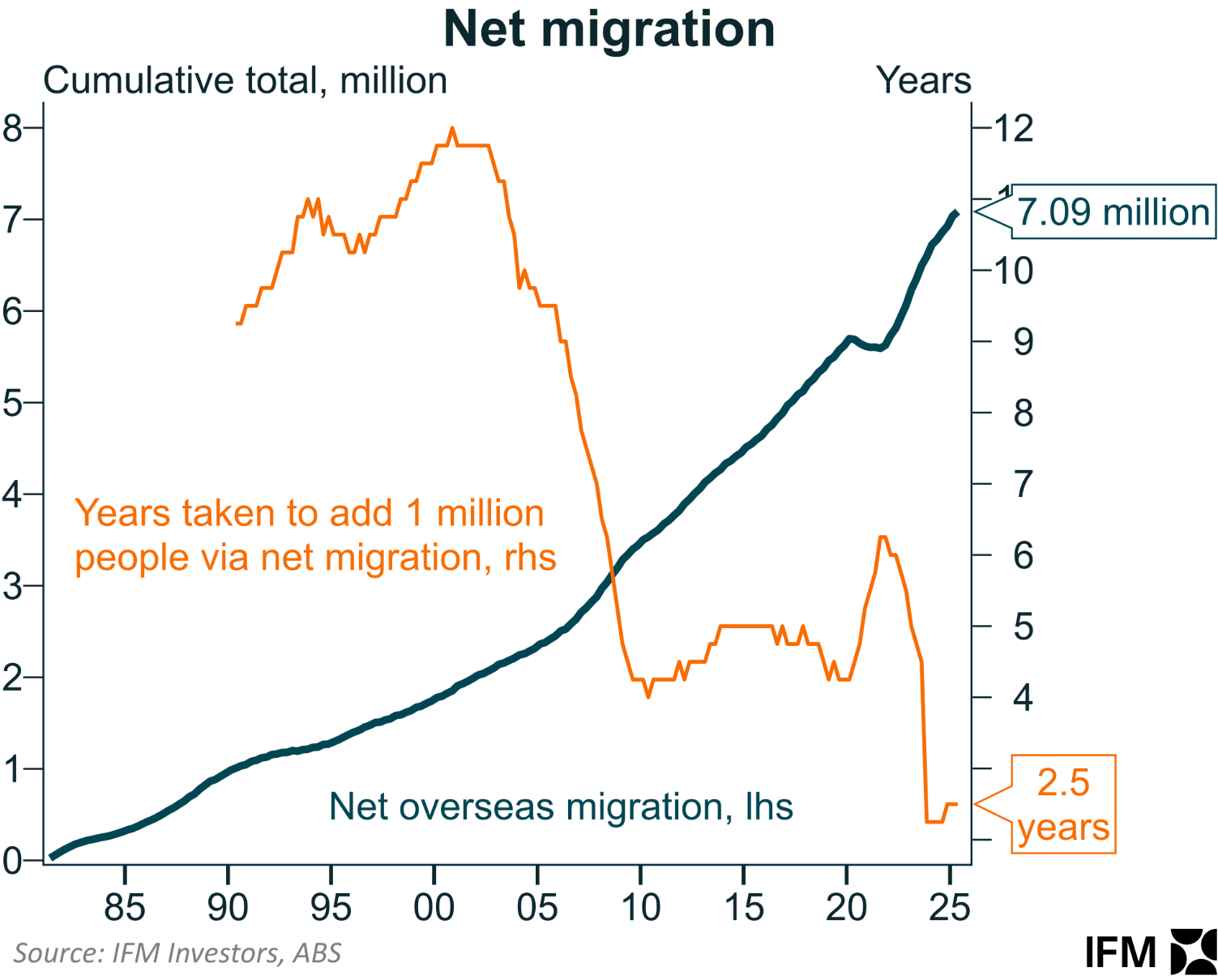
Joiner noted that as of Q4 2000, it had taken 12 years of NOM to add 1,000,000 people to the population.
As of Q2 2025, it had taken just 2.5 years.
Therefore, Australia has imported people more than four times faster than we did at the start of the century.
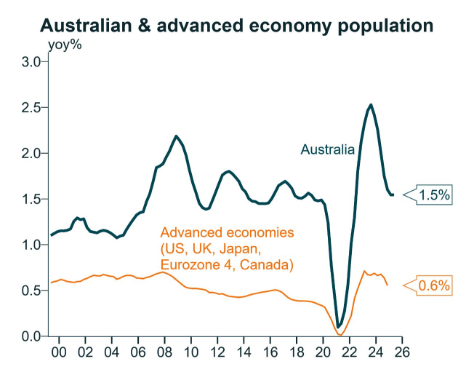
Joiner separately posted a chart illustrating how Australia’s population growth is running 2.5 times faster than the developed world average:
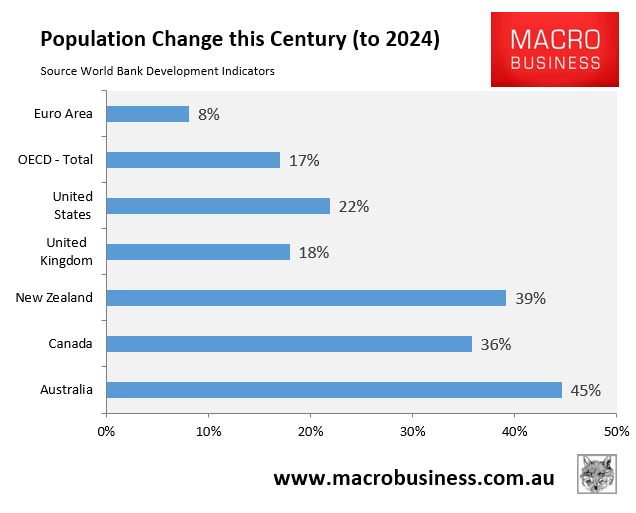
I have made similar comparisons previously to highlight Australia’s world-beating immigration-driven population growth this century:
Canada experienced an even more extreme immigration boom following the pandemic, whereby it added around 1.2 million people alone in 2023.
The surge in immigration created all manner of problems for Canada, including extreme housing shortages, surging rents, productivity and infrastructure stress, services inflation, and rising youth unemployment.
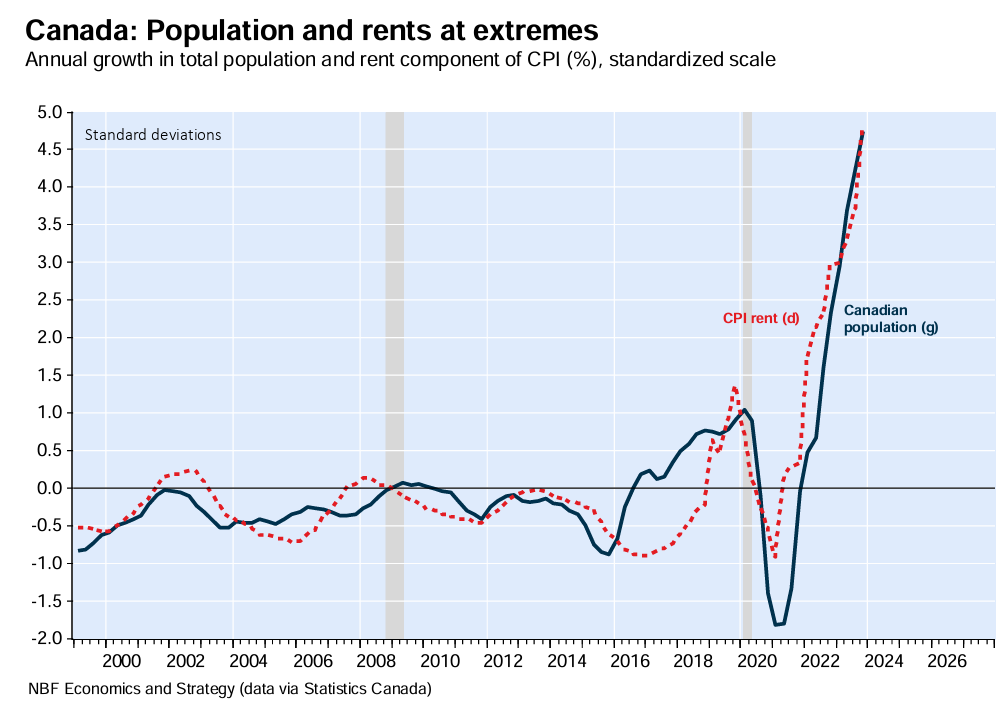
Like in Australia, Canada’s population boom was driven by temporary residents. According to StatCan, the number of non-permanent residents climbed from 1.36 million people in Q2 2021 to 3.15 million by Q3 2024. At the peak, non-permanent residents accounted for over 1 in 14 people in Canada (~7.6% of the total population).
The left-leaning Canadian government recognised the error and implemented sweeping immigration cuts last year in a bid to stabilise the population.
The measures include reducing annual permanent resident targets, capping international student and temporary worker admissions, and tightening asylum and border measures.
Canada’s permanent resident targets were lowered from an ambition of 500,000 to 365,000 by 2027.
Canada also set controlled targets for temporary residents, including international students (largest reductions) and temporary foreign workers.
The share of the Canadian population made up by temporary visa holders is to be reduced from a peak of 7.5% to 5% by the end of 2027.
Canada’s immigration reforms have proven highly successful.
The Canadian population declined by 76,000 people in the third quarter of 2025, marking the first contraction in its history (excluding the pandemic).
This decline in population was driven by a decrease of 176,000 in the number of non-permanent residents (NPR) during the quarter. After peaking at 7.6% in Q3 2024, the share of NPRs fell to 7.3% in Q2 2025 and 6.8% in Q3 2025.
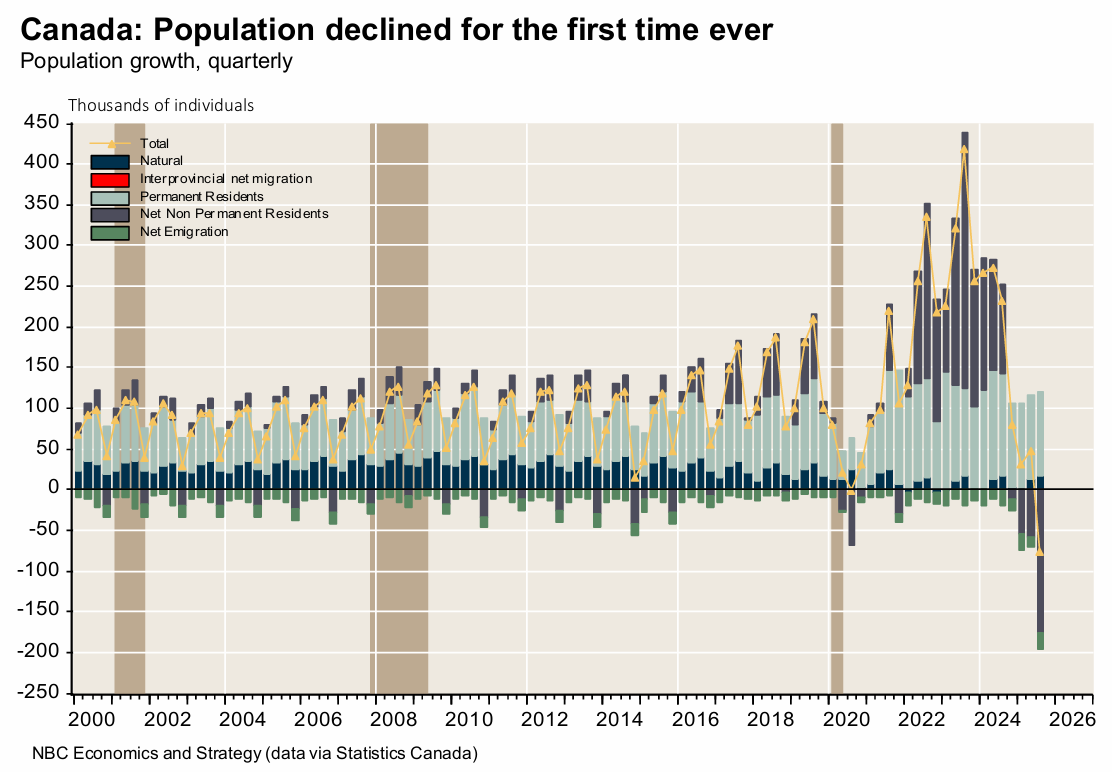
“The process of normalizing this segment of the population is now well underway—Ottawa is targeting a 5% share from 7.6% at the high and 6.9% as of the latest quarter”, noted major bank BMO.
“That implies further net outflows ahead, likely right through 2027. The impact is being seen most vividly in the rapidly-softening rental market”.
“A major population adjustment is well underway, and it remains one of the biggest economic stories in Canada. In order to hit the NPR target share, we’ll need to see population growth run barely above zero through 2028 (births and permanent immigration flows held constant), before settling back into a longer-term run rate of just under 1%”.
“Among the impacts we’re tracking are a significant weakening of the rental market, especially with the pipeline chock-full of supply; less pressure on services inflation; easing slack in the youth job market; and a likely pickup in productivity and growth in real GDP per capita”, BMO noted.
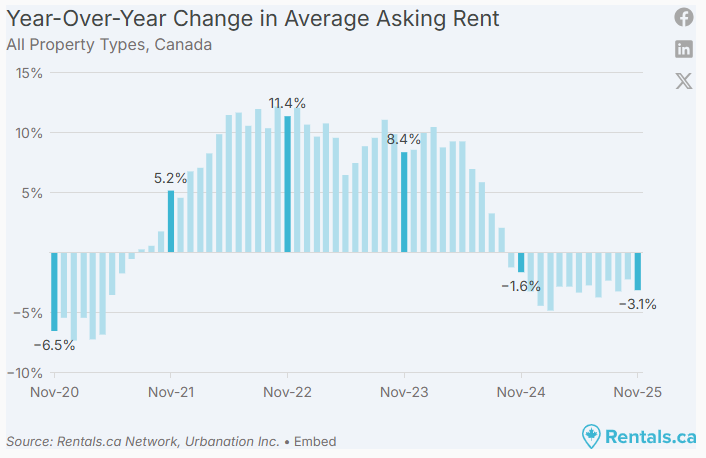
Indeed, the outflow of population has seen advertised rents fall across Canada.
The latest data from Rentals.ca showed that advertised rents have declined for 14 consecutive months, down 3.1% year-on-year in November:
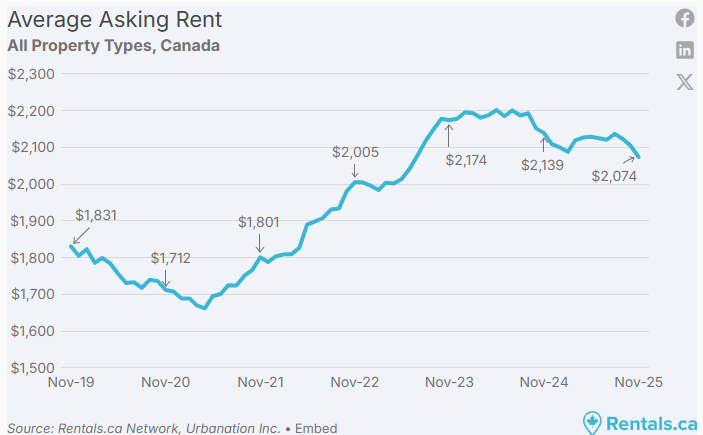
This marked the lowest advertised rental level since June 2023, with advertised rents now tracking $100 below the level from two years ago:
Now compare the situation in Canada with Australia, where net overseas migration continues to run hot, housing shortgages are chronic, and the rental market is tightening.
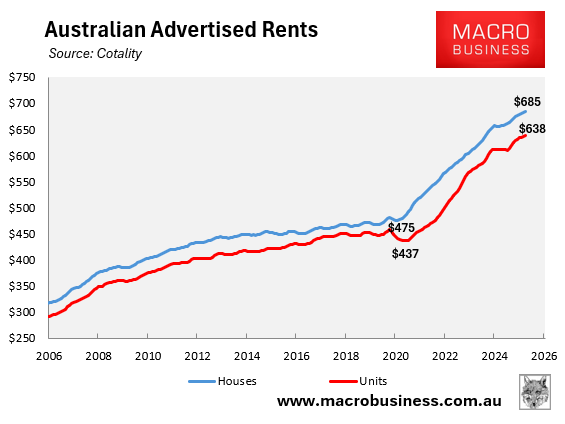
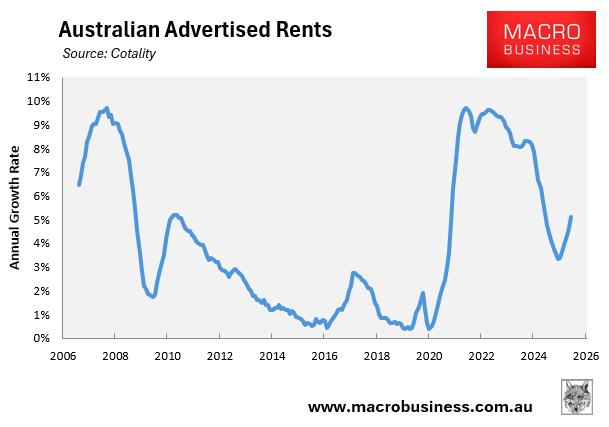
After rising by 44% nationally over the past five years, rental inflation has accelerated once more amid record low vacancy rates.
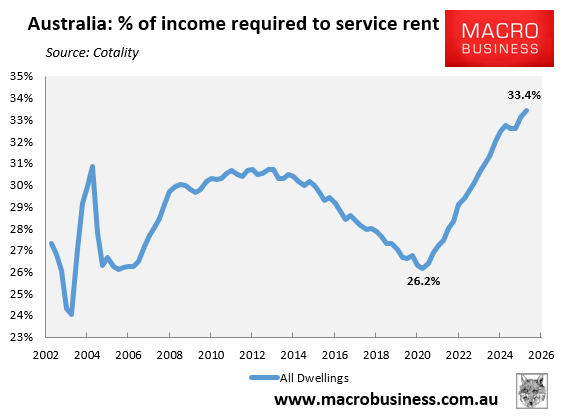
As a result, rental affordability relative to household incomes has never been worse in Australia.
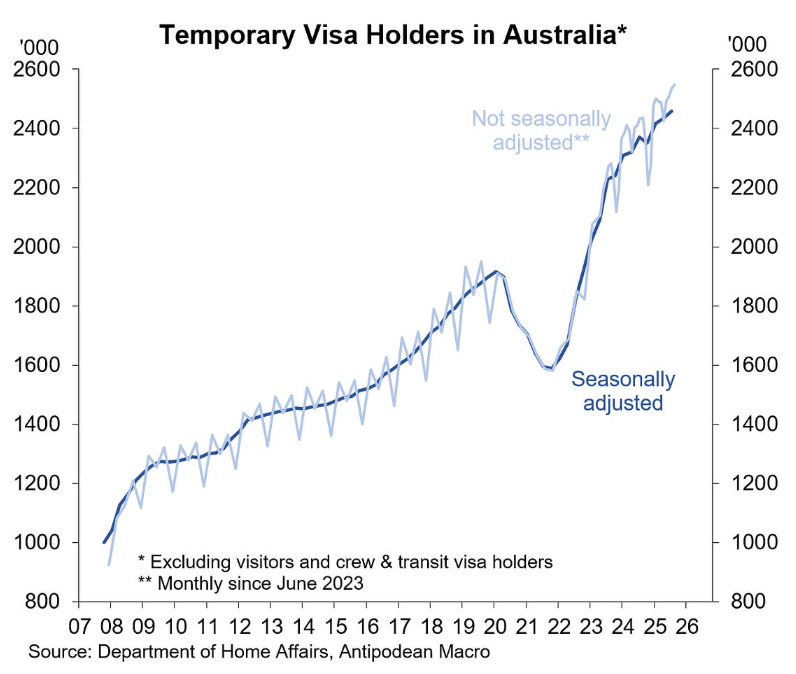
The temporary migrant population in Australia also continues to grow inexorably, driving the strains in the rental market.
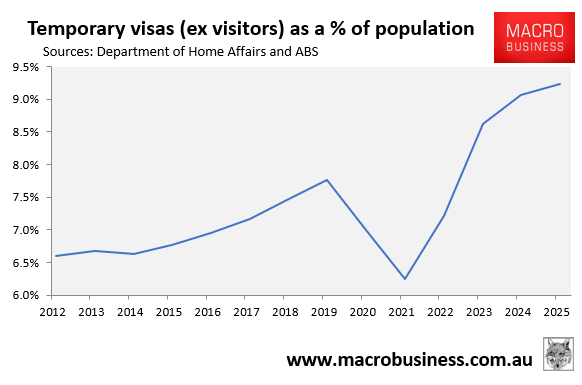
As a result, the share of temporary visa holders relative to the population is tracking at an all-time high.
However, rather than emulating Canada and implementing sharp immigration cuts, in particular by lowering temporary visa numbers, the Australian Labor government has instead significantly lifted the planning level for international students for 2026, as well as eased entry requirements.
Labor has also chosen to raise the effective permanent migrant intake to record levels.
Given Australia’s chronic housing shortages and rental crisis, and the fact that all opinion polls show that voters overwhelmingly support lower immigration, why won’t Australia’s left-leaning government emulate the left-leaning Canadian government’s immigration reforms?
Without changes, Australia’s immigration intake will remain at historically high levels, the housing shortage will worsen, and the rental crisis will intensify.
