
The Albanese government has already ignited the housing market with its 5% deposit scheme for first home buyers.
Now housing minister Clare O’Neil is busy spruiking Labor’s Help to Buy shared equity scheme, which launches on 5 December 2025 and is designed to make home ownership more accessible by allowing eligible buyers to purchase a property with the federal government taking up to a 30% equity stake for existing homes and a 40% equity stake for new homes. Buyers also only require as little as a 2% deposit, since the government’s equity reduces the loan size.
This reduces the size of the mortgage and deposit required, but participants must eventually repay the government’s share when they sell or refinance.
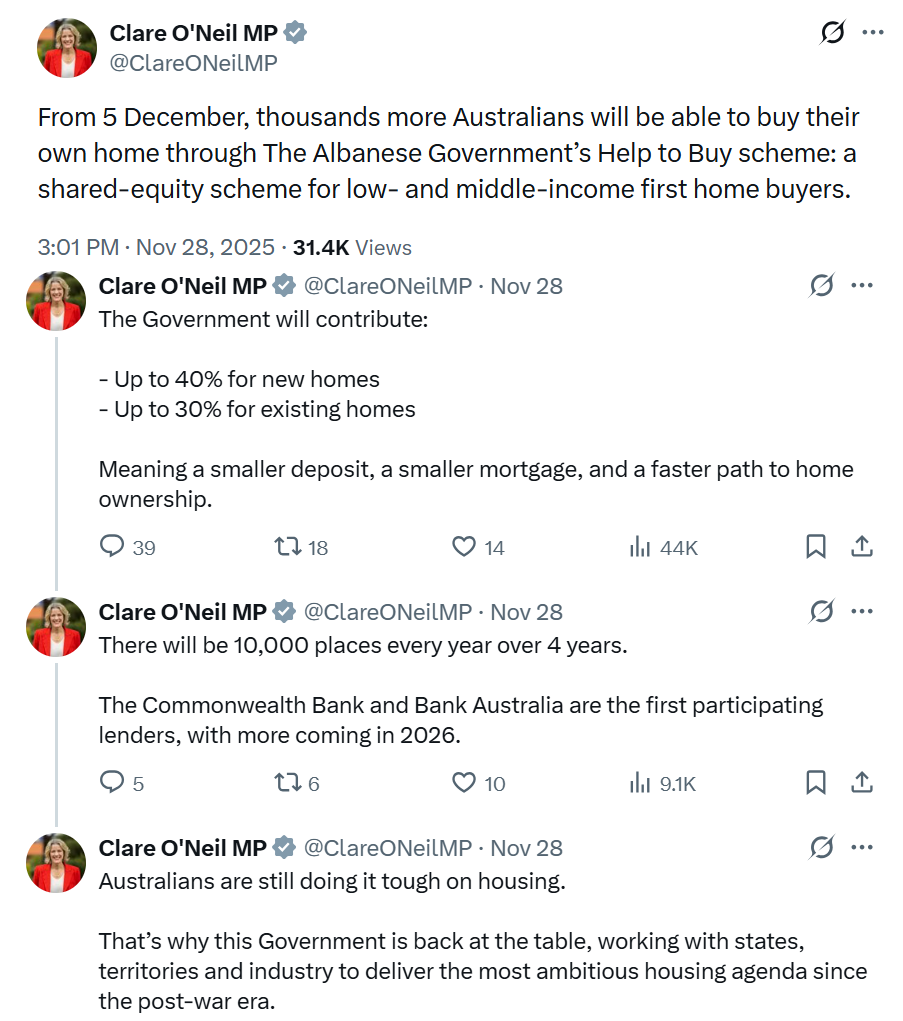
However, unlike Labor’s 5% deposit scheme, there are stronger eligibility requirements and caps on the number of places, namely:
- Available to low- and middle-income earners (i.e., $100,000 for single applicants and $160,000 for joint applicants and single parents).
- Buyers must not already own property.
- Limited to 10,000 places per year.
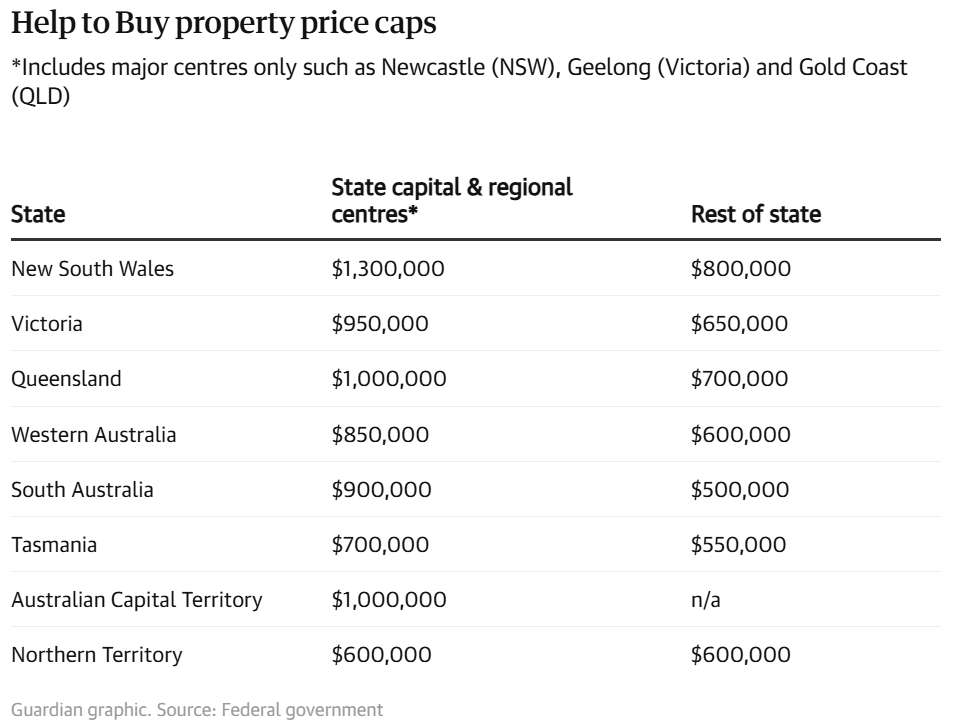
The following chart from The Guardian shows the property price caps, which have been set around the median prices for each market:
While not as inflationary as Labor’s 5% deposit scheme, the Help to Buy shared equity scheme will add additional demand to the market at a time when prices are already inflating.
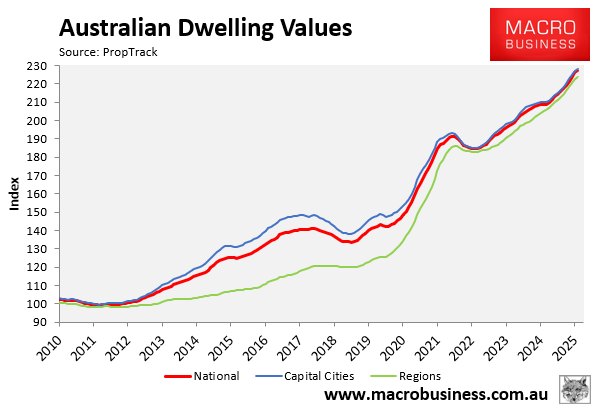
Like all demand-stimulating policies, Help to Buy will ultimately be self-defeating from an affordability perspective since it will merely push home prices higher.
As a result, future first home buyers will be left paying higher prices and carrying larger mortgages than they otherwise would for the privilege of putting a roof over their heads.
The real housing solutions lie in taking demand from the market in the form of lower immigration (reduces rents and prices) and removing investor demand (reduces prices).
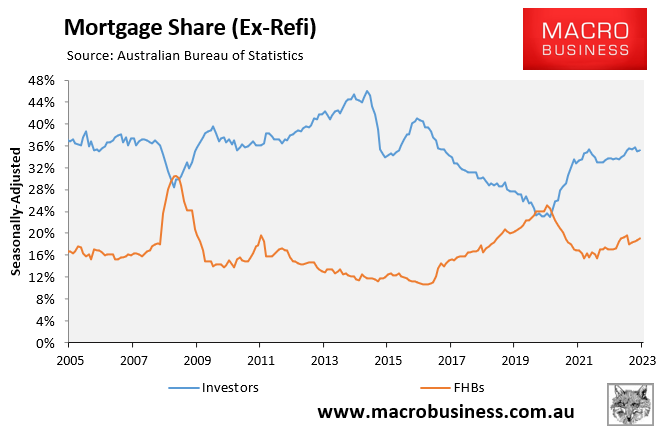
As illustrated above, property investors compete directly with first home buyers. As a result, less investor demand necessarily means more first home buyers, a higher home ownership rate, and less pressure on prices.
Sadly, Labor is more concerned about appearing to provide solutions via demand-side policy gimmicks than taking concrete policy actions that would make housing more affordable.
