
The Australian Bureau of Statistics (ABS) released dwelling approvals statistics for October, reporting 15,844 trend approvals, down 0.6% from September.
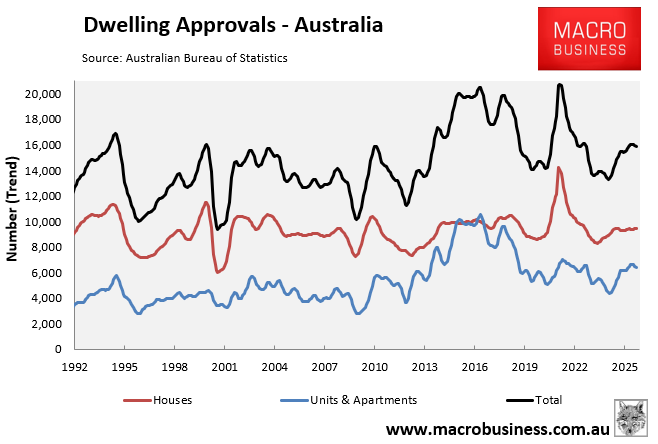
Approvals in October were 4,168 (21%) behind the National Housing Accord’s five-year target of 20,000 dwellings per month.
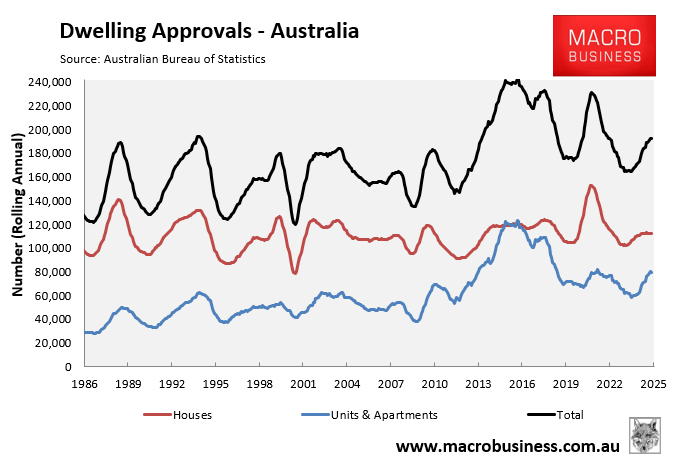
In the year to October, 192,100 dwellings were approved for construction, which was 47,900 (20%) fewer than the National Housing Accord’s aim of 240,000 homes each year.
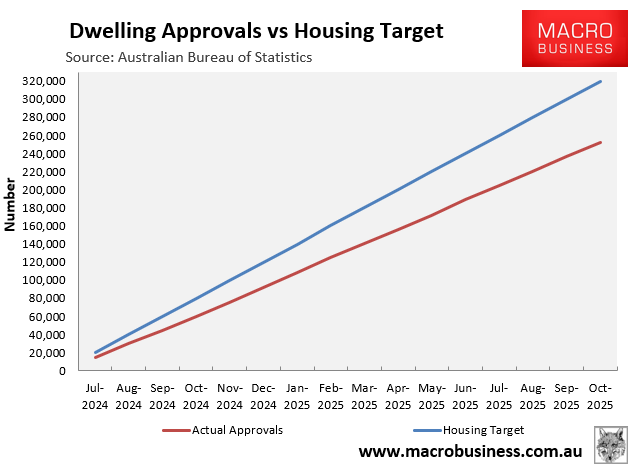
In the first 16 months of the National Housing Accord, 252,594 dwellings were approved for construction, which is 67,406 (21%) fewer than the required run rate of 320,000.
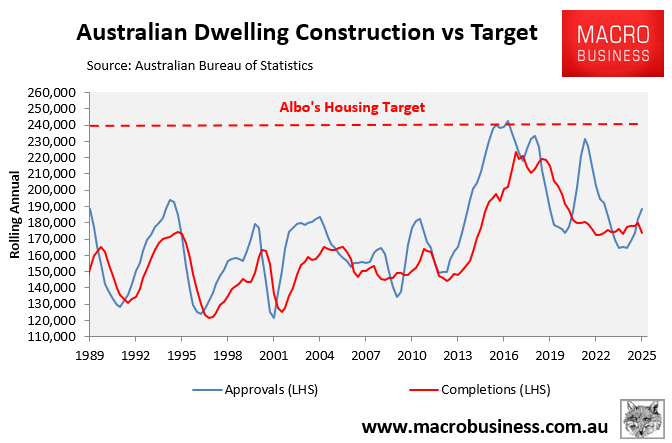
However, the approval of a home for construction does not guarantee its completion.
Over the last decade, dwelling approvals have outpaced completions by 5%. This means that meeting the target set by the National Housing Accord will be even more challenging than infered by the approvals data.
The reality is that Australia’s housing supply is constrained due to factors including:
- Interest rates have structurally increased.
- Construction costs have risen by more than 40% since the beginning of the Covid-19 pandemic.
- Since the beginning of the pandemic, residential lot values have increased by about 33%.
- Factors impacting the homebuilding industry including labour shortages and high rates of insolvencies.
At the same time, the Albanese government is running a turbo-charged immigration program, which is pumping demand and overwhelming supply.
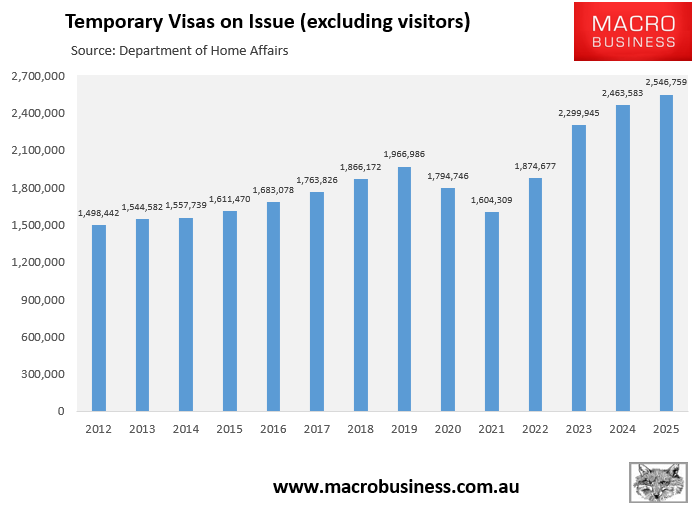
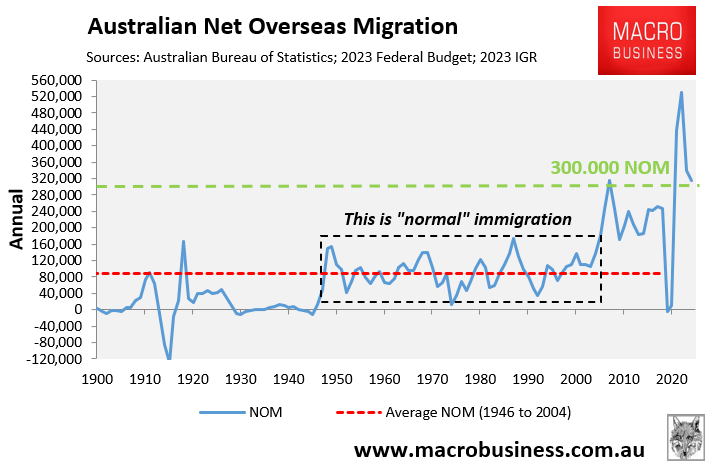
The former deputy secretary of the immigration department, Abul Rizvi, recently forecast that Australia’s net overseas migration (NOM) will track around 300,000 annually under current immigration policies, 15% higher than the Treasury’s forecast.
Prior to the pandemic, Australia only exceeded 300,000 NOM once in history—i.e., 2008-09 (315,700 under Rudd).
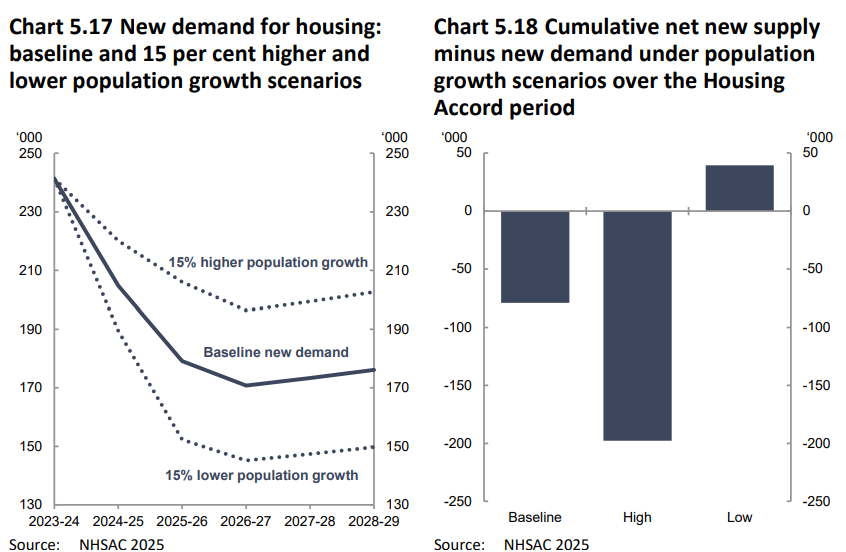
The National Housing Supply and Affordability Council’s (NHSAC) latest State of the Housing System report, released in May, calculated that if Australia’s population grows 15% faster than projected by Treasury, as suggested it will by Abul Rizvi, then Australia’s housing shortage will increase by around 200,000 over five years.
This 200,000 forecast increase in the housing shortage by NHSAC is on top of the current cumulative shortage of at least 220,000 homes, calculated by AMP chief economist Shane Oliver:
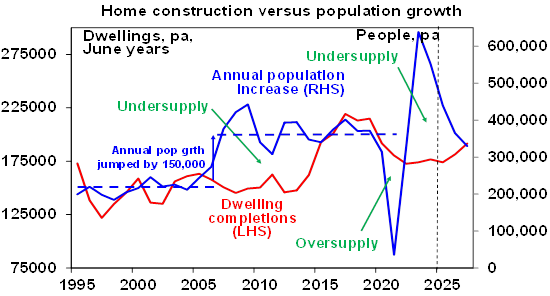
Source: Shane Oliver (AMP)
Therefore, Australia’s housing shortage could double to 400,000 over the next five years if Rizvi’s immigration forecasts come to fruition.
This comes at a time when Australia’s rental vacancy rate is tracking at a record low, alongside rental affordability:
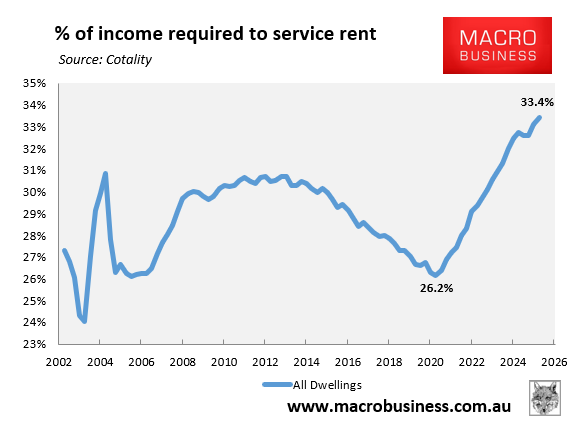
Despite promising otherwise, the Albanese government has delivered a larger, lower-quality, and more temporary immigration program than ever.
Australian renters are suffering the most as demand from high immigration forever outstrips new housing supply.
