
Heading into the release of the official Q2 population and immigration data from the Australian Bureau of Statistics (ABS), all indicators were pointing to an increase.
A record 448,500 net permanent and long-term (NPLT) arrivals were recorded for the first 10 months of 2025:
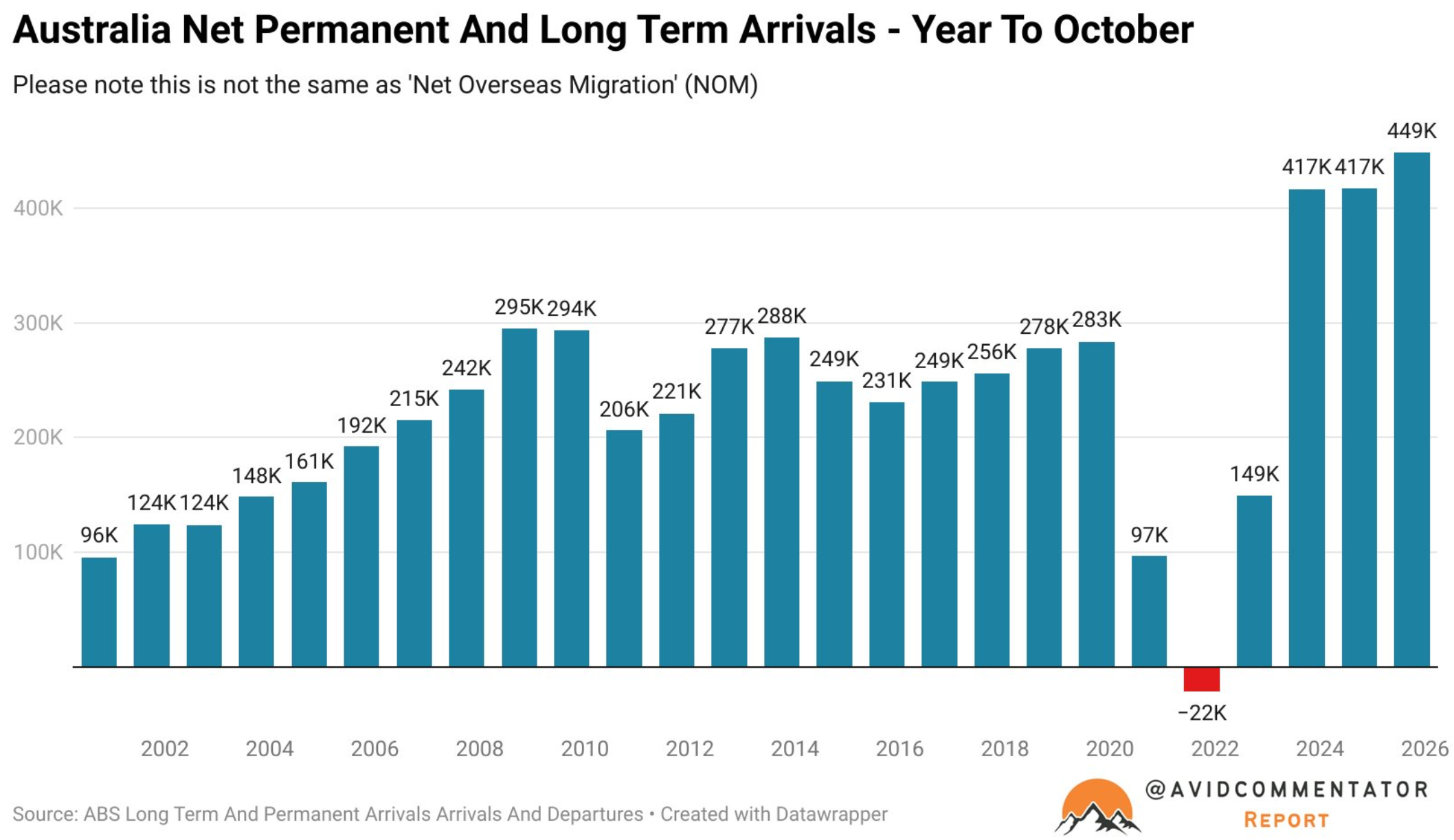
The ABS monthly NPLT arrivals series has historically tracked the official quarterly net overseas migration (NOM) series directionally and is used as a leading indicator by the Centre for Population.
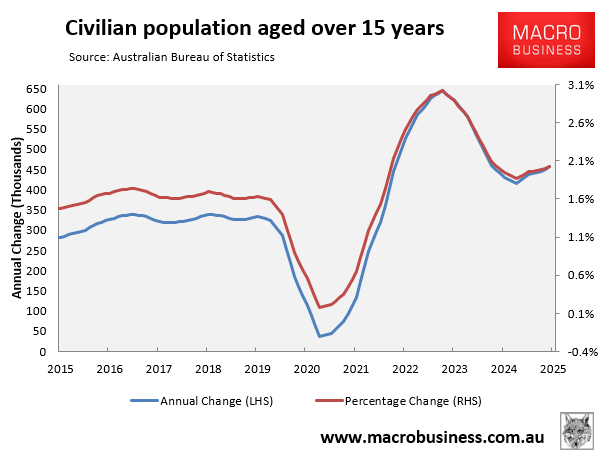
Last week’s labour force release for November showed that annual growth in the civilian (working age) population aged 15-plus bottomed in March 2025 at 415,100 (1.9%) and has since firmed, growing by 457,200 (2.0%) as of November 2025:
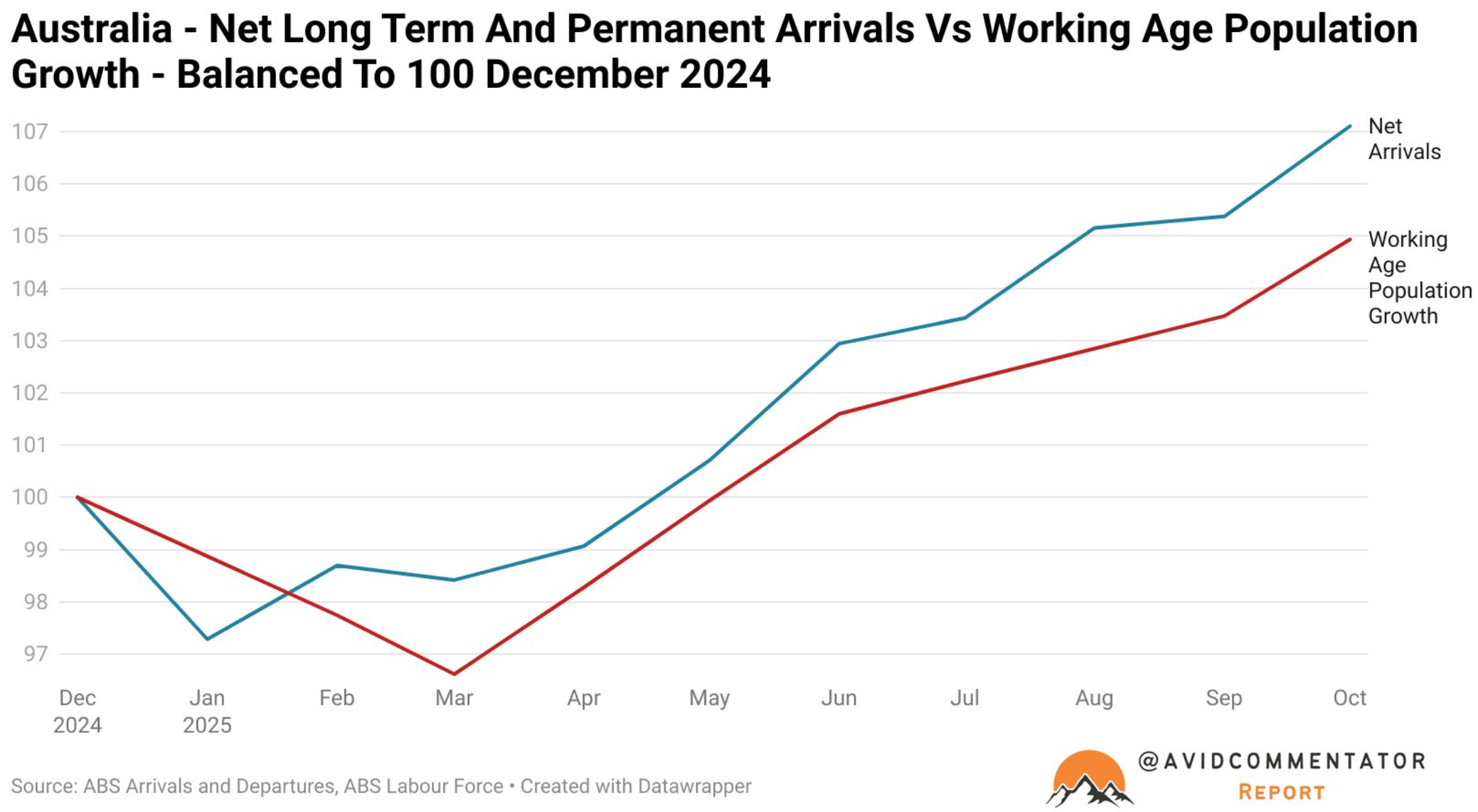
As illustrated below by Tarric Brooker, there is a clear strong correlation between rising NPLT arrivals and the growth in the working-age population:
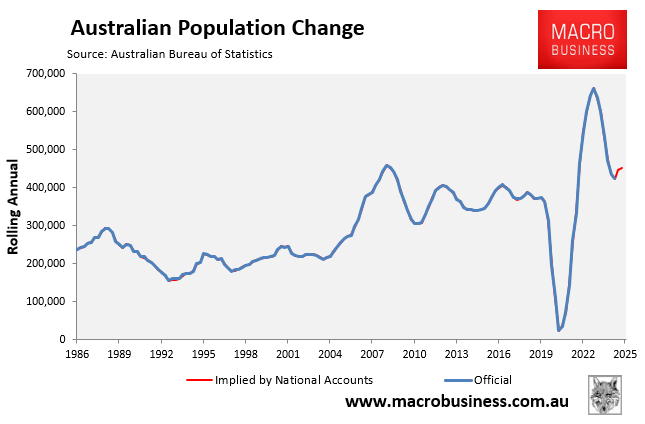
The September quarter national accounts, released this month, also suggested that annual population growth accelerated to 451,200 in Q3 2025, up from a low of 422,500 in Q1 2025:
Annual advertised rental growth also accelerated to 5.0% in November, according to Cotality, commensurate with the rebound in population growth.
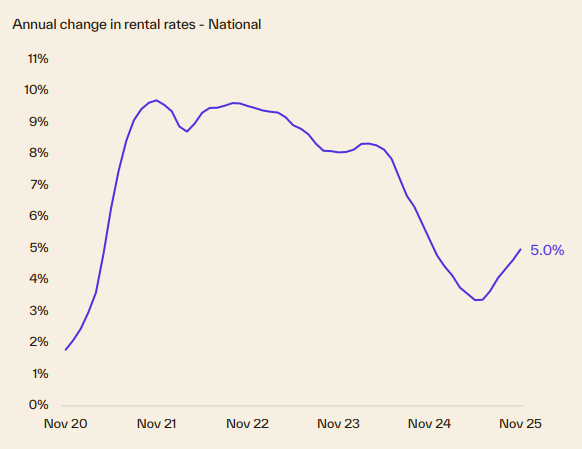
Source: Cotality
Finally, today (Thursday), the ABS released the detailed labour force survey for November, which recorded the strongest annual working-age population growth since September last year after bottoming in March 2025:
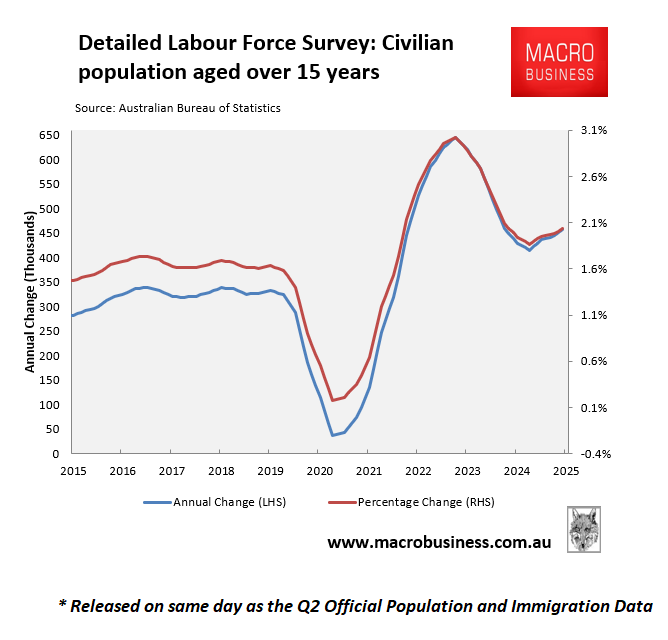
Alas, despite reporting rising population growth in both the monthly labour force survey and the Q3 national accounts, both of which were released this month, as well as the detailed labour force release released today (Thusday), the ABS has reported falling net overseas migration (NOM) and stable population growth in the June quarter.
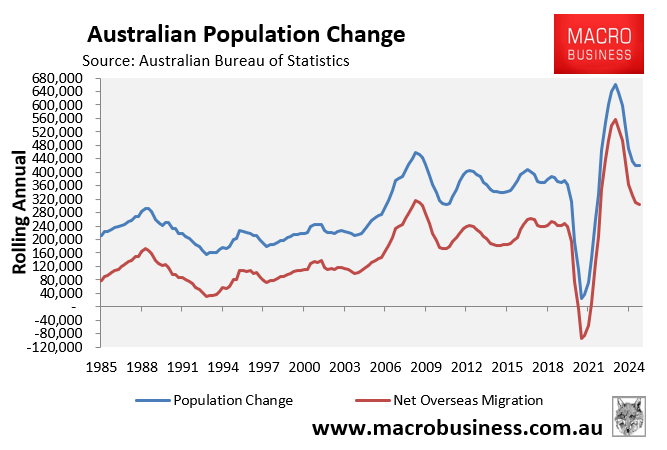
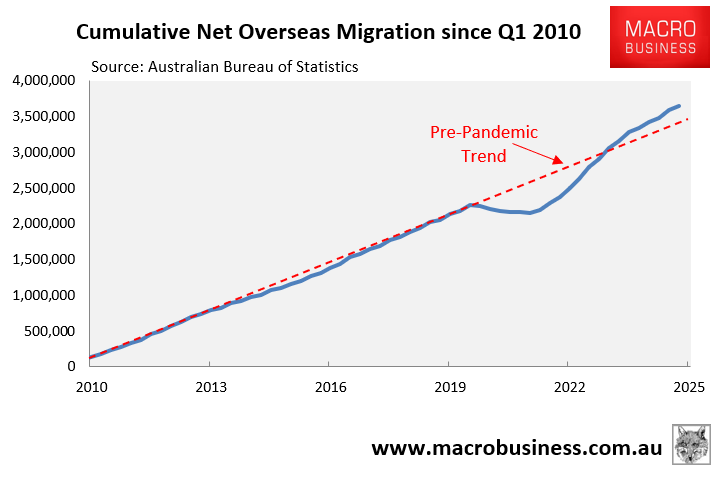
Annual NOM slowed to 305,500 in the June quarter, down from 311,200 in the March quarter.
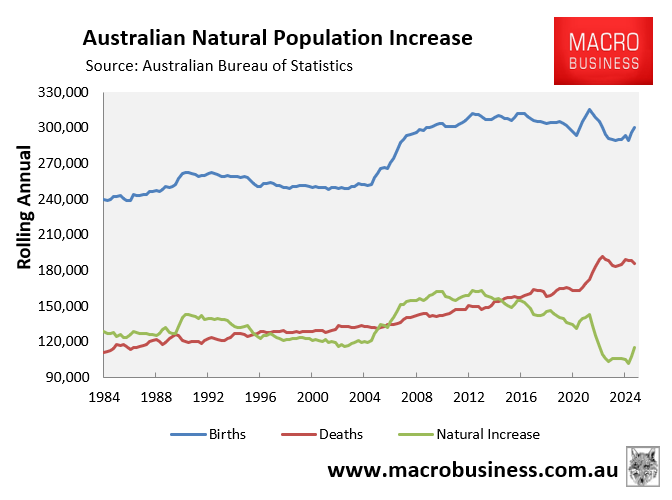
Annual population growth rose marginally to 420,100, up from 418,700 in the March quarter.
This slight increase in population growth was driven by a bounce in births:
Despite the official moderation in NOM, it is still running well above the pre-pandemic trend after adding 1,273,000 net migrants during Labor’s term to Q2 2025 (i.e., 1,162 net migrants per day over Labor’s first 1,096 days).
There are two questions for the ABS arising from this release.
- Why has it reported falling NOM and stable population growth when, on the same day, it released the detailed labour force statistics for November showing the strongest working-age population growth since September 2024?
- Why does it take so long for the ABS to release population and immigration data when New Zealand has released immigration data to October 2025 and Canada to the September quarter of 2025?
If the ABS wants commentators to stop speculating on immigration by using timely unofficial measures like NPLT arrivals, the working-age population, and the national accounts, it should release the official data more quickly like Canada and New Zealand do.
Commentators should not have to wait between 6 and 9 months to get an official read on immigration and population growth.
