
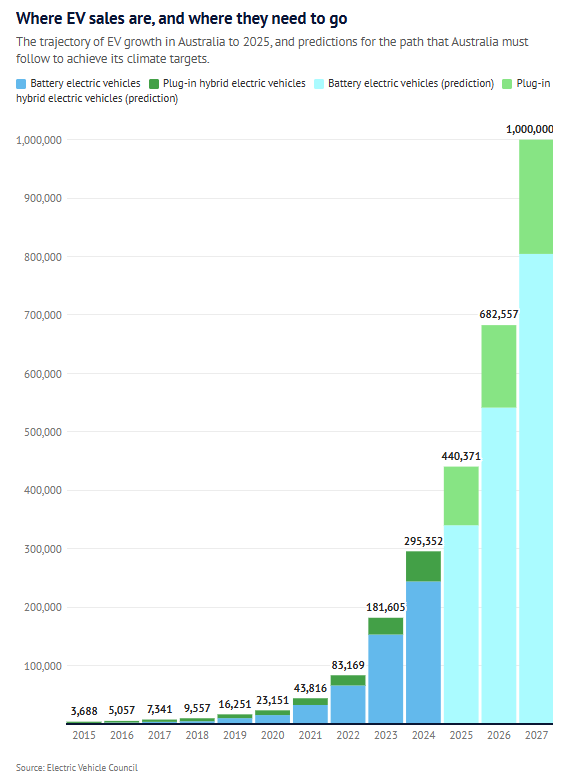
The Climate Change Authority recently warned that electric vehicles (EV) will need to account for 50% of Australia’s new car sales over 10 years if the federal government’s emissions reduction targets are to be met.
Federal and state governments already provide substantial subsidies and incentives for EVs, which cost their budgets billions of dollars. Many of these subsidies are a reverse Robin Hood scenario as they effectively tax the poor to subsidise the rich.
As reported by Michael Read at The AFR, the cost of the Fringe Benefits Tax (FBT) exemption for EVs has “blown out thirteenfold, and the benefits are disproportionately flowing to workers earning over $150,000, who make up almost half of all recipients”.
The FBT exemption policy took effect in July 2022 and exempts employees from paying FBT if they buy an EV for less than $91,387 via a novated lease, in which the company pays for the lease through pre-tax income deductions.
The FBT exemption can save buyers tens of thousands of dollars over several years and has proven to be more popular than Treasury expected.
While the Treasury initially expected the FBT exemption to cost approximately $205 million in foregone income over its first four years of operation, the actual cost is expected to be $2.6 billion, nearly 13 times the initially estimated amount.
The total cost is forecast to rise to $9.7 billion between 2026-27 and 2029-30, as the number of EVs increases.
EVs receive other subsidies and incentives from governments.
EVs are eligible for a higher luxury car tax threshold than internal combustion engine (ICE) vehicles.
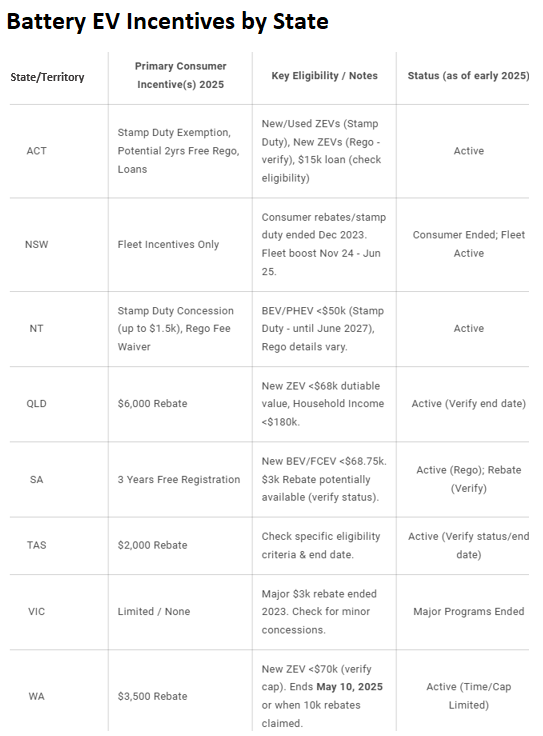
Several Australian states and territories offer direct subsidies, stamp duty exemptions, and registration discounts for battery EVs.
EVs are exempt from road user fees, including the 51.6 cents per litre fuel excise.
With over 300,000 EVs now on Australian roads, the cumulative loss in excise revenue is substantial—estimated to be in the hundreds of millions of dollars annually. This figure will only grow alongside the growth of EVs on Australian roads.
The federal government’s New Vehicle Efficiency Standard (NVES) is also designed to force Australians into buying EVs by taxing new ICE cars out of existence.
Despite the generous carrots and sticks used by governments to force widespread EV adoption, consumer demand remains sluggish.
The Australian Automobiles Association (AAA) has released its Electric Vehicles Index for the September quarter of 2025, which shows that purchases of EVs (blue line below) are barely higher today than they were three years ago:
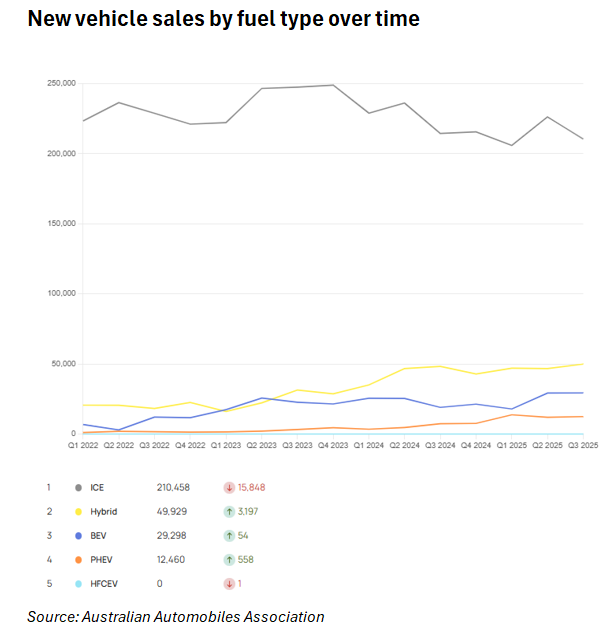
In the year to September 2025, battery EVs comprised only 97,774 out of 1,188,162 total vehicle sales in Australia, a share of just 8.2%.
In comparison, there were 232,105 hybrids sold over the year, a 19.5% share of total vehicle sales.
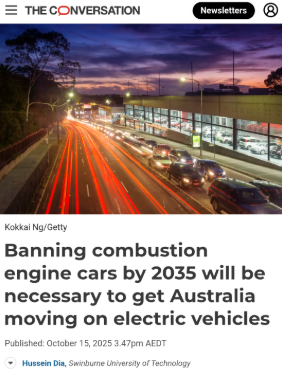
As usual, the electric vehicle industry has called for more subsidies and heavy-handed regulation to force Australians into purchasing battery EVs. This includes a complete ban on combustion engines by 2035, alongside more cash incentives (subsidies), the rollout of EV chargers paid for by taxpayers, and the continuation of no distance-based road user charging for EVs (to make up for lost fuel excise).
“We need to set EV targets and we need more incentives to encourage Australians to make the switch”, EV Council chief Julie Delvecchio said.
“It’s clear the federal government’s EV policies are working, but all governments need to be doing more to put us on the path to the 2035 climate targets”.
The obvious question is: Why is the federal government wasting scarce taxpayer money by subsidising private car purchases?
The bulk of these subsidies flows to wealthy, inner-city residents and costs federal and state budgets billions in lost tax revenues, while worsening inequality.
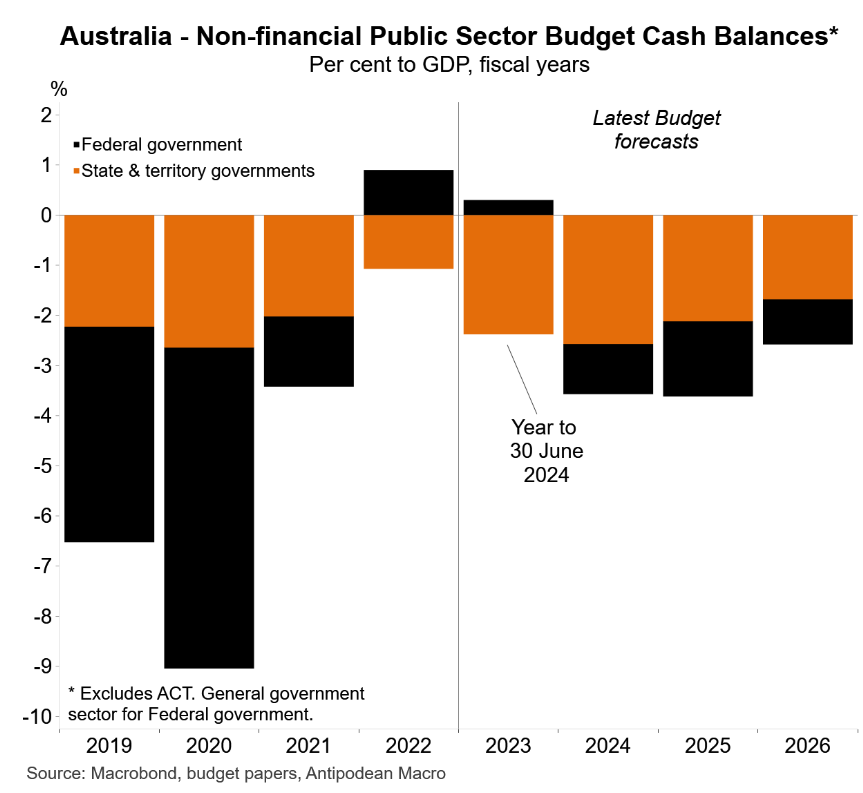
Australian governments are already engulfed in debt. They should stop wasting taxpayer money subsidising the purchase and use of EVs.
Moreover, if EVs were superior to ICE and hybrid vehicles, they wouldn’t need taxpayer subsidies and outright bans on combustion engines, as consumers would choose them because they are a better product.
The fact that the EV lobby continues to demand more subsidies, incentives, tax breaks, and outright bans on ICE vehicles to “encourage” people to switch to EVs is an admission that they cannot compete with ICE or hybrid cars on a level playing field.
