
Man, if you believe this, then I have a bridge I will sell you.
The comments mark a major intervention by the nation’s biggest energy company just months before voters head to the polls, putting both sides of federal politics on notice over the urgent policy demands from big business.
“No matter how our economy evolves, we will succeed or fail on the strength of our energy system,” Ms O’Neill will say in a speech on Thursday.
“Just like today, Australian companies of the future will need reliable, affordable energy to be the best in the world at what they do. In a country as lucky and resource rich as Australia, it would be a major policy failure if we are not able to achieve this.”
Woodside does not want cheap energy or gas anywhere in Australia. On the West Coast, check out the excellent Boiling Cold.
On the West Coast it has been white-anting domestic reservation for years and has managed to nearly double the price.
The two largest Australian oil and gas companies, Woodside and Santos, have been able to charge significantly more for the vital fuel in recent years, demonstrating a market shift that has heavy industry worried.
Woodside, which supplies 19 per cent of the WA market, charges twice as much for the vital fuel as it did five years ago.
Santos, which had a 24 percent market share in the 12 months to June 2024, charges more than Woodside and has increased its price by 83 percent in four years.
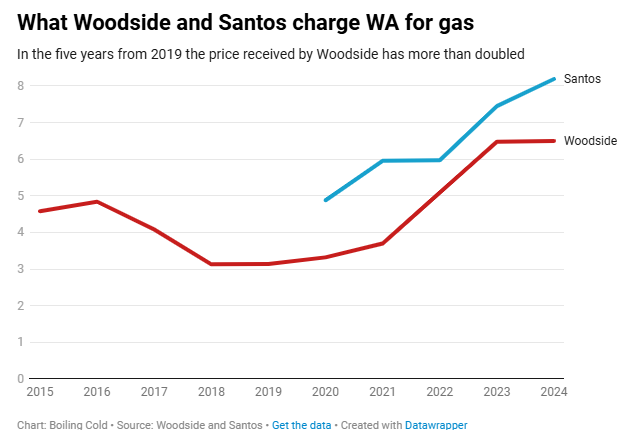
On the East Coast, Woodside was one of the most aggressive lobbyists and attack dogs against the Gas Code of Conduct.
Increasing supply on the East Coast will do nothing to lower gas prices because supply is not the problem.
Market structure is the issue because the export cartel sits on 80-90% of 2P reserves and, soon enough, it will be 100% as Bass Strait drains.
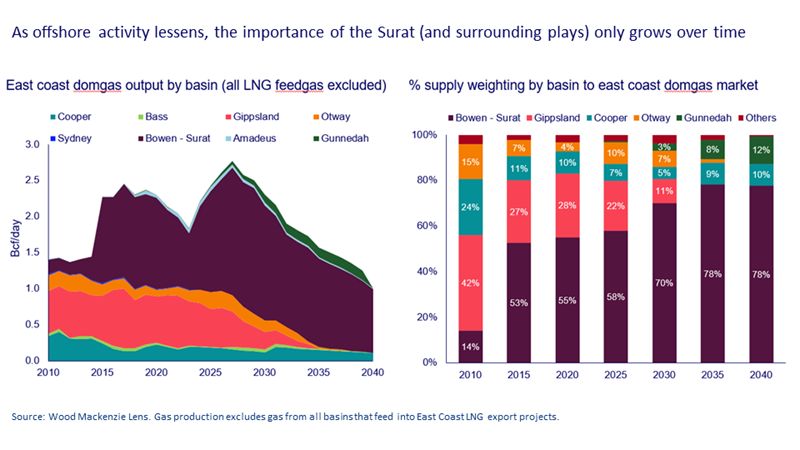
Any attempt to increase supply will simply send more gas offshore or reduce production within the cartel.
This malprocess will be intensified as LNG imports begin; the cartel will do whatever it takes to drive the local price to import parity.
Only domestic reservation and/or export levies can prevent the price shock.
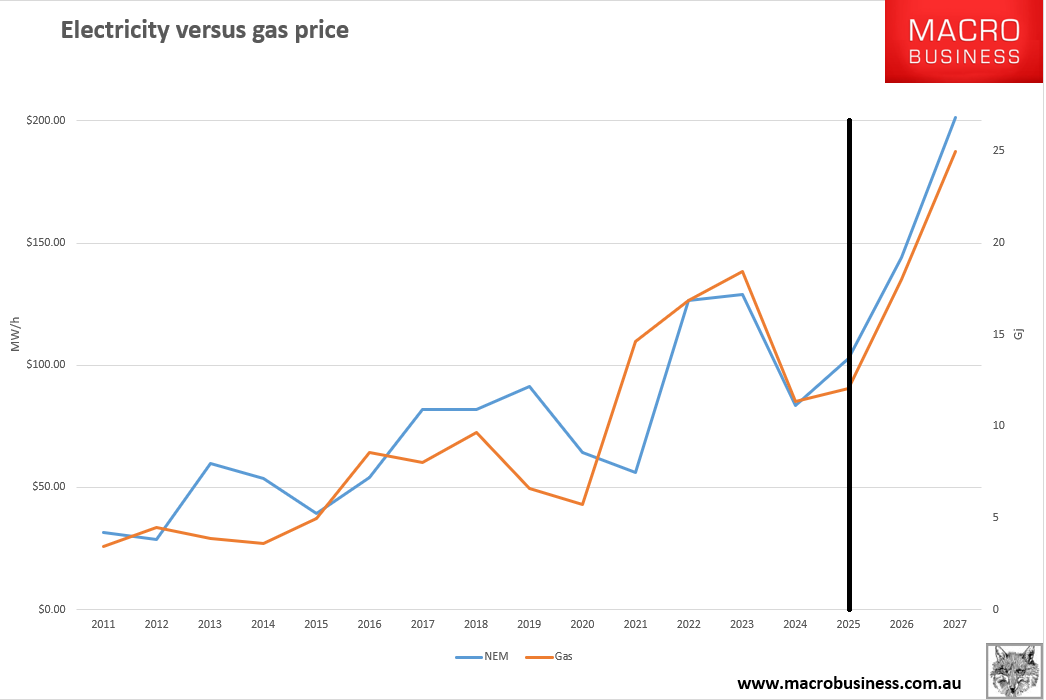
Or we can let Woodside’s raw prawn power Australia.
