
“Show me the incentive and I’ll show you the outcome”.
This famous quote was coined by legendary investor and Berkshire Hathaway vice chairman Charlie Munger in a 1995 Harvard speech.
Munger’s quote encapsulates a fundamental truth about human behaviour and its impact on business and government.
It also applies to Australia’s gargantuan National Disability Insurance Scheme (NDIS).
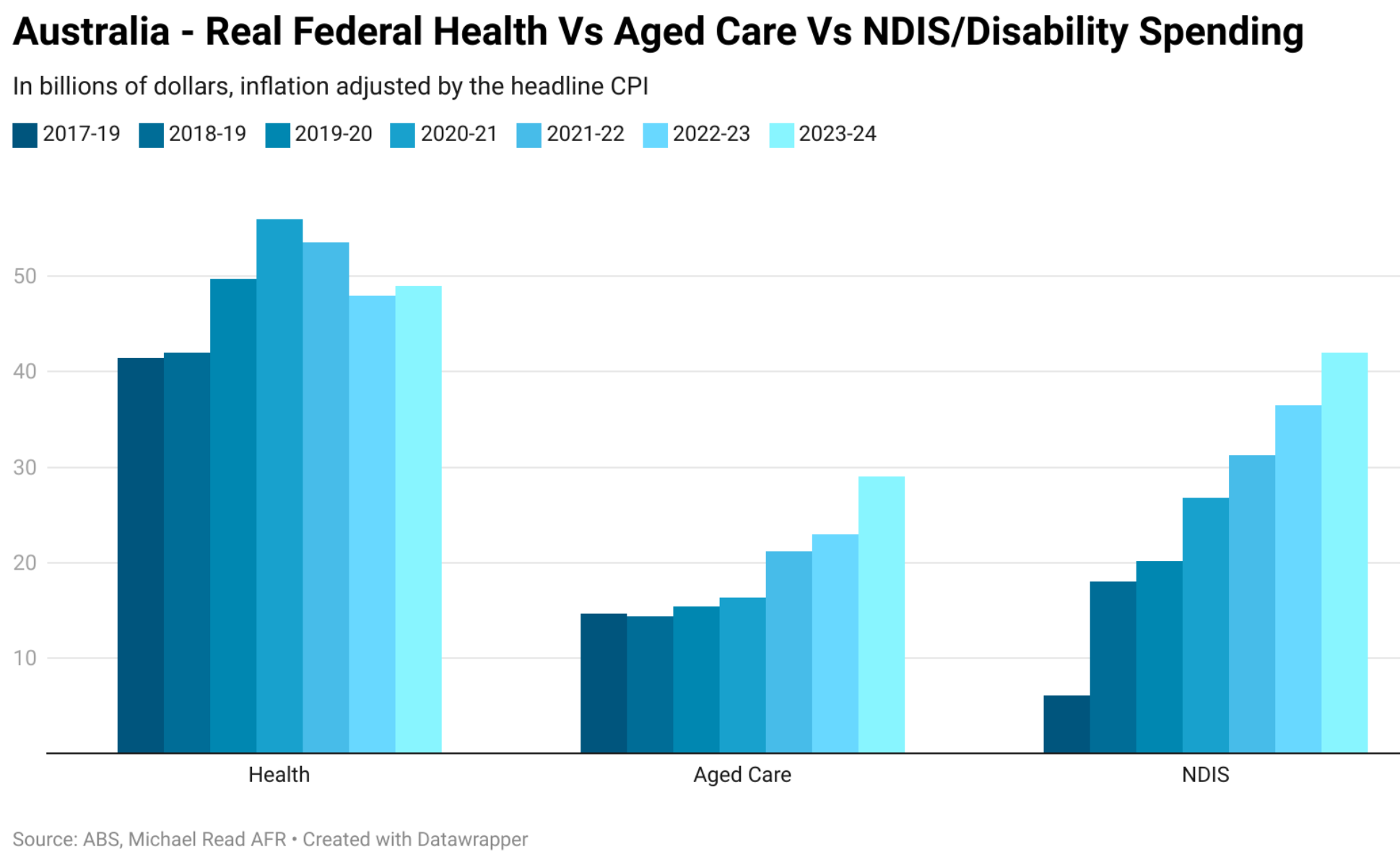
As illustrated in the following chart from Tarric Brooker, the cost of the NDIS rose inexorably between 2017-19 and 2023-24.
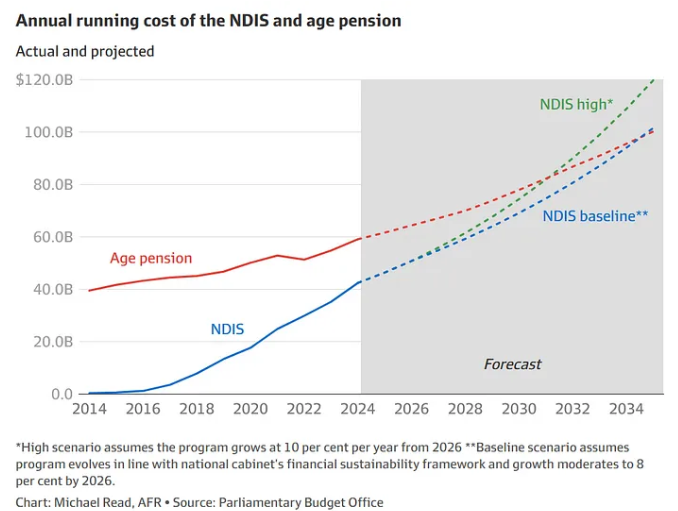
Over the coming decade, the cost of the NDIS is projected to surpass that of the aged pension.
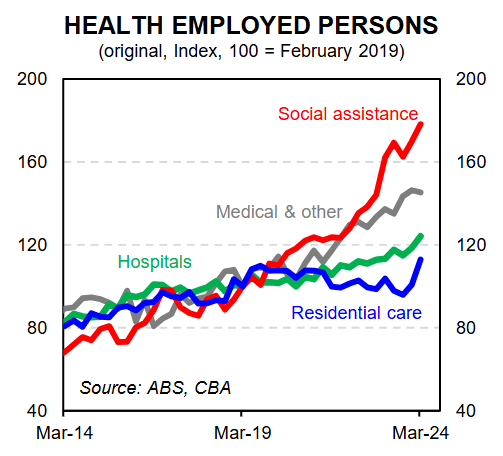
An unprecedented boom in healthcare and social assistance jobs has accompanied the surge in the NDIS.
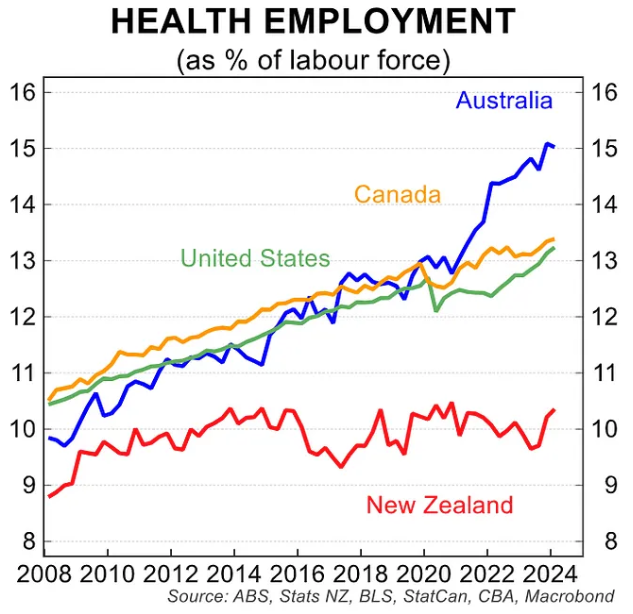
No other developed nation has experienced such a boom in so-called ‘caring jobs’.
Unsurprisingly, Tarric Brooker also shows that the share of Australians aged 5 to 14 who are classified as “disabled” has also risen in concert with the rise in the NDIS.
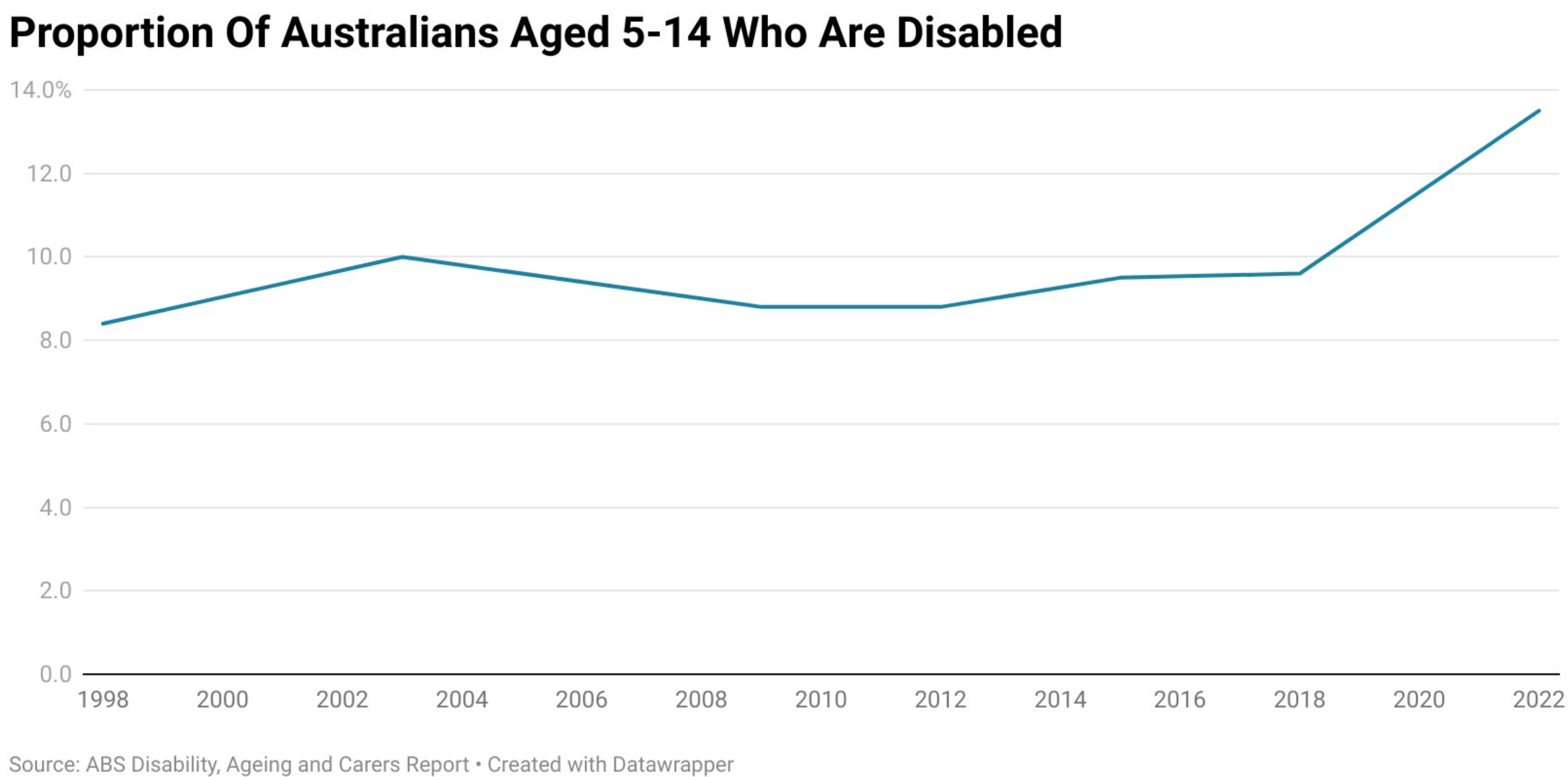
Indeed, research from the Australian National University in 2023 found the NDIS could be contributing to the increase in autism diagnoses in Australia.
Just over one-third of NDIS recipients (35%) have been diagnosed with autism.
Incentives matter. And the massive financial honeypot of the NDIS has facilitated more disability diagnoses.
“The NDIS funds 610,000 recipients to the tune of $76,000 each on average per year, and under even the most wildly optimistic forecast, this will double over the next 10 years”, noted Economist Steve Hamilton in December.
“Just to fund it today, we’d need to take an additional $3400 a year from every single Australian taxpayer, and in 10 years – well, you do the maths”.
Sadly, the NDIS has also facilitated high levels of fraud among plan managers.

The Albanese government now seeks to share the growing cost burden with the states.
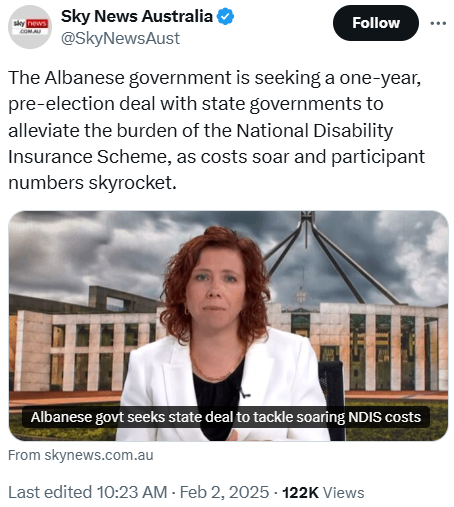
This comes as the independent budget watchdog projected the NDIS will balloon to become the most expensive government program within three years.
The number of NDIS recipients has also increased dramatically, reaching 650,000, up from the 400,000 predicted when the scheme was first launched.
Indeed, the states appear to have shifted some of their funding responsibilities around health and education to the federal government via the NDIS.
The growing size and cost of the NDIS risks disabling the federal budget and economy.
The ultimate victims of the NDIS failing will be the disabled.
