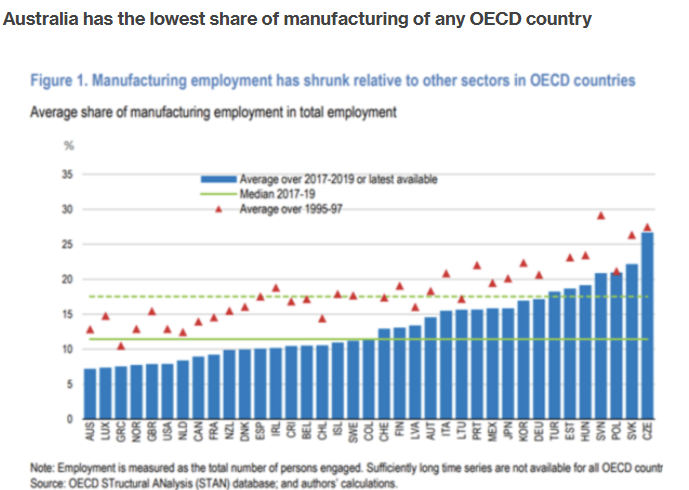
The extent to which the giant National Disability Insurance Scheme (NDIS) drives Australia’s economy has been laid bare.
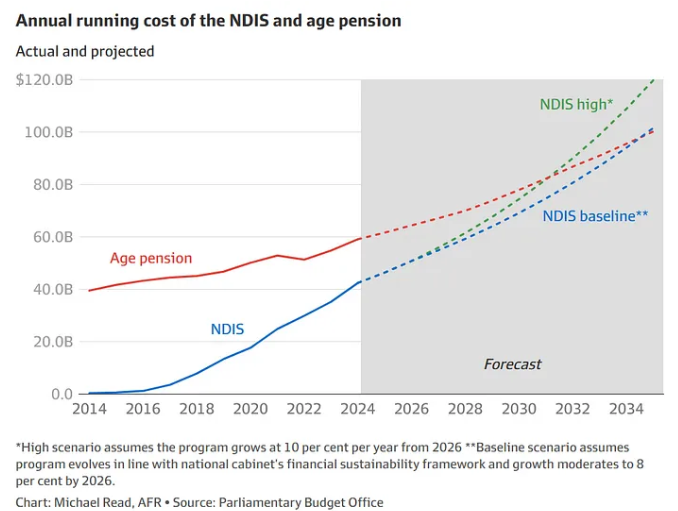
The Q3 national accounts release from the Australian Bureau of Statistics (ABS) showed that public demand drove virtually all of Australia’s GDP growth over the previous two quarters.
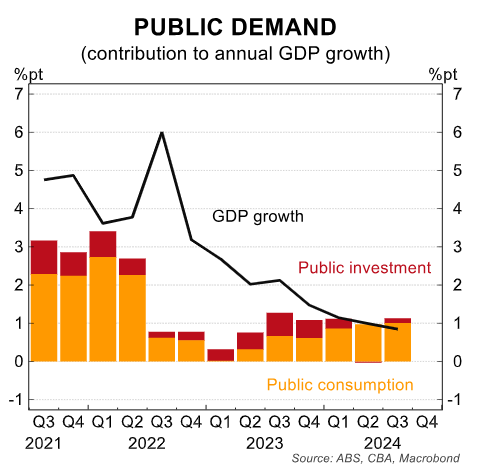
The ABS’s Q3 labour market account also revealed that the non-market (government-aligned) sector has been the primary driver of the nation’s job growth in recent years.
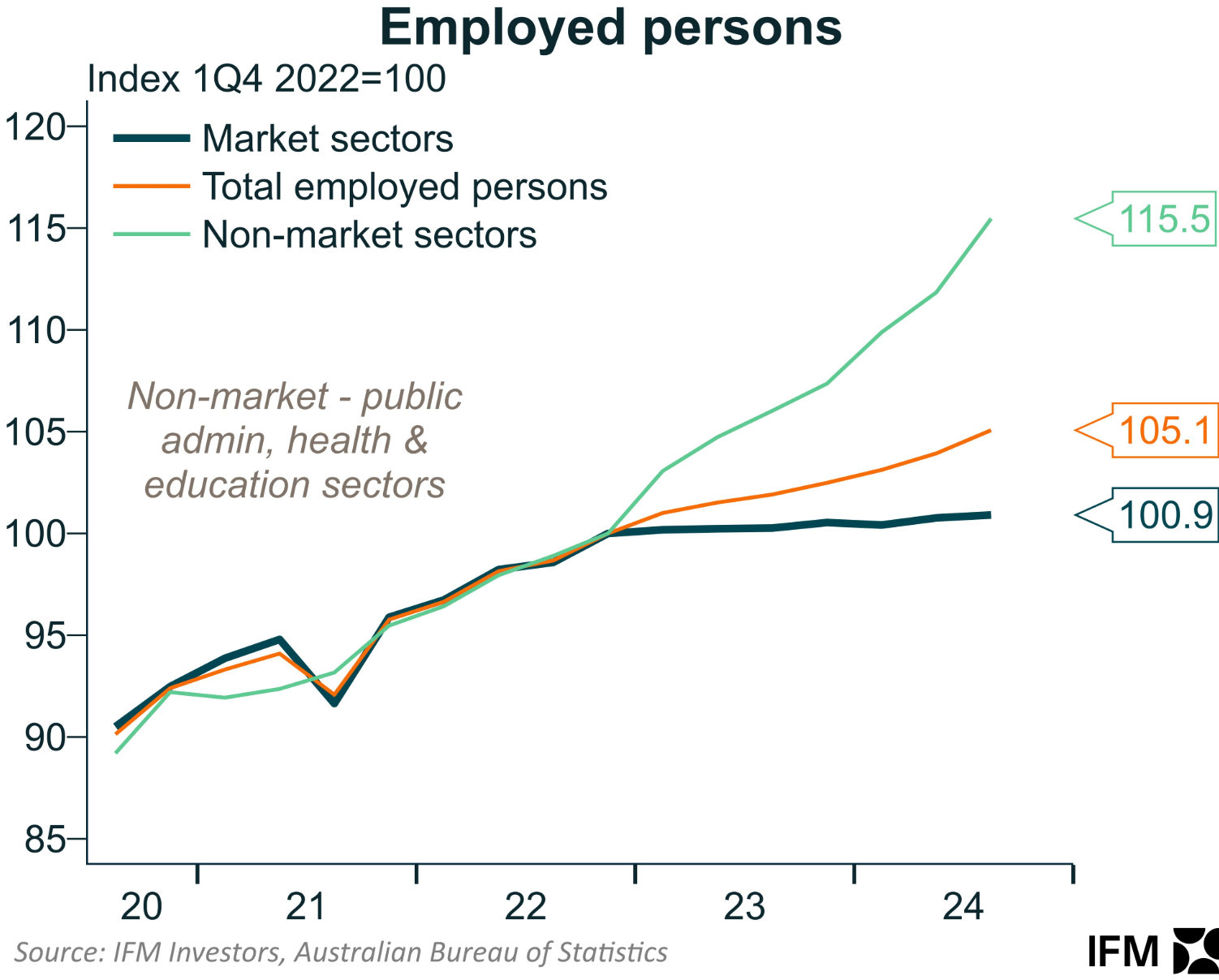
As illustrated below by Alex Joiner from IFM Investors, non-market sector jobs have grown by 624,574 since Q1 2023, versus just 91,443 across the market sector. This means that 87% of job growth has occurred in the non-market sector.
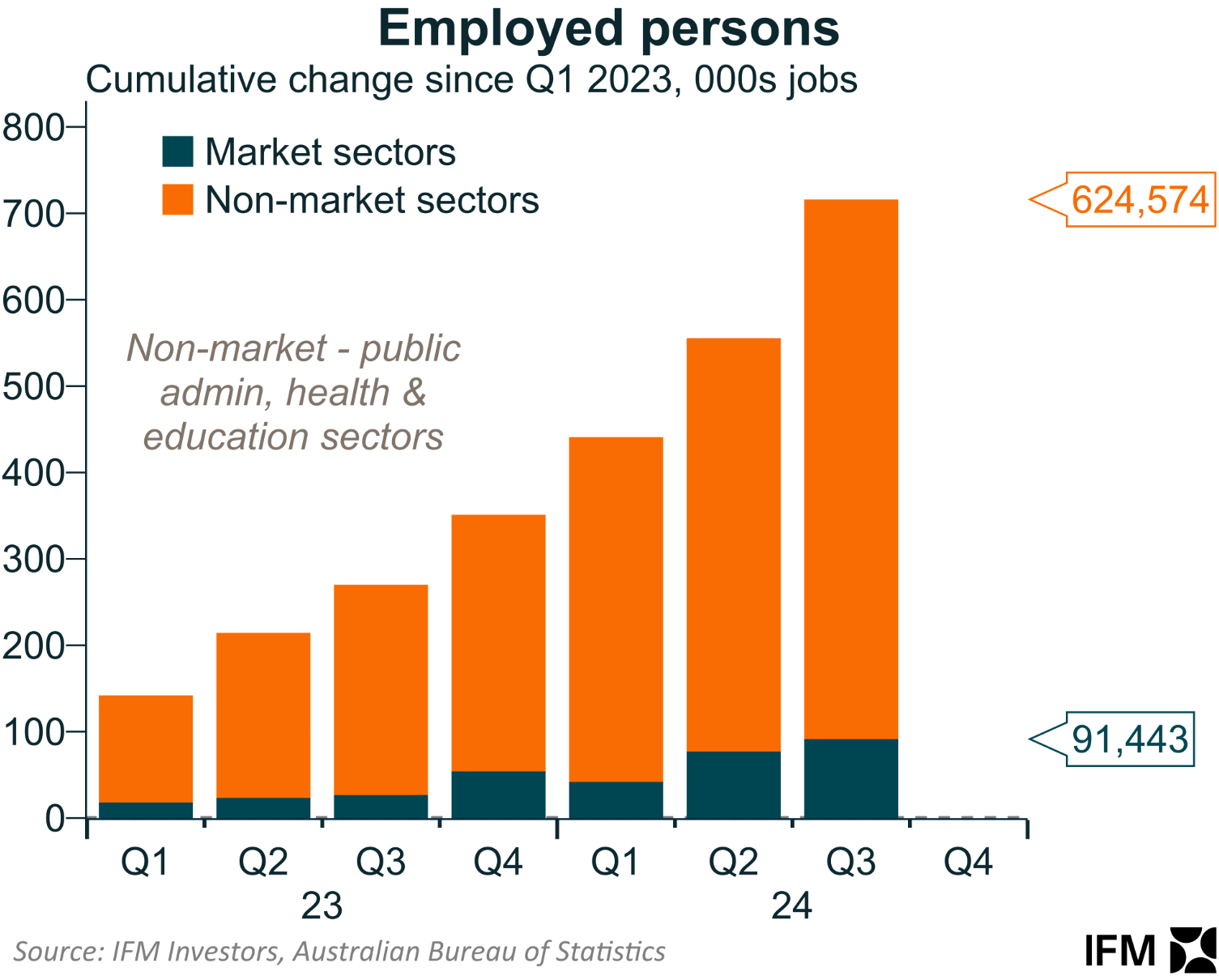
Indeed, there has been near-zero market sector job growth since the end of 2022.
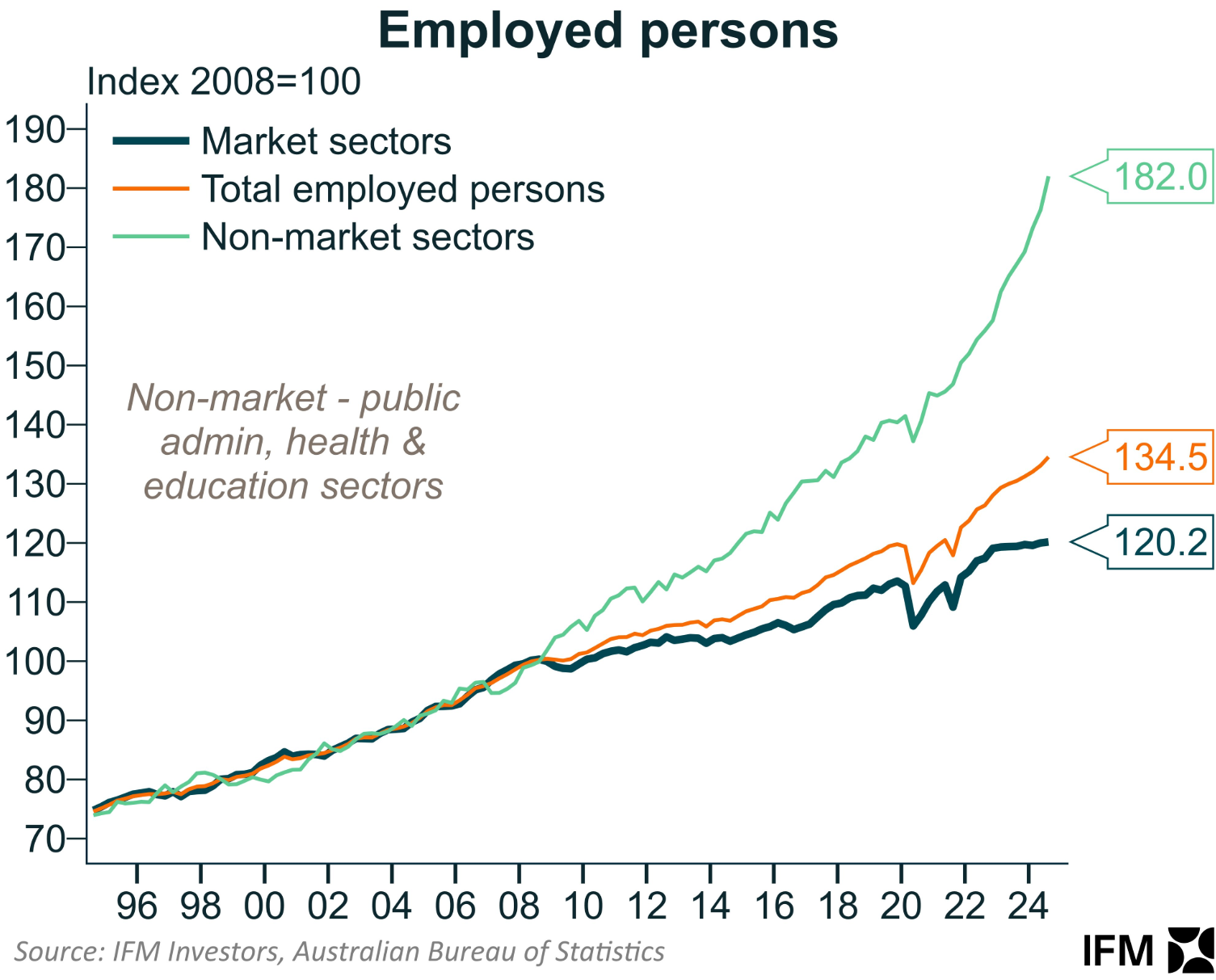
From a longer-term perspective, the Global Financial Crisis in 2008 marked the beginning of the transition between market and non-market jobs.
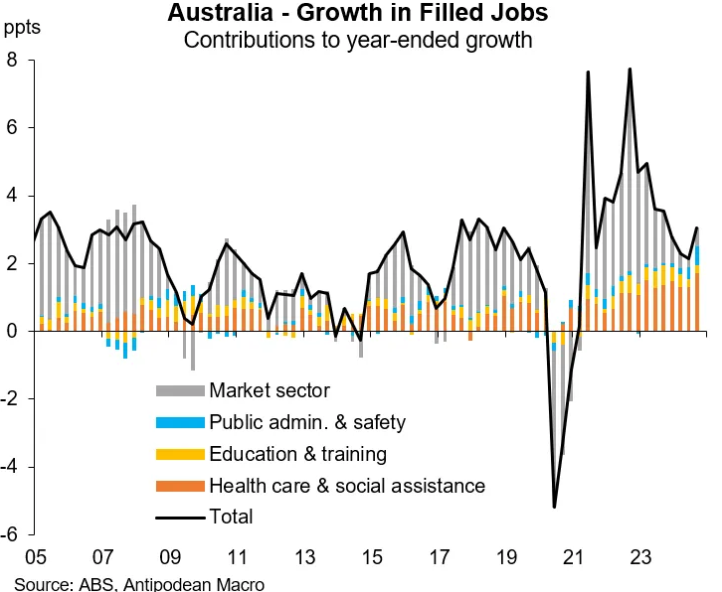
Justin Fabo at Antipodean Macro also shows that in the year to Q3 2024, the health care & social assistance industry contributed just under 60% of total job growth in Australia.
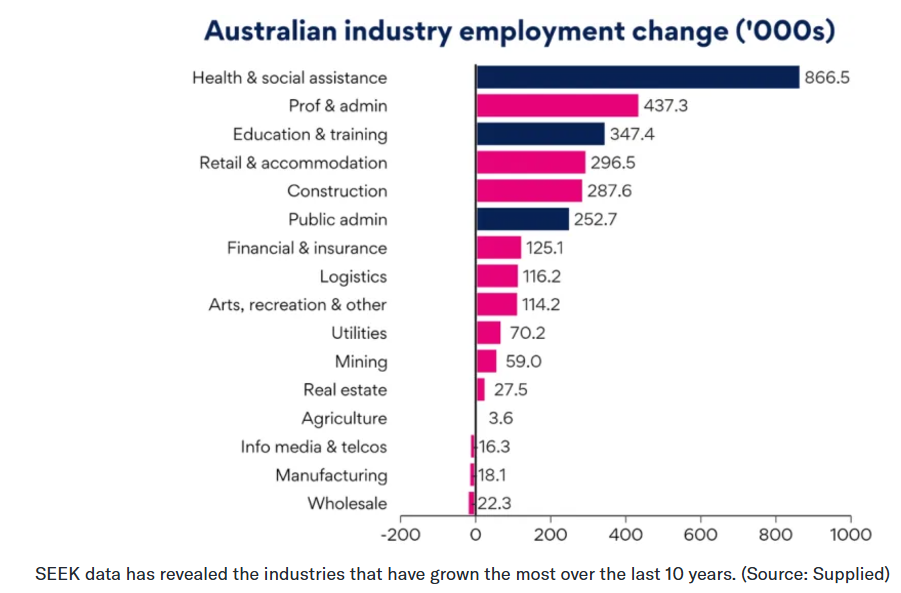
Separate analysis from Seek showed that the healthcare and social assistance industry has also dominated Australia’s job growth over the past decade, adding a whopping 866,500 jobs.
The following chart from independent economist Tarric Brooker also illustrates the explosion in non-market jobs, with nearly 400,000 created in the past year alone:
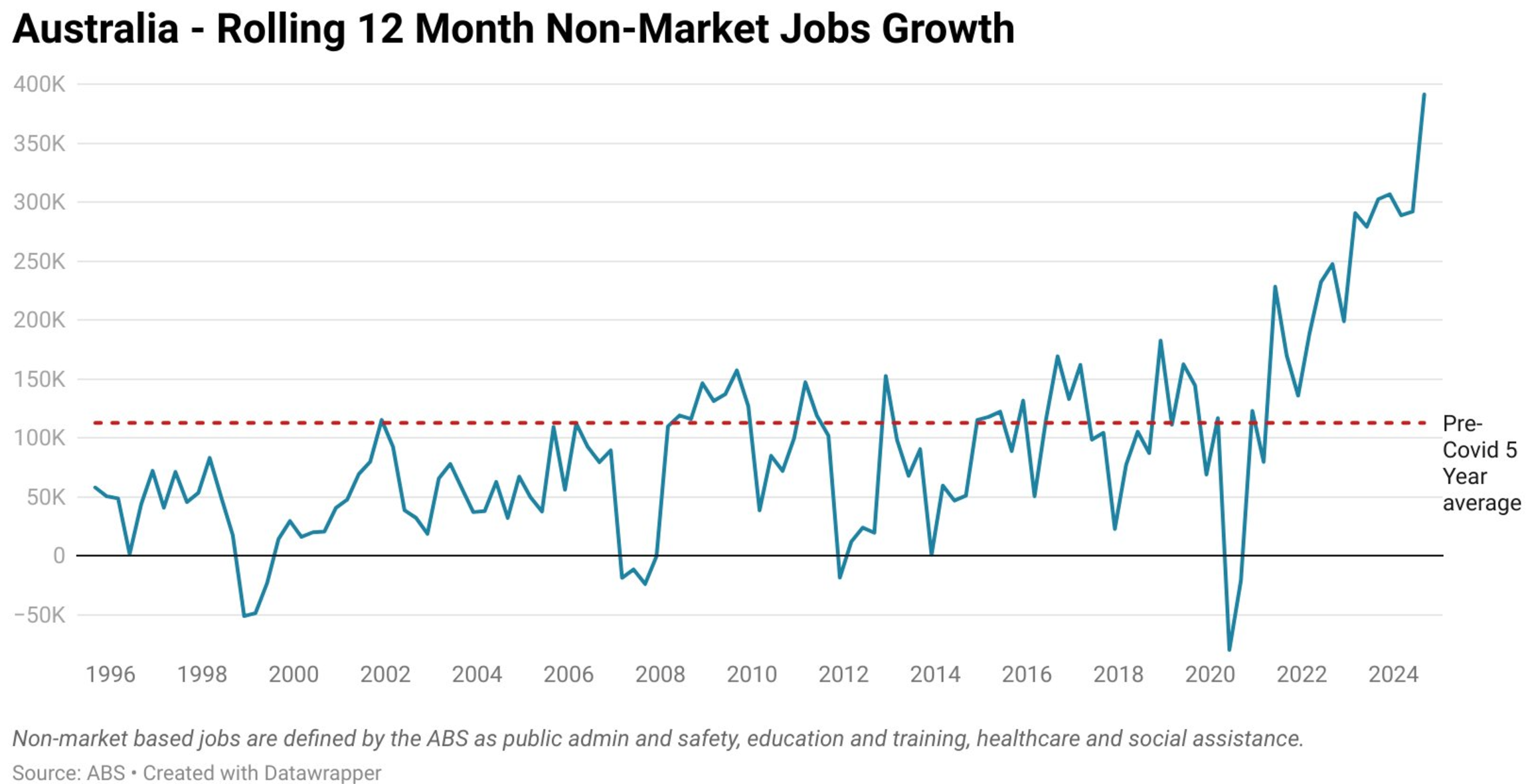
Source: Tarric Brooker
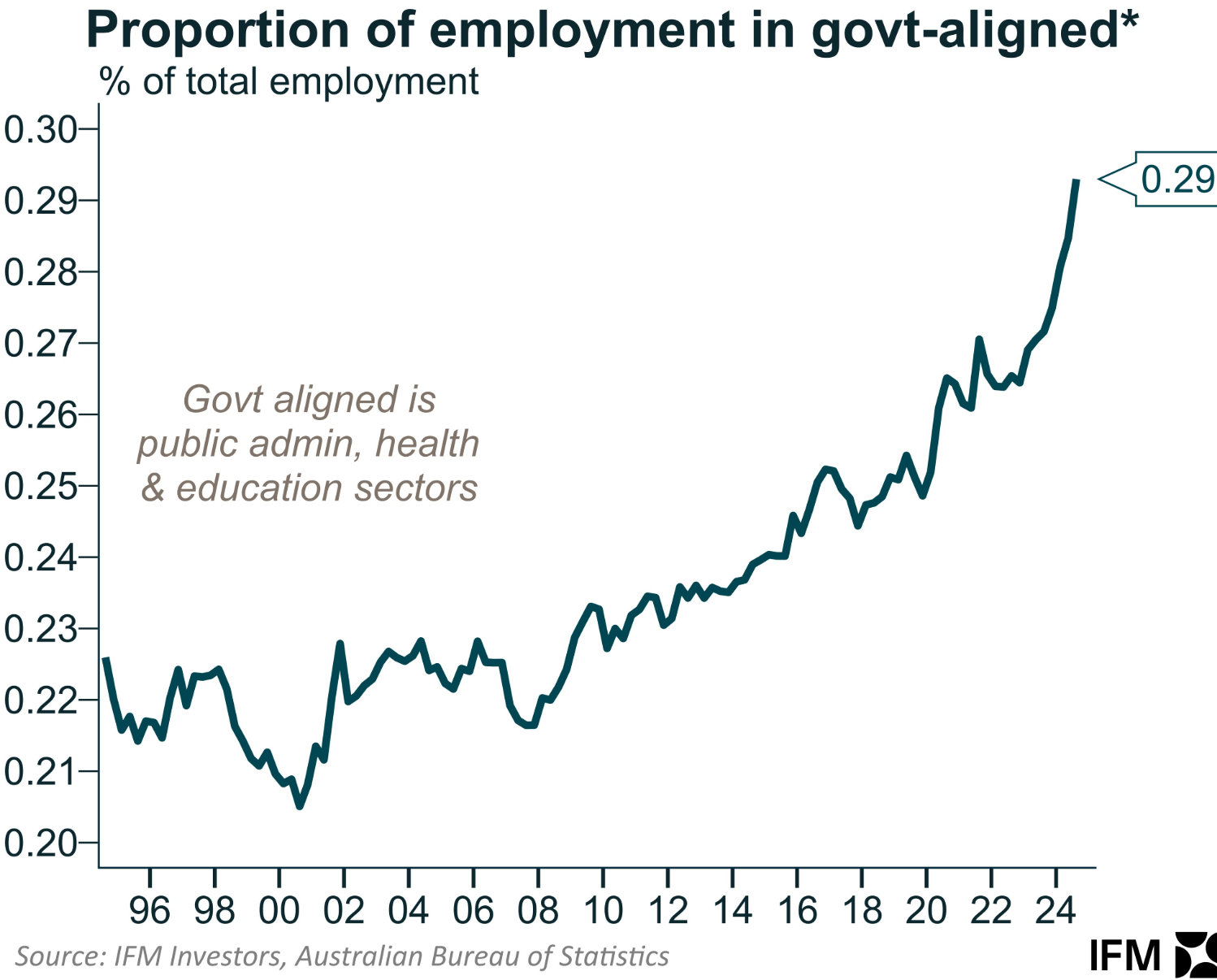
Alex Joiner from IFM Investors demonstrates that government-aligned jobs have surged to a historic 29% of total employment, increasing from approximately 23% in 2006.
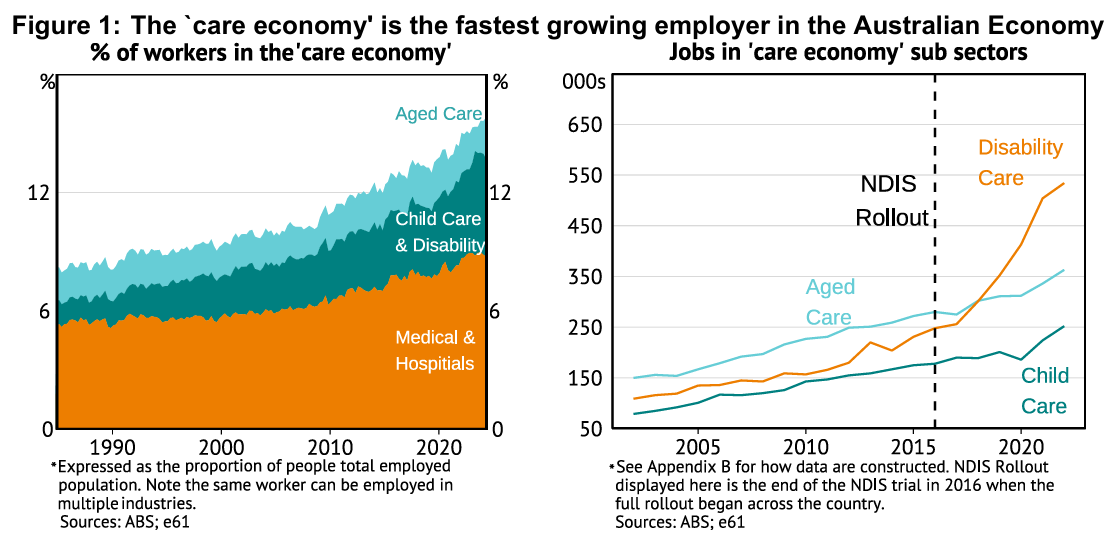
Much of this job growth has come from caring roles, many of which are related to the NDIS.
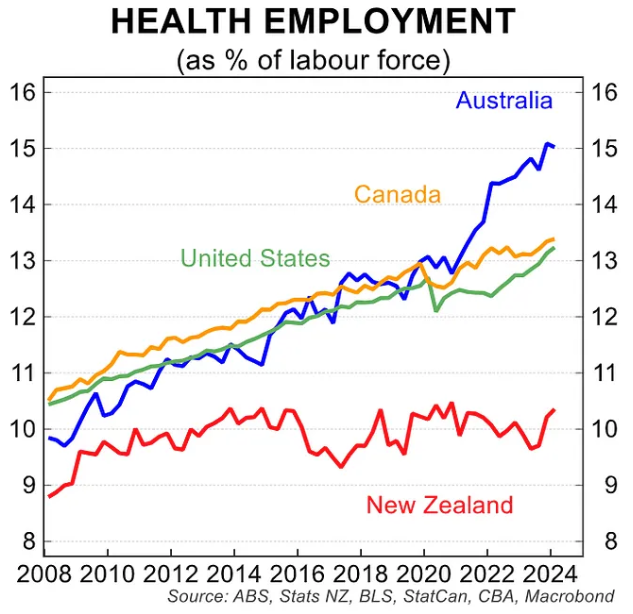
Australia’s growth in caring jobs via the NDIS has also dwarfed other advanced nations.
The surge in non-market jobs has driven the decline in Australia’s productivity, which has fallen to 2016 levels.
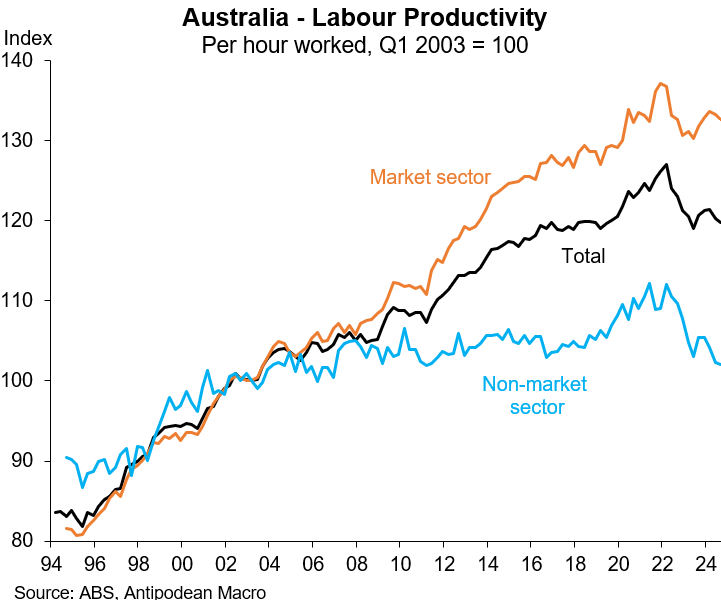
Alarmingly, productivity in the non-market sector is tracking around the same level as 20 years ago.
This helps to explain why Australia has experienced one of the largest declines in labour productivity in the developed world.
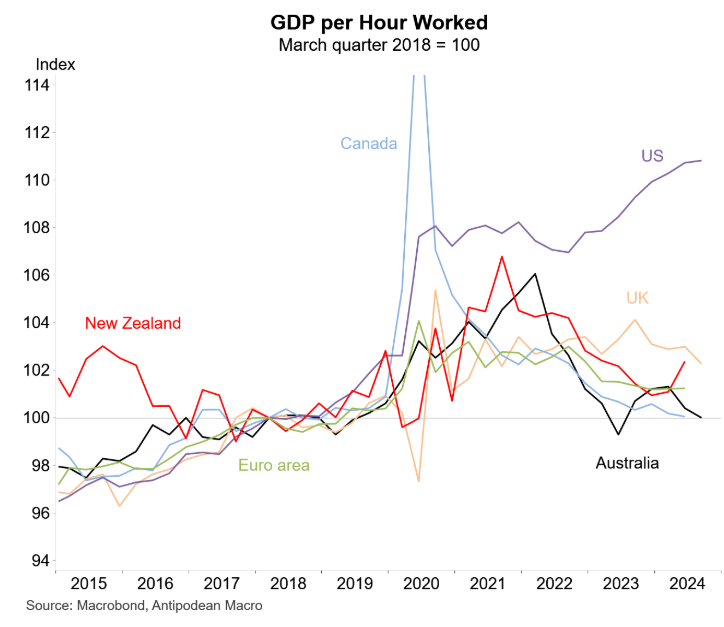
There is no sugar coating this data. Australia’s living standards will continue to contract unless the nation’s productivity growth improves.
However, it is difficult to see how productivity can rebound so long as policymakers remain wedded to mass immigration and continue to drive energy costs higher through failed gas policy and ‘net zero’ madness, further deindustrialising the economy.