
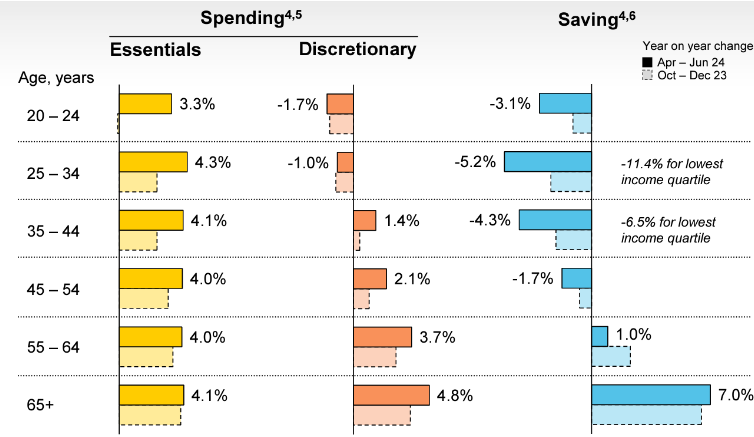
CBA released data on the household expenditure of customers in the June quarter of 2024. It once again showed that younger Australians are cutting back on discretionary purchases, whereas older Australians continue to spend freely:
Source: CBA
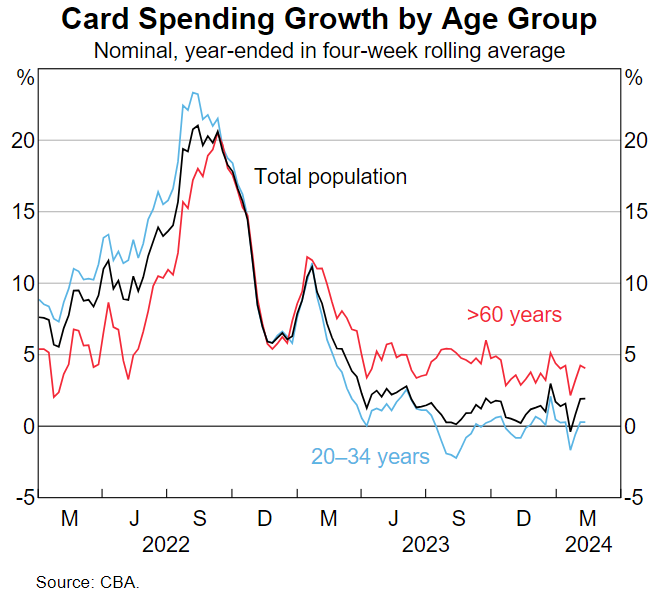
As shown above, Australians aged under 35 outright cut their expenditure on discretionary items, whereas older Australians aged 65-plus increased their spending the most.
Australians aged under 55 also drew down their savings, whereas Australians aged 65-plus grew their savings by 7.0%.
Clearly, the surge in rents and mortgage payments is hurting younger Australians. By contrast, older Australians, who tend to own their homes outright, have been largely shielded from the rising cost-of-living.
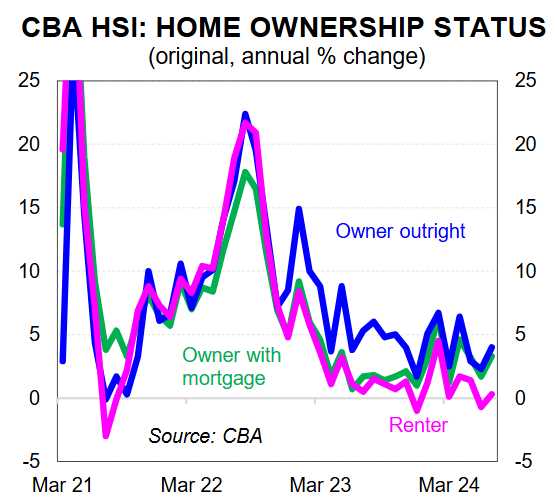
Renting households have cut their expenditures especially hard, whereas Australians who own their homes outright have grown their spending the most.
The sad reality is that this century has been especially unkind to younger Australians.
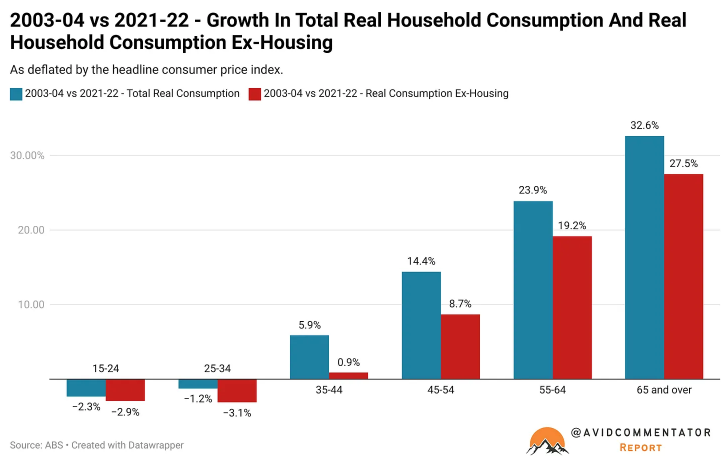
Even before the latest bout of extreme rental inflation and soaring mortgage costs, younger Australians’ real consumption was lower in 2021–22 than it was in 2003–04:
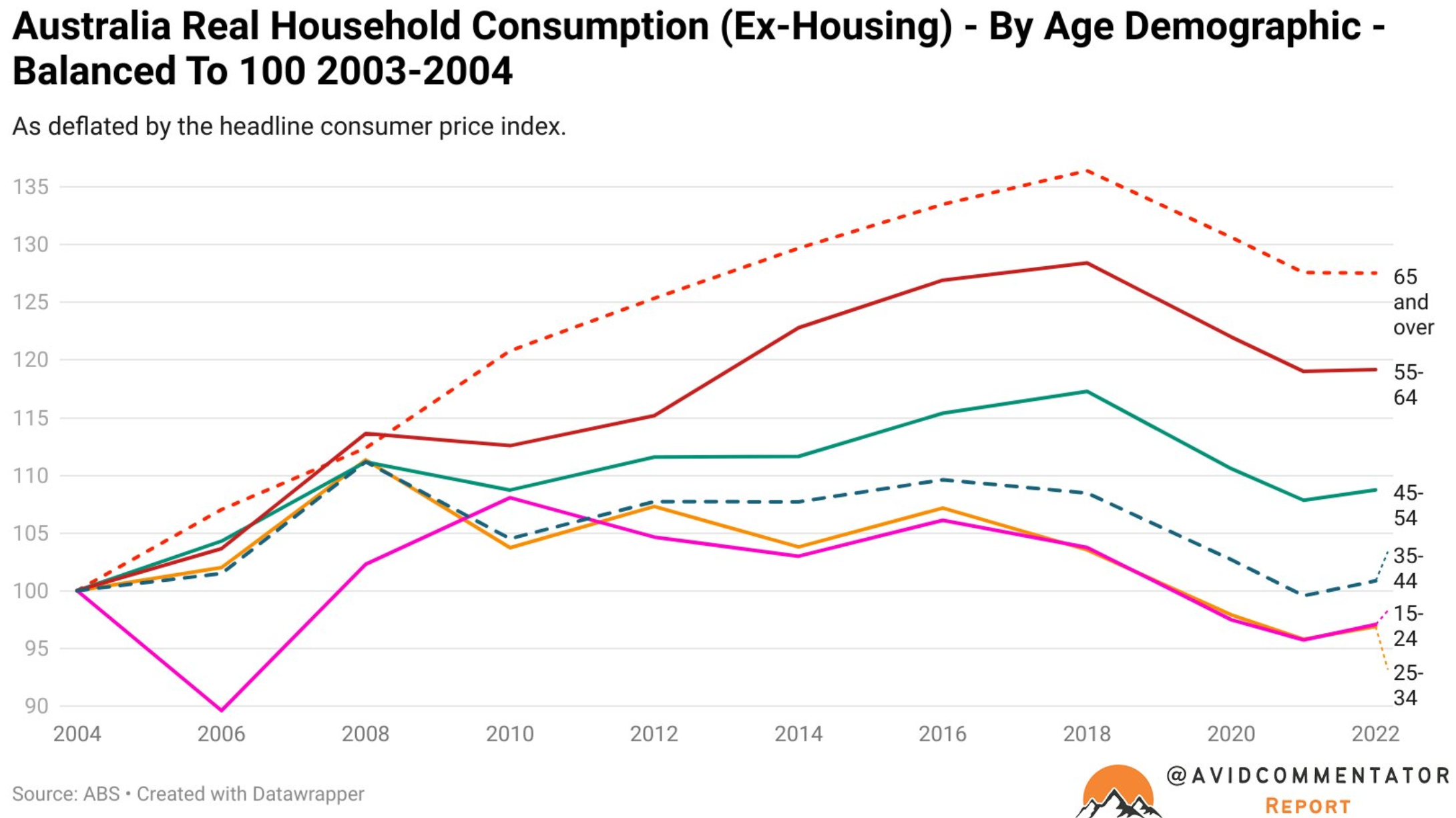
The following chart from Tarric Brooker highlights the long-term disparity in spending between young and old:
Decades of inequitable policies, particularly those involving taxation, housing, and immigration, have shifted the economic playing field from young to old.
Sadly, instead of addressing these inequities via policy reform, our governments have outsourced macroeconomic management to the RBA, which only has one blunt instrument at its disposable: interest rates.
Higher interest rates disproportionately impact Australians with mortgages while having minimal impact on older, wealthier Australians who own their homes outright and spend freely.
