
Young Sydneysiders have no housing future.
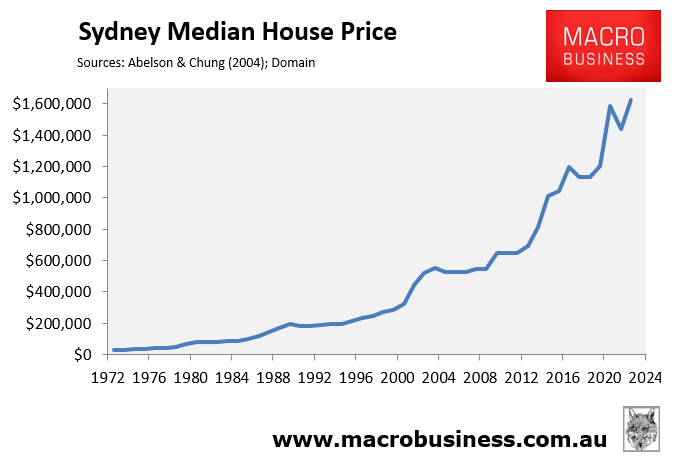
The city’s median house price has passed $1.6 million, according to Domain:
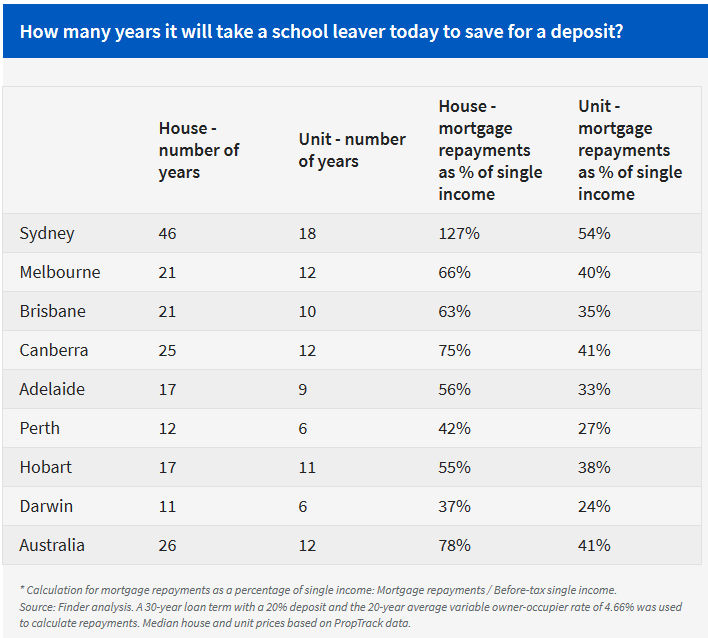
As a result, it will take a typical single school leaver 46 years to save a 20% deposit on a median Sydney house, according to Finder:
To nobody’s surprise, a new study from the University of New South Wales (UNSW) and University of Technology Sydney (UTS) found that housing affordability in Sydney is dire:
“While we expected the issue of housing affordability to be severe for part-time employment, we found that full-time employees are also significantly affected”, said senior study author Professor Chyi Lin Lee, from the School of Built Environment at UNSW.
The study found that only apartments in some areas of Western Sydney were affordable for someone on the median income, while detached houses were unaffordable across the entire city.
“Households relying solely on their earnings will have limited chances of achieving homeownership”, Lee said.
“So it’s clear the Australian dream of owning a home is becoming increasingly harder to attain”.
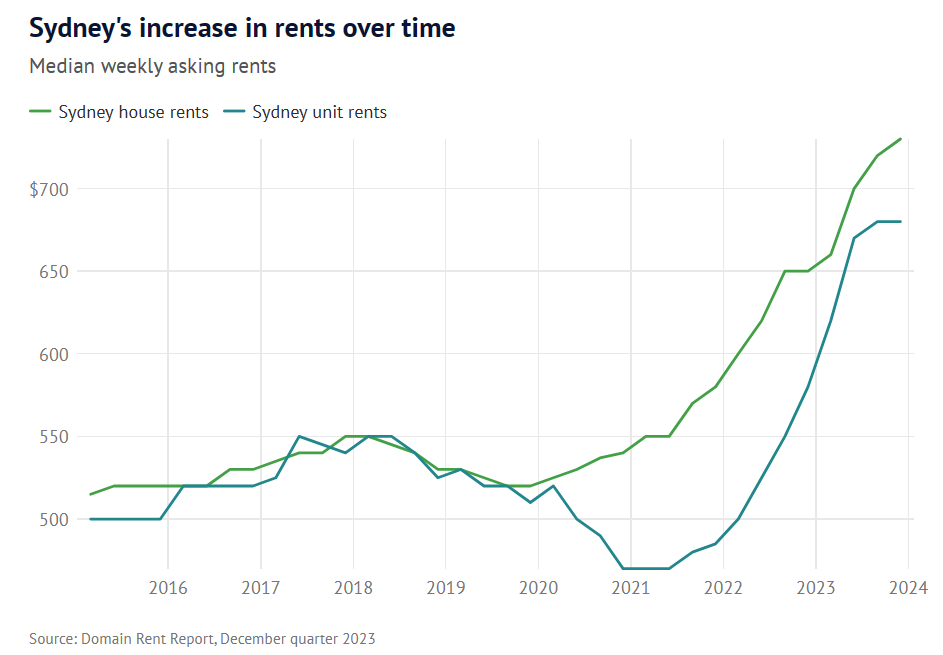
The rental market isn’t much better, with median weekly asking rents across Sydney also skyrocketing, led by detached houses:
The explosion in housing costs has driven the number of births in New South Wales to its lowest level since the early 1980s, according to new analysis from KPMG.
In 2023, there were 92,200 babies born across New South Wales, a decrease of 6300, or 6.4%, from the previous year. This was the largest percentage decrease since 1983, when the economy was rebounding from a severe recession.
According to KPMG, the decline in births has been particularly severe in Sydney, with only 60,860 babies born last year.
“Sydney is in the midst of a baby recession”, noted author and KPMG urban economist Terry Rawnsley.
“Birth rates give you an insight into how confident households are feeling about the future. So the recent slump in births is an indicator of how much cost-of-living pressures are affecting households and how much housing availability challenges are feeding into people’s behaviour”.
Rawnsley added that the high cost of extra housing space in Sydney was influencing the number of children couples were choosing to have.
Lack of space will become an increasingly binding constraint on having children, given the state government’s desire to pack future residents into high-rise shoe boxes.
According to projections from the Urban Taskforce, the composition of Sydney’s housing stock will transform over the next 33 years from being mostly detached houses to mostly apartments (50%) and town houses (25%):
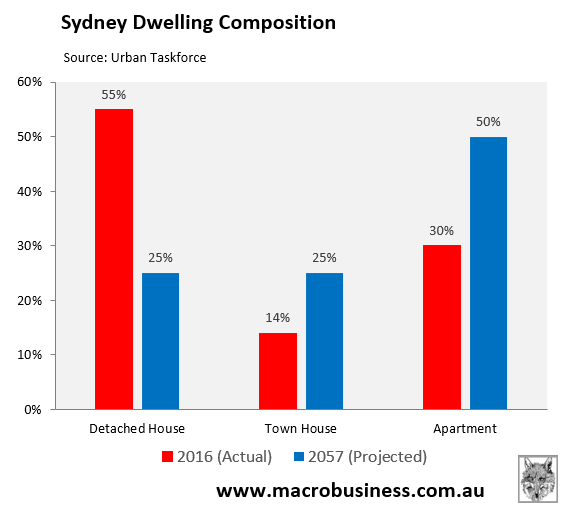
Obviously, high-rise apartments are not conducive to larger families.
Earlier this year, the NSW Productivity Commission blamed high housing costs for driving younger residents out of Sydney, resulting in a “brain drain” of 30 to 40 year olds.
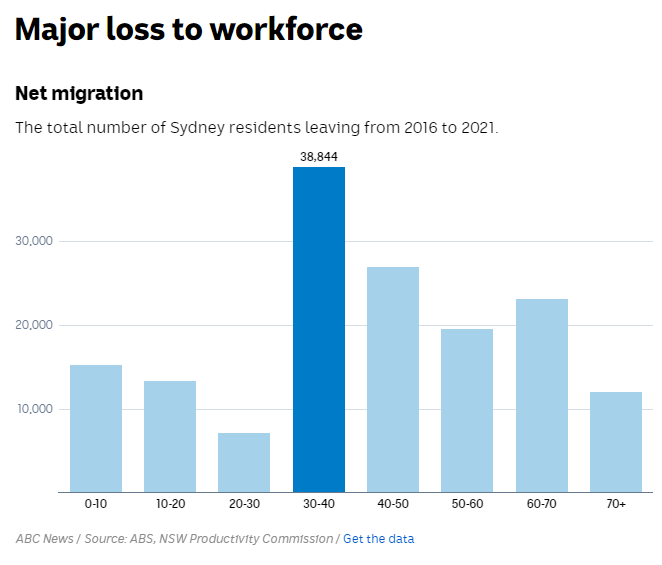
As usual, nobody has bothered to mention that 100% of New South Wales’ population growth has come from net overseas migration, which is pushing incumbent locals out:
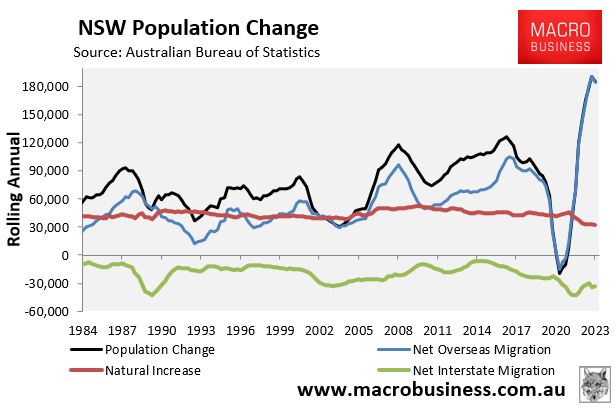
While 31,700 residents left New South Wales in 2023, they were more than replaced by 184,600 net overseas migrants.
Sydney’s population is also projected to grow to around 8.3 million people by 2070 on the back of permanently high net overseas migration.
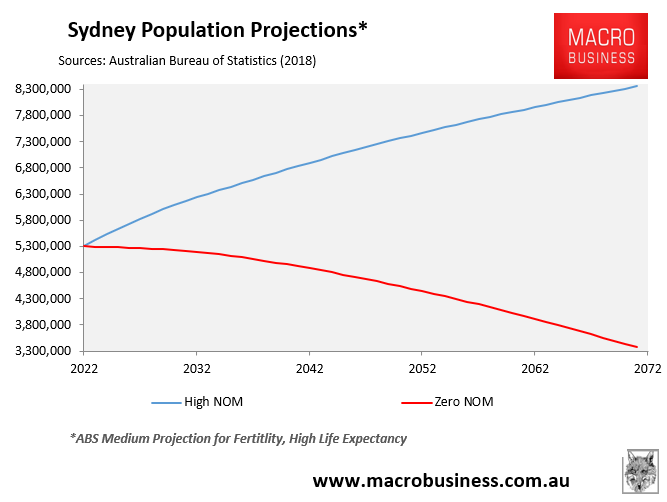
So long as Sydney’s population grows like a science experiment via high net overseas migration, house prices and rents will continue to climb.
As a result, birth rates will fall and younger incumbent residents will continue to leave the city.
